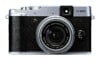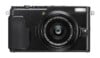
The Fujifilm X-E5 has landed to near-universal praise, with reviewers consistently calling out its excellent image quality, charming retro handling, and the clever design touches that fix the shortcomings of its predecessor.

The Fujifilm X-E5 has landed to near-universal praise, with reviewers consistently calling out its excellent image quality, charming retro handling, and the clever design touches that fix the shortcomings of its predecessor.
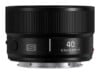
The Lumix S 40mm f/2 is a lovely little lens, and I think a lot of Lumix S users will enjoy its company.
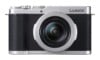
Yes, the Lumix DC-L10 is more expensive than the Lumix DC-LX100 ll was at launch, but that was a full eight years ago and we’re getting a whole lot more camera.
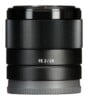
I tested the Sony FE 28mm f/2 lens predominantly on the 24.3-million-pixel Alpha 7, and found that it delivers consistently good-looking images.
[I]f you’re happy to make these compromises and compactness is the most important thing for you there are few cameras to compete with the model.
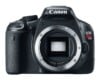
[T]he EOS 600D is a 550D with the 60D’s vari-angle screen, with very little in the way of innovation.
The camera feels modern in its design and, though heavily consumer-oriented in its buttons and layout, remains a solid and well built unit, with only slight nuisances in the mode and rear dial.
[T]his is a camera serious photographers will find extremely tempting – assuming the price doesn’t put them off.
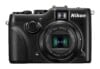
The Nikon P7100 performs very well with regards to image quality.
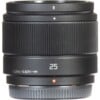
It’s not only a lens that looks fantastic, but also backs up its minimalist design with a robust build quality and a superb image quality performance that will tempt portrait, event, wedding, and documentary photographers into taking a much closer look.
I found the 1D X Mark II to be addictive and very impressive. I would loved to have used it for a bit longer but, unfortunately, circumstances prevented me trying both its high ISO and low-light AF capabilities – two areas it should really excel in.
Sony’s uncompromising approach to the Alpha A77 has produced a camera that not only matches some excellent competition, but beats them in a number of areas too.
The EOS 550D is an excellent camera, offering a beginner similar specs to an EOS 7D semi-pro model at a fraction of the price. The low-light and video perfromance are a superb bonus to the excellent overall image quality.
It’s decently sharp, handles well, and focuses quickly and silently.
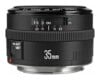
[T]he EF 35mm may not be an outstanding performer but it is very consistent and is certainly workable at its maximum aperture.
[T]he overall improvements justify the additional cost.
In a competitive class it could well be argued that the K-S2 is one of the most pleasing DSLRs to use thanks to the large viewfinder and impressive control set-up.
[T]he Olympus E-PL1 indicates the direction for hybrid models, then the outlook is certainly positive.
It would be a mistake to overlook this unassuming little optic, though, as not only is it a genuinely capable lens, but it’s also one that almost any photographer can afford.
Sony’s sensor technology is well and truly ahead of the game, and the 42.4-million-pixel sensor inside the RX1R II is at the forefront of this.
With its dependable build quality, impressive AF, excellent resolution and generally pleasing images, it’s a welcome addition to an admittedly crowded market.
It would be harsh to label the X70 as a cut-down X100T, as this cracking compact carves out a niche all of its own in the Fujifilm line-up.
The result is a camera that may not be quite exemplary, but that will be very pleasing to use and dependable in a variety of situations for a lot of people.
If you’re prepared to invest in the extra quality that these lenses provide or intend to use existing glass, you’ll be rewarded with excellent images from a camera that’s perfect for the photo enthusiast looking for a high quality but lightweight camera.