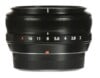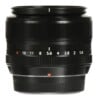
For my event shooting, this lens has turned out to be better in practice than it tests. Thus, I can say with some confidence that if you need "fast normal," then this is a reasonable choice.

For my event shooting, this lens has turned out to be better in practice than it tests. Thus, I can say with some confidence that if you need "fast normal," then this is a reasonable choice.
I don't have a lot to say about this lens because, well, it's fairly simple and basic.
For most people, the 14mm Fujinon is already enough lens, and optically it stands right up with the best wide primes I've seen.
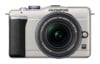
I can recommend the Olympus E-PL1 if (and it's a big if) you can live with the screen and the accidental settings problem.
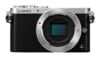
The GM1 is a bit of a conundrum. Most certainly there are compromises in the features and design, but compromises of some sort are necessary to get a high performing camera with interchangeable lenses down to this size.
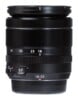
Because the zoom is darned sharp and optically quite a good performer across the board. It's just a heck of a lot more convenient, and being f/2.8-4, it's not all that slow a lens, either.
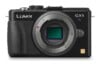
I should point out that I've now sold my GF1 and adopted the GX1 as its replacement in my camera collection.
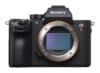
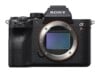
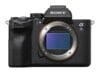
There's little doubt in my mind that the A7Rm3 is a great camera. Sony has improved the previous model in so many useful ways that the A7R now stands up against many DSLRs.
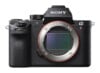
No doubt about it, Sony has created a beast with the refresh of the A7r into Mark II form.
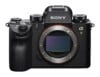
I really wanted to like the Sony A9. And to a very large degree I do. But frankly, I was expecting a little bit more than Sony actually delivered.
I'm going to cut right to the chase: most of you will be better served by a different Sony full frame camera (or a Canon, Nikon, or Panasonic one).
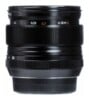
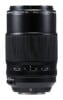
This lens has two attributes that detract from its overall desirability. First, is that focus performance is on the sluggish side, particularly with large distance changes.
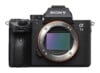
The A7 III is well rounded, does the intended job quite well, and won’t max out your credit card (though watch out for buying lots of new lenses to put on it).
The A7s is your choice if low light work and video are your primary needs.
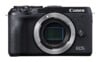
If you don't want an EVF and can live with framing via LCD, the M6 Mark II is probably the best camera you can find for that. It's got a bright screen sitting on a small body, but packs one heck of a lot of image quality inside.
At roughly US$1200, you're making a Faustian bargain here: price, size, and weight are all completely optimized against performance.
Sony's done an excellent job of compromising a bit where you generally won't be bothered by it, while keeping the aspects of the lens that you want top notch, well, top notch. Even on the 42mp sensor cameras this lens shines in the center.
My final words are these: if you need what this lens provides focally, buy it. I can’t imagine it disappointing you.
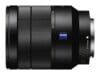
[T]his is the lens you want if you're looking for the best mid-range FE zoom without breaking the bank (or pushing down the scales too far).
[T]he 12-24mm is a keeper, and it's one of three lenses I keep in my Sony bag now.
That actually sums things up fairly well: this is a very good to great lens, but not an exceptionally great lens. Sony made some compromises (vignetting, edge acuity compared to center) to produce the lens at the price they gave it.
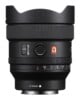
The Sony 14mm f/1.8GM is the first such 14mm prime I've encountered that is changing my mind about fast, really wide primes.
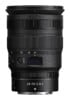
The 24-70mm f/2.8 S is arguably the best zoom lens of that focal range I've seen to date, certainly the best I've fully tested and measured.
[T]his is the lens you should be considering.