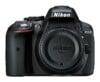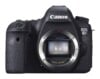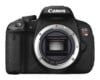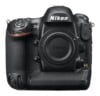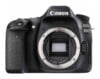
If you’re looking for a DSLR with an APS-C sensor, the 80D is an excellent choice. It competes well against its main competitor, Nikon’s D7200.

If you’re looking for a DSLR with an APS-C sensor, the 80D is an excellent choice. It competes well against its main competitor, Nikon’s D7200.
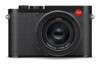
Top it all off with a really nice EVF, optical image stabilization, and Leica’s unique design sense, and you’ve got a really interesting camera.
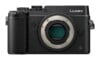
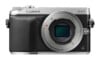
The Panasonic Lumix GX8 is a well thought-out upgrade to the GX7. The Fujifilm sports a 16MP sensor, so its test results trail slightly behind the GX8.
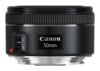
Between test results that showed improvement by almost every optical metric and Canon’s numerous small but significant handling and cosmetic upgrades, this lens is undeniably a winner and a welcome addition to the Canon lens catalog.
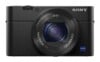
It’s nearly a toss up, but if forced to pick one as Just Right, we’d likely go with the RX100 IV.
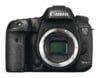
Canon has made a meaningful upgrade to the top of its APS-C line with the EOS 7D Mark II.
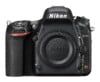
Nikon's D750 is at the head of the pack in all of the most important areas of image capture.
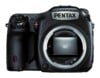
The Pentax 645Z brings high-quality medium-format imagery within reach of a whole new group of photographers. Its overall feel is similar enough to the smaller-format DSLRs that most shooters know for them to face only a slight learning curve after switching.
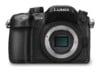
Panasonic’s GH4 is one of the best ILCs you can get these days. Even if you don’t expect to shoot 4K, its 1080p video is stunning.
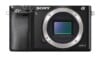
Sony’s a6000 is a terrific all-purpose camera. Priced just above entry-level DSLRs, its advantage in size and weight over those cameras justifies the extra bucks.
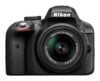
Nikon’s D3300 doesn’t change too much compared with the D3200—and that’s mostly a good thing.
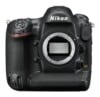
The Nikon D4s competes mainly with Canon’s EOS-1D X. As outlined above, the D4s ends up winning the image quality comparison with better low-light performance, even though its resolution trailed the Canon by a small amount at ISO 1600.
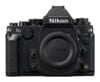
The Nikon Df is a camera that makes you want to take pictures and to look for pictures to take, and you can’t ask for more than that.
Nikon shooters looking to step up from an entry-level DSLR will find a worthy camera in the D5300—although it would be a very small upgrade from the D5200.
The Panasonic Lumix GX7 is a nice upgrade from the GX1. The tilting EVF and interface upgrades alone make it worthwhile to step up.
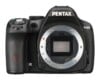
Pentax’s cameras are always hard to compare to those from other manufacturers; it opts for more rugged designs and often eschews the trendy features du jour.
In ads for ILCs and DSLRs, you’ll most likely be told about video shooting these days, but we’re not convinced that people are shooting more videos than stills with these kinds of cameras.
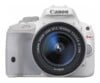
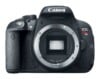
Canon’s latest flagship Rebel remains as a great choice for an entry-level DSLR.
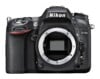
The Nikon D7100 is a very powerful imaging tool. We’d expect Canon to update its competing 60D before long.
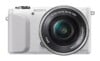
If price has been the only thing keeping you from buying an ILC, you officially have no more excuses left. While the NEX-3n isn’t the best ILC on Sony’s roster, at this price it’s worth every penny.
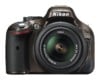
If you are not invested in any system, you should strongly consider the D5200, a very solid choice for a DSLR at this price. But if you’re open to an ILC, the decision becomes harder.
Shooters who demand pro-level power will still gravitate toward pricier models or stick with APS-C. But, for the majority of shooters, the 6D offers plenty of bang for the buck.
At the same time, Canon has maintained the AF performance we’ve come to enjoy up to this point.
Videographers, however, should definitely consider the D4. Besides the uncompressed output and all the audio extras, the camera’s noise control should allow for appreciably more versatile shooting with video.