Everything You Wanted to Know About Noise but Were too Afraid to Ask
As technology has advanced, so too has noise control. Here's the basic information about why noise appears in your photos and how to deal with it.

As technology has advanced, so too has noise control. Here's the basic information about why noise appears in your photos and how to deal with it.

Abstract photography is one of those things that you either love or hate. Either way, it’s a genre worth dabbling in, as you can learn a lot about your camera from it.

There’s more to photographing the sea than many people realize. Here are some handy techniques for safely photographing one of the most exciting and evocative subjects on our planet.

Social media was once the backbone of marketing for photography businesses. However, we now have strong reasons to leave it behind and adopt a different approach to photography. Why did my recent behavior change prove this to be true?

When we print, we usually want colors and tones to be as accurate as possible. What appears on the paper should match what is on our screens. There are important steps to achieving that.

Printing is the ultimate step in the photographer’s workflow. Getting to grips with the basics is essential, and there is more to it than meets the eye. In my first article, we discussed the printers and inks. In this second one, we examine the paper.

Photographers often embrace beauty and the sublime, unlike the current trends in other arts that downgrade their importance. There are good arguments for both rejecting and embracing aesthetics in our images.
Do you print your photos? If not, it’s something you should consider because it is much more rewarding than just posting pictures online.
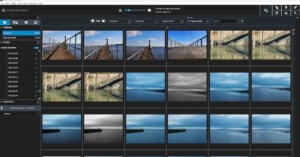
We can quickly acquire tens of thousands of photos. Therefore, managing them effectively is essential. Equally, we are becoming more demanding of our development and editing software. Recently, the most effective way of managing our workflow has changed dramatically, making our lives easier.

For professional photographers, there’s more to it than just composing a photo and exposing it correctly. It's great fun, but any photographer can set up a business and benefit from it.

Street photography documents contemporary life. If done well, it can be one of the most compelling genres for viewers. It is also a regularly debated genre of photography, and opinions differ on what exactly is street photography.
I often refer to photography as a blend of art and science. However, our cameras' lack of adherence to scientific principles can lead to confusion. Both our photographer ancestors and the camera manufacturers are to blame.

We all want to become more successful at photography, don’t we? Of course, success is a personal thing and can be defined in many ways. If you want that as your New Year’s resolution, there are ways to go about it.
An understanding of colors and how they can transform our photography is a skill we photographers must master. Therefore, getting to grips with the strangeness of color is essential for understanding how to take better photos.

Claims made about the golden ratio in nature are often overstated or romanticized. In fact, it is more often a useful model than it is a universal law,

It may be commonplace to you, but your audience members may be unfamiliar with the things in your life. Consequently, to them, your ordinary subjects may seem exotic and unusual. However, there are other good reasons to photograph the commonplace repeatedly.
Originating in the early part of the last century, Gestalt Theory revolutionized the understanding of perception. It emphasizes how humans perceive what they see. So, how can we use it to improve our photography?

Learning photography is a never-ending quest. Most of us are hoping to make our photos appealing to our audience. So what follows are five approaches we can employ to help achieve that.
As photographers, we often concentrate on technical perfection and the compositional layout. However, arguably more important than either of those is adding meaning to your photos. It can be challenging, but adding meaning can genuinely elevate your photos to the next tier.

There have been significant improvements in photographic technology over the last 50 years. Although it helps us get ever-better photographs, there is an essential reason for going back to basics.
The most compelling photos are those that break away from the mundane. Therefore, you can achieve better results by photographing at atypical times of day and weather conditions. Here are some hints for doing that and avoiding some risks.

Depth of field refers to how much of the picture is sharply in focus. A skill you should hone is precision, because it can make an enormous difference to the success of your photos.
Digital photography is at a disadvantage when it comes to creativity, I argue; at least when compared to painting, drawing, sculpture, or music. However, there are lessons from history you can apply to overcome the hindrances we face and learn ways to help us grow creatively.
The holiday season is not far off, and photographers may be thinking about what they want as a gift. Here are some gift ideas for photographers of all levels of experience and budgets.

There are different types of color contrast, and how we use them radically changes the look and feel of our photographs. An often-overlooked aspect of photography, the various types of contrast play an essential role in creating our images. What are the different types, and how can we use them to improve our pictures?
Previously, I wrote about five elements of art and how they can impact our photographs. However, there are three more elements that work in conjunction with points, lines, shape, and form that can elevate your photography further.

Merging multiple images into panoramas is a feature available in many editing programs and it is surprisingly easy to accomplish.

Understanding the roles of the fundamental elements of art allows photographers to create compelling compositions. These elements are not merely aesthetic choices but tools for creating structure in your photography.

Travel photography is one of the most rewarding genres, as it allows you to use your image skills in new and exciting environments. But there is more to it than just creating vacation snaps. Here are some of my approaches to better travel photography during a recent visit to beautiful Albania.

The design of an image is one of the most important aspects of photography, but composition is a vast and complex subject on which much ink has been spilled. It is well worth coming to grips with composition fundamentals, as they will transform your photography.
There’s much more to exposure than just correcting for light. It’s one of the most powerful tools you can use creatively.
Is our pursuit of exquisite photos inconsistent with what is expected in art? Or is beauty something we should continue to strive for?

In this, the second in a series of articles about autofocus, we will look at different focusing modes and their practical applications.

There’s a lot more to focusing than many novice photographers realize. When they delve into it, it can seem complex. However, it is easy to master once you have found your way around your camera.

There are small pieces of information that can make a big difference to your enjoyment of photography and your success at taking better pictures.
All great photographers in the past and present have had creativity at their core. There are proven links between personality traits and creativity. Therefore, modifying your actions can improve your photography.

Choosing the correct shutter speed is imperative. Here’s how it works and why you should take it into consideration when shooting any photograph.

In my previous article, we embarked on an adventure that started with a basic understanding of metering and exposure. Hopefully, you appreciate how the camera measures light and how its aperture, ISO, and shutter speed can be balanced to expose the image correctly. Each of those changes the way the image looks, and here’s what the aperture does.
Photography requires greater technical understanding than any other art form. I’ve been teaching people at all levels of photography for well over a decade. At the start of each workshop, I always begin by explaining metering and basic exposure settings. A major foundation of good photography, these settings are often the least understood, but they are among the easiest things to get right.

It’s getting ever more challenging to earn a living from photography. It is especially difficult to start a photography business now. So, here are some of the barriers you may meet and how to overcome them.
I consider myself lucky as I earn my living from photography. It’s not a profession that is going to make me rich, although it keeps the wolves from the door. Moreover, I love what I do.

It is tempting to be drawn in by marketing hype and buy the camera with the most enticing advertisement. Or you might go along with what a friend has. Alternatively, you could consider the choice in Walmart and pick up the cheapest model. All of these could be bad decisions.