
Husband and Wife are the Only People in The World Producing Film in Their Basement
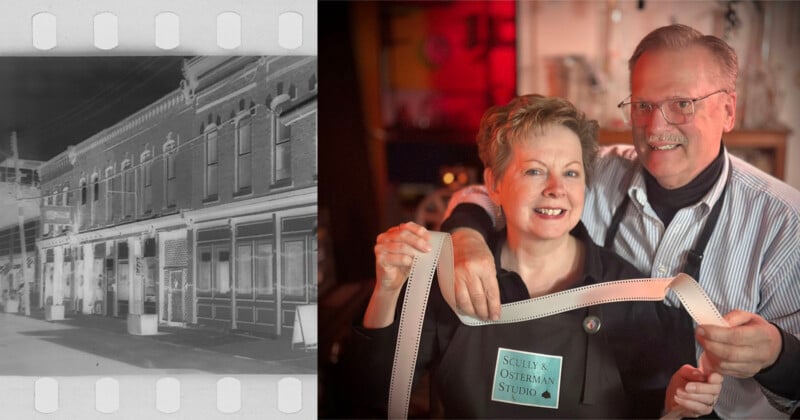
A husband-and-wife team is producing their own 1920s-era film, similar to the one Oskar Barnack used, in the “world’s smallest film factory”, which they intend to shoot using a 100-year-old Leica camera.
Mark Osterman and France Scully Osterman from Rochester, New York, are film enthusiasts and educators who have managed to scrape together all the necessary items to actually make their own film stock at home — the only people in the world outside of major manufacturers who are doing it.
The list of impressive items they have procured includes a film coating machine, a vintage film perforating machine, a slitter, a 1926 Leitz variable enlarger, a rare FIMAN film developing drum, and thousands of feet of blank film stock.
Now 71, Mark has worked most of his life at the George Eastman Museum, where his job was to research the evolution of photography, so he could teach photo conservators about how to identify images by the process they were made and how they will deteriorate over time.
“I come from a culture of learning how to do things with no monetary value,” Osterman tells PetaPixel over the phone. “It’s all intellectual value.”
Indeed, the ambitious project to make their own film is not for any commercial gain, as he and France will produce just a fraction of what major manufacturers like Kodak make.
A Chance Encounter with a Rare Camera
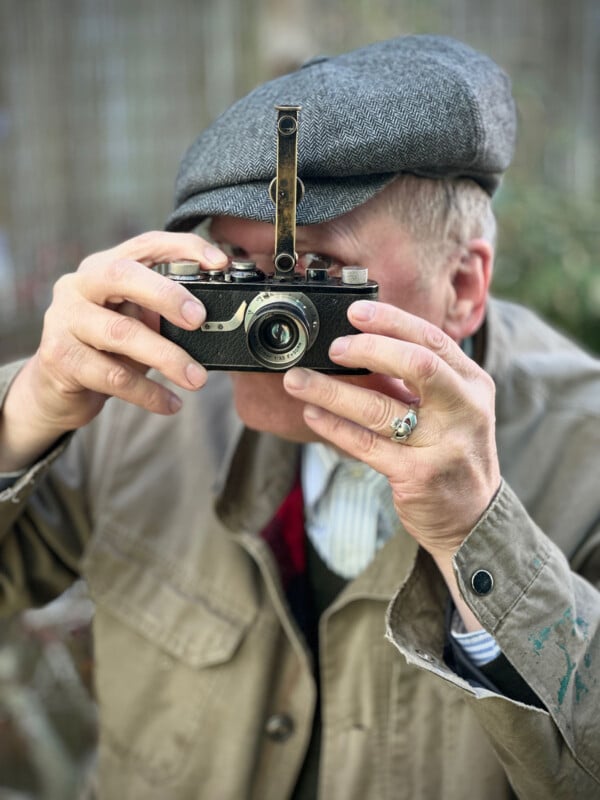
The entire project began when Mark and France were in Istanbul, Turkey, teaching gelatin emulsion techniques. There, they got their hands on a Leica 1a “Hockey Stick” camera. Mark was infatuated, and before he returned to the States, he had already bought one on Facebook Marketplace.
Mark tells Rust Magazine that this inspired him to recreate the type of film that Oskar Barnack, who invented the first 35mm prototype film camera, used in the very early Leica cameras of the 1920s.
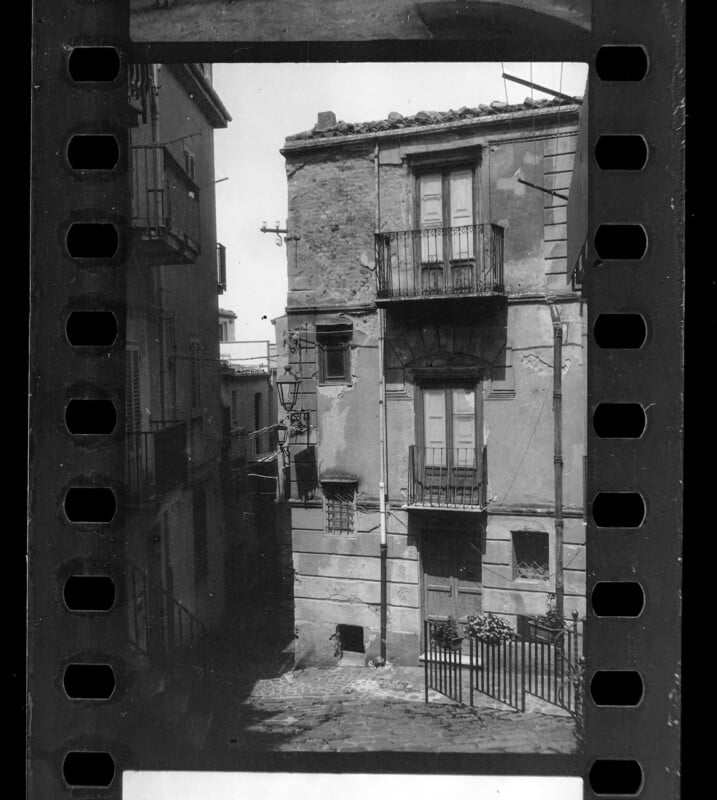
The film that Barnack used in the early 20th century is different from the film stocks that came later, namely, it is only sensitive to blue and violet light, known as orthochromatic film.
“Not yellow, not orange, not brown, not red,” says Mark. “That gives you a different look to the things you’re photographing.”
The film still has a fine grain structure, which allows for Leica’s original idea of “small negative, large print.” Those early films had an extremely low ISO of 1 or 2, but Mark has managed to improve that to something like 10-20.
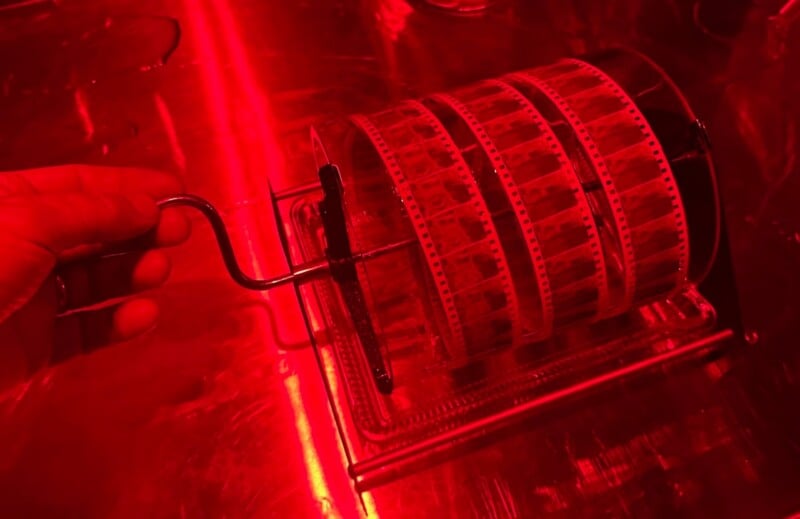
The advantage of working with film that’s not sensitive to red light is that Mark and France can work with the stock under red light. That means the husband and wife team can actually show their process, something they’re taking full advantage of by making a documentary about their project.
“In our case, we can show everybody every step of every operation, which you can’t see with modern film,” Mark says.
Mark and France have set up a GoFundMe so that a videographer and audio guy can fly with the couple to Leica’s headquarters in Wetzlar, Germany, where they will present not only their MO-1925 film that’s similar to one Barnack shot 100 years ago, but Mark — a man with a talent for procuring pieces of photographic history and film machinery — will also bring a unique roll of film shot by Barnack himself in 1914.
“It’s one of the oldest 35mm films in existence,” Mark says, who first got the film so he could compare it to the stock he and France are making. “We can prove it’s Kodak film. We are making the same look emulsion that he used, and when we go to Wetzlar, one of the things we’re going to do is donate that roll of film to the Leica Museum. It’s a big deal.”
Mark adds that he and France will make “not one dime” from the documentary; the money is purely for filming in Wetzlar and Rochester. “I’m sorry I didn’t include some silver nitrate in the budget,” he jokes.
You can find Mark and France’s GoFundMe here. Their website is here.
Affiliate Disclosure PetaPixel articles may include affiliate links; we may earn a commission if you buy through one.