US Copyright Office Wants to Increase Cost to Register Photos by 55%
The US Copyright Office has proposed a substantial increase to the cost to register photos, citing rising costs and inflation. It argues the cost is still negligible, but critics say the Office is out of touch with reality.
In March, the Office issued a Notice of Proposed Rulemaking (NPRM) where it suggested substantial increases to its fees, including increases of more than 50% for group registration of photographs and approximately 268% for updates to news websites.
“The Office has determined that fees should be raised an average of 43% to account for increases in the cost of providing services. This reflects both historic inflation since the last fee study and anticipated inflation over the next three years,” the NPRM states. “The Office estimates that revenues generated by these proposed fees would be roughly $51 million per year over the next five years (compared to the current schedule’s projected $41 million per year), and would achieve approximately 53% projected cost recovery during the first year of implementation.”
Registration of both published and unpublished photos is set to increase to $85, up from $55 — that’s a 55% increase.
‘This works out to as little as $0.11 per photograph if the applicant submits the maximum number of photographs permitted.’
“The Office proposes more substantial fee increases for the group options to register photographic and non-photographic databases, and updates to news websites. Because these options primarily serve corporate applicants, we are allocating a greater portion of costs to these fees. Due to the relative inelasticity of the demand, the Office anticipates that the additional revenue from these fees can subsidize group registrations used primarily by individuals, for which greater cost recovery is impracticable,” the Office argues.
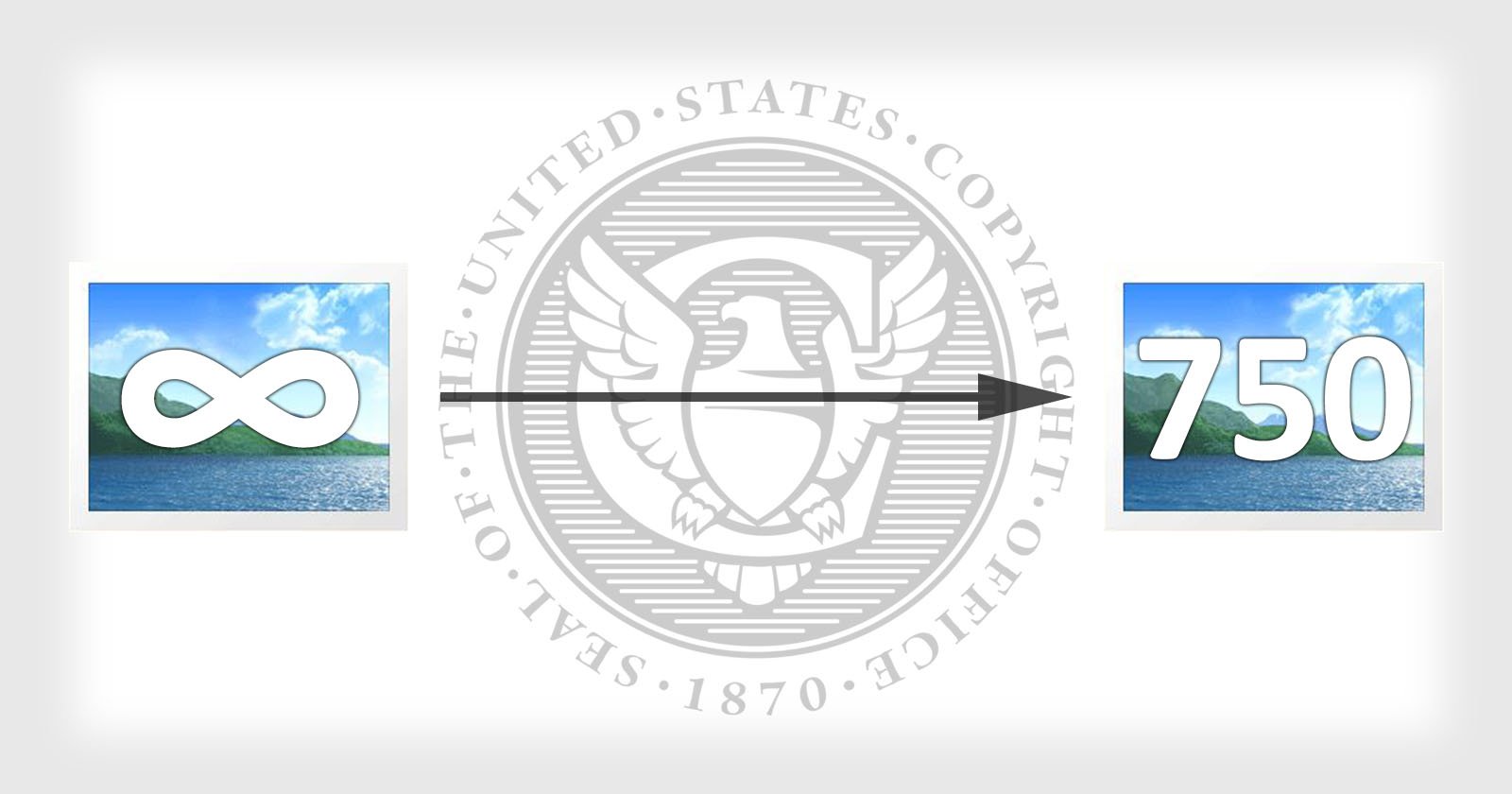
“Photographers typically produce a large number of works 71 and have cited cost as an obstacle to registering them. In recognition of these challenges, the group registration options for photographers are currently heavily subsidized to result in a fee as little as $0.07 per photograph if the applicant registers the maximum number of photographs (i.e., 750). The Office proposes raising the fee for these services from $55 to $85, which would be the same as the proposed fee for registering one work with the Standard Application. This works out to as little as $0.11 per photograph if the applicant submits the maximum number of photographs permitted and is only slightly above the historical and projected inflation rate. These fees would achieve greater cost recovery while maintaining low levels on a per-work basis.”
The Office’s rationale sounds well-reasoned, but the National Press Photographers Association (NPPA), argues this is too much of a burden to place on photographers. Mickey Osterreicher, General Counsel for the NPPA, and Alicia Calzada, Deputy General Counsel for the NPPA, have submitted comments to The Copyright Office arguing their case.
“The NPPA urges the Copyright Office to delay any increase in registration costs for group registration of photographs until modernization of the registration process is complete and the Office has had time to update its economic assessment based on the true costs of registration in light of modernization, which, unbelievably, is still not complete eight years after the last fee increase proposal,” the NPPA argues.
‘The proposed fee increases are once again based on faulty analytical assumptions and do not account for the promised efficiency gains from modernization that photographers have been waiting for over a decade.’
“While NPPA recognizes that periodic fee adjustments may be appropriate under 17 U.S.C. § 708, the proposed increases as currently structured are neither fair nor equitable. They also reflect a continuation of analytical approaches that NPPA and others challenged in prior fee proceedings nearly a decade ago. The Office has not meaningfully addressed those concerns in the years since, or here.”
The NPPA argues that photographers have already indicated that the current cost of registration is already a significant deterrent and these increased fees are coming when participation in the registration system is already under strain.
“In a survey conducted by the Copyright Alliance last month (“CA Survey”), of over five hundred (500) creators of all types, forty-four percent (44%) of respondents reported that they have not filed a copyright registration application with the U.S. Copyright Office within the last five (5) years. The number one reason provided for not registering remains that “it’s too expensive.” More photographers than any other professional category participated in the Copyright Alliance survey,” the NPPA cites.
“The proposed fifty-five percent (55%) increase for group registration of photographs (both published and unpublished) raises significant concerns for NPPA members.”
As noted above, the Office argues that if a photographer were to submit the maximum number of images in a standard application, that would work out to just $0.11 per photo. But the NPPA argues this is a flawed way of looking at it.
“The Office again relies on a cost-per-work framework to justify these increases. NPPA and others have explained why this framework is misleading as applied to photographers, and those concerns remain unaddressed,” it says.
‘The number one reason provided for not registering remains that it’s too expensive.’
“Because it is impossible to predict which images may later be infringed or acquire value, photographers register works in bulk to preserve potential remedies for a small subset of images. The cost of registration is therefore effectively borne for the benefit of only a limited number of works. Dividing the fee across all works in a group obscures this reality and understates the economic burden on creators. This repeated approach by the Office creates a false sense of value that is divorced from reality. Unless a specific image is under a specific threat, photographers typically either register their work as policy or don’t. They do this by integrating registration into their workflow or not. As a result, the decision is influenced not by the per-image cost, but by the annual cost and impact on their budget.”
The NPPA is urging the Office to reconsider these price increases and engage with photographers directly to better understand how they actually behave in the real world, not just on paper.
“The proposed fee increases are once again based on faulty analytical assumptions and do not account for the promised efficiency gains from modernization that photographers have been waiting for over a decade. Theories that assume value on a per-image basis are not grounded in the realities of high-volume creators and will predictably reduce participation in the registration system,” it concludes.
“For visual journalists, copyright registration is a critical safeguard that supports independent newsgathering and the creation of an unfiltered visual record of events of public concern. Policies that discourage registration of such work undermine both economic sustainability and public accountability.”
The NPPA’s full letter to the Copyright Office can be read here.
Image creditsElements of header photo licensed via Depositphotos.com.
Affiliate Disclosure PetaPixel articles may include affiliate links; we may earn a commission if you buy through one.