Photographer Makes Pinhole Camera Out of Chinese Roast Duck
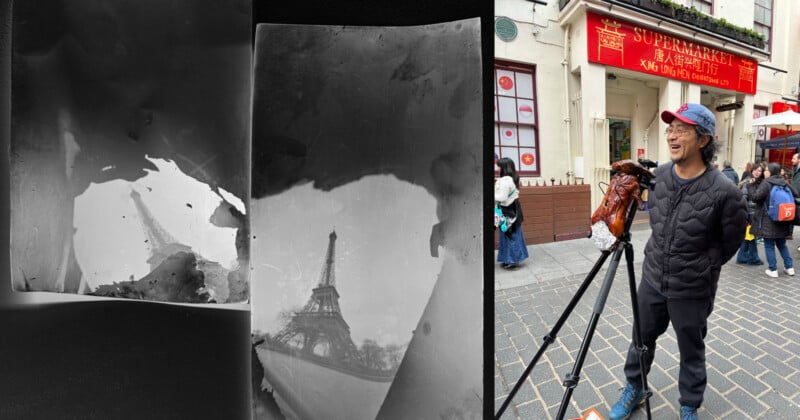
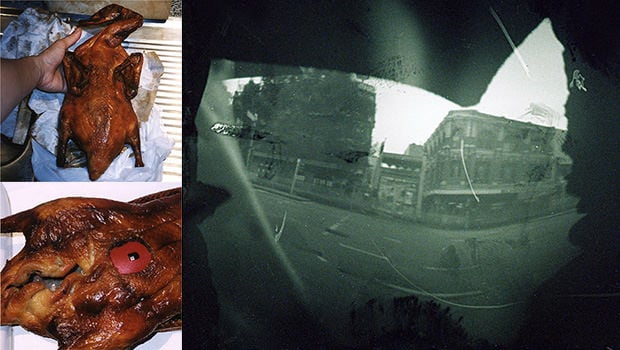
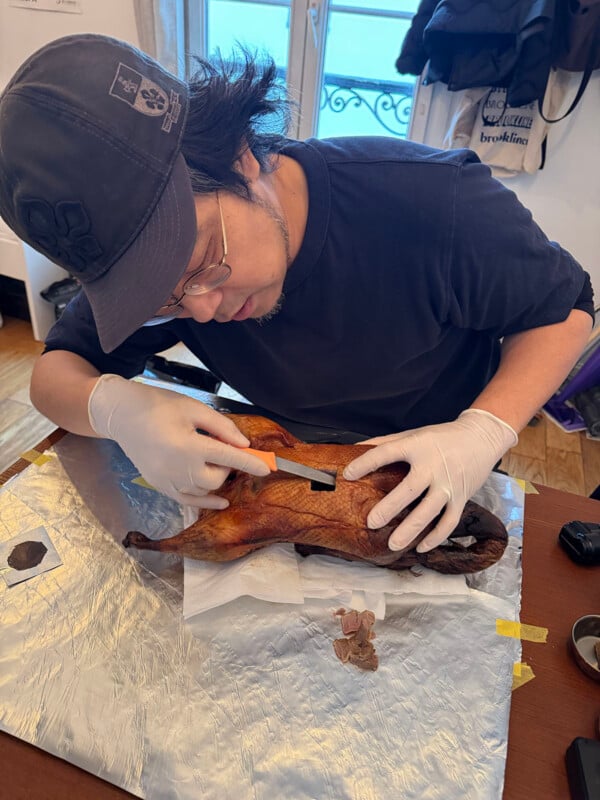
You can make a pinhole camera out of just about anything — as an Italian photographer recently proved by building one from pasta. Continuing that playful nod to culinary heritage via the medium of photography, Martin Cheung has been creating images with a Chinese roast duck as his camera.
PetaPixel reported on Cheung’s Duckcam all the way back in 2011, now he has resurrected his idea and recently tried it out in Paris and in London.
Cheung grew up in Hong Kong before moving to Melbourne when he was 15-years-old. When he arrived in Australia, he says he felt “weird” because he became aware that he was viewed by others as a Chinese person. “Growing up in Hong Kong has always made me feel like a world citizen,” he tells PetaPixel.
When he was 18, he was working in a kitchen in Melbourne’s Chinatown while studying photography. It was there that he had an idea to explore his identity through his studies.
“Roast duck is a symbol of Chinese cooking, so I wanted to see how the duck itself saw Chinatown,” he says. “Suckling pig can be made into a camera, too, but it’s hard to find a good one. It’s more feasible to get a duck. And its skin color is more appropriate for making a pinhole camera, as the reddish color helps prevent light leaks.”
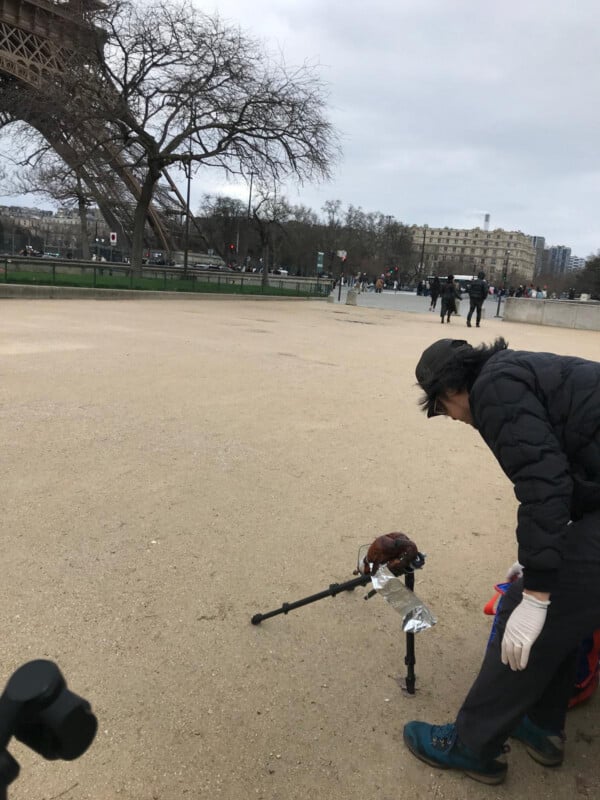
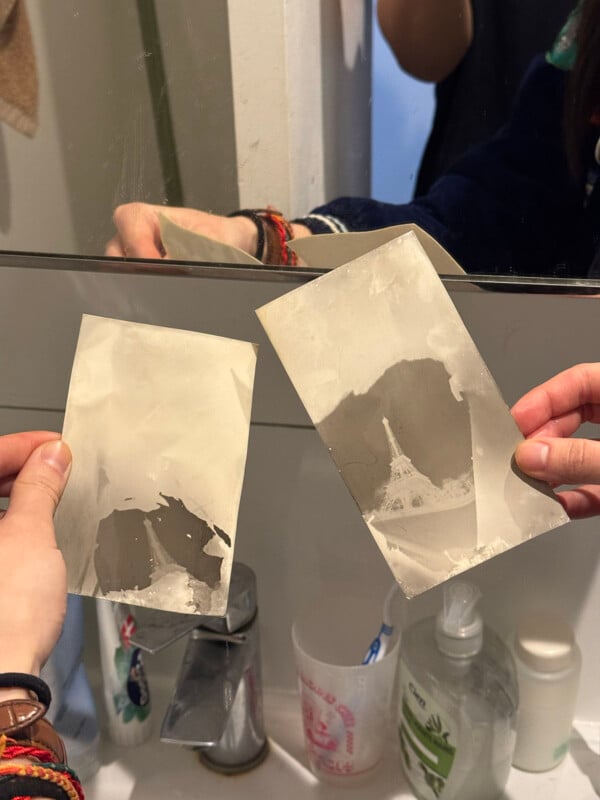
Cheung’s roast duck camera, unsurprisingly, created some intrigue. “I recall under the Eiffel Tower, it was Valentine’s Day and it was freezing,” he says. “There were a few groups of people who came up and looked at me with confused smiling faces, but without any further conversation.”
If Parisians were only mildly intrigued, Cheung says it was different in London’s Chinatown. “It was a Sunday, and there was a lion dance on the sixth day of Lunar Chinese New Year; the crowd was much busier and more interactive.”
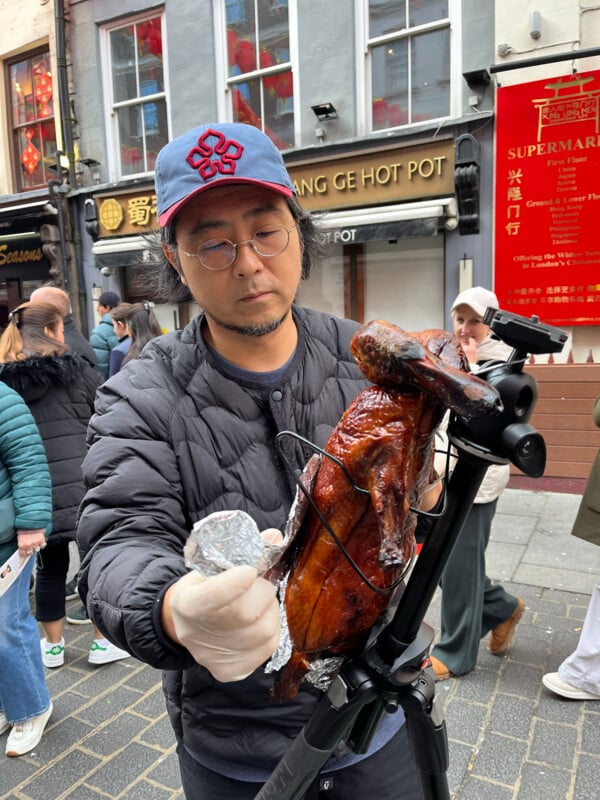
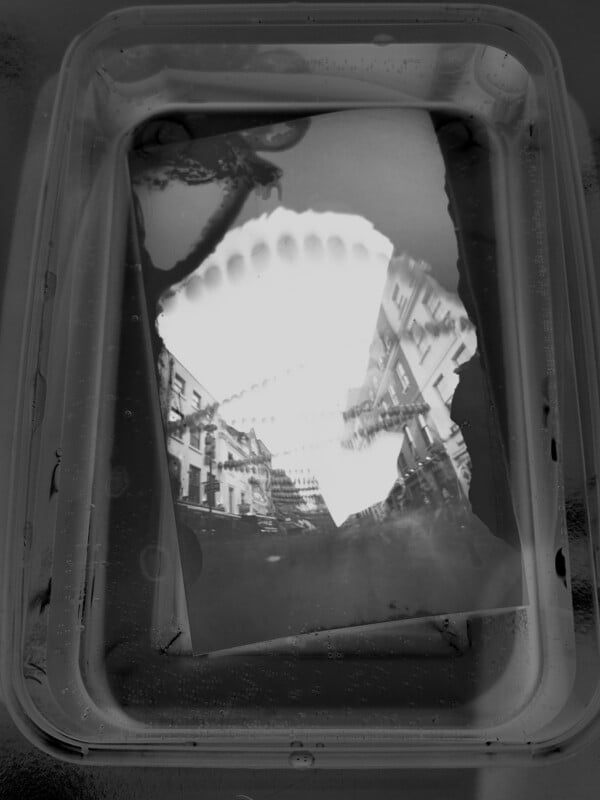
The photographer says that during the four-minute exposure, almost every other person stopped to take a look at what he was doing and asked him about it. “I assume they came to see the lion dance; they didn’t expect to see Duckcam,” he adds.
Cheung says that while he felt embarrassed during the exposure while among a busy crowd, he is learning to be less shy. “I quite believe that most people get to know the surface of a culture through food,” he says. “I will continue making Duckcam while I travel, so next time when you see a person with a roasted duck on a tripod, please say hello to me.”
More of Cheung’s work can be found on his Instagram.
Image credits: Photographs by Martin Cheung