Sony a7 V vs a7 IV: The 15 Biggest Improvements
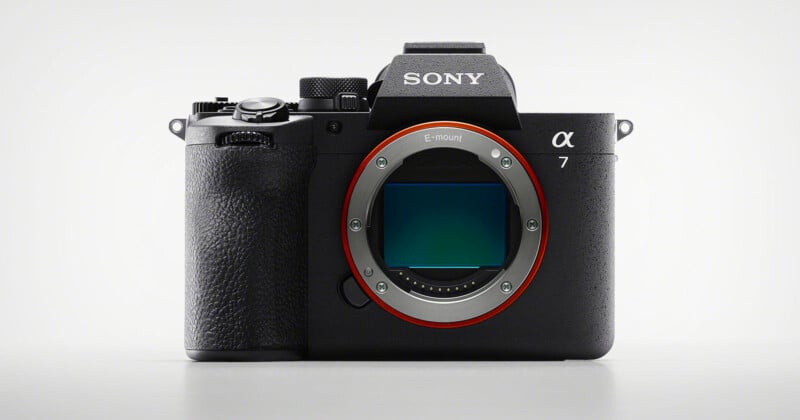
The brand-new Sony a7 V ushers in many improvements, ranging from a new image sensor and a first-of-its-kind processor to better autofocus and faster continuous shooting. Let’s take a closer look at the most significant changes between the a7 IV and the new a7 V.
New Partially Stacked 33MP Image Sensor
The Sony a7 V has the same megapixel count as 2021’s a7 IV, but it features a new image sensor. The new 33-megapixel chip employs a partially stacked design, which is a first for a Sony Alpha mirrorless camera.

This new image sensor is significantly faster and more performant than the a7 IV’s unstacked sensor, which we will discuss in greater detail in the next section on speed and performance. The new 33MP chip also promises improved imaging performance compared to the a7 IV. Sony promises up to 16 stops of dynamic range when using the mechanical shutter, which is a stop better than the a7 IV.
Speaking of improved image quality, the a7 V now offers Pixel Shift Multi Shooting, Noise Reduction Shooting, and HDR compositing modes, none of which are available in the a7 IV. By combining multiple RAW images, photographers can achieve more resolution, up to 199-megapixel files, and cleaner pictures shot at high ISO. These modes require Sony desktop software.


The move to a faster, partially stacked sensor also has a big benefit when it comes to rolling shutter. The a7 V’s rolling shutter is now around 15ms, down from nearly 70ms on the a7 IV. This means that the camera’s electronic shutter is more useful than before, delivering less distortion when shooting fast-moving subjects, which is excellent, because the a7 V can shoot at much faster rates now.
33MP RAW Photos at 30 Frames Per Second
The Sony a7 V and its new, faster partially stacked image sensor can shoot at up to 30 frames per second with full AF/AE tracking. This is a significant improvement over the a7 IV, which topped out at 10 frames per second, whether using its mechanical or electronic shutter. The a7 V still shoots at 10 fps when using its mechanical shutter, by the way.

Although the a7 V features the same EVF as its predecessor, a 3.69MP OLED EVF with 0.78x magnification, its faster sensor and improved processor mean the a7 V offers blackout-free shooting, even at 30 frames per second. The a7 IV, on the other hand, had blackout while shooting at 10 fps.

Speaking of the new and improved processor, the a7 V is the first Sony Alpha camera to feature the Bionz XR2 processor. This new processor is not only faster and more efficient than the prior-generation Bionz XR, but it is Sony’s first processor to include integrated AI processing rather than relying on a separate dedicated AI processing unit that debuted in the Sony a7R V in 2022, one year after the a7 IV’s release.
AI Improves Autofocus and White Balance
As mentioned, the a7R V was Sony’s first camera to include a dedicated AI processing unit, a feature that subsequent Sony models adopted. The a7 IV, arriving a year before the a7R V, lacked many of Sony’s AI features that have become ubiquitous, including robust AI-powered subject detection. The a7 V now has these, including subject tracking for people, animals, birds, insects, and various vehicles. The camera also includes predictive technology to help track people when they are partially obscured and estimate poses. The a7 V’s autofocus, as a result, promises to be significantly faster and more performant than the a7 IV’s. By the way, the a7 V also includes an automatic subject detection mode, so users do not need to select their desired subject manually.


The improvements don’t stop there, though, as the built-in AI in the new Bionz XR2 processor also impacts automatic white balance performance. Automatic white balance, or AWB, is often taken for granted in cameras but is actually a very sophisticated, complex system. In the case of the a7 V, the camera promises improved color accuracy, especially in challenging situations with memory colors such as skin tones, blue skies, and green foliage.
The Sony a7 V Rediscovers the a7 Series’ Hybrid Splendor
It is a fair assessment that the Sony a7 IV, in pursuit of more megapixels, lost some of the hybrid prowess of its predecessor, the a7 III. The Sony a7 V course-corrects quite a bit thanks to its new, faster, partially stacked sensor. As mentioned above, the sensor’s faster readout improves video performance in numerous ways.

Beyond reduced rolling shutter, the a7 V also promises improved video features and performance compared to the a7 IV. The a7 IV’s full-width 4K video topped out at 30p, while the a7 V ups the game and offers full-width 4Kp60 video. The a7 IV’s APS-C crop still exists on the a7 V, but only at 120p and faster frame rates.
The a7 V’s video features may not keep pace with all the competitors, but they are significantly improved compared to the a7 IV. Beyond full-width oversampled 4K video at 60p, the a7 V’s autofocus performance is improved, it offers Sony’s more aggressive stabilization technology for smoother handheld shooting, and it supports Custom LUTs and Auto Framing.

The a7 V may not have a built-in fan, but its thermal performance remains impressive nonetheless, despite the faster sensor readout and better video recording features. In PetaPixel‘s testing, there were no thermal issues when recording 4Kp60 All-I at 600Mbps to a CFexpress Type A card. The camera’s battery died before any overheating warning could have appeared.
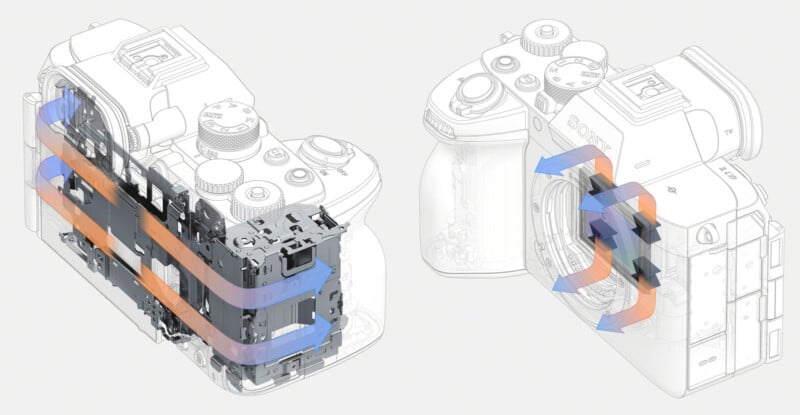
Now, the a7 V still shares some video weaknesses with its predecessor. Like the a7 IV, the a7 V does not record internal RAW video, nor does it have Open Gate, both features offered by the Canon EOS R6 III and the Panasonic S1 II. This is an area where some users would rightfully have hoped the a7 V would improve upon the a7 IV.
Nonetheless, the a7 V is a significantly more capable, well-rounded video camera than the a7 IV. PetaPixel‘s Jordan Drake argues that the a7 V is one of the best 4K video cameras on the market, which is, in many cases, more than enough for most hybrid creators.
The Sony a7 V Is a More Usable Camera Across the Board
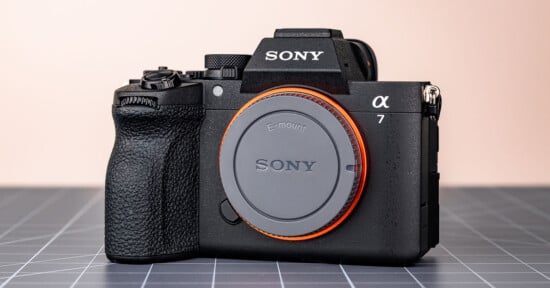
The Sony a7 V looks an awful lot like the a7 IV, which is not necessarily a bad thing. However, there is a bit more to it than meets the eye. The a7 V borrows the revised front grip shape from the a7R V, making the camera more comfortable to hold and use.
The a7 V also has an improved EVF experience, even though the 3.68-million-dot EVF itself is the same. Thanks to the faster sensor and improved processing power, the a7 V delivers a fully blackout-free EVF experience. It would have been nice if the EVF itself were sharper than before, but there’s no doubt that the EVF experience is improved.

The a7 V also has a new screen, borrowed from the a7R V. The 3.2-inch screen has 2.09 million dots and four-axis articulation. It also supports DCI-P3 wide gamut color, which is a nice touch. The Sony a7 IV, on the other hand, sports a 3.0-inch screen with just 1.04 million dots. It’s a meaningful step up.

Although less important to most users than a blackout-free EVF and bigger, sharper screen, the a7 V also sports a pair of USB-C ports, up from one on the a7 IV. This means the a7 V can deliver data while charging over USB, which may be important in specific workflows.
The new processor, yet again, impacts another aspect of the a7 V’s overall performance: battery life. The a7 V uses the same NP-FZ100 battery as its predecessor, but thanks to improved efficiency, the a7 V promises significantly better battery life. When using the EVF, the a7 V promises 630 shots, up from 520. When using the LCD, the a7 V should deliver 750 shots, up from 580.



The Sony a7 V Is Better Than the a7 IV In Myriad Ways
The Sony a7 V is better than its predecessor in nearly every way. While there are some similarities, including the total megapixel count and the target audience, the a7 V’s new partially stacked image sensor and faster processor drive meaningful improvements across the board.
The Sony a7 V promises superior image quality, much better continuous shooting performance, reduced rolling shutter, AI-powered autofocus, better video, longer battery life, more reliable image stabilization, and an improved user experience.
Although the a7 V doesn’t do everything better than its competitors, it is Sony’s best mid-range offering in a long time, and photographers with older a7 cameras, even the a7 IV, have good reason to consider upgrading.
Image credits: Sony