US Will Soon Begin Photographing All Non-Americans When They Enter and Exit Country
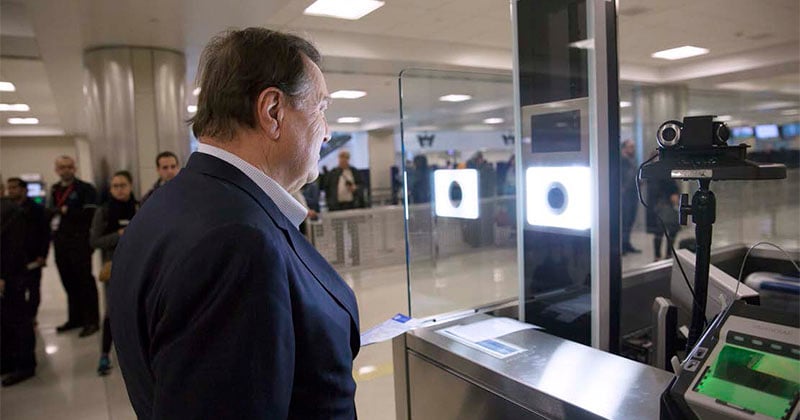
As part of its expanding crackdown on immigration, the United States government says it will soon begin photographing every non-citizen, including all legal ones with green cards and visas, as they enter and leave the U.S. The government claims that improved facial recognition and more photos will prevent immigration violations and catch criminals.
As Forbes reports, the Department of Homeland Security (DHS) will require customs and border patrol agents to collect photographic and other biometric data from all non-citizens that enter and exit the U.S., per a document published on Friday, October 27. The rules outlined in the document go into effect 60 days after publication, so December 26, 2025, in this case. This is part of the planned creation of a robust, comprehensive data collection network to track immigrants, legal and otherwise.
The new rules build upon President Donald Trump’s “Protecting the American People Against Invasion” executive order issued on January 20, 2025. This order claimed that “millions of illegal aliens crossed our borders or were permitted to fly directly into the United States on commercial flights and allowed to settle in American communities, in violation of longstanding Federal laws.”
The order continued that “many of these aliens” pose “significant threats to national security and public safety, committing vile and heinous acts against innocent Americans.” While others were committing “espionage, economic espionage, and preparations for terror-related activities.”
As part of broader efforts to crack down on alleged national security threats posed by “aliens unlawfully within the United States,” the latest rule change focuses on those who reside legally in the U.S., including those with green cards and visas. These legal residents were included in the President’s January order, which required that legal immigrants at least 14 years old register with DHS and begin carrying proof of their legal status at all times.
U.S. Customs and Border Protection (CBP) will soon begin using enhanced photographic and facial recognition technology to better track everyone who enters and leaves the U.S., including those who overstay their legal documents and those who were inside the U.S. without being legally admitted. The new federal ruling also claims that facial recognition technology can adequately identify “impostors” who are utilizing other people’s travel credentials. Further, more biometric data will be captured at the border, helping CBP “reconcile any errors or incomplete data in a traveler’s biographic data.”
The CBP says that taking photographs of all aliens upon entry or departure will “improve security.”
For U.S. citizens concerned about border agents taking their photos and collecting biometric data, the new federal document claims CBP “will not retain photographs of U.S. citizens collected as part of CBP’s biometric verification program in CBP databases once CBP verifies that a traveler is a U.S. citizen.” To that end, CBP says that photos collected of U.S. citizens will be “discarded within 12 hours of verification of the individual’s identity and citizenship.”
For citizens, these photographic programs, at least as they currently exist, are opt-out. However, this choice can seem “illusory,” Cody Venzke, senior policy counsel for the American Civil Liberties Union (ACLU) tells Bloomberg Law.
“This technology is unreliable, disproportionately harms people of color, and serves as the foundation for a perpetual surveillance state,” Venzke says.
When assessing the costs and benefits of this expanded photography program at borders, the CBP says that while some people may “perceive their photographs taken for facial comparison as a loss of privacy,” the CBP cannot quantify these costs. Facial recognition will purportedly save about 1.25 hours per vessel arrival, in addition to “improving national and homeland security efforts.”
“Most travelers are familiar with cameras and do not need to learn how to have a photograph taken,” the federal document explains, meaning that DHS doesn’t anticipate any delays or difficulties with travelers not understanding how a camera works.
There are already various points of entry in the U.S. that require photos of people entering and leaving, though deployment is not yet particularly widespread and is not always explicitly compulsory for immigrants; both factors will soon change. Further, current regulations don’t require photographs to be taken of those under 14 or over 79 years old, but these limitations will be removed.
Even though these new rules go into effect on December 26, the Department of Homeland Security thinks it could still take three to five years for the necessary photographic and biometric data collection infrastructure to be installed at all relevant locations, per Newsweek.
Affiliate Disclosure PetaPixel articles may include affiliate links; we may earn a commission if you buy through one.


