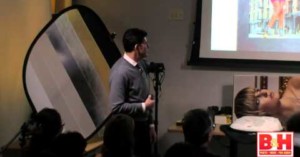
A Basic Introduction to Studio Lighting
Want to learn the basics of studio lighting? Here's a two-hour-long lecture with photographer Joey Quintero in which he gives an overview of the basic principles, techniques, and tools.
Want to learn the basics of studio lighting? Here's a two-hour-long lecture with photographer Joey Quintero in which he gives an overview of the basic principles, techniques, and tools.
Caleb Barrett wanted a simple ring light to play around with, so he built himself one for just $20 using built himself a makeshift ring light using eight cheap compact fluorescent light bulbs. The lights are pretty dim and have a horrible color rendering index, but are fun to play around with if you're just looking for something to experiment with.
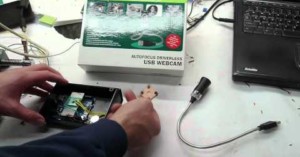
Major camera makers including Olympus, Samsung and Sony have all filed patents in recent days for liquid lens technology. Unlike traditional glass lenses, liquid lenses don't have any moving parts. Instead, liquid is used to focus light, and different voltages are applied to the liquid to change the shape of the liquid, thereby controlling the image. In the video above, techie Ben Krasnow introduces the technology, and then shows off a device he made by ripping a liquid lens out of a USB webcam.
We now have an official page on Google+! Add us to your circles to receive our awesome photography-related content (and possibly some exclusive posts) in your stream!
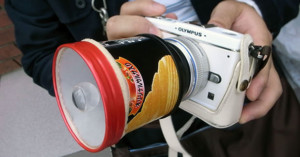
John Sypal of Tokyo Camera Style spotted a photographer on the streets of Tokyo using this homemade lens created out of a potato chip tube. It captures photos that show the world in a glass-like sphere, with everything else blurred.
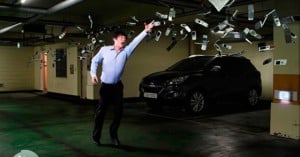
Award winning Korean photo studio Indylab shot this award winning advertisement without the aid of computer generated imagery. Instead, they manually tossed and photographed phones one at a time, and then composited all the images afterward.
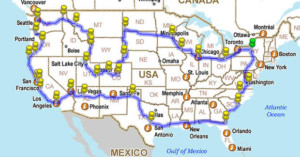
Brian DeFrees spent two months between August and October of this year driving a giant loop around the United States on a 12,225-mile-long road trip. He captured a photo every 5 seconds using an intervalometer with his Canon 60D while in his car, and by creating individual time-lapse videos when parked or exploring an area. The result is this epic 5-minute long time-lapse.