[A]uto focus is king for me when it comes to picking out a camera body to conduct my business with.

[A]uto focus is king for me when it comes to picking out a camera body to conduct my business with.
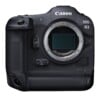
If the mirrorless camera market were a poker game, it’s safe to say that Canon’s EOS R3 is the company’s ace-in-the-hole. The full-frame camera is the 1-DX of the full-frame mirrorless R family —a rugged, fast, professional camera.
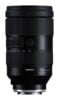
This is without a doubt the best lens on the market for wedding photographers. From someone who was used to use his primes and constantly change them in and out, this made my day so much easier and the results were quite impressive.
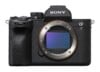
The new Alpha 7 IV continues the tradition, mixing in new achievements in design and autofocusing alongside advanced technologies originally debuted on other Alpha models.
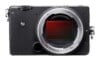
Sigma has made a serious effort to court filmmakers with its fp series and the fp L is no exception.
The Z fc proved to be as capable (if not more so) on the video front as it was with still images.
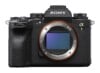
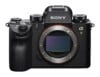
Every once in a while, though, there are cameras where these evolutionary steps look more like a leap. Sony’s Alpha 1 is a good example.
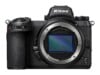
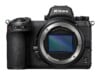
The follow-up to 2018’s Z 7, the Z 7II isn’t a wholesale reinvention, but does include some notable improvements, such as a second memory card slot and a second image processor.
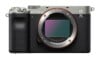
Image Engineering found that the Alpha 7C can resolve 109 percent of its sensor’s theoretical maximum when shooting video at low ISO.
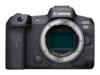
Anyone wondering if Canon was fully committed to developing mirrorless technology for professional users could put those fears to bed when Canon finally pulled back the curtain on the EOS R5 in July 2020.
Nikon’s follow-up to its first-ever full-frame mirrorless, the Z 6II is proof positive that camera makers do indeed listen to their customers.
As for video, the S5 is a powerhouse in the specs department.
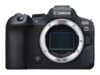
The EOS R is a solid camera with good performance and despite some quirks, we think that it will appeal to a wide range of pro photographers, particularly in the portrait and wedding fields.
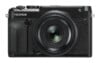
The GFX 50R delivers a maximum of 10.8 stops of dynamic range (at ISO 100), which is a strong result.
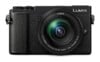
The GX9 is definitely designed for still shooters for whom video is a secondary consideration. Although the GX9’s 4K video is quite good, videographers will miss not having microphone and headphone jacks, as well as myriad other video features found on, say, the pricier GH5.
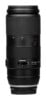
The Tamron 100-400mm lens is a great value for the money, and given Tamron’s excellent image stabilization, the lens should perform well for wedding and portrait photographers—even if you have to shoot at f/6.3.
Given the ever-growing line of Sony and third-party FE lenses and adapters, most photographers—particularly wedding and portrait shooters—will find their favorite focal lengths for the a7R III.
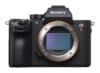
The a7R Mark III produces images with excellent resolution.
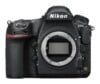
Despite the somewhat slow autofocus for video, the Nikon D850 is really an incredible piece of technology.
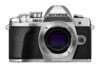
The E-M10 Mark III is a highly capable, entry-level mirrorless camera.
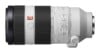
With its compact size, speed, excellent image quality and versatility, this lens is perfect for wedding photographers who want the extra focal length without overloading their gear bags. It’s a great portrait lens, too, and it focuses as close as 3.22 feet for those detail shots.
The bottom line is that the a9 is not just for sports shooters or wildlife photographers who need that burst of speed.
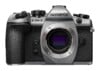
There’s more to a camera than sensor size, of course, and the EM-1 Mark II excels at most other parameters, blazing-fast performance and image quality being two of them.
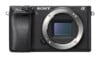
In many ways, the a6300 offers the responsiveness of a DSLR in a more compact body.