[T]he improvement over the past four years is there, but it's not huge.

[T]he improvement over the past four years is there, but it's not huge.
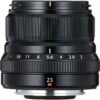
[M]y final word of this lens is I really like it.
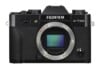
I don’t see why the X-T30 shouldn’t become as popular as its predecessor. You get excellent 4K video quality, better touch screen capabilities, an improved autofocus algorithm with better face and eye tracking, and fast continuous shooting speeds with no blackouts.
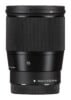
Nikon has placed a lot of emphasis on the superior optical quality of its new generation of lenses and the new Z mount, and as far as sharpness is concerned, I feel it lives up to the hype.
If you love super fast, sharp primes, the RF 50mm f/1.2 is the kind of lens that will make you go weak at the knees. Sharpness is exceptional wide open, the bokeh is sublime and the build quality is exactly what you’d expect from an L series lens.
Priced at approximately $450, the Sigma 16mm f/1.4 DC DN Contemporary is definitely a lens worth considering regardless of whether you use the Sony E or Micro Four Thirds system.
If I were still shooting video professionally, I would definitely put it at the top of my to-buy list.
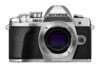
A beginner looking for his or her first camera will find lots of things to like about the E-M10 mark III. [...] However if you already have experience with OM-D or Pen cameras, the omission of useful features and some manual controls may prove a disappointment.
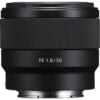
I have to say that I was pleasantly surprised by the overall performance of the 50mm, especially in terms of its optical quality.
[T]he camera isn't a bad performer, but if you're looking for a good mid-range 4K camera, Panasonic and Sony have much more to offer.
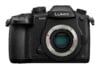
The GH5 is a camera I really enjoyed using and reviewing. It’s one of the best, if not the best mirrorless when it comes to ease of use.
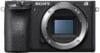
The Sony a6500 is a great camera if we consider the image quality, autofocus performance and video capabilities that include professional 4K quality and excellent slow motion capabilities.
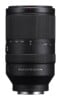
The Sony 70-300mm G lens is a very good option, and at the time of writing, the only one really.
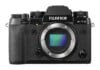
If we dig deep, we can certainly find a few flaws (after all, no camera is perfect) but it is hard not to praise the many qualities of the Fujifilm X-T2.
So if you don’t need the 1.4 aperture, you will probably be quite satisfied with the f/2 version and will save some money in the process, which is always a nice thing.
I think I’ve run out of things to say for now. Not bad for one day of testing!
It’s a great product to own, not just for photographers on a budget but any user who owns an APS-C mirrorless camera.
I could easily see using this camera for street, travel and reportage if you are a “one camera, one lens” type of photographer.
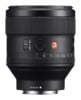
Let’s give Sony credit: the brand has created an excellent portrait lens. There is little to complain about concerning optical quality, if not the lower contrast at the fastest aperture (which is not necessarily a negative thing).
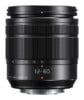
For a kit zoom, I believe the 12-60mm performs admirably well at nearly all apertures and focal lengths and more than fulfils its role as an all-purpose lens for travel and everyday photography.
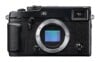
If I put aside the precision and professionalism required to test a camera and speak from the heart instead, I admit I am quite fond of the Fujifilm X-Pro2.
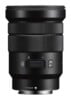
Not only is it sharp in the centre at the most important apertures, it also has a very versatile zoom range that suits anything from landscapes to sports, and even though its fastest aperture is only f/4, it is constant throughout the zoom range.
The Panasonic GX80 is one of the best deals on a micro four thirds cameras, or even a mirrorless camera that you can find today.
[I]s: the camera won’t cope with very fast subjects but it works fine for slow/medium subjects.