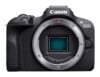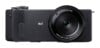
If you need real APS-C image quality in a truly pocketable camera, then this is it.

If you need real APS-C image quality in a truly pocketable camera, then this is it.
It's not exciting but it's smart.
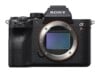
Most likely, most photographers would not make these same choices. However, the joy of seeing real increases in IQ sealed the deal for me. And, for me, the Sony A7r M4 is the camera for which I have waited almost 70 years!
It’s a highly competent tool for creating images that gives up almost nothing to any competitor, and while it doesn’t win every race, it places in the top three if not the very top in every category.
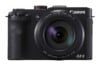
I bought one, and it now will be part of my travel kit when I anticipate needing a long lens on the road.
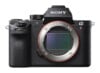
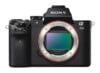
The early mistakes of dreadful user interface and awkward controls is now mostly past, and instead the A7 MKII has emerged as one of the most usable mirrorless cameras on the market.
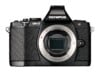
The bottom line on the Olympus OM-D E-M5 (other than its convoluted name) is that it’s the best Micro Four Thirds cameras yet, and highly competitive with the current mirrorless segment market leader, the Sony NEX-7.
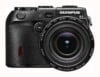
Given the functional superiority of the Sony, and the fact that there will be highly competitive cameras coming along soon from Nikon, Canon and Minolta, it’s hard to see how one can recommend the Olympus C-8080.
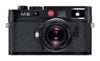
If you know and appreciate what an M Leica is about, you’ll find that the M8 fulfills its promise. If you can afford one, then run don’t walk to your local dealer.
[T]he combination of this sensor and lens to produce extremely sharp and contrasty images – as good as anything that I’ve seen from comparable cameras from other makers, and often for a lot more money.
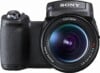
I am very ambivalent about the Sony R1. With its large and high resolution sensor, excellent lens, and first rate build quality for under US $1,000 it offers photographers a combination of features and abilities that in a DSLR would cost 2-3X as much to implement.
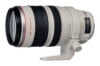
It’s big, it’s heavy and it’s expensive. All aspects of performance at the wide end of the lens’ focal range are modest, though it improves to quite decent levels at mid and long focal lengths.
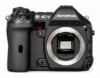
The Olympus E-1 is an excellent camera and the start of what promises to be a well designed system.
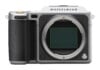
Thinking about my experience with this camera, I must compliment Hasselblad on excellent design and user experience. It was a pleasure to use, and except for some minor issues, the camera did a great job at delivering.
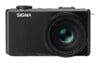
As with the DP2 Merrill, the DP3 Merrill is a little gem, with improved firmware.
[T]his is an interesting proof of concept camera that is lacking on many fronts. This is one camera that will not be in my camera bag and I really wanted it to be.
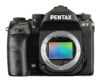
The K-1 is a fantastic camera body. A rugged field camera that will suit the requirements of many photographers, especially those interested in landscapes.
The Fujinon GF 500mm f5.6 R LM OIS WR represents more than just a new lens – it’s a proof of concept that medium format telephoto photography can be practical, portable, and powerful.
The 17-40mm f/1.8 DC Art represents the kind of bold engineering that keeps photography exciting. It gives APS-C shooters another reason to feel proud of their system choice.
The RX1R III is an impressive feat of engineering. Sony created the smallest 61-megapixel full-frame camera ever made.