[...] I was very happy with the lens and I think objectively there is really not much you can complain about.
[...] I was very happy with the lens and I think objectively there is really not much you can complain about.
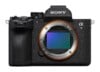
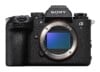
[...] I think the Sony a7 V is a really good upgrade from the A7 IV and it's an almost perfect allrounder.
If somebody would tell me, Fabian, you're only allowed to shoot Micro Four Thirds from now on, and you're only allowed to have one lens, not more, I would pretty sure I would pick this lens.
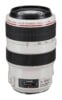
[I]f you prefer to have a more metal lens, then I would suggest to get the 70 to 300.
[I]t's an extremely flexible lens, and this is why it became my favorite lens.
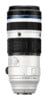
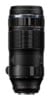
You don't want to spend too much money, you don't want to drag around a super heavy lens, then the new OM System M.Zuiko Digital ED 100-400mm f/5-6.3 IS II could be a very interesting choice.
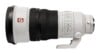
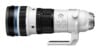
It's a bit hard to believe that this is actually a 300mm f/2.8 because it's just too light and too small, and that's a really good thing.
[O]verall it's a fantastic all-around flagship camera. Not an all-rounder that is affordable for everybody, but for a flagship camera, amazing.
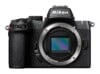
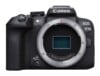
So if you're coming from a D500, D7500, or another DSLR camera and you want to have a crop camera and want to go mirrorless, is the Nikon Z50 II a good idea? I think for most of the people, yes.
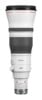
The Canon RF 600mm f/4 L IS USM lens is certainly a very impressive and excellent lens for wildlife photography and especially for bird photography if you're often chasing after some smaller and shyer birds because it also takes the teleconverters extremely well.
I'm very happy that I bought this lens. I also use it a lot for filming if I want to film myself outside or inside and I want to show a bit of the environment but still have the background not distracting.
I would have wished for some more impressive specs in some ways, so either a bit more megapixel, let's say 30 to 35.
I think it's a very interesting lens.
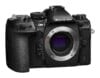
I think at the moment this is really the best micro four thirds camera that you can buy for wildlife photography.
I think at the moment this is really the best micro four thirds camera that you can buy for wildlife photography.
I think bang for the buck is really amazing here.
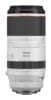
I think the Canon RF 100-500mm f/4.5-7.1 L IS USM is a very, very good all around lens if you want to do sometimes landscapes, you want to do some like amphibians, reptiles, some portrait of birds, also showed you more the environment, then for me it's a very good lens.
I think it's an amazing lens if I just want to walk around, not shooting in a city park, not shooting from a hide, not shooting at a feeder or something, but just here in this open area or a bit of foresty area, agricultural area.
So what are my conclusions? Well, if you want a rather lightweight combination but you still want to have a modern camera with professional features, I think the Panasonic Lumix G9 II is a very nice choice.
I think for people that just started into bird or wildlife photography in general or want to get a bit more serious, also shoot often a bit more shy subjects, I think this is an amazing lens.
I was just impressed of how much it could do for this price point, and was amazed how far entry-level full-frame cameras, or particularly this one, have come.
First of all, it's really an awesome lens. The weight is so nice, it handles amazingly, autofocus is good, image stabilizer is amazing, the image quality is good, I like the look of the picture, so yes, I really liked it.
[I] think that you get a lot of camera for the money that you pay. I think this the price value is one of the best or maybe the best full frame mirrorless cameras for animal and bird photography that you can get on the market for every manufacturer.
I think the Z9 is a really nice camera for wildlife and bird photography. However, I think the R5 provides the better value.