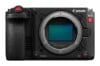
As I mentioned at the top, it's pretty darn close to perfect. The image quality is the best Canon has ever produced, and its excellent form factor makes it an incredibly versatile tool for all types of production.

As I mentioned at the top, it's pretty darn close to perfect. The image quality is the best Canon has ever produced, and its excellent form factor makes it an incredibly versatile tool for all types of production.
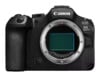
The EOS R6 Mark III is a great camera. It's easy to use.
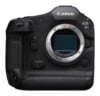
After eight months of intense field use, I can say with complete confidence that the Canon EOS R1 is the most capable and reliable camera I’ve ever used. It is also the most complicated in terms of customing the set up.
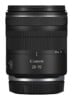
The Canon RF 28-70mm f/2.8 STM IS is a somewhat strange combination of qualities that you can find in professional and budget lenses. This doesn't mean that this concept doesn't work. If you can live with a few compromises, the lens can deliver great results.
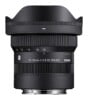
I would run and get a Sigma 10-18mm F2.8 DC DN. Yes, you will lose image stabilization, but you will gain quite a bit of light and a decent performance bump on the wide end.
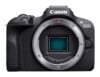
The EOS R100 is currently the cheapest way to buy into Canon's R-series mirrorless system, but for most users it's not going to be the best way to do so.
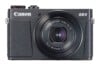
[T]he Canon PowerShot G9 X Mark II adds just enough new features (just) to make it worth considering as a truly take-anywhere pocket camera.
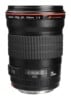
APS-C crop body users might find the 216mm equivalent a bit much for day-to-day use, and many do find their way to an 85mm lens (136mm equivalent). And like the 85mm lenses, the 135 f/2 L is a bokeh-machine, producing great images, seemingly, without me even trying.
[T]he great image quality, reasonable size and heft, strong autofocus performance, and amazing minimum focus means that there is very little that this lens cannot do.
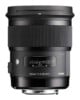
Sigma has done it again. Another fine lens which, while not quite “better” in every area than the Canon, certainly brings exciting quality and value at half the price.
Sigma has done it again. Another fine lens which, while not quite “better” in every area than the Canon, certainly brings exciting quality and value at half the price.
Canon finally made a pro camera that ditched all the irrational elements kept for years primarily so that the male pro photographer could have a camera that emphasized his own manliness.
The Sigma 35mm f/1.4 is the finest lens I’ve ever used from the company. It has impressed me more than many of Canon’s own primes.
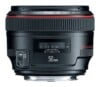
The optics are certainly worth the investment. Though, for the professional shooter who may bang their camera around and find themselves without a lot of choice as to where they’re positioned for the shot by way of contrast and control of flare; the 50mm f/1.2 delivers.
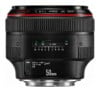
Without being contradictory it is easy to see why the Canon EF 50mm f/1.0L never sold much but also easy to see why people are desperate to acquire the rare copy that shows up on the used market.
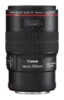
I don’t always advocate buying the more expensive piece over the lesser one – though I rarely regret it when I do – but I wouldn’t even consider the 100mm f/2.8 macro. Go straight for the 100mm f/2.8 L IS and experience lens perfection.
For the purpose of outdoor everyday photography, including a safari, this is a fabulous lens. With the current landscape of lens pricing, I don’t think it’s overpriced.
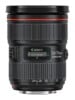
If you want the best 24-70 on the market and don’t mind paying for the privilege, you won’t be disappointed with the EF 24-70 f/2.8L II.
It’s not a bad lens, not at all, so if it interests you go for it: this is a lens for you there are far worse things in photography you can spend your money on.
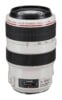
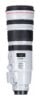
If the versatility of a zoom is what you need and f/4 doesn’t bother you (and for many of us, it really doesn’t), then the Canon 200-400 f/4 L IS USM Extender 1.4x is, in itself, a bargain.
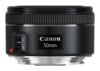
This is an excellent lens that sets a new benchmark for autofocusing 50mm lenses.
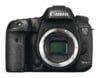
The Canon 7D mark II brings a lot to the table. Between the fantastic autofocus system, impressive build quality, video features and the improvements in image quality it is an incredible value.
The reality is that Canon has given us far more lens and charged us no more for it, making this lens officially one of the best bargains (if not the best) in DSLR photography.
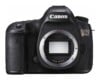
Bottom line: if you are familiar with Canon’s 5 series you will find the 5DsR both familiar and satisfying to use…just don’t expect a lot of revolutionary improvements. This isn’t so much an all-new model as it is a very big new engine in an existing model.