Special Feature
Saype Is a Humanist Land Artist Who Captures His Murals with a Drone
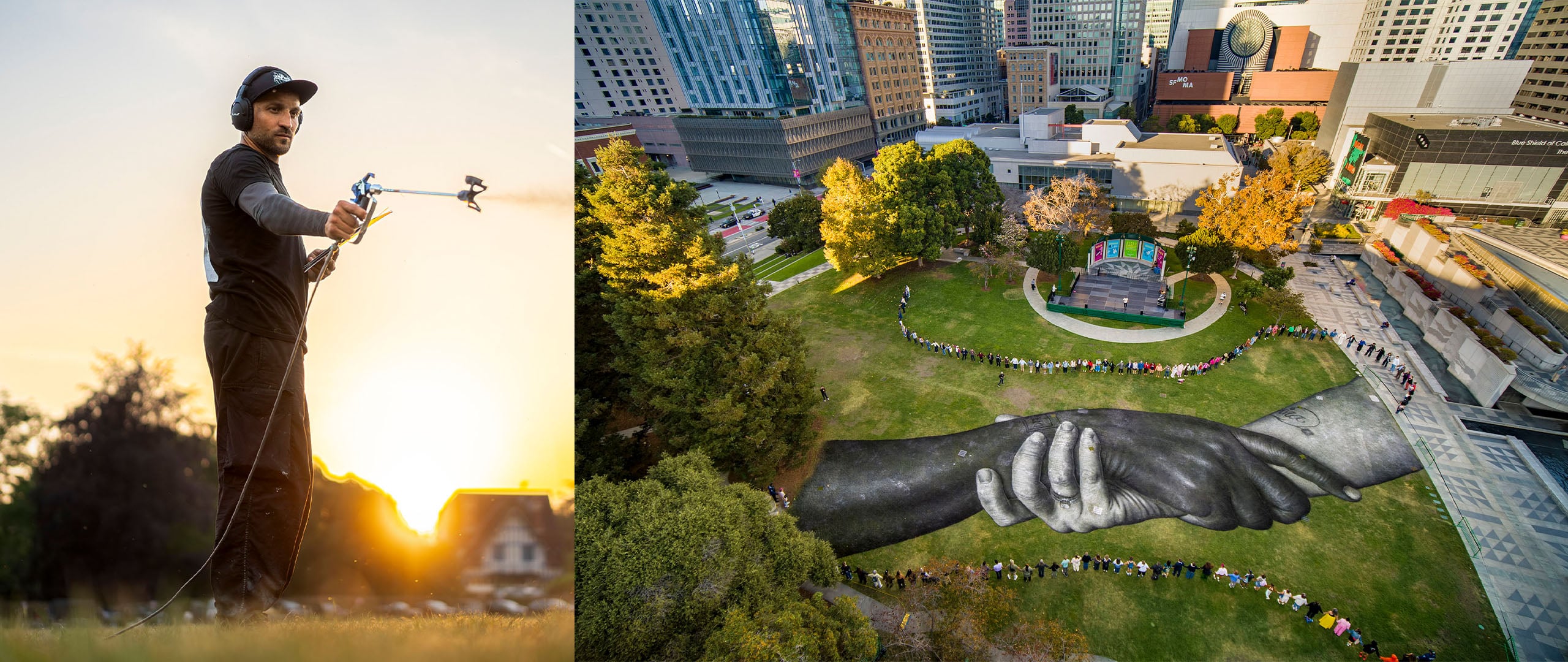
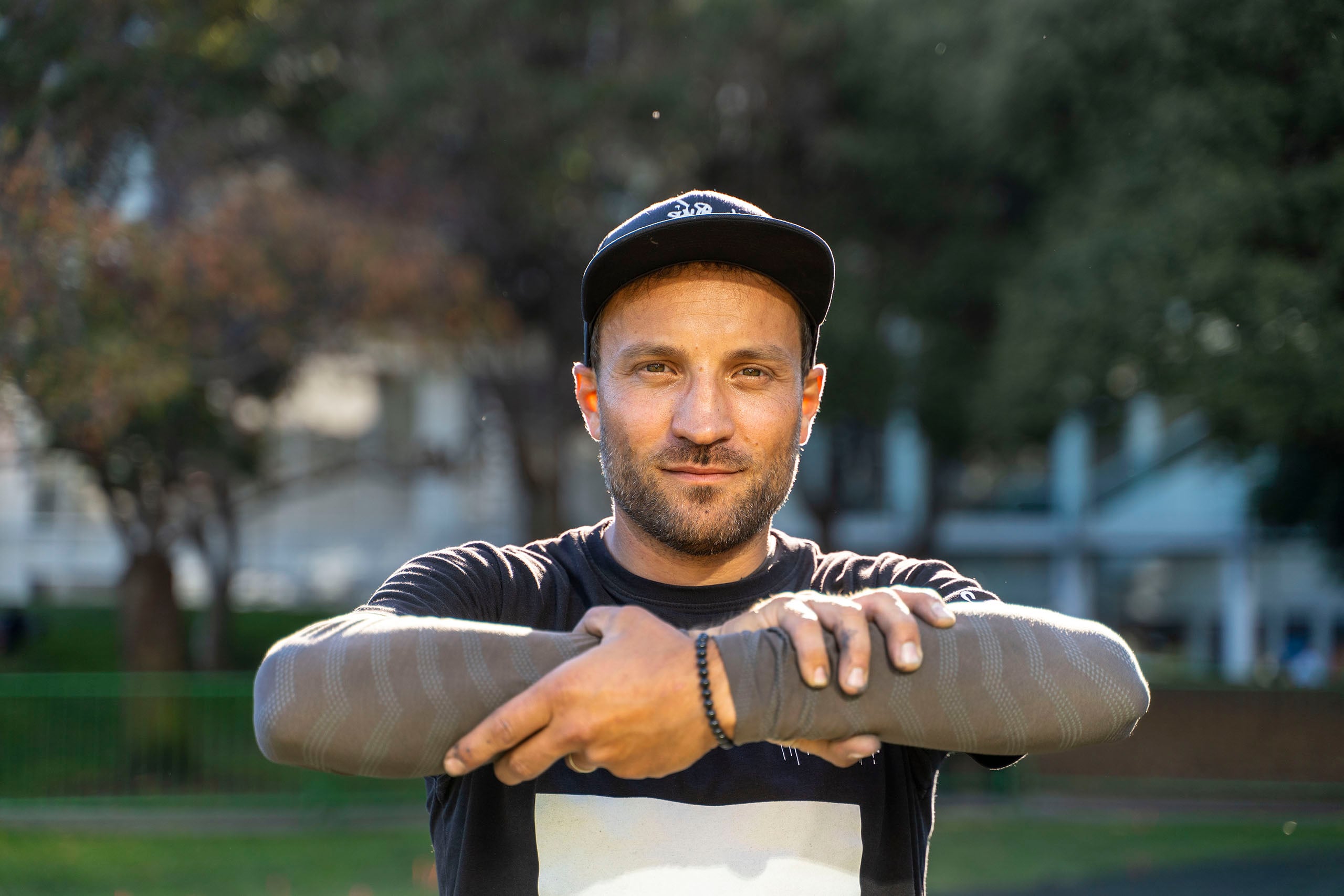
Grass, snow, sand, and laterite—these are the surfaces Saype (real name Guillaume Legros) has spent the last fifteen years exploring, creating monumental, ephemeral works of art around the world with his 100% biodegradable paint.
The concept behind this 37-year-old Franco-Swiss former nurse—now one of the most prominent figures in contemporary international land art—is unique. “In the history of art, I haven’t found anyone who has produced what I do. I’ve looked,” he insists with a laugh. “Of course, the Lascaux caves come to mind, but it’s not the same scale or the same logic.”
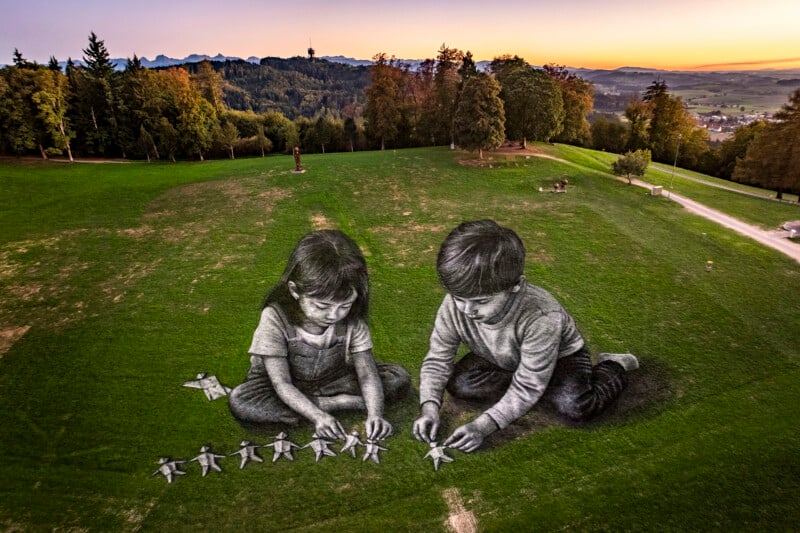
His site-specific murals, ranging from 1,000 to 18,000 square meters, are exposed to the elements, local erosion, and regrowing vegetation, conveying messages of social commitment that he carefully preserves through aerial drone photography. From the very beginning, Saype has made his goal clear: “to influence mindsets without harming nature.”
A Unique and Innovative Concept
His love for art began at age fourteen when he discovered street art and the paintings of Claude Monet and J.M.W. Turner. “It really resonated with me right away, and I started painting on canvas,” he explains. “When I was 18, I told my mom I wanted to be an artist. She replied, ‘No way, find a real job.’ In the end, it served me well to have responsibilities and lead a team as a nurse. I didn’t need to worry about making money or selling things to pursue art. That gave me greater creative freedom to do what I wanted.”
This nature enthusiast, who spent ten years studying environmental science and confronted mortality in his work as a nurse, soon asked himself the pivotal question: “What mark will I leave behind as a testament to my existence?” The turning point came in 2012, when he was 23. His approach is both intellectual and strategic. “I realized that if I want to make a living from my art and become an artist, I have to be well-known. And to achieve that, I have to invent something; otherwise, it becomes difficult to stand out from the crowd. That’s why I wanted to create my own biodegradable paint.”
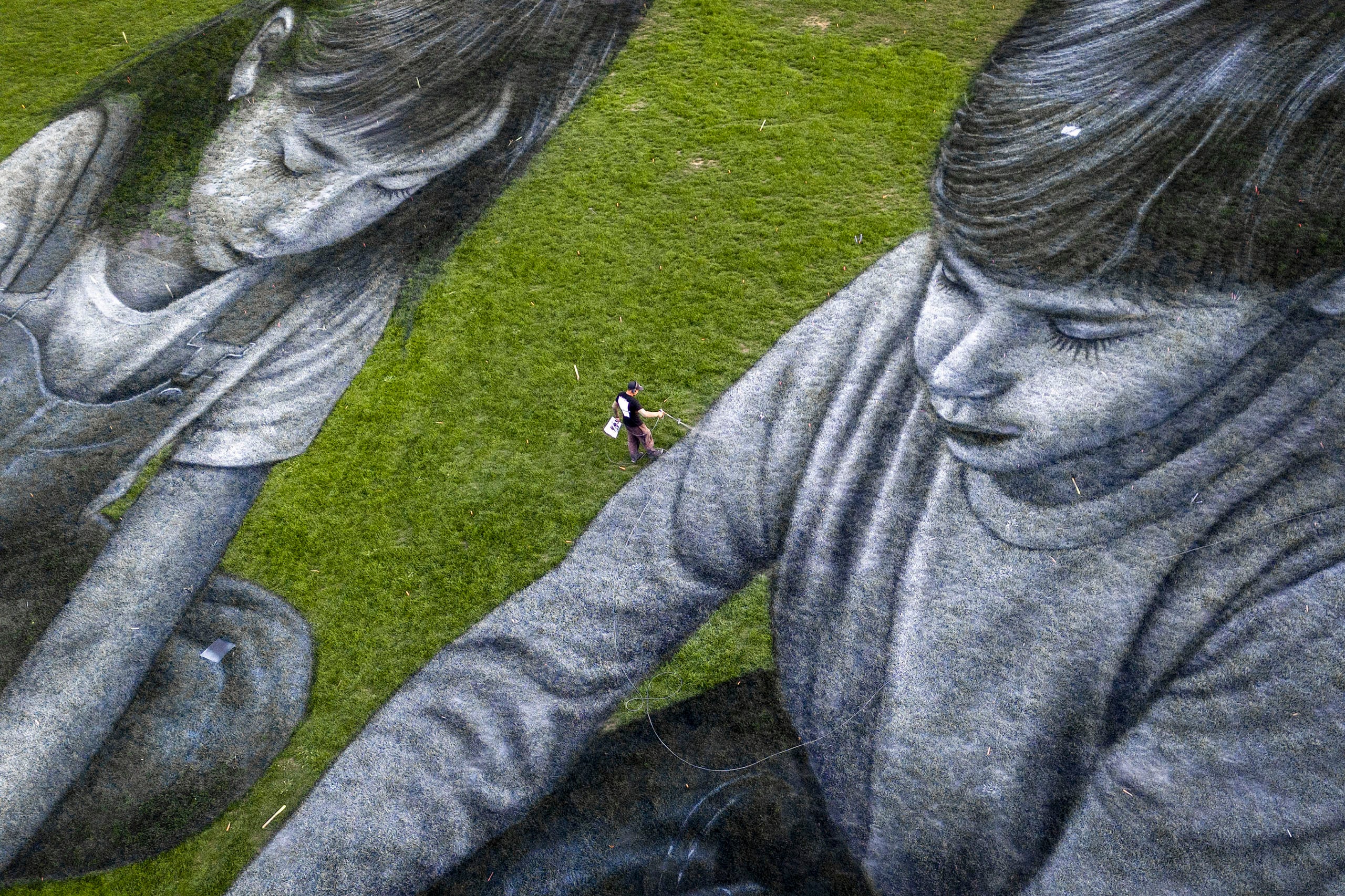
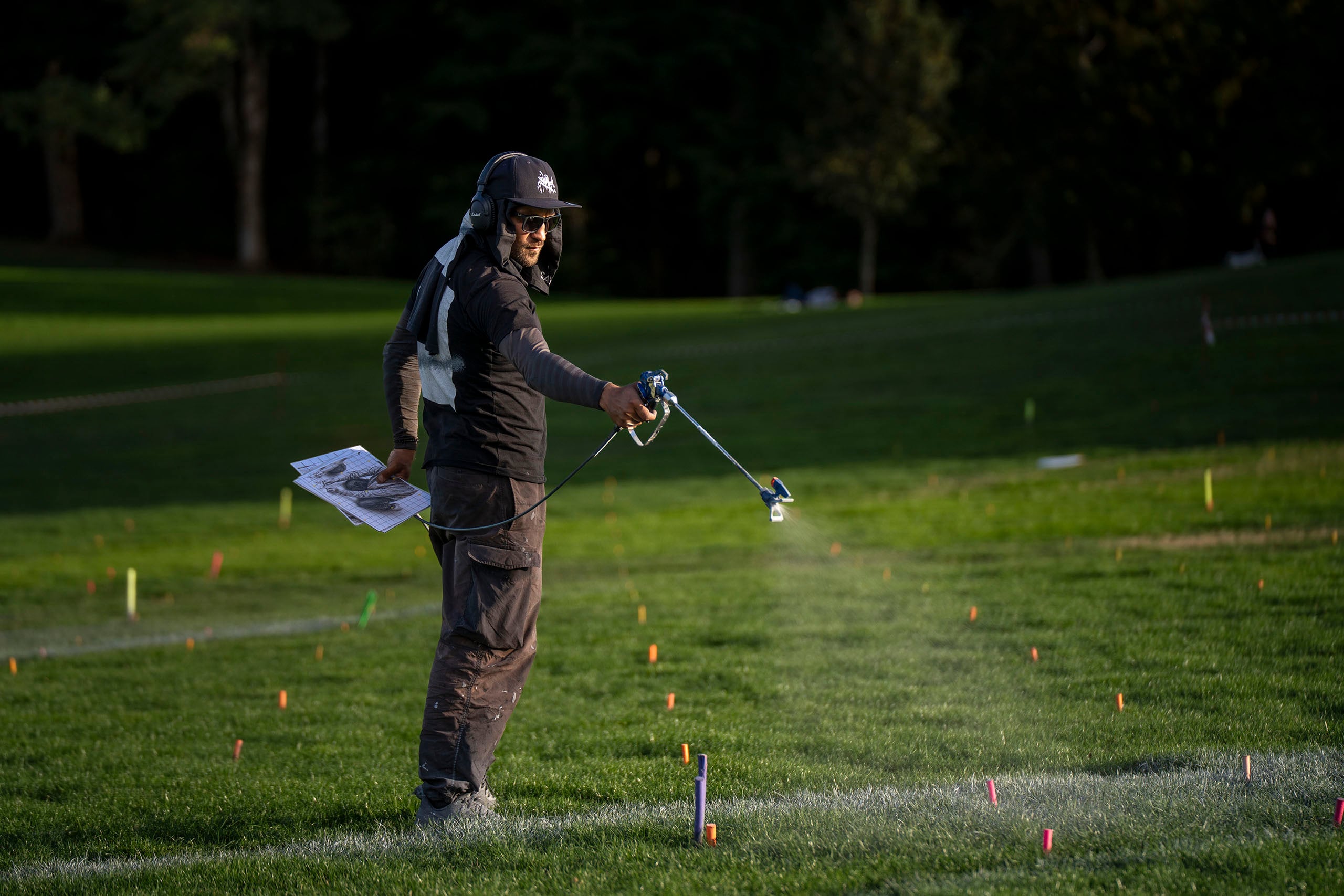
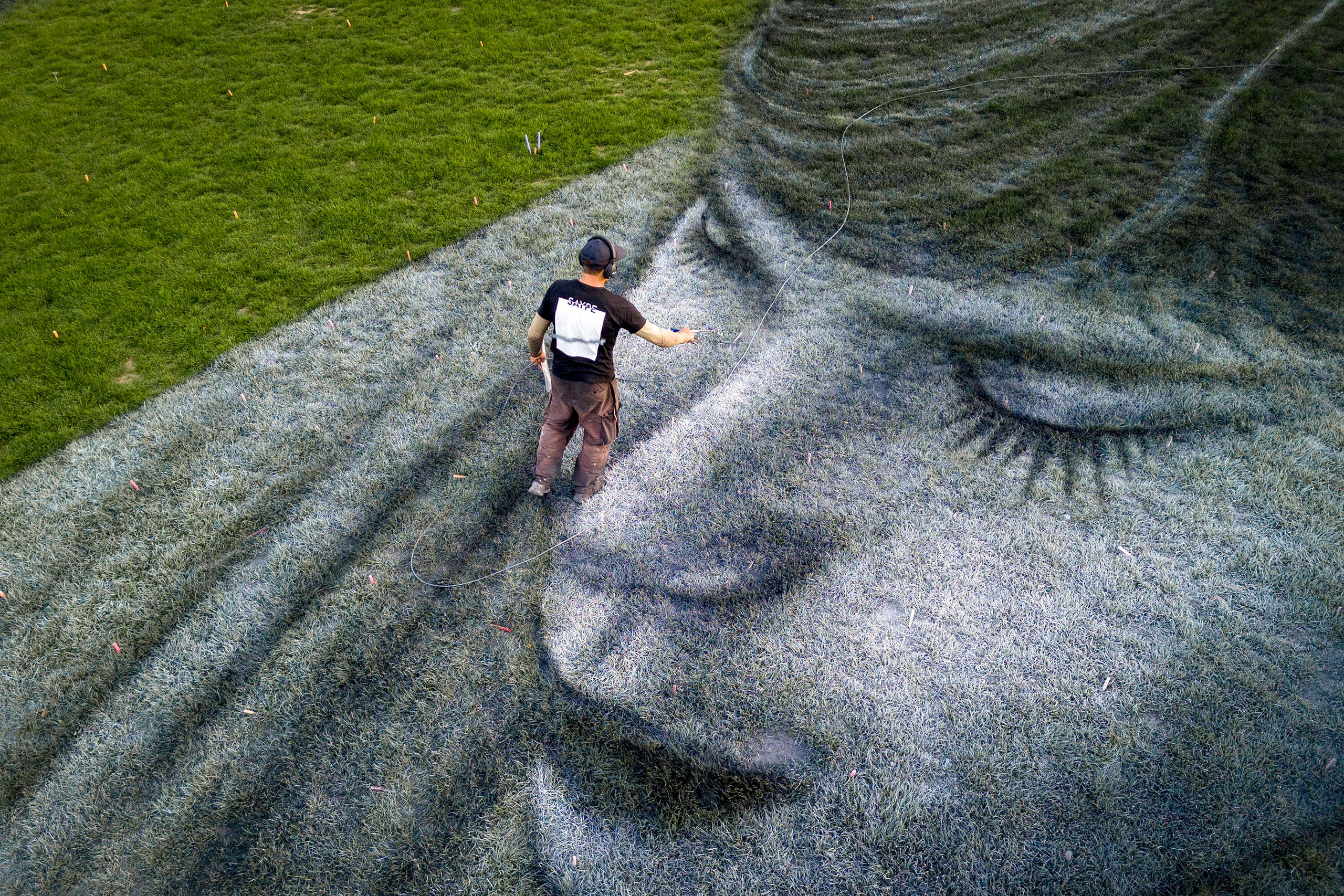
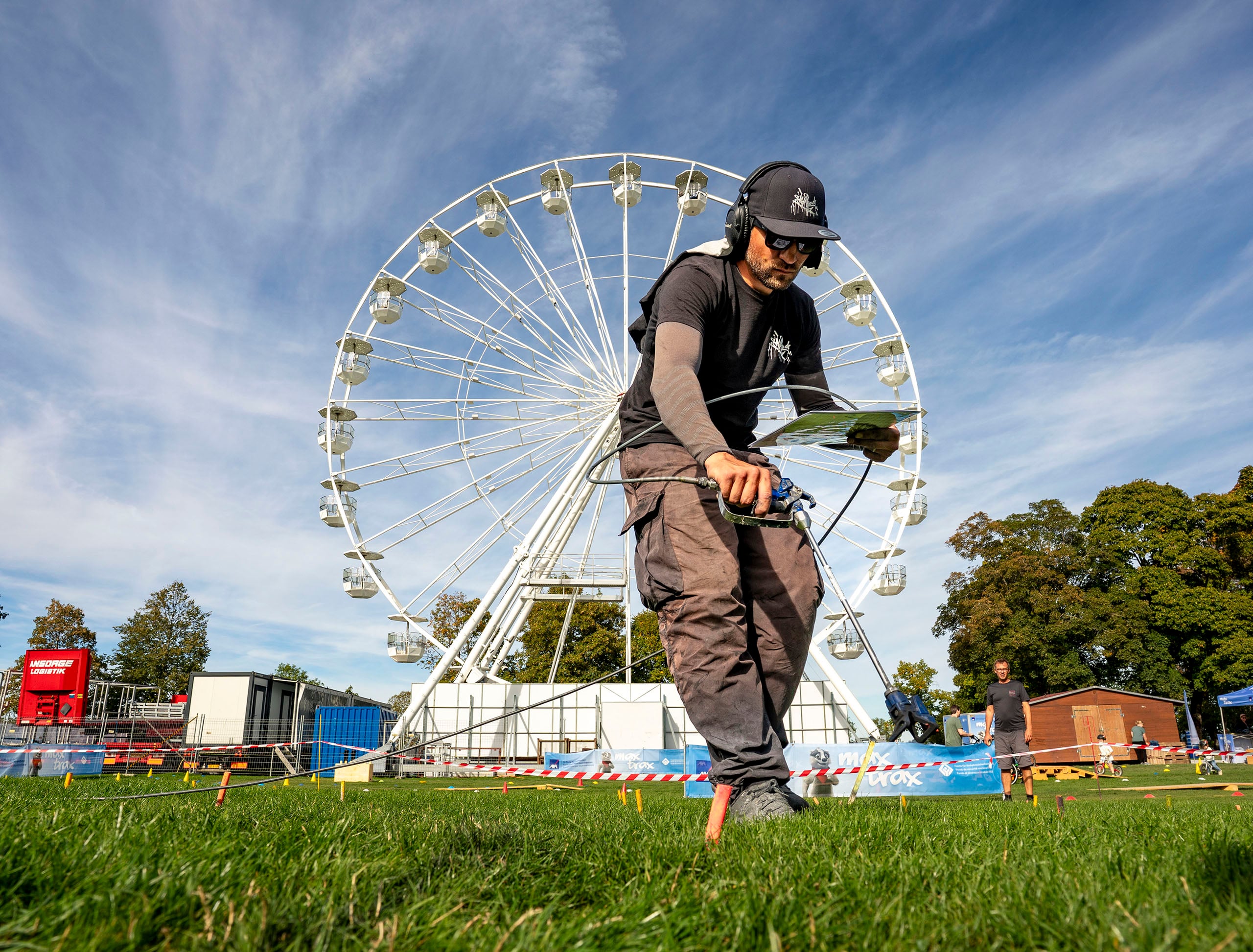
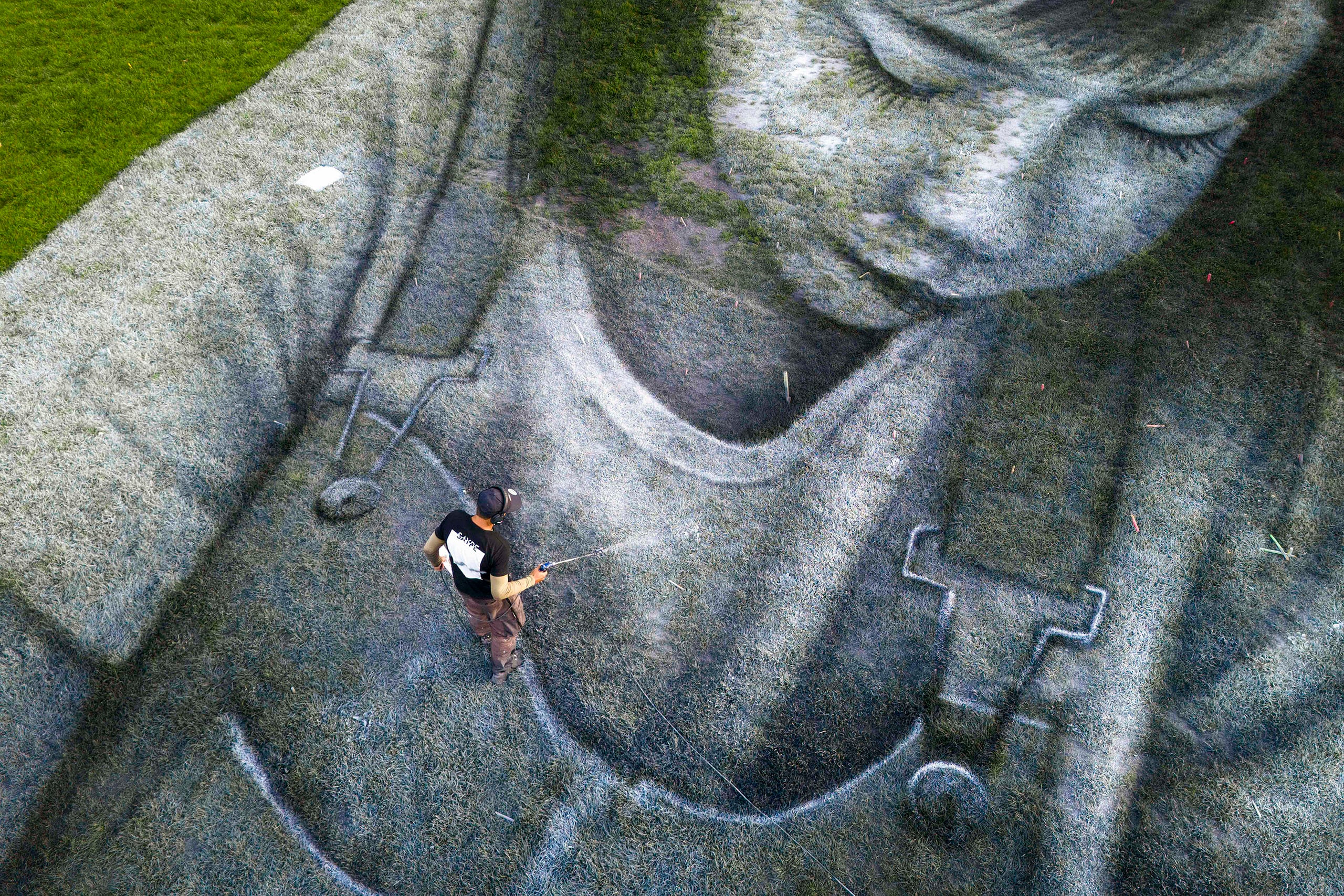
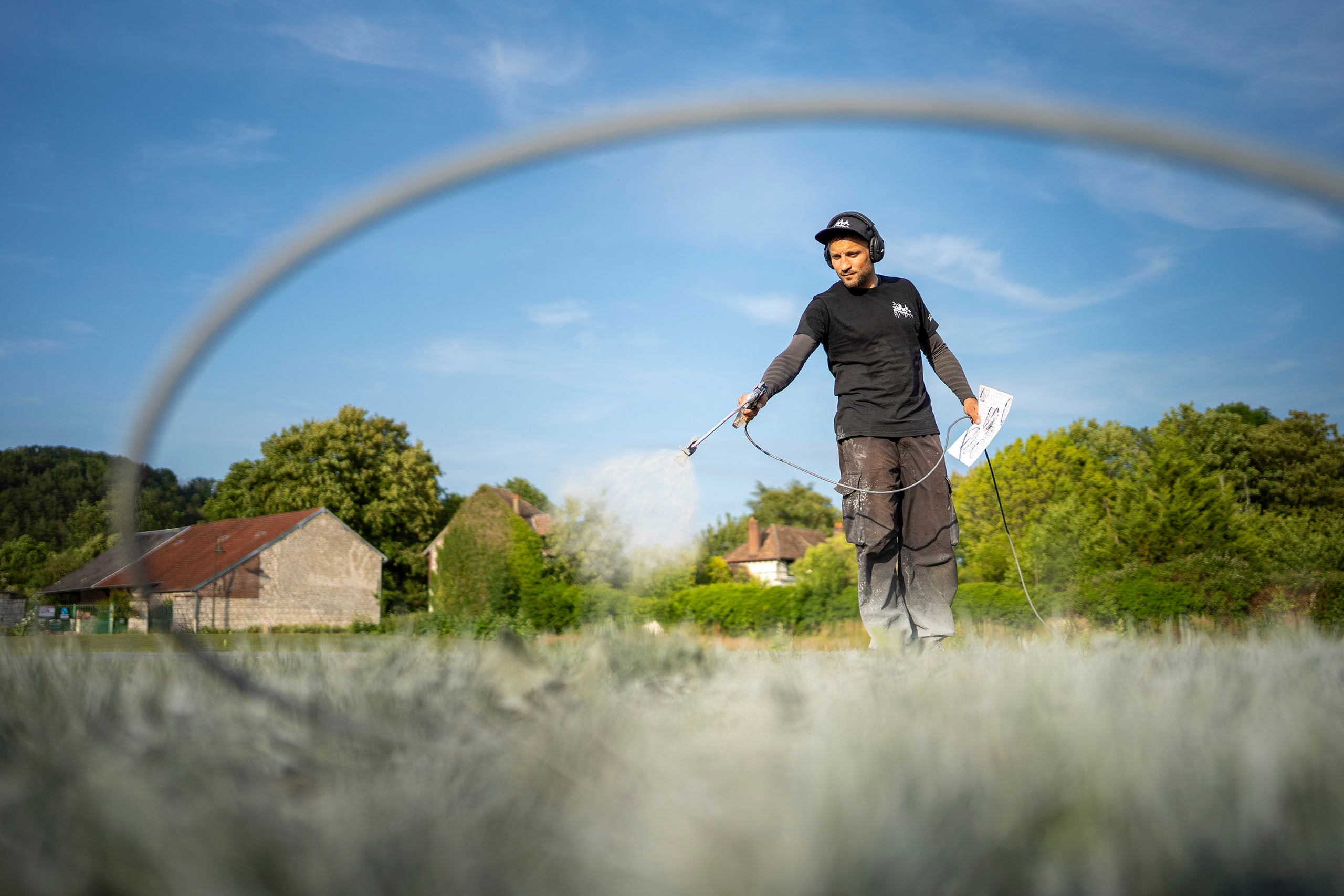
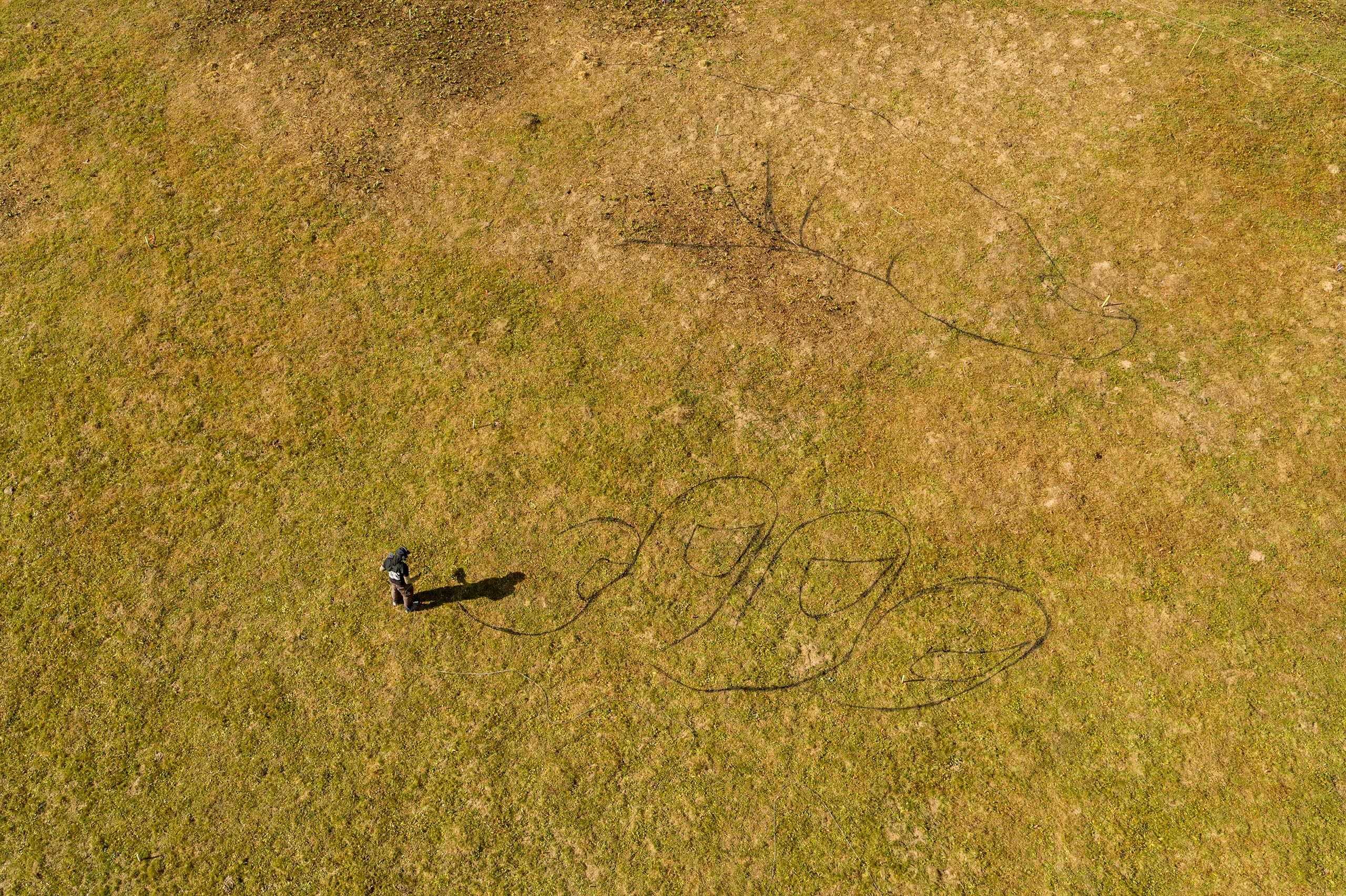
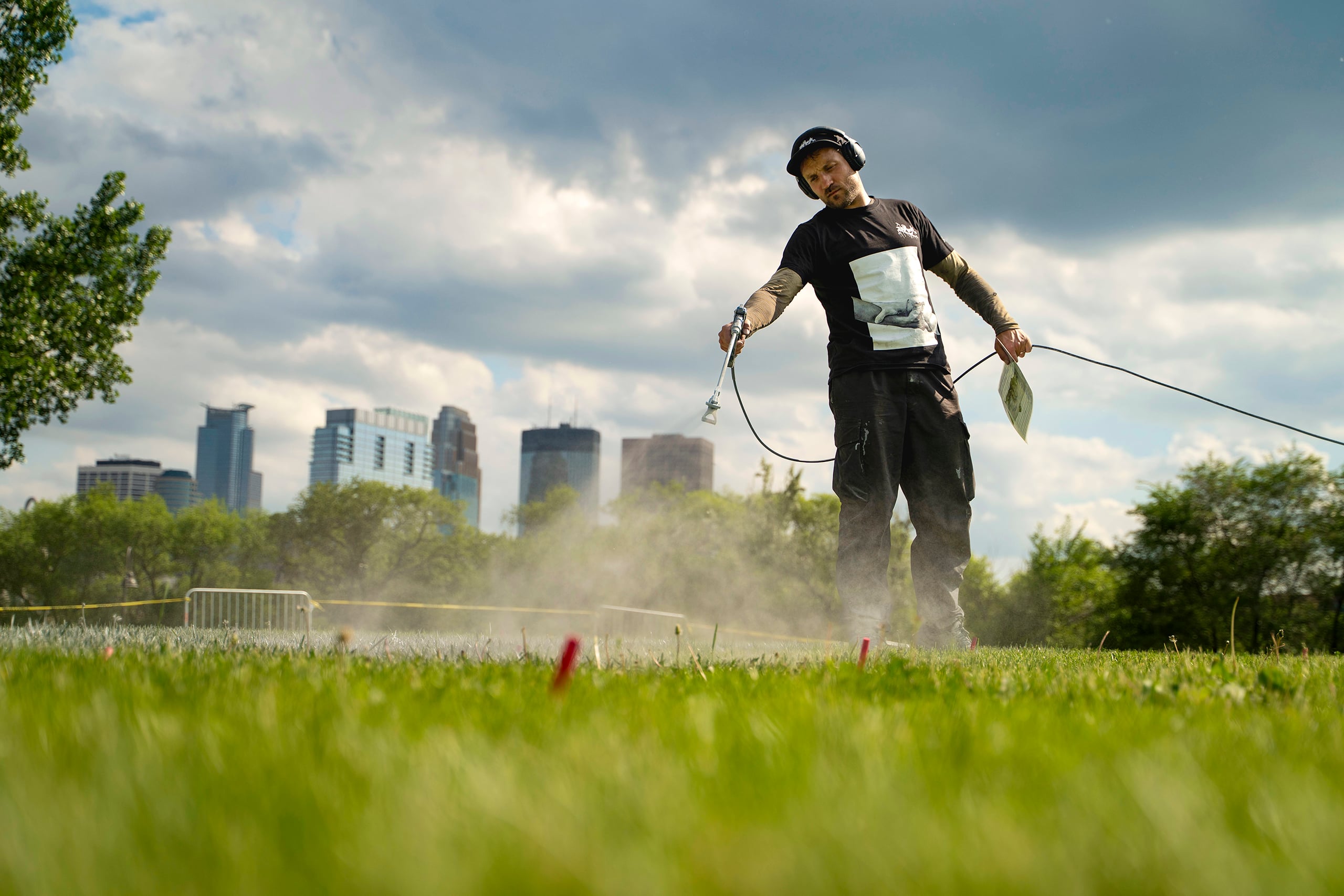
Saype immersed himself in books on traditional recipes, watched dozens of documentaries, and tested around fifty different pigments. “I had to figure out how to orient myself in the space and spray my natural pigments onto the ground using industrial compressors. It had to be opaque enough on the grass, last long enough to withstand rain, wind, or snow, and not disappear right away even under normal conditions.”
Immediate Recognition
His very first work, “L’Amour,” covering 1,600 square meters, came to life in 2015 in the French Alps. On the grass, he depicted a woman’s torso in a figurative style blending hyperrealism and Impressionism. Media coverage was immediate. The following year, Saype left his job in public health to devote himself fully to his artistic career, spending three years refining his technique. With a clear vision and an innovative concept, his work rapidly gained recognition, launching his international career.
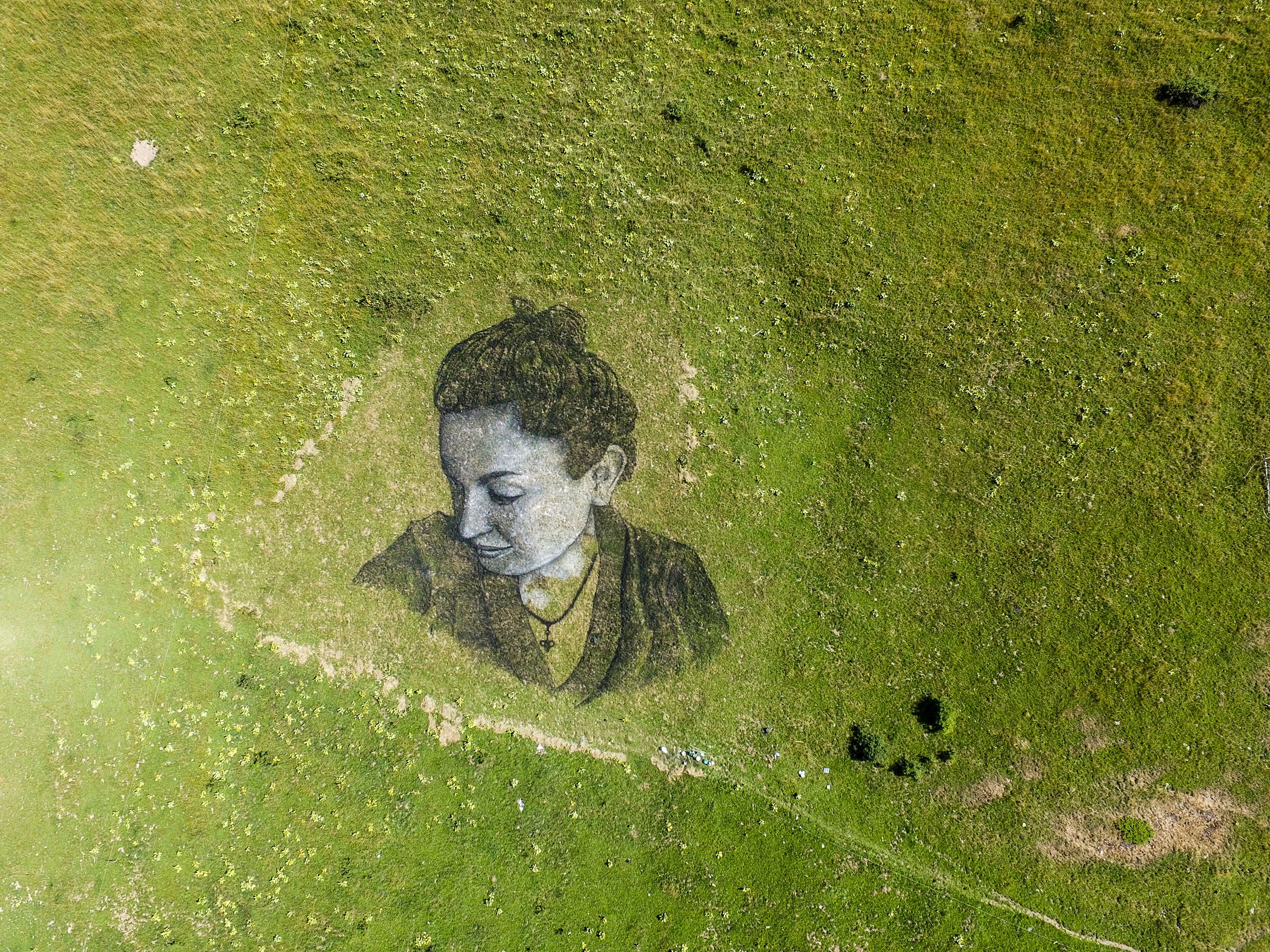
Depending on the location and weather, there are “a thousand different recipes,” as he puts it. His ingredients typically include charcoal, chalk, casein (a milk protein that acts as a natural binder), and materials found on-site. Today, he works with a four-person team: two production assistants—childhood friends who have been with him since his first piece—a manager who aids in strategic decision-making, and a project manager handling back-office operations.
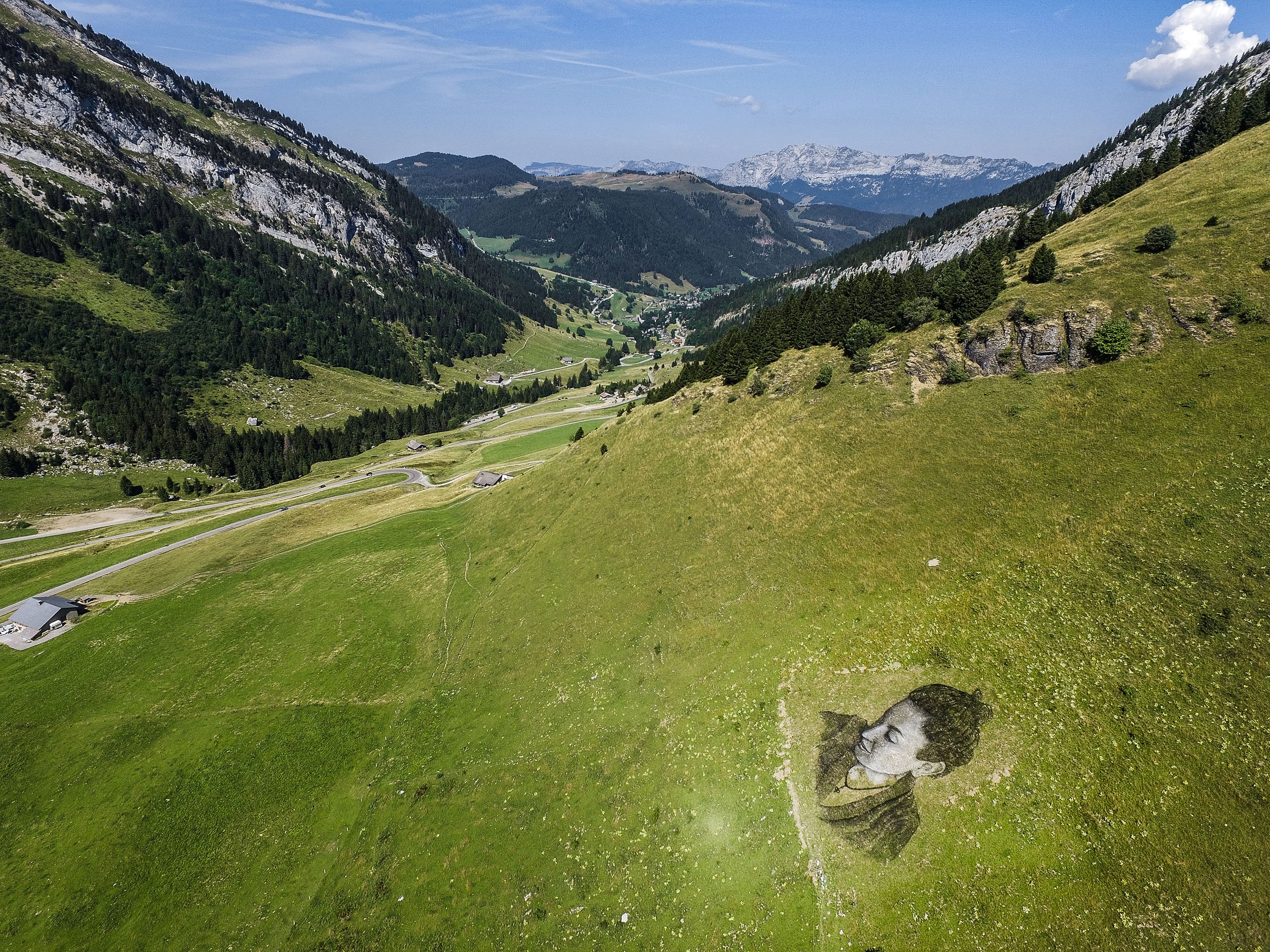
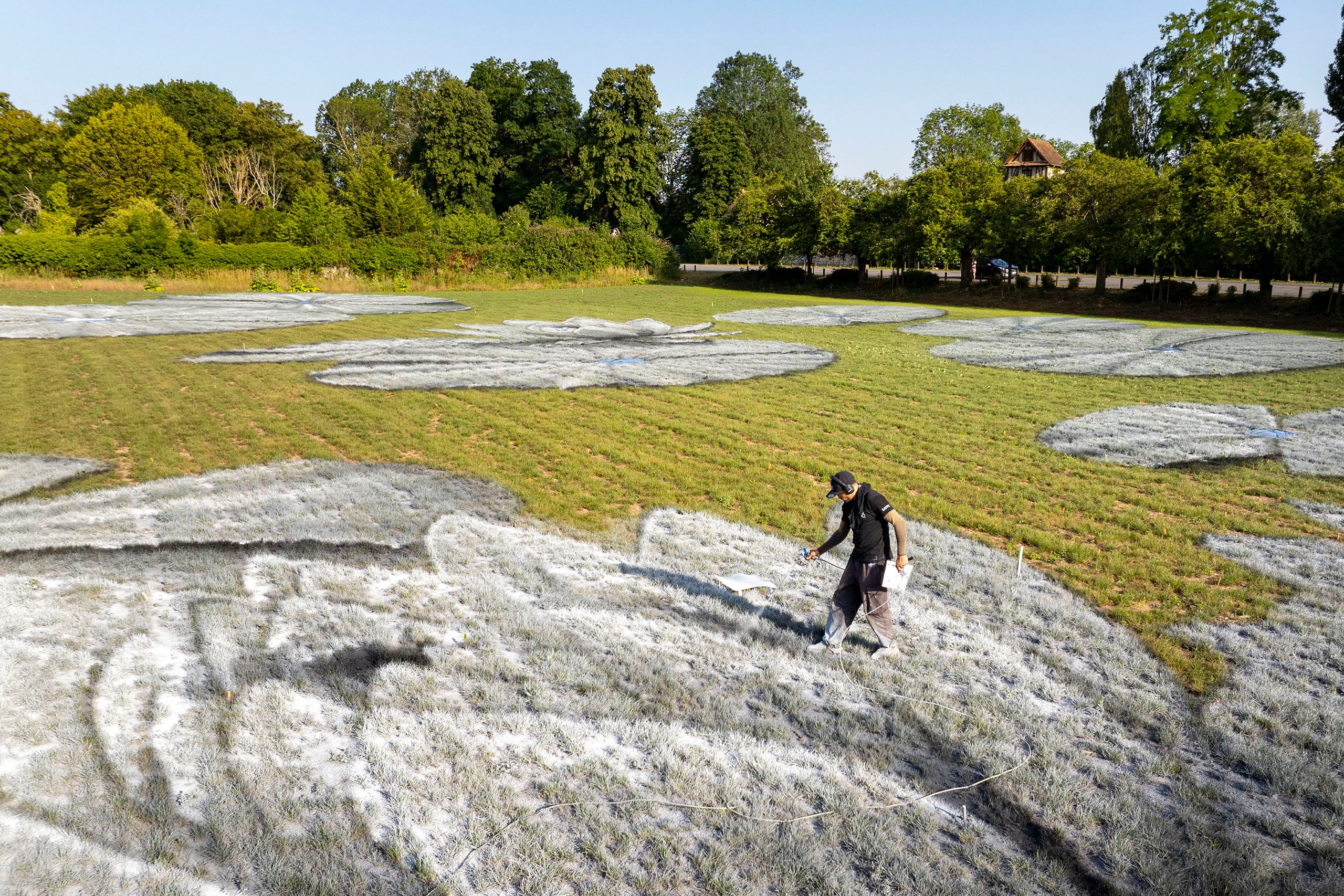
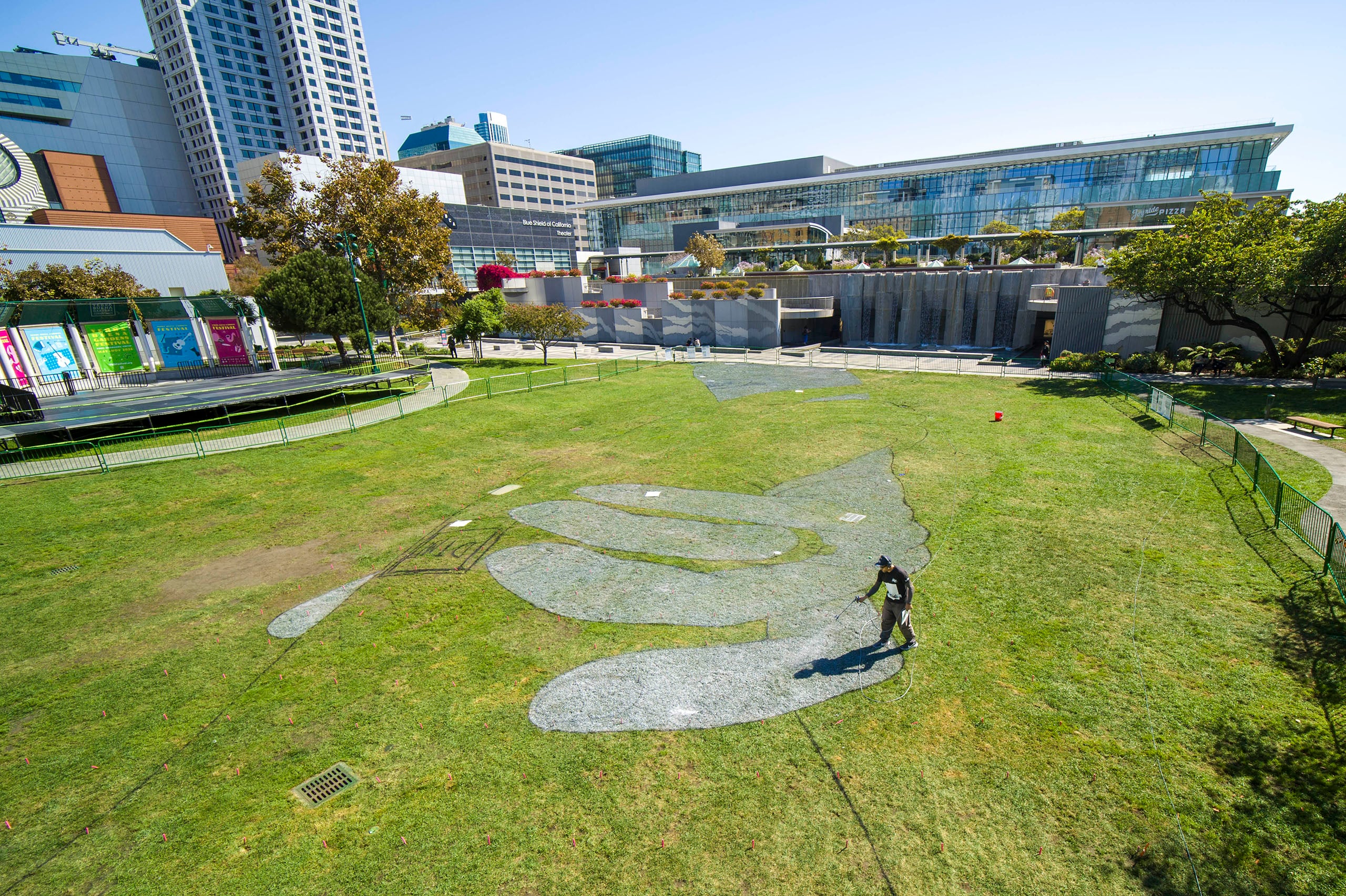
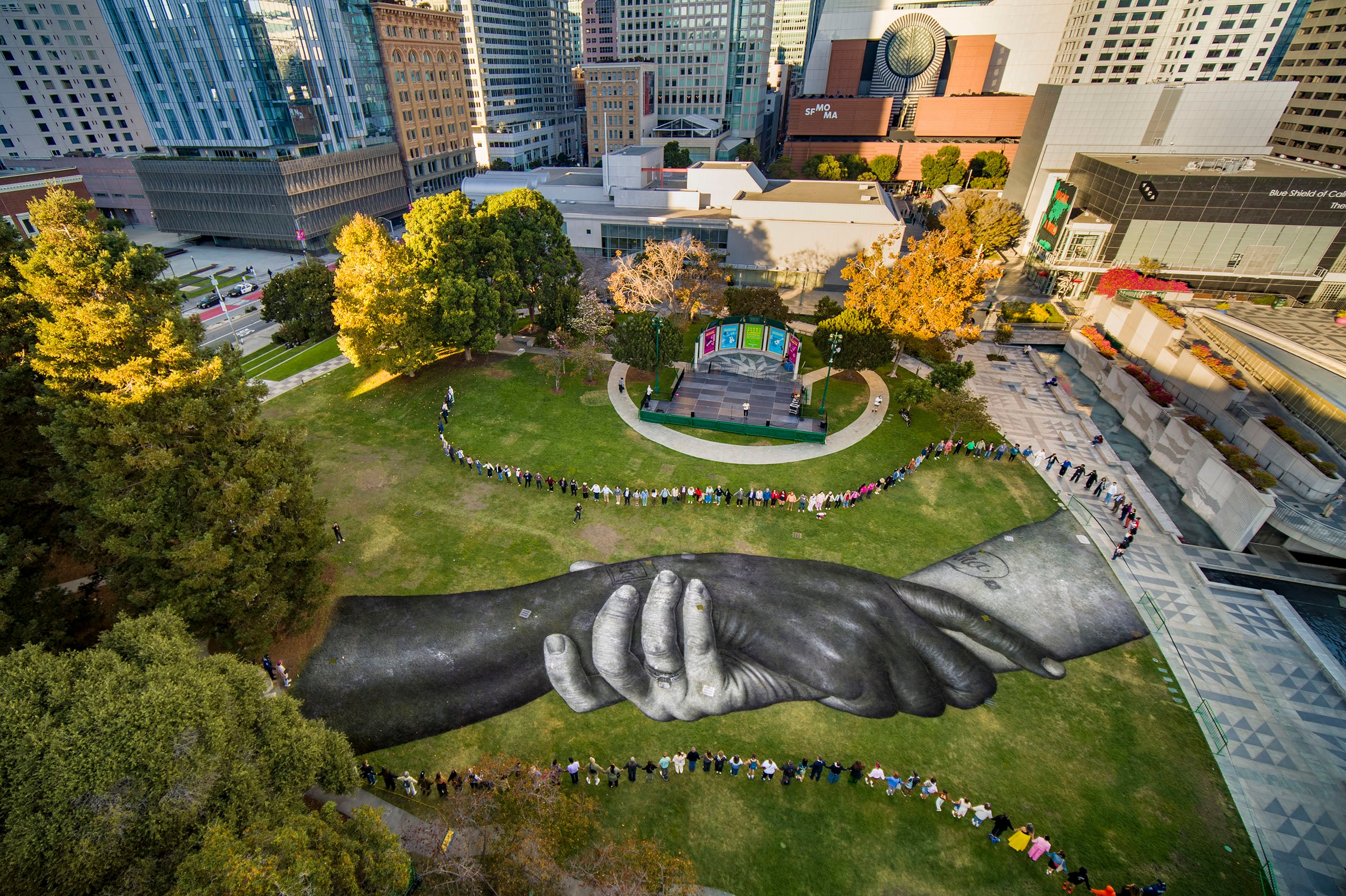
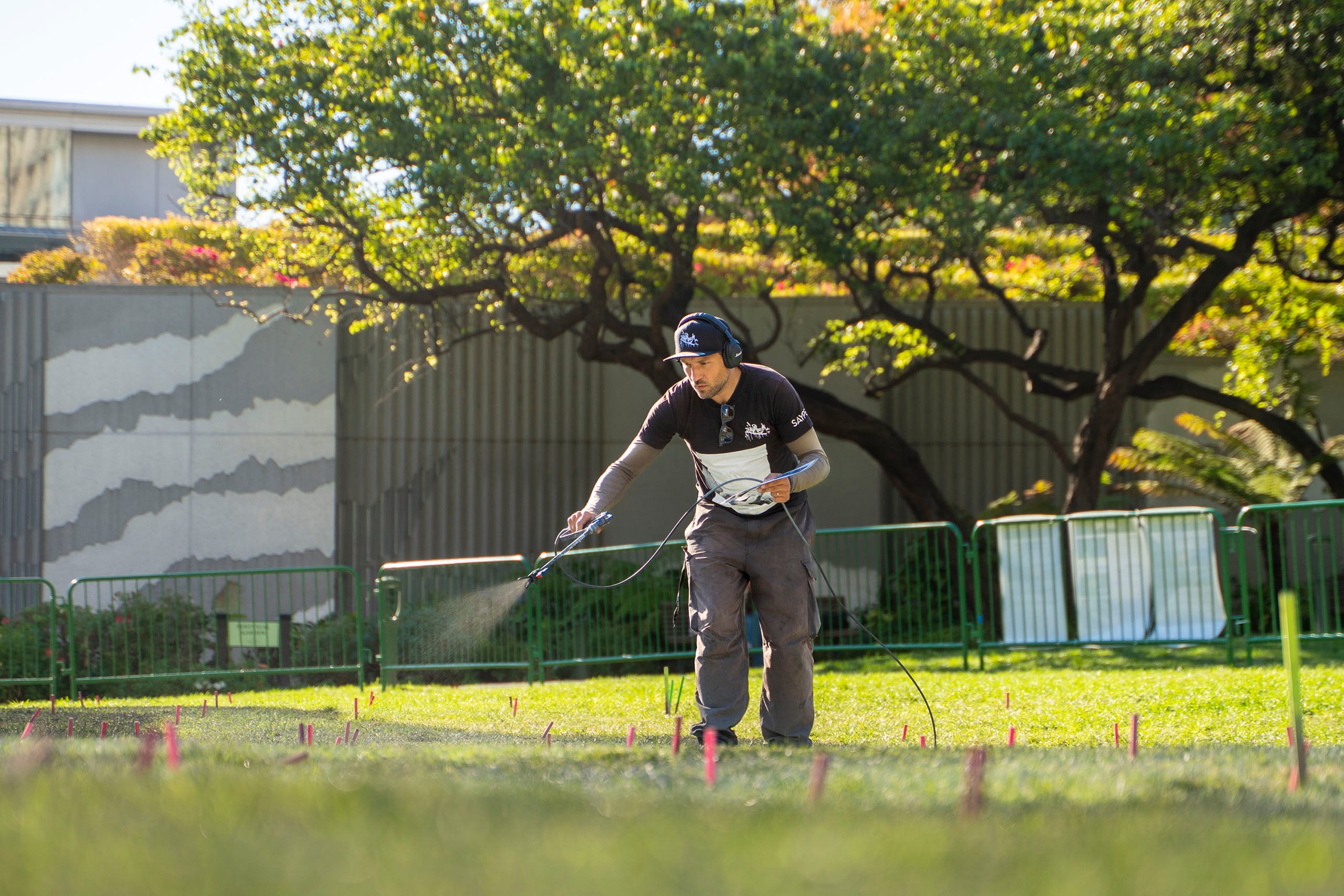
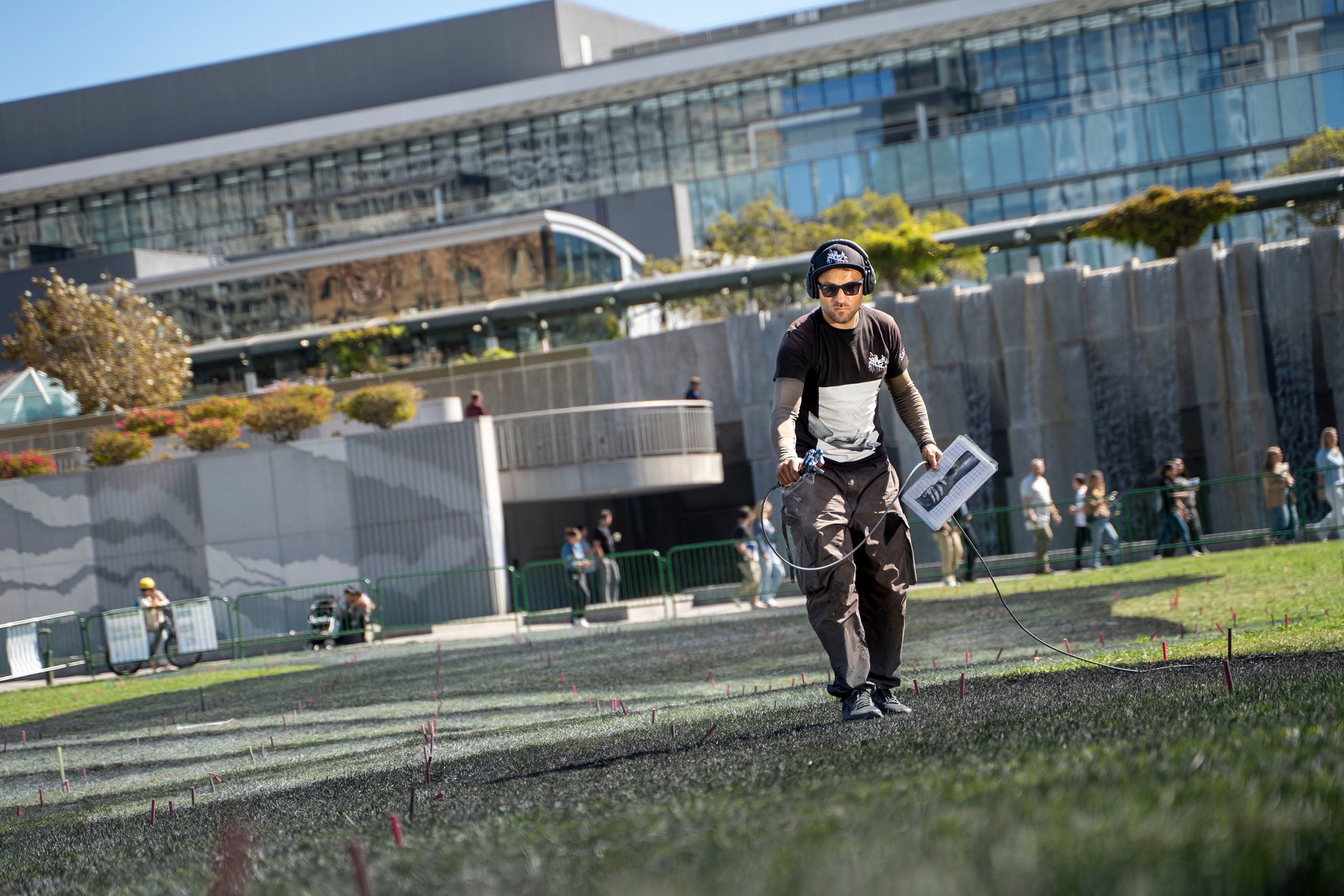
His murals, regardless of size, take two years to prepare, four to five days to execute, and one to two weeks to fade away. Among his most grueling creations, the project in Brazil tops the list: a 6,000-square-meter piece scaled down to 1,500 square meters, which he had to repaint three times due to severe weather. It is part of his famous “Beyond Walls” series—the world’s largest human chain, launched in 2019—which depicts intertwined hands to explore the forces that unite and divide humanity.
“I had just finished the piece in Benin, the departure point for slaves heading to Brazil or the Caribbean. I wanted to symbolically build this bridge in Copacabana. I had two parties to convince: UNESCO and the mayor of Rio de Janeiro. After a year of discussions, I was granted five days. It was complicated because of the COVID-19 pandemic. The forecast called for perfect weather, but it poured, and I had to start all over again after two days that had already been physically grueling. This triggered a domino effect, because I had three stages planned in Brazil and hadn’t accounted for enough pigments. I saw my project falling apart. In the end, I divided the surface area into four parts, which allowed me to complete the mural in a single day and have enough pigments left for the other two destinations.”
Aerial Drone Footage
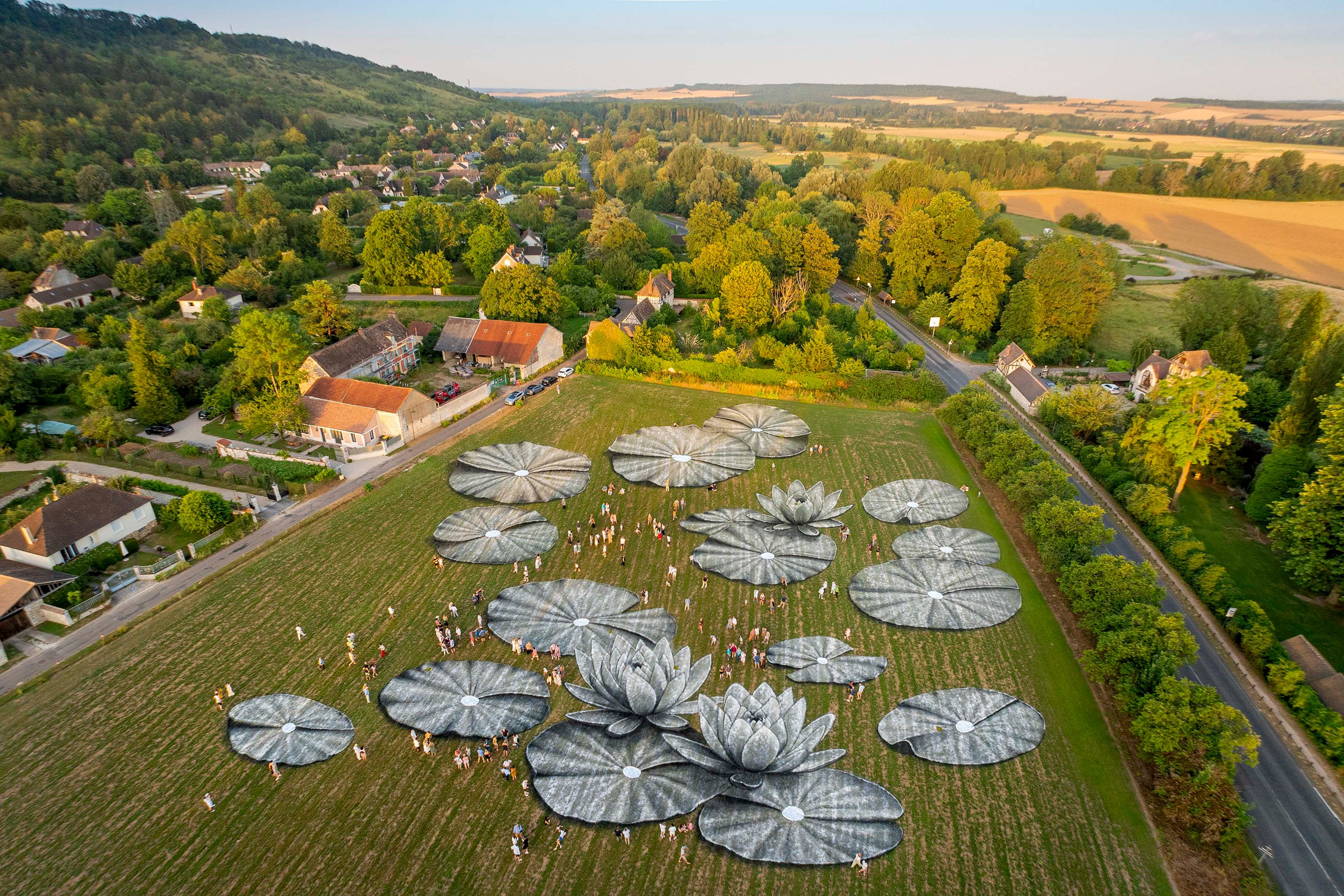
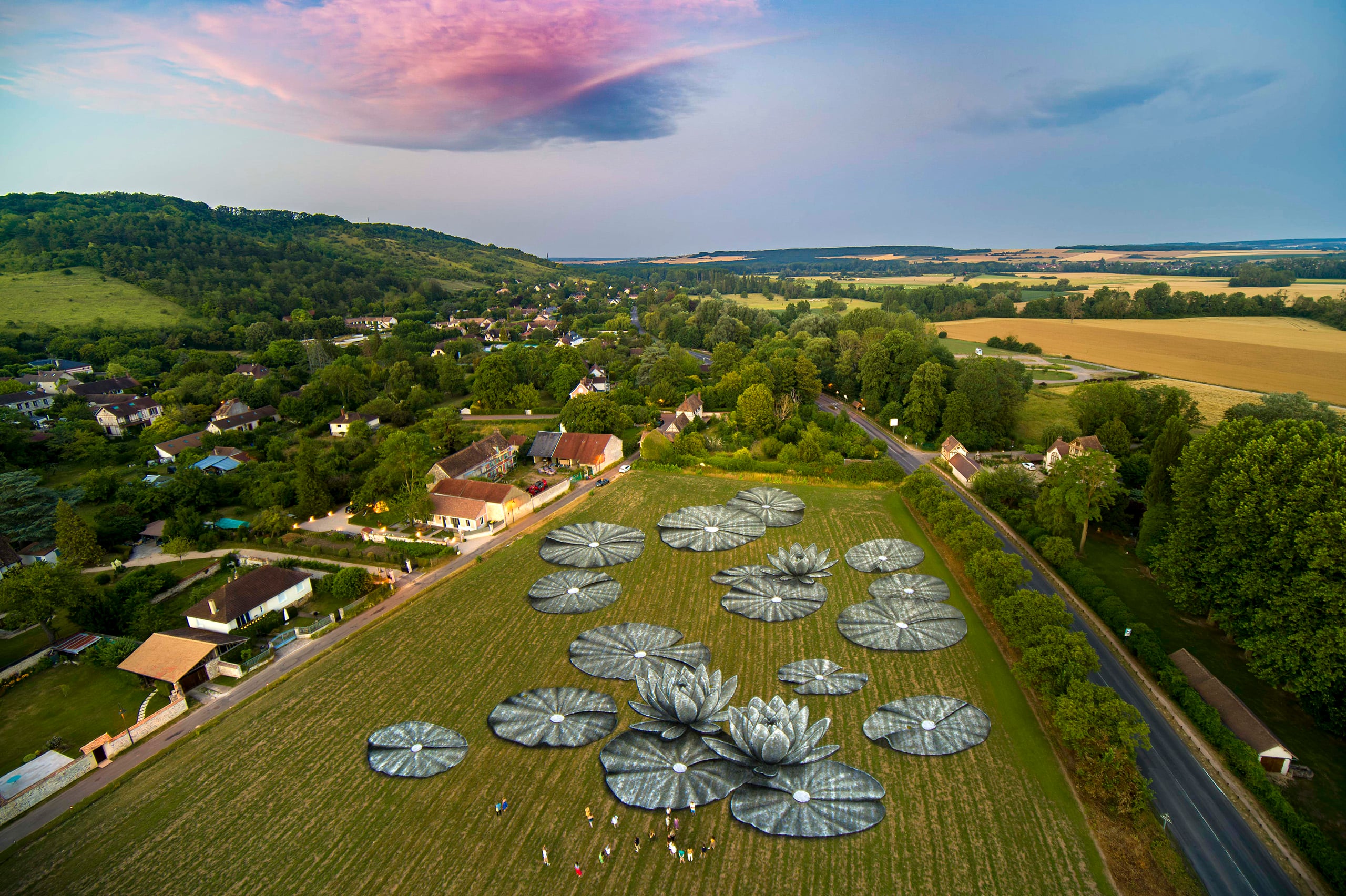
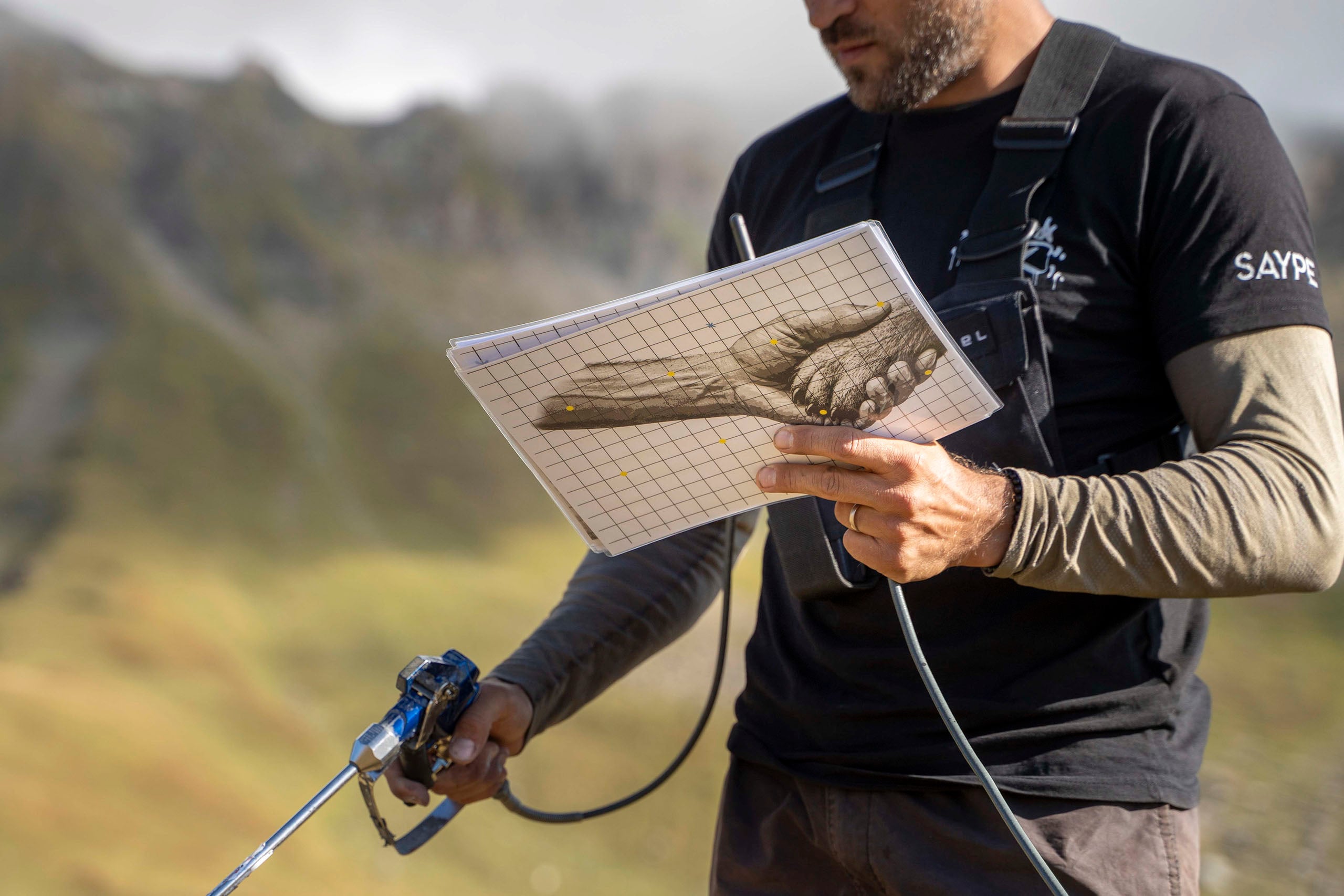
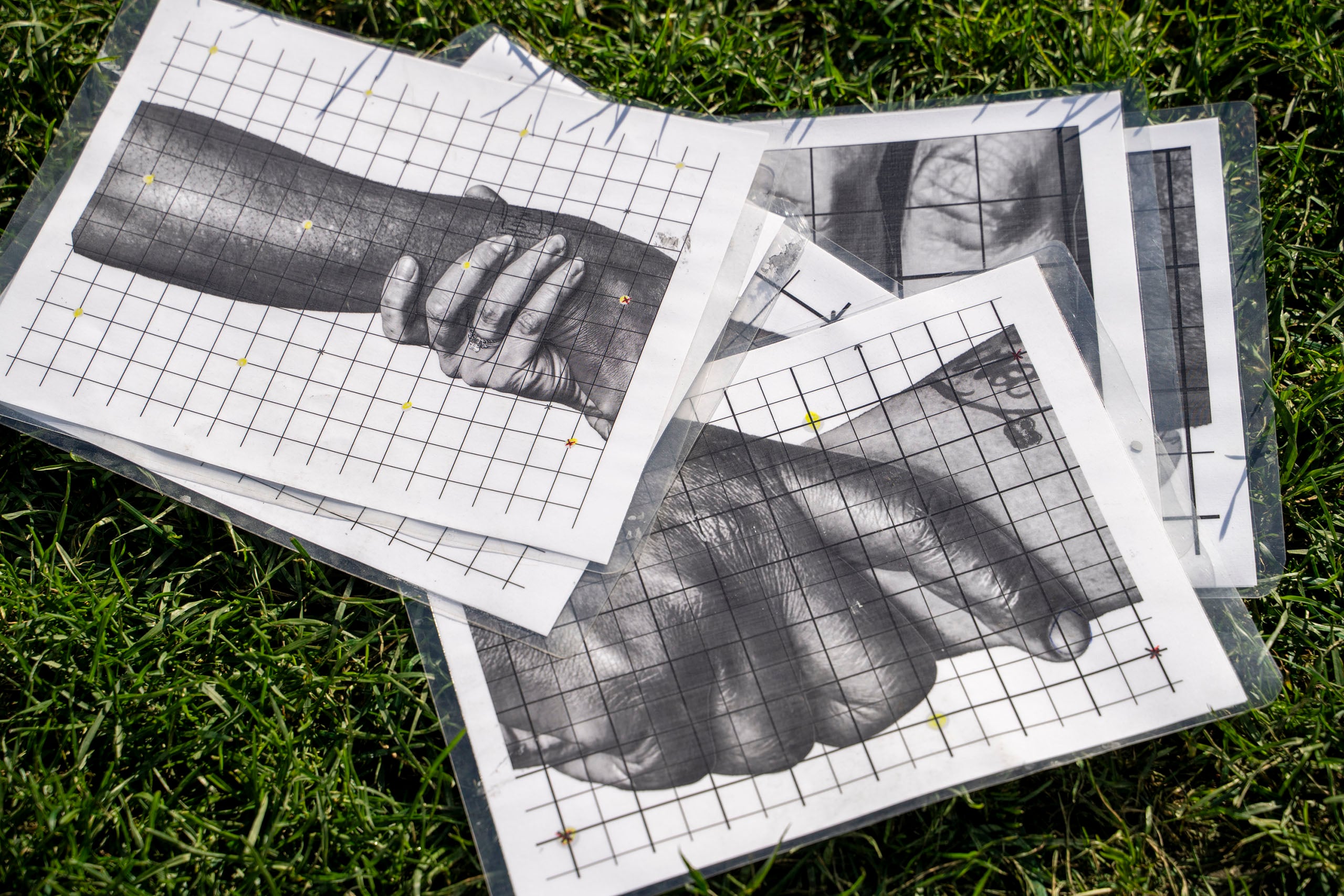
The visual impact of these ephemeral creations is elevated by drone footage, allowing them to reach a global audience. His creative process involves extensive research and hours on Google Earth to digitally map out each piece. During an initial drone flight, he surveys the terrain and plays with sightlines to position the artwork in situ. From this aerial perspective, he determines elevation, sets GPS coordinates, and places ground markers.
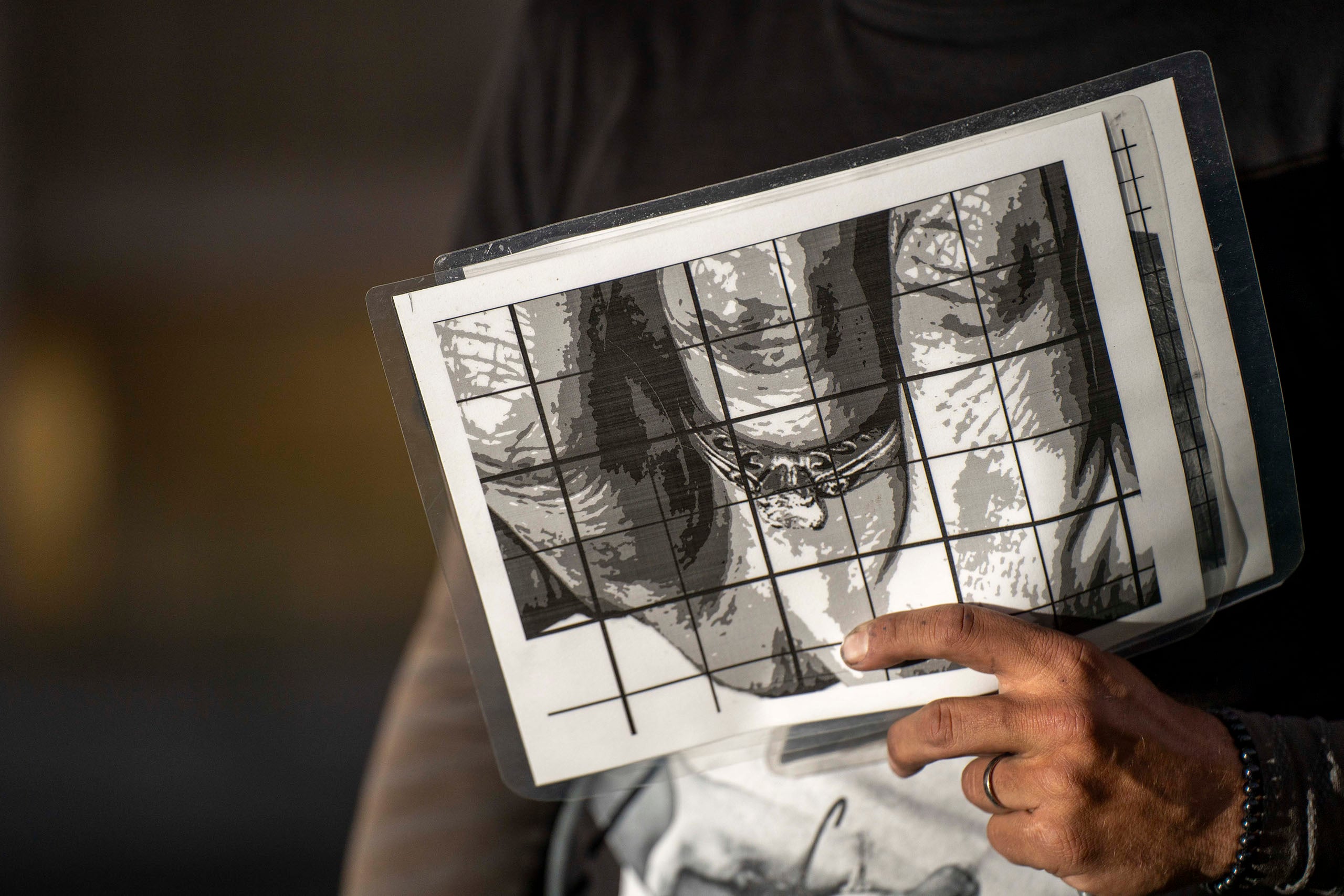
“I also create a small anamorphosis,” he explains. “This technique allows me to distort the perspective and establish a viewing angle. To set it up, I need to understand how the vanishing lines are positioned on the ground. I create a large square where I place stakes every fifteen meters, which gives me the proportions of the site.”
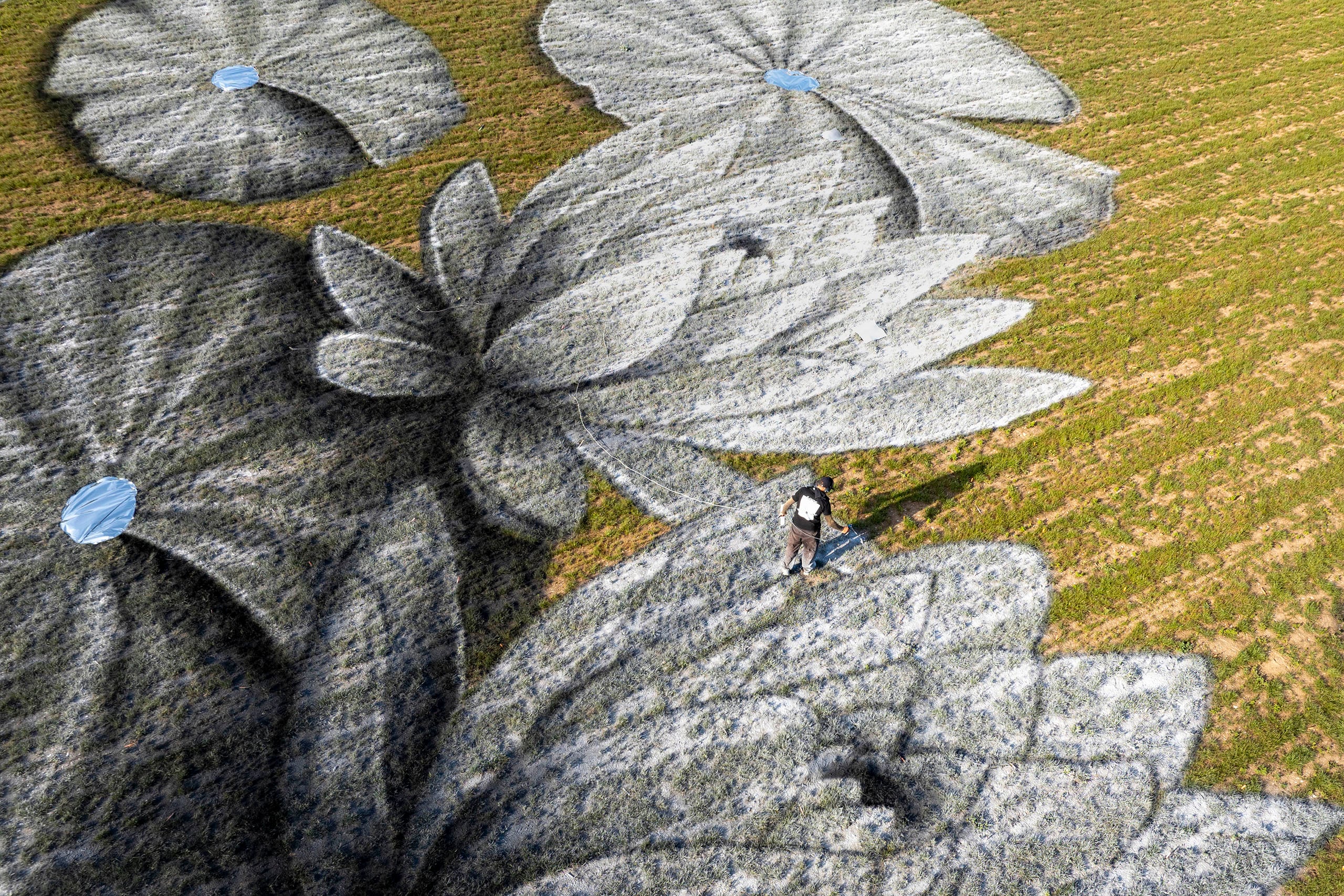
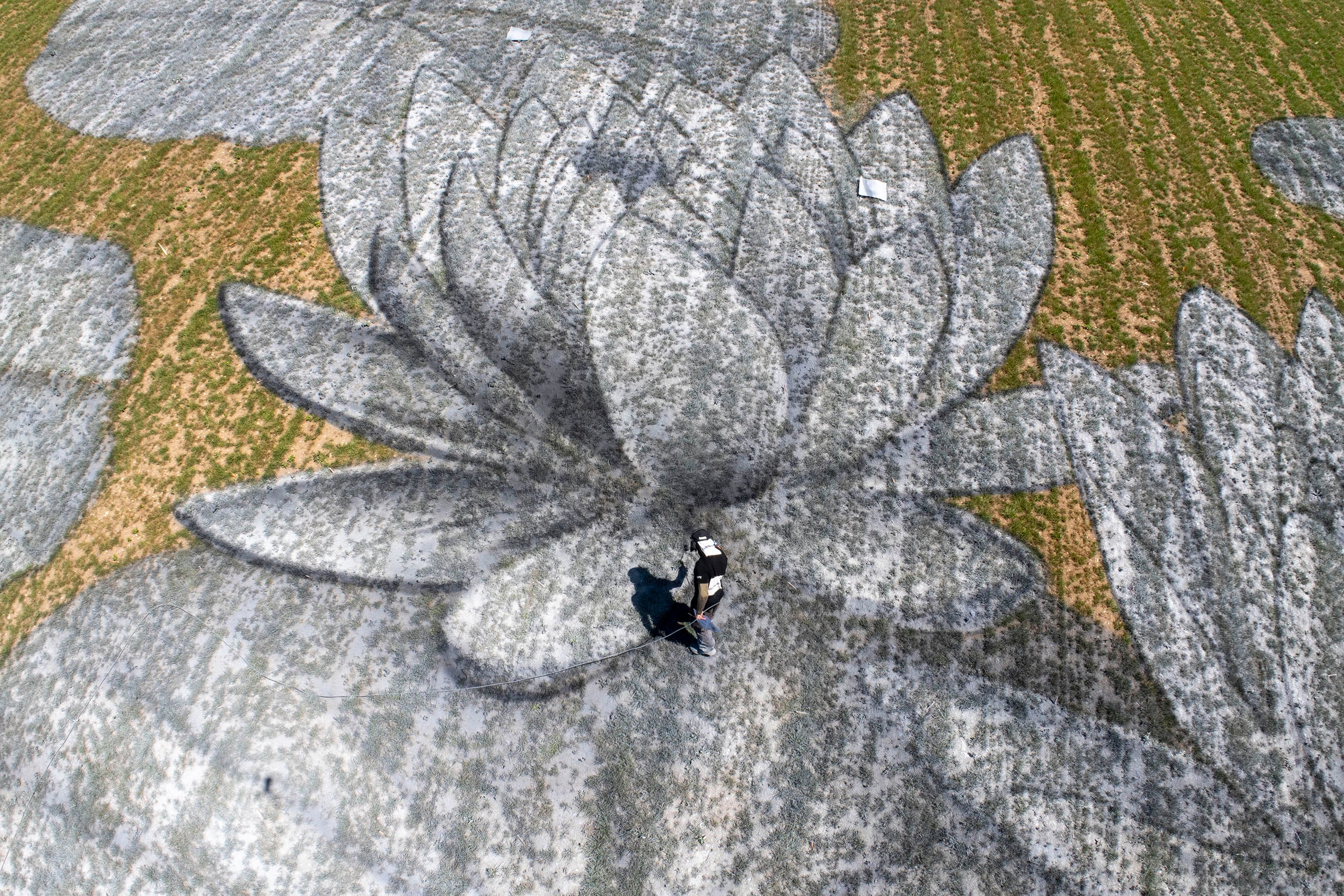
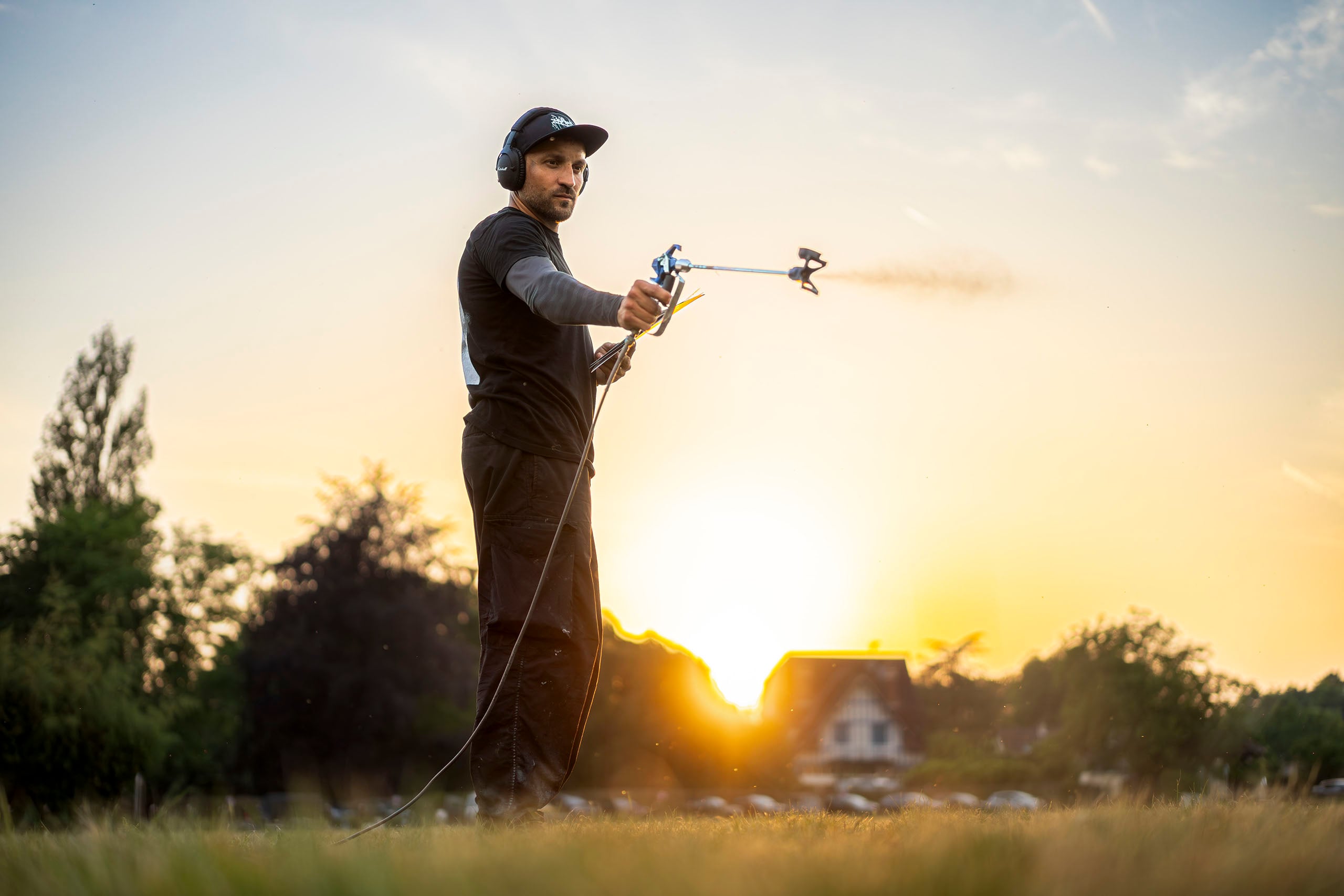
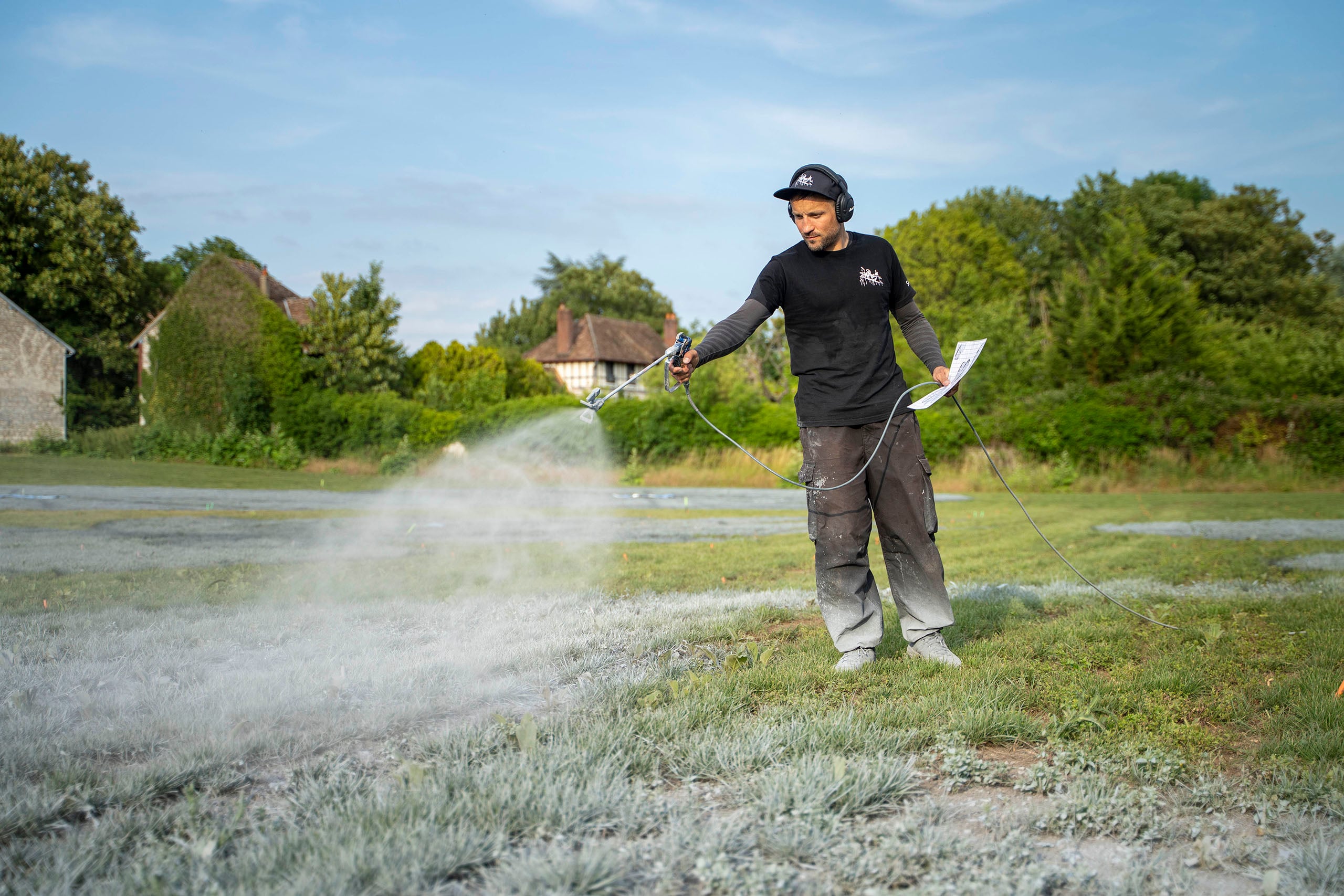
This framework allows him to prepare his sketch while adapting to the terrain. “I know the size of the artwork thanks to the planning beforehand, including the right amount of pigments. Everything has to be calculated roughly to avoid surprises. I have a 50% margin of error for pigments.” Lighting is another critical factor in his process. “If I shoot against the light, the mural won’t stand out the same way. So I play with different lighting conditions. If the child in the drawing is looking at the horizon, I’ll be more likely to choose a sunset.”
Saype uses a 4 kg DJI Inspire 2 drone with a 16 mm lens for his photography, carefully framing each shot while his assistant handles the flight controls. He started out in the 2010s using a DJI Phantom 1 with a GoPro taped underneath. “Drones were just becoming more widespread back then. There was no live video feed yet—everything was done on the fly,” he recalls with a laugh. “I’d take burst shots because we couldn’t see the results—it was complicated. Today, everything’s become much simpler. Google Earth was nothing like it either. I really worked differently back then.” As for AI, he limits its use to site research and administrative tasks.
From Land Art to Fine Art Photography
Between equipment and paint, the initial investment runs roughly €50,000 each. “And that’s not even counting the ten compressors, valued at 10,000 euros each,” he adds jokingly. His projects fall into two categories: personal endeavors and professional collaborations with partners and patrons. He holds a six-year contract with Villars-sur-Ollon, a Swiss ski resort situated 1,300 meters high overlooking Lake Geneva. “Half the people who go there come to see my murals. I usually have free rein.”
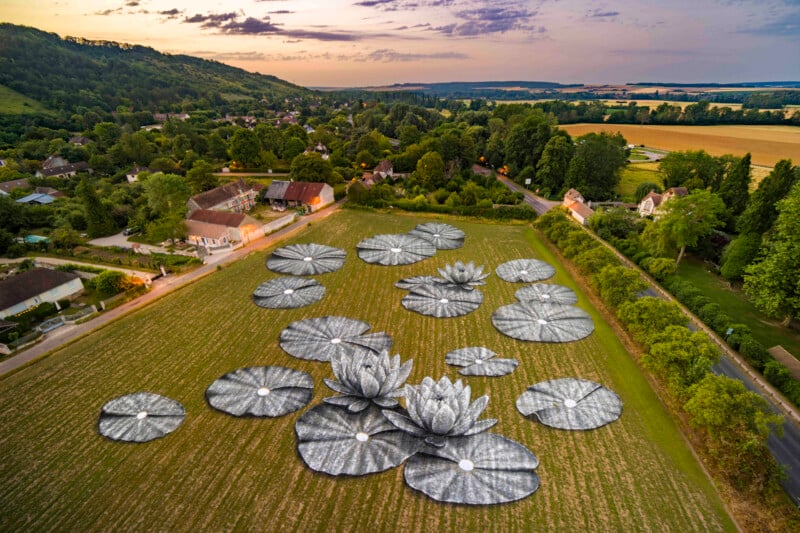
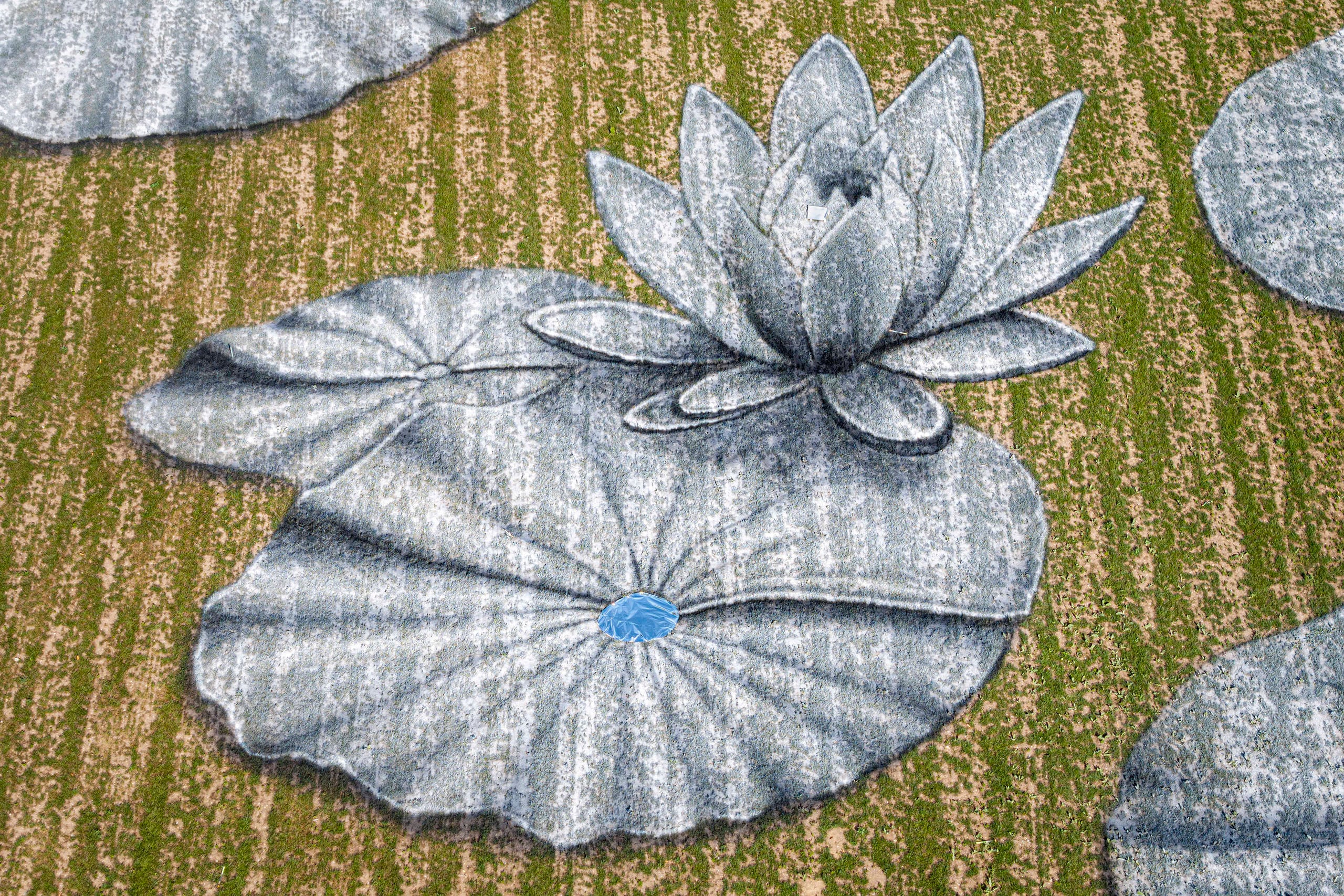
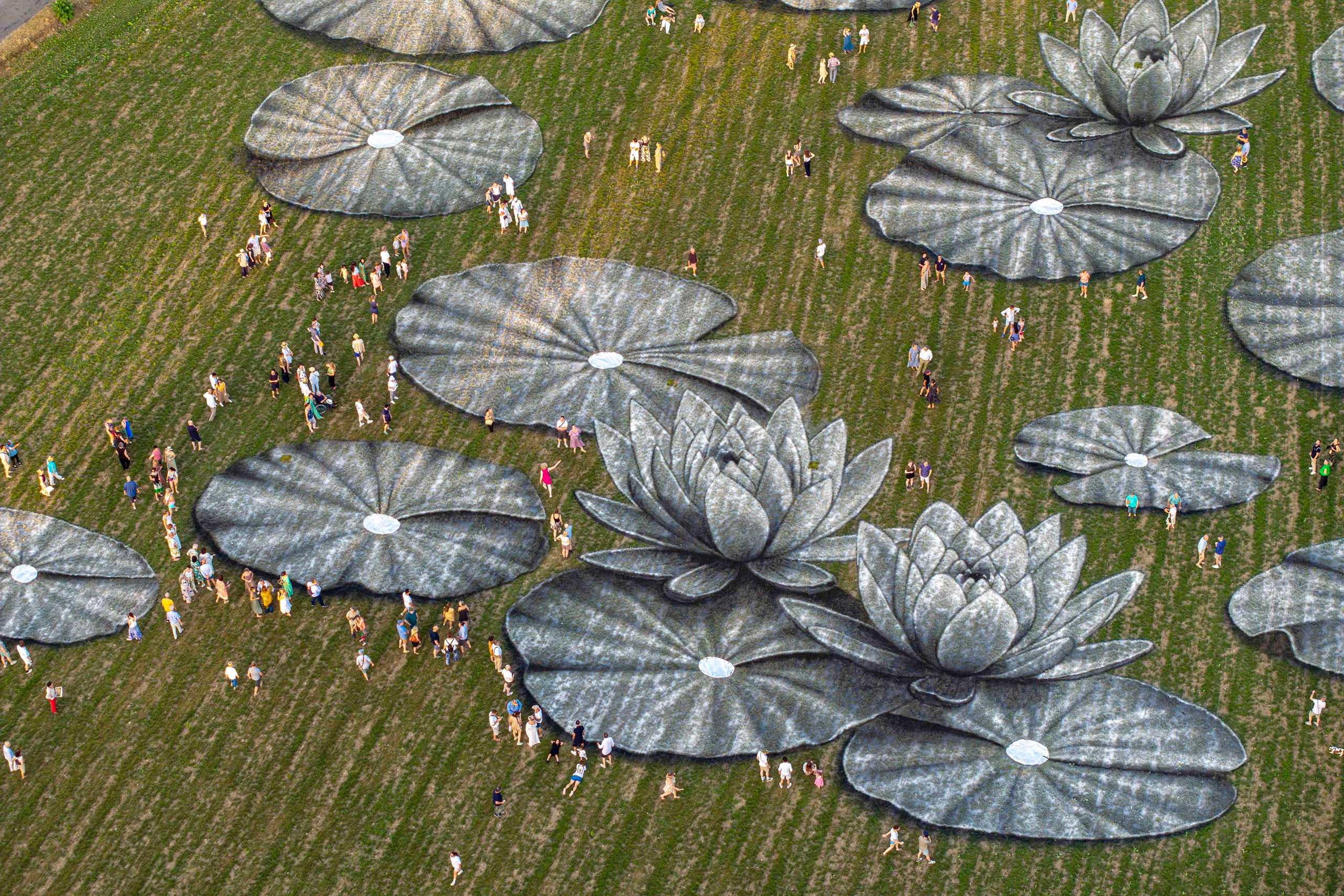
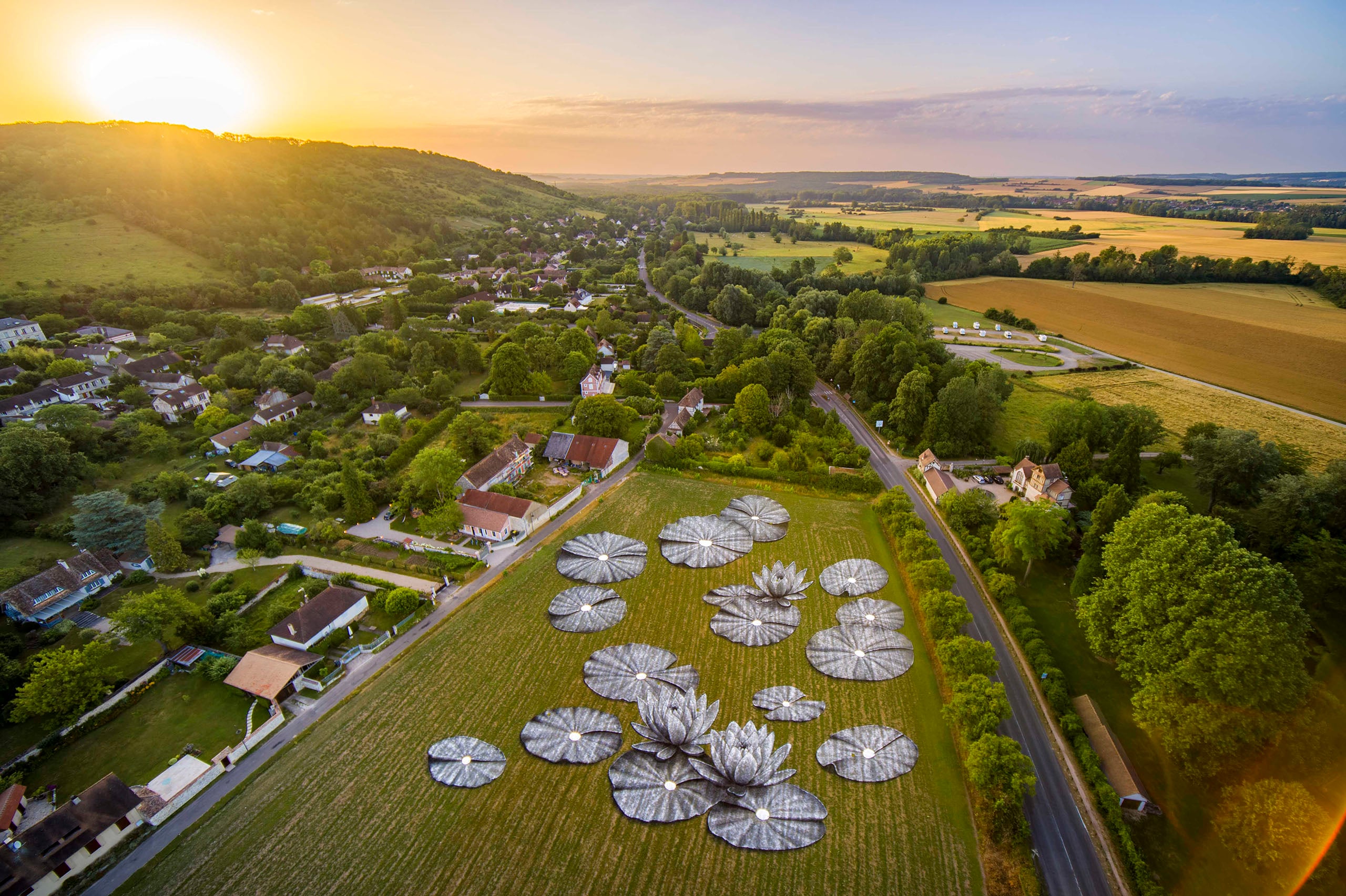
His large-scale project “Beyond Walls” is entirely self-funded. The same goes for his mural in Giverny, France—a 10,000-square-meter water lily piece created on lawn to mark the centennial of Claude Monet’s death—as well as the artwork he designed for Handicap International in Gurten Park, Switzerland, celebrating 30 years of humanitarian action.
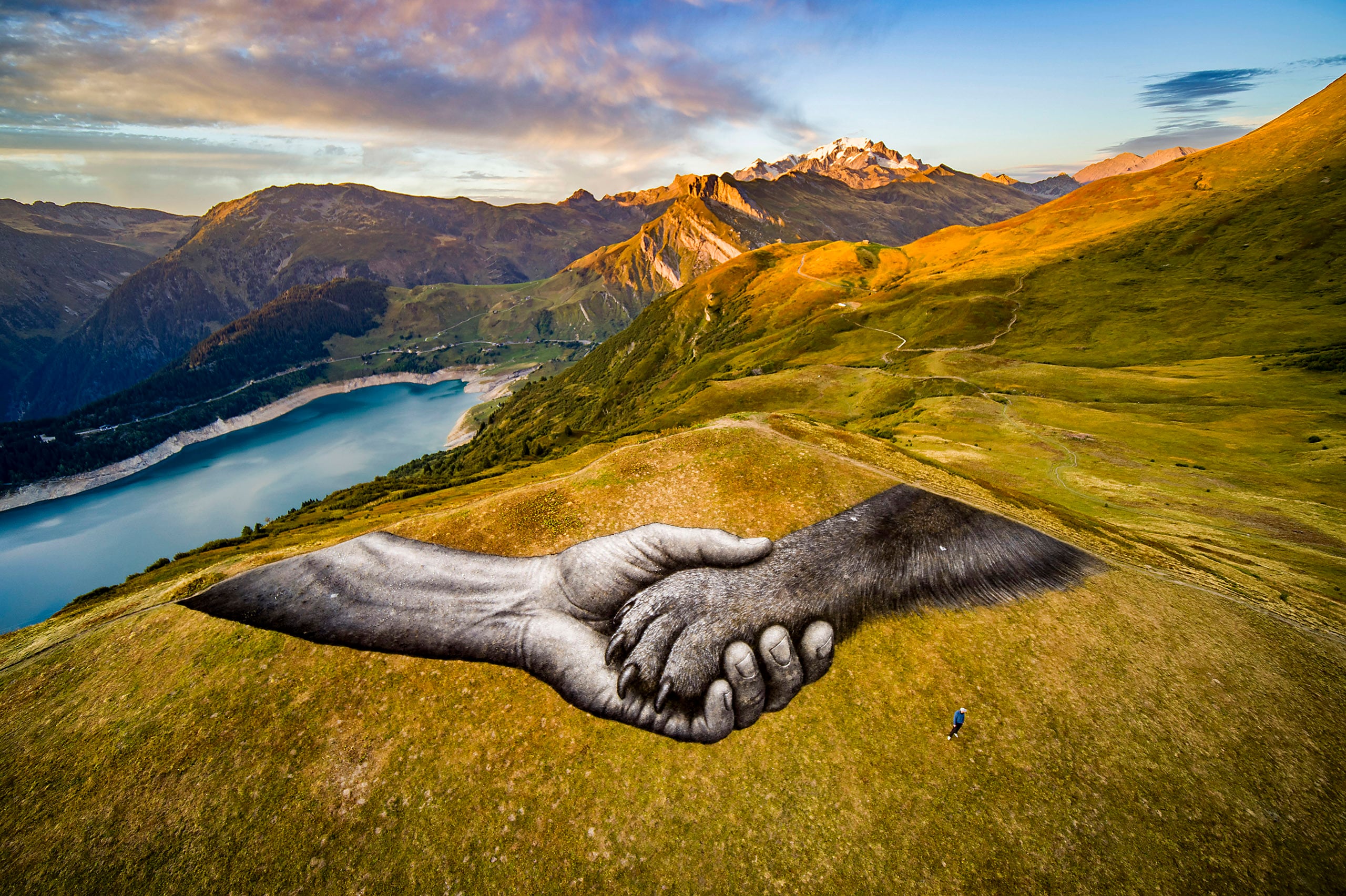
This year, Saype made his first foray into film. Partnering with Paramount, he created a 2,000-square-meter mural in the pastures of Beaufortain, Savoie, depicting a human hand reaching toward a dog’s paw. The piece appears in David Ayer’s *Heart of the Beast*, starring Brad Pitt. “I met the director of Paramount at one of my exhibitions. This film resonated with my artistic vision. I worked on a theme broader than the screenplay: man and animal, man and the living world. The choice of Savoie in France was quite similar to the atmosphere of Alaska, where the action takes place, because there is no human infrastructure. It feels like you’re at the end of the world.”
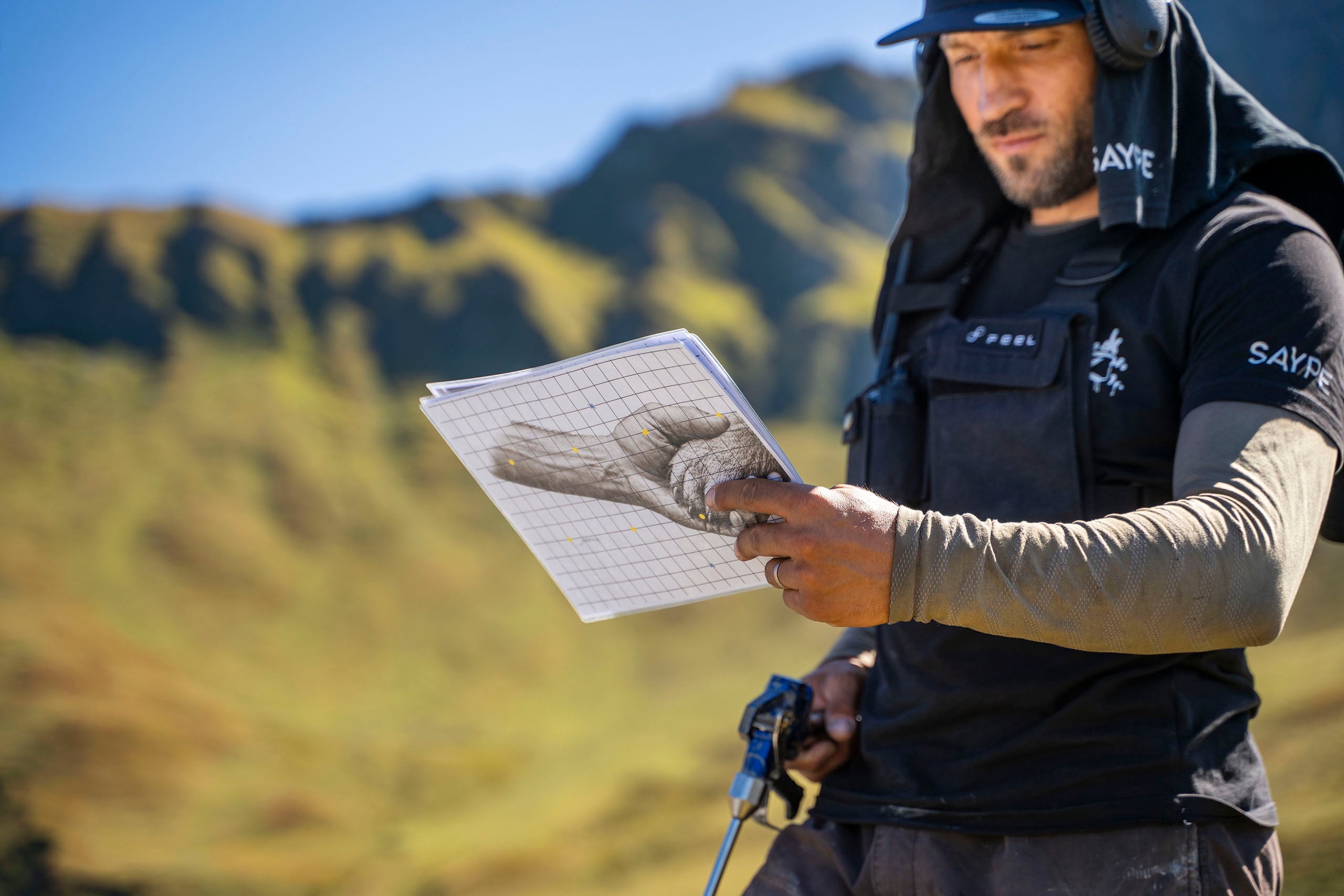
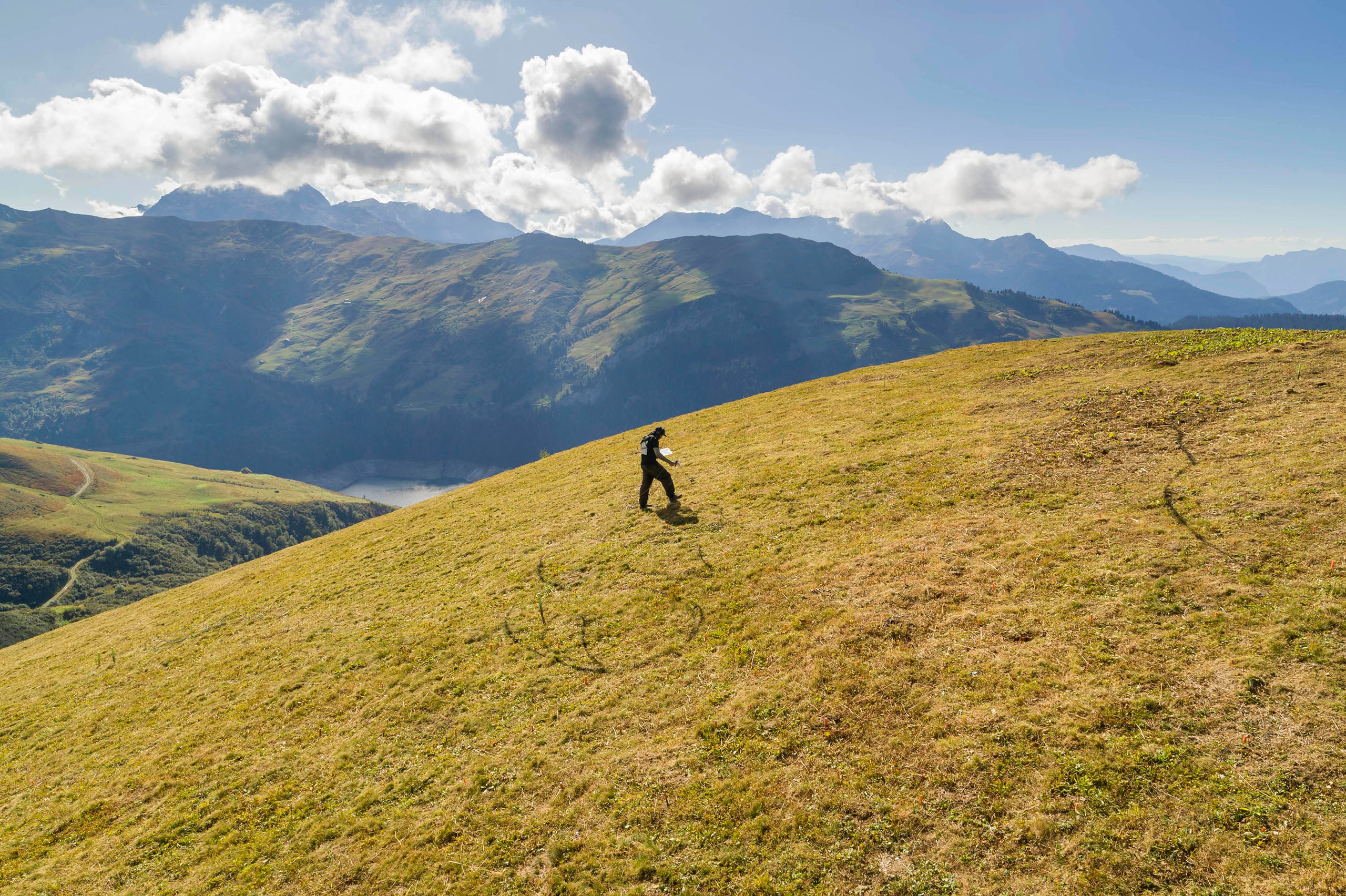
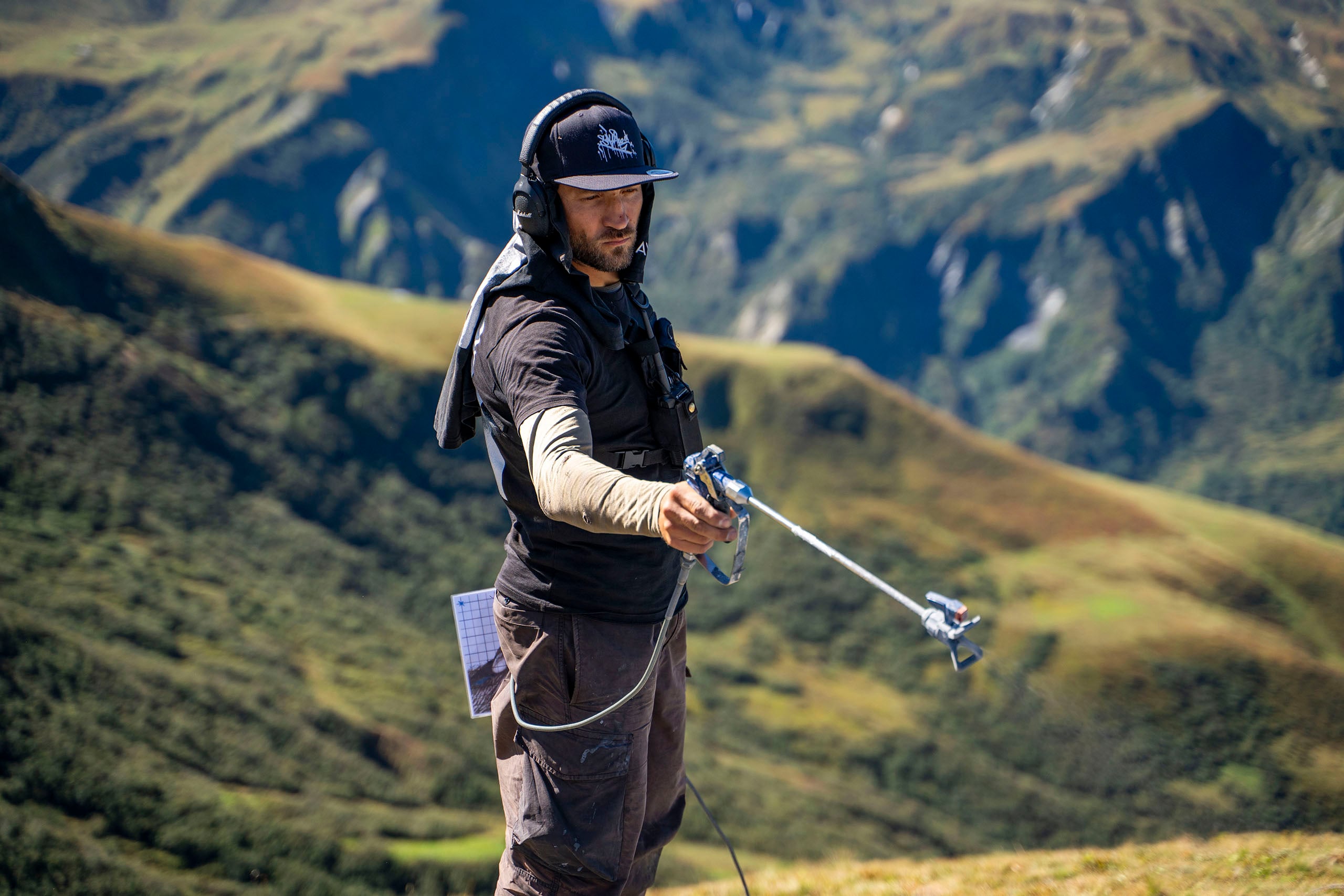
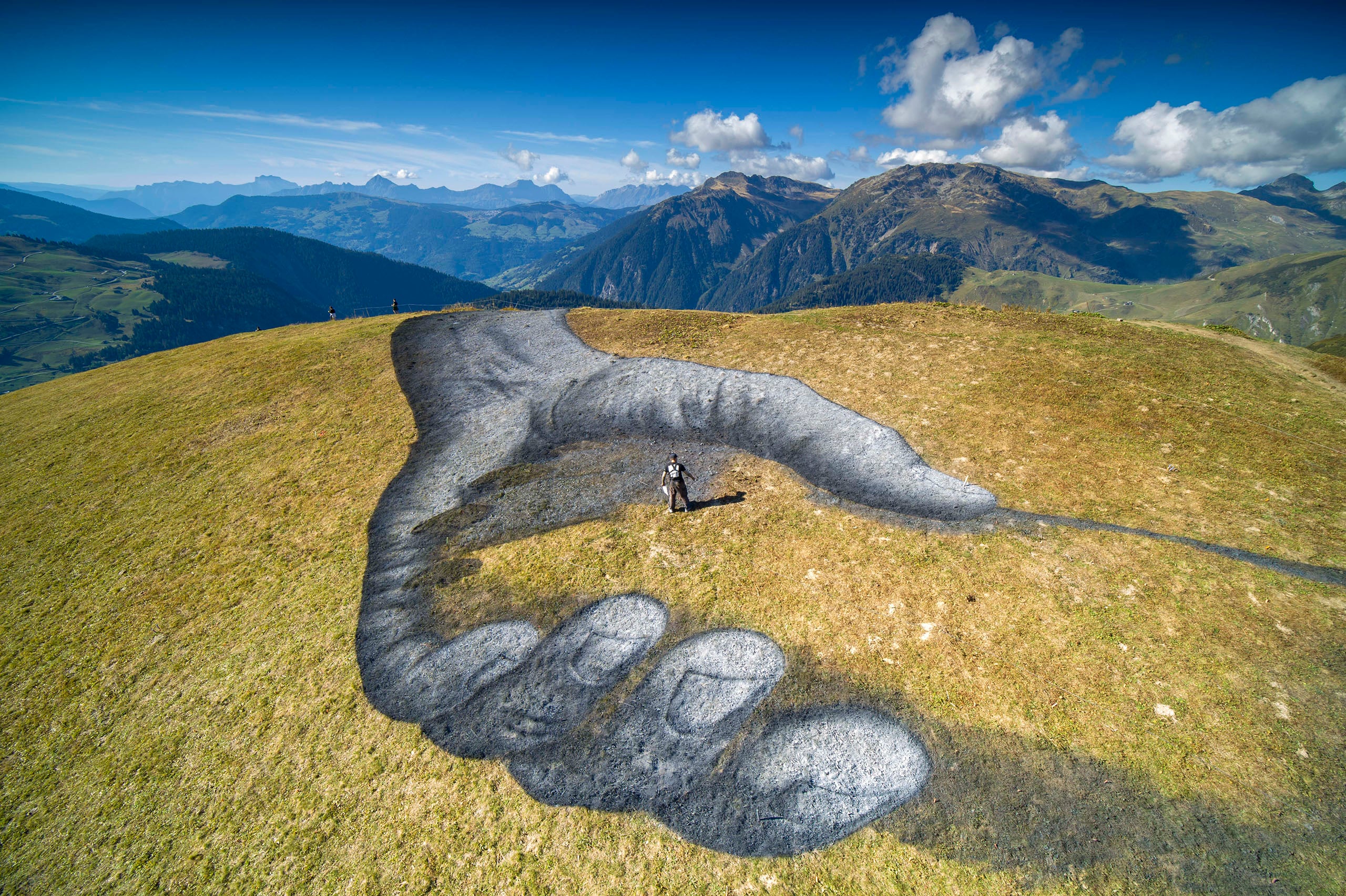
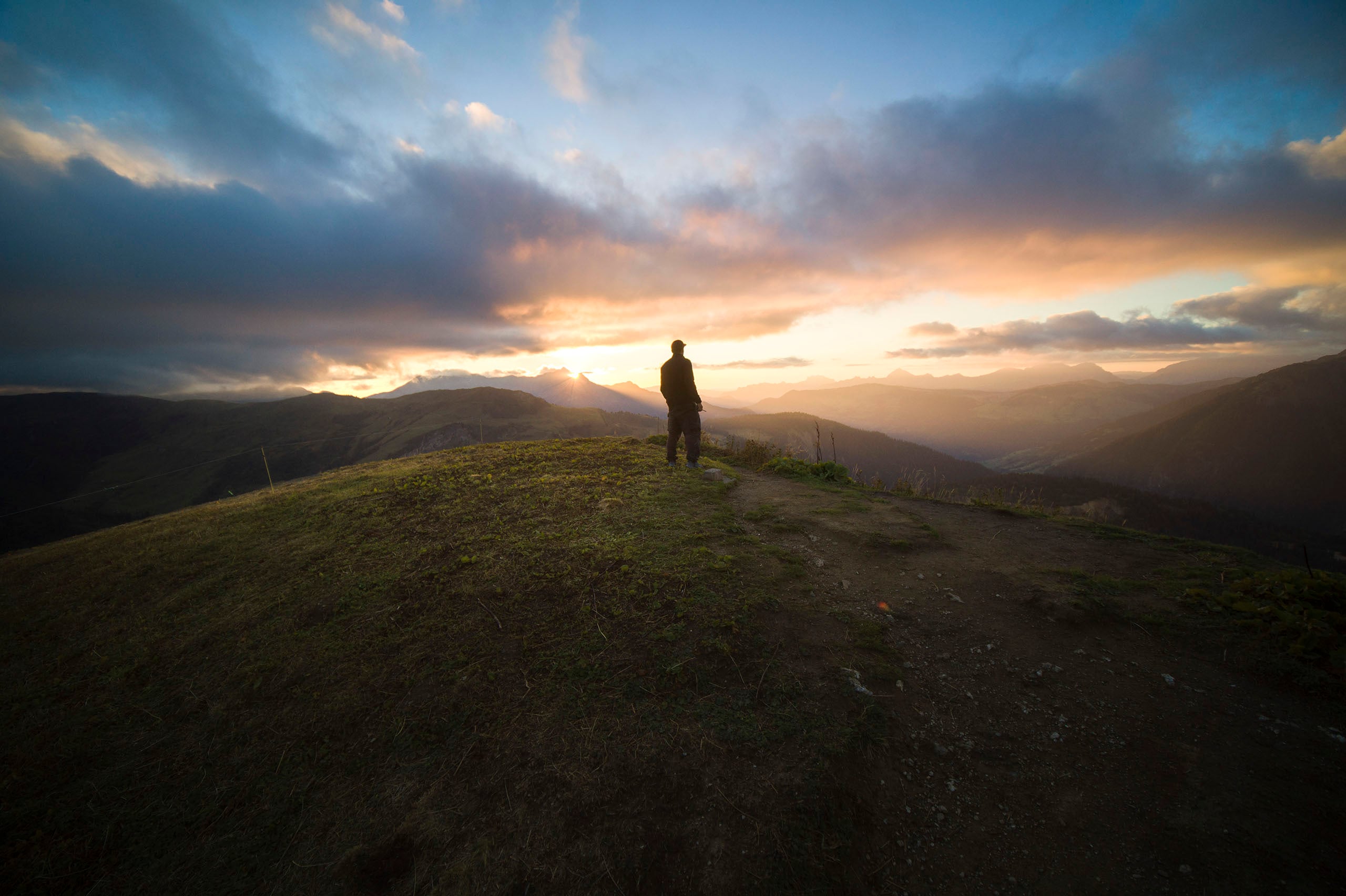
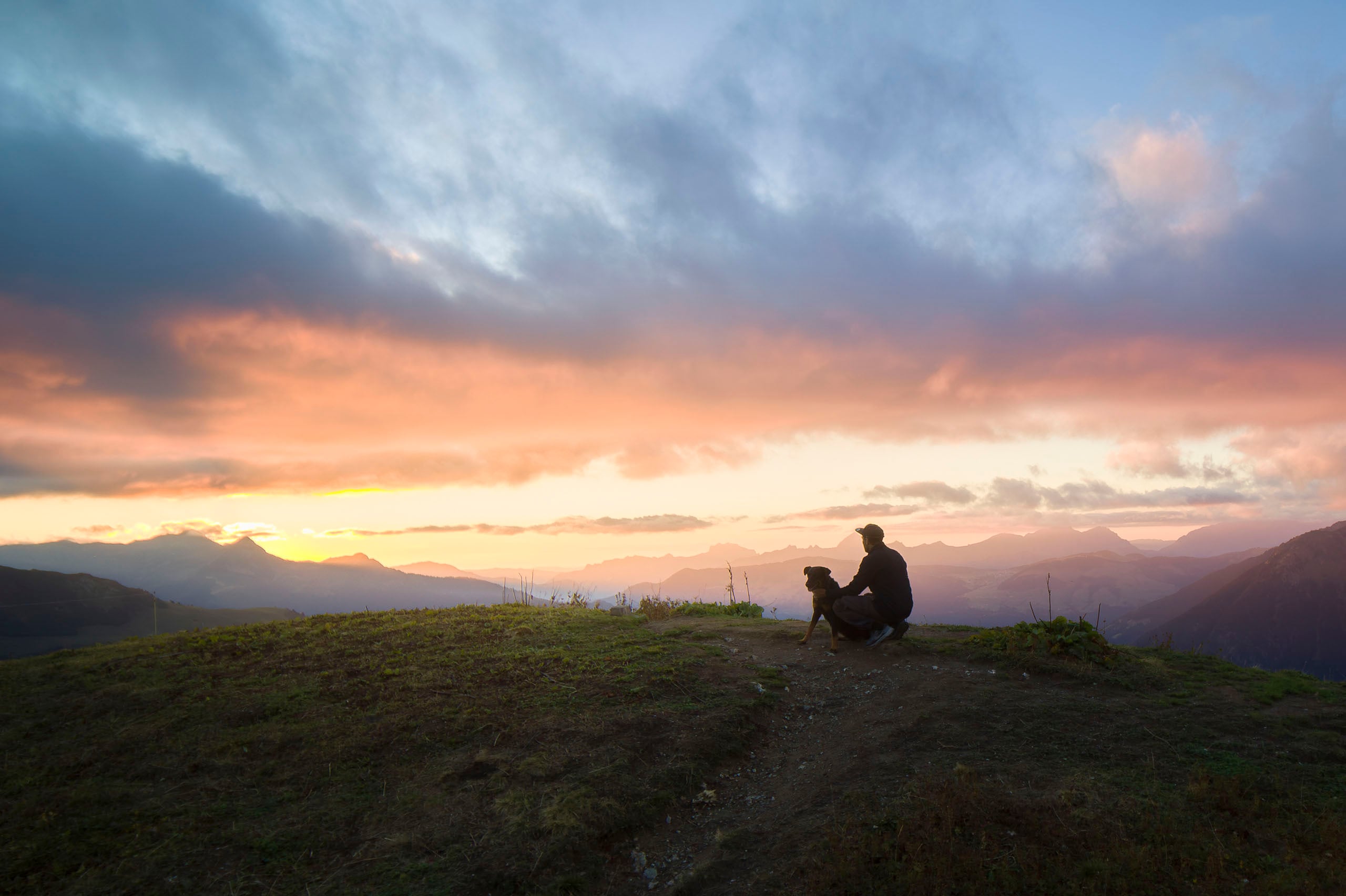
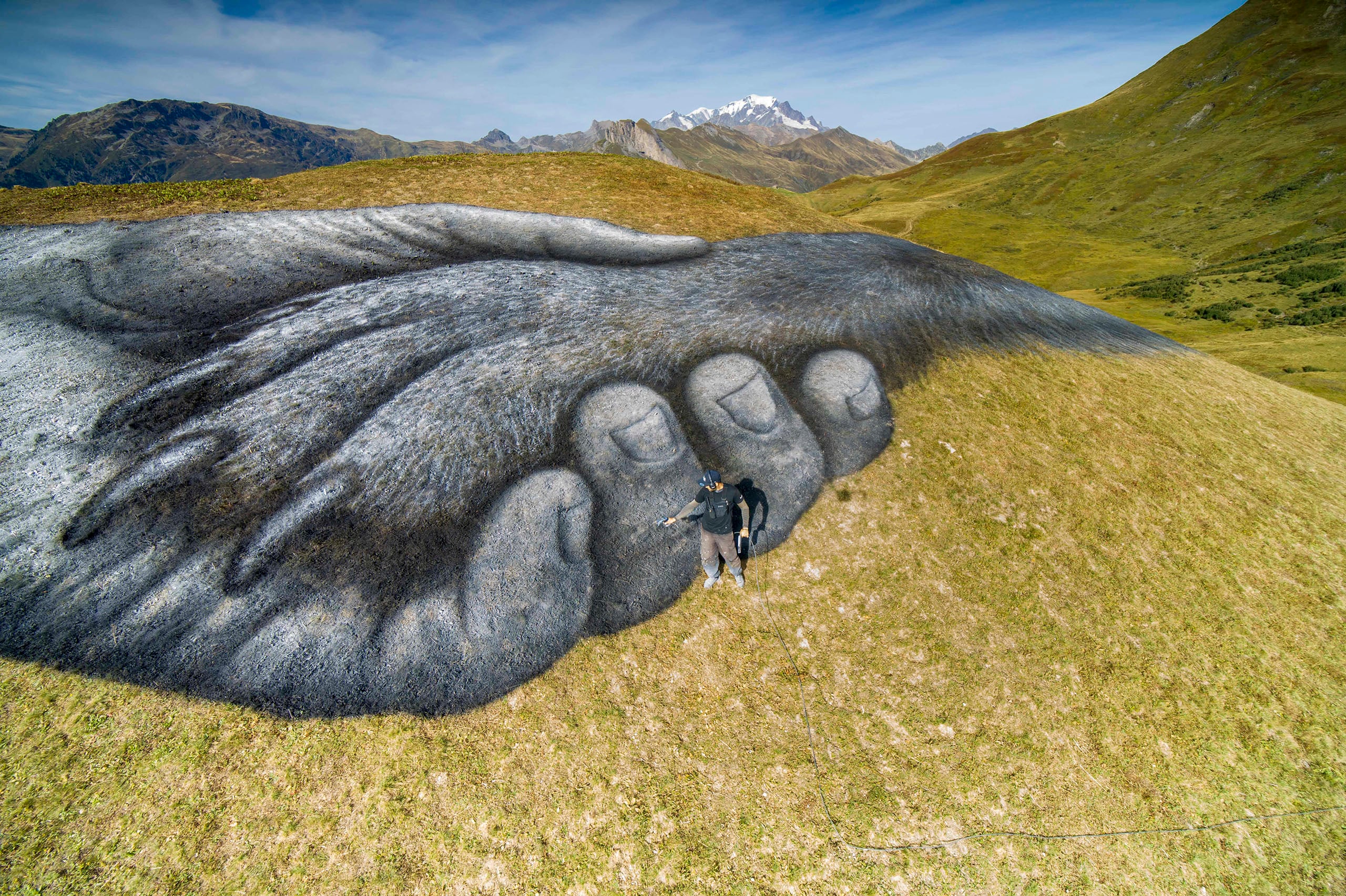
Following the completion of a site-specific work, signed and numbered prints on matte fine art paper (40×60 cm and 120×80 cm) are offered for sale on his website. He also creates unique physical pieces for galleries and museums. “Before painting the mural, I place 50×50 square centimeters of paper where I’m going to paint. And before taking the final photographs, I remove these pieces of paper. It’s the only physical trace left behind, created by nature, the elements, and the climate. I’ve been using this process since 2023. These fragments of the artwork form small squares that I’ve called ‘pixels.’ And collectors buy them. They’re one-of-a-kind.”
Beyond Walls in America
Saype is currently focusing on the United States amid growing social divides. He recently wrapped up a project in San Francisco—his second U.S. location after Minneapolis and his twenty-third worldwide, following stops in Paris, Berlin, Cape Town, Belfast, Fuji, Montreal, and Yamoussoukro (his largest mural to date, spanning 18,000 square meters).
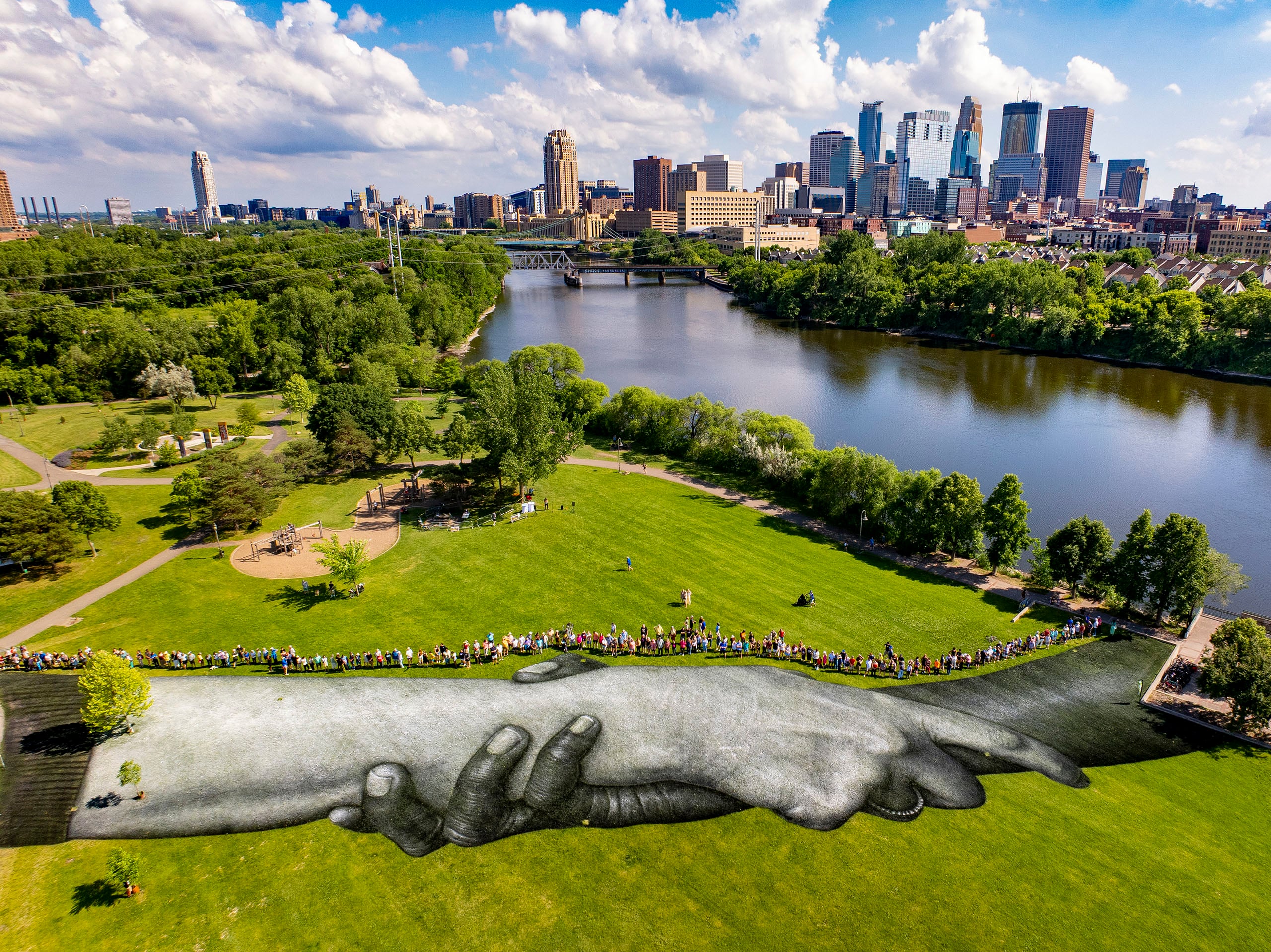
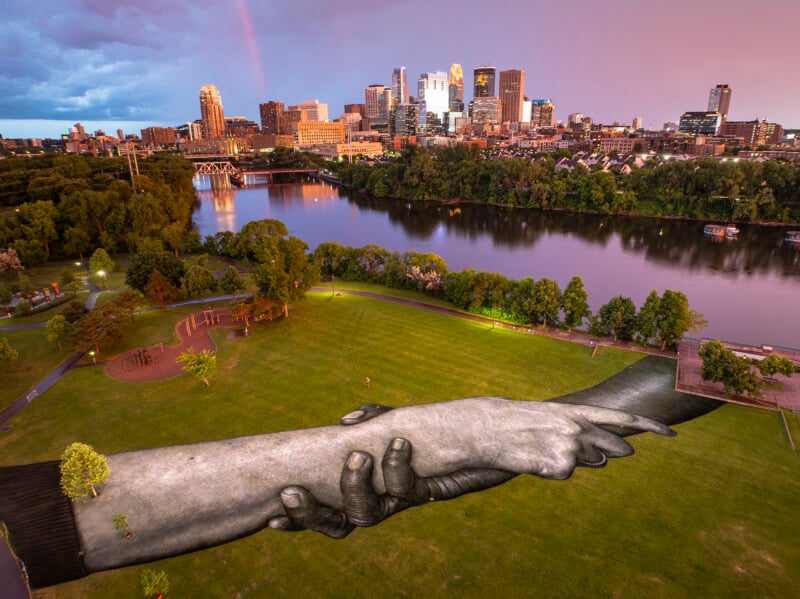
“It’s no coincidence that I started with Minneapolis,” he says. “In 2022, George Floyd was murdered, and that sparked the Black Lives Matter movement. In January 2026, two killings of American citizens by ICE agents sparked a major social movement. In my view, San Francisco is at the center of the storm when it comes to AI issues. It has been said that there is a more than 10% chance that AI will destroy humanity in the coming decade—not to mention the resulting social upheaval.”
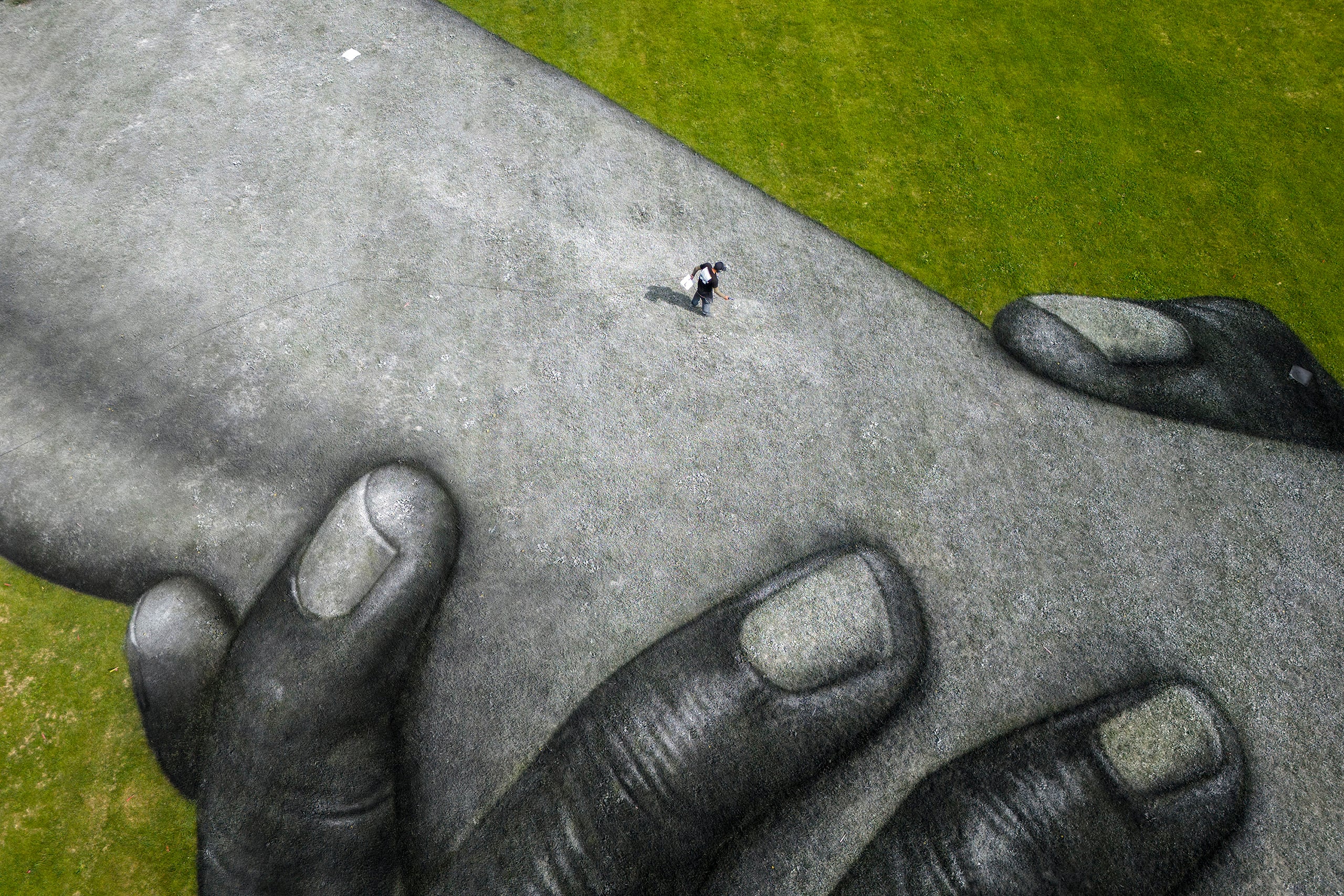
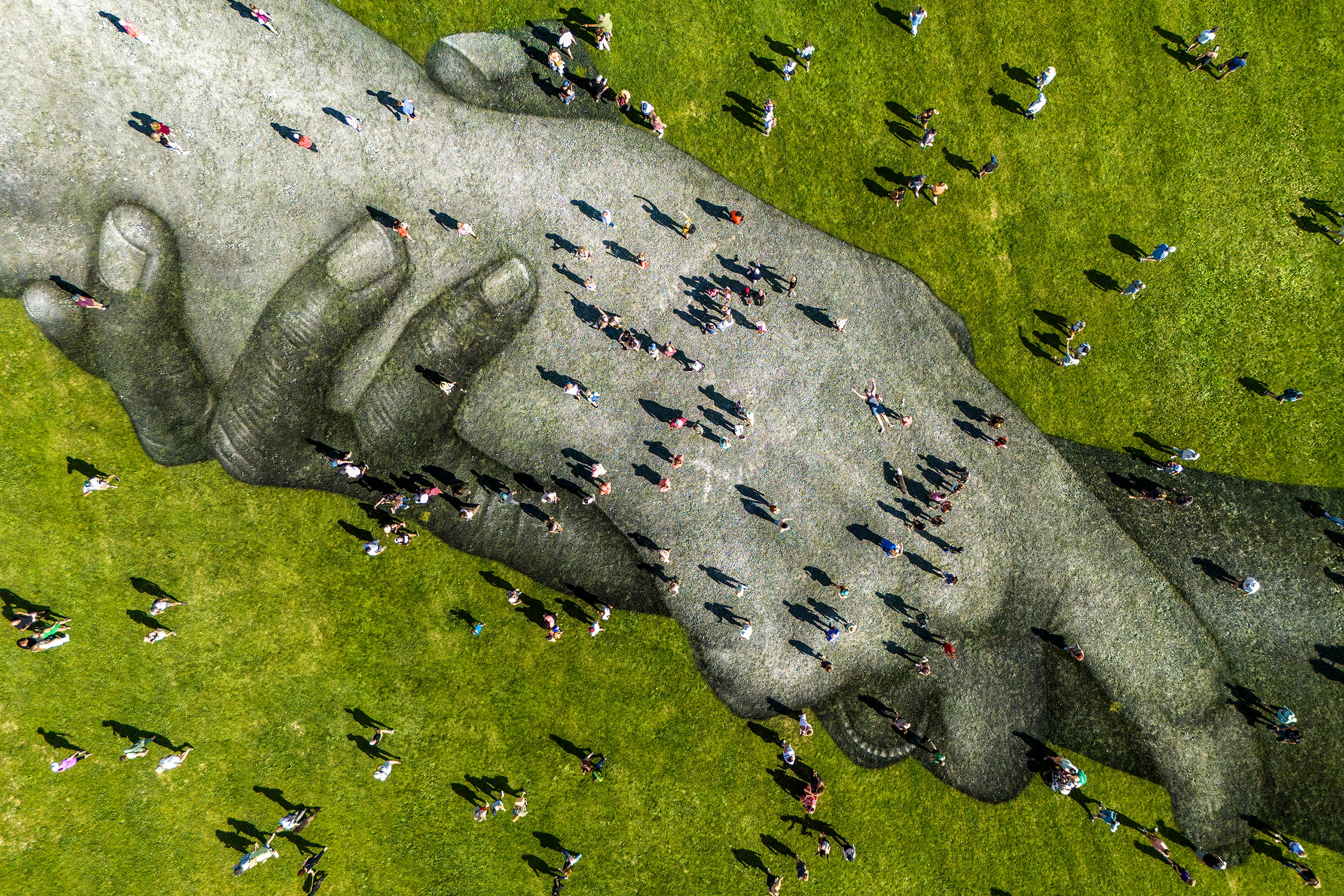
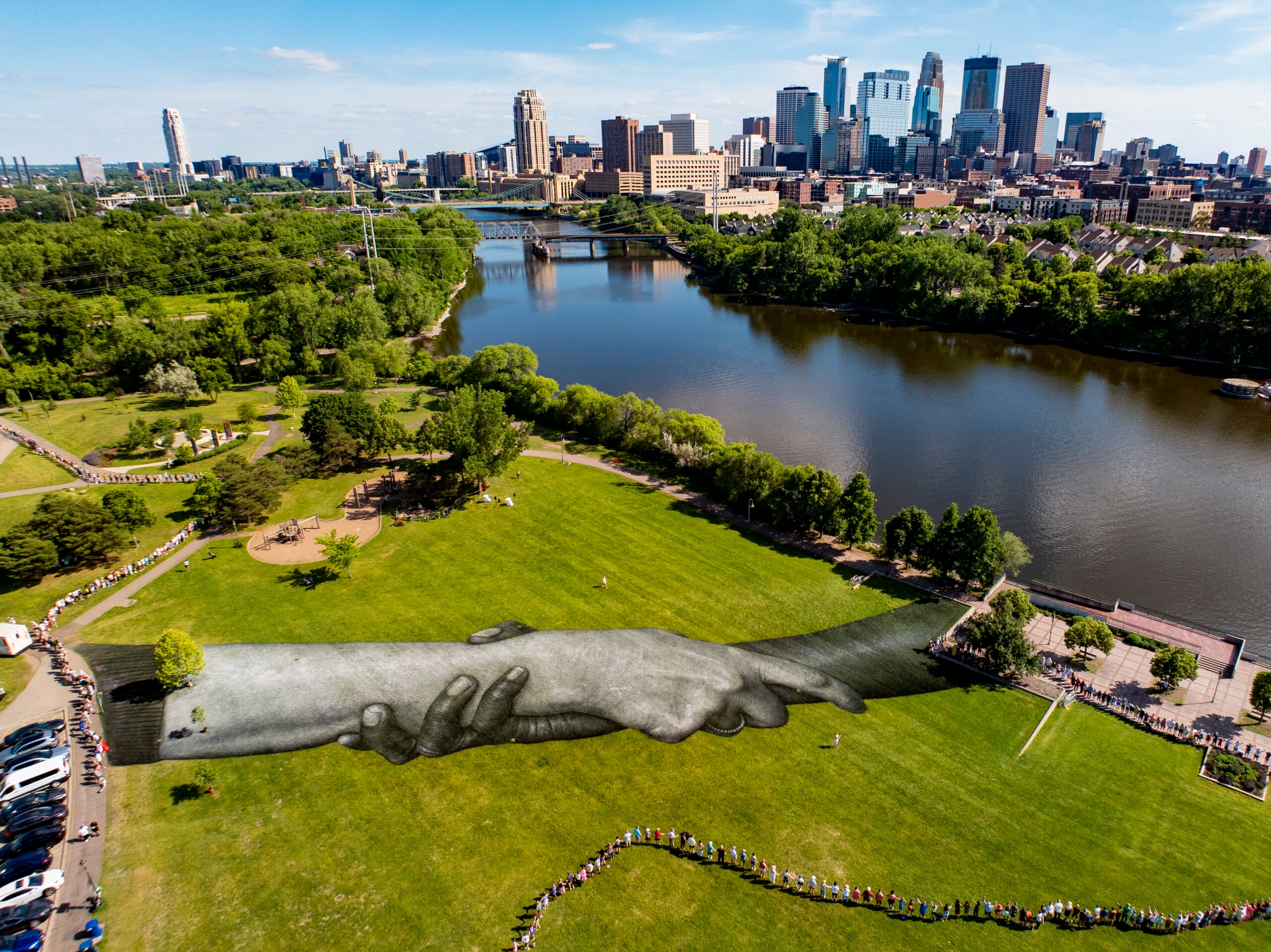
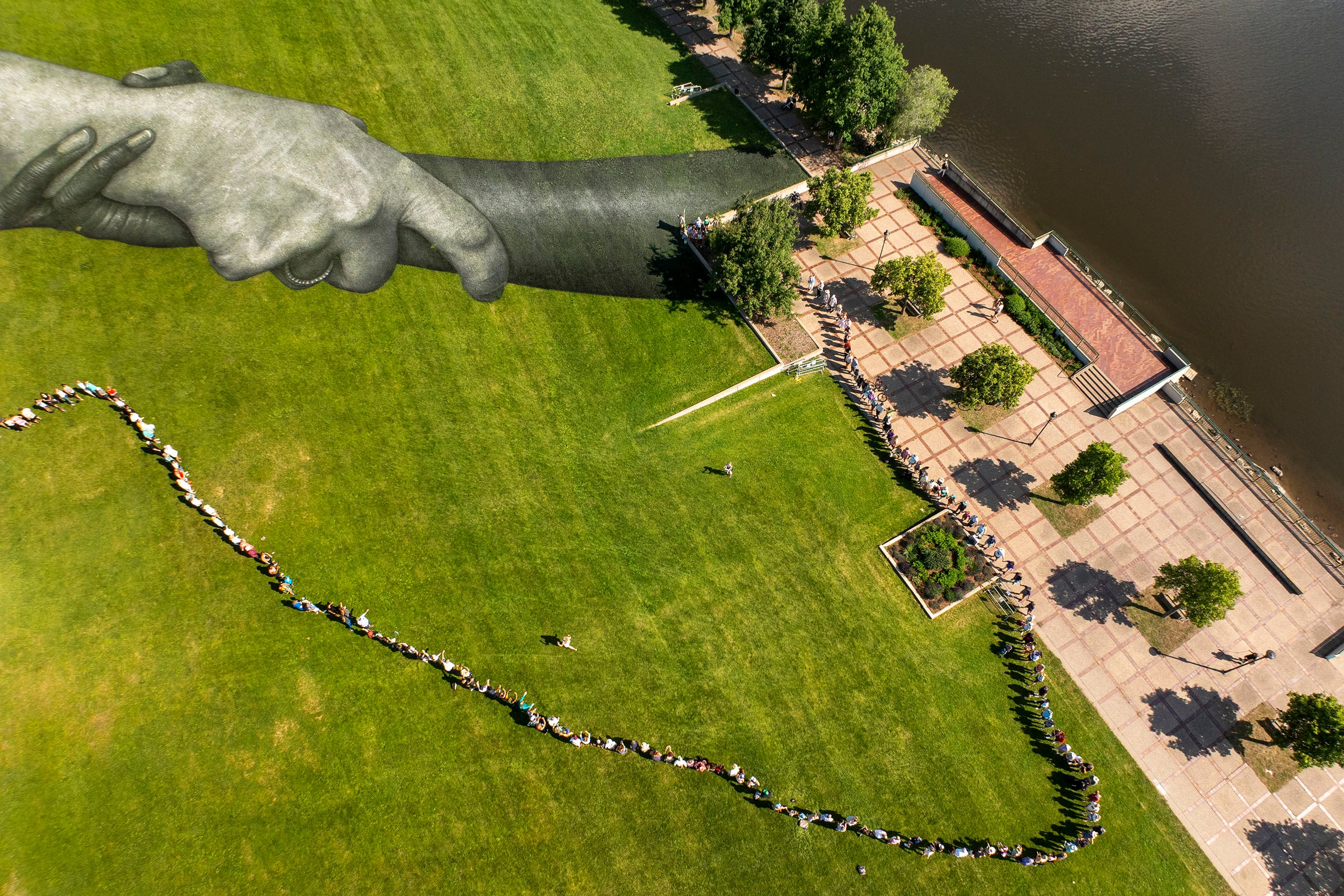
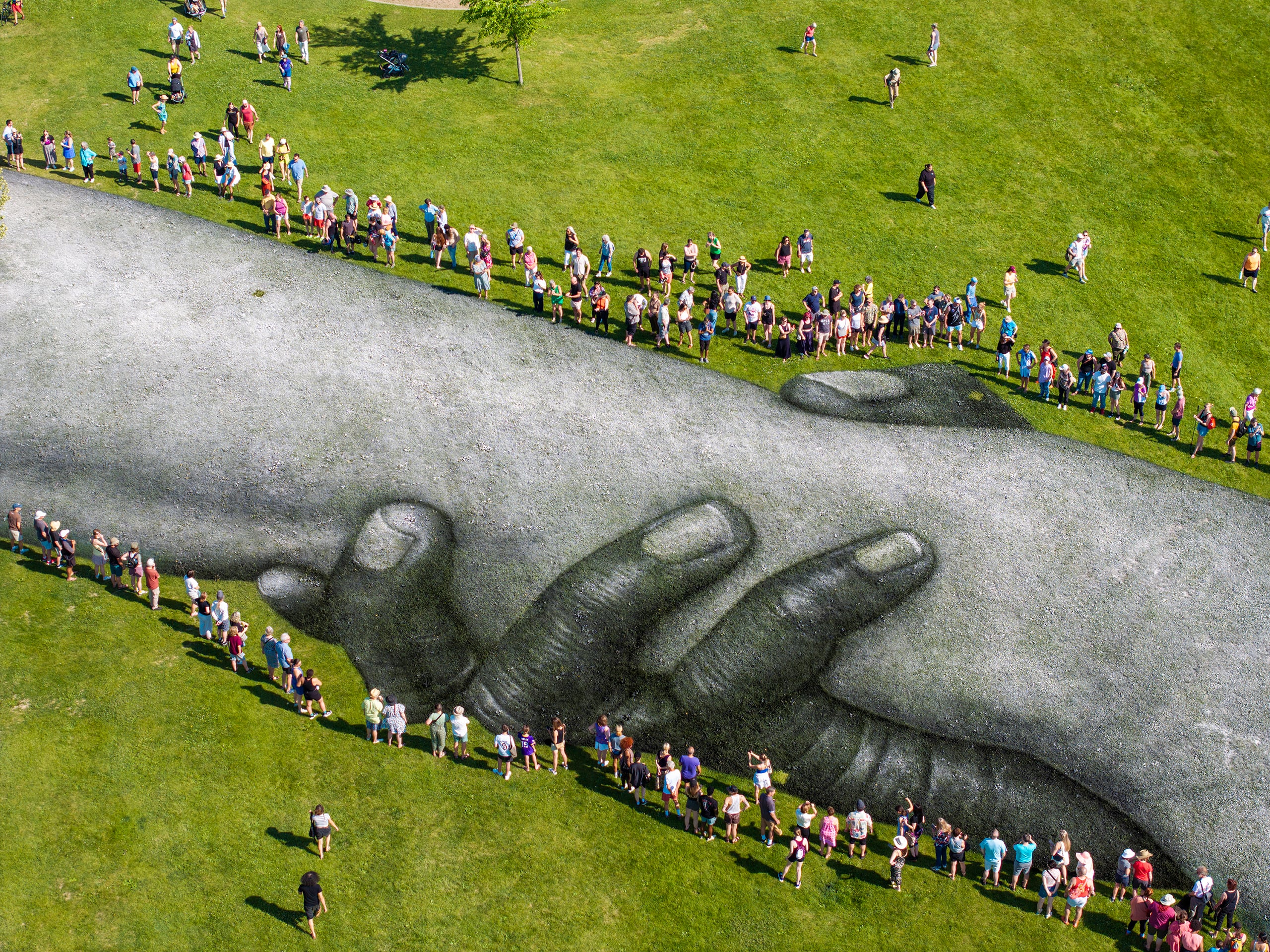
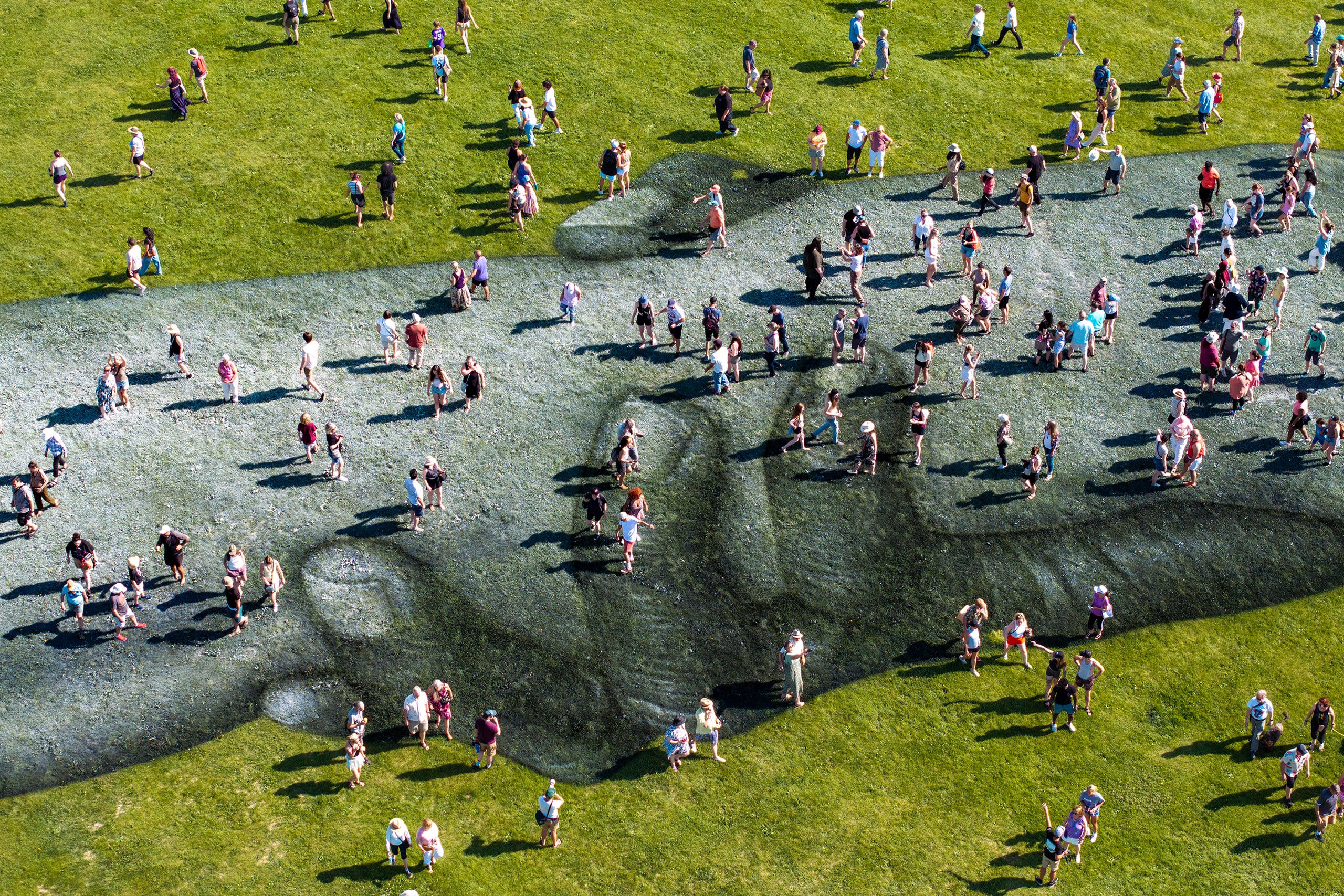
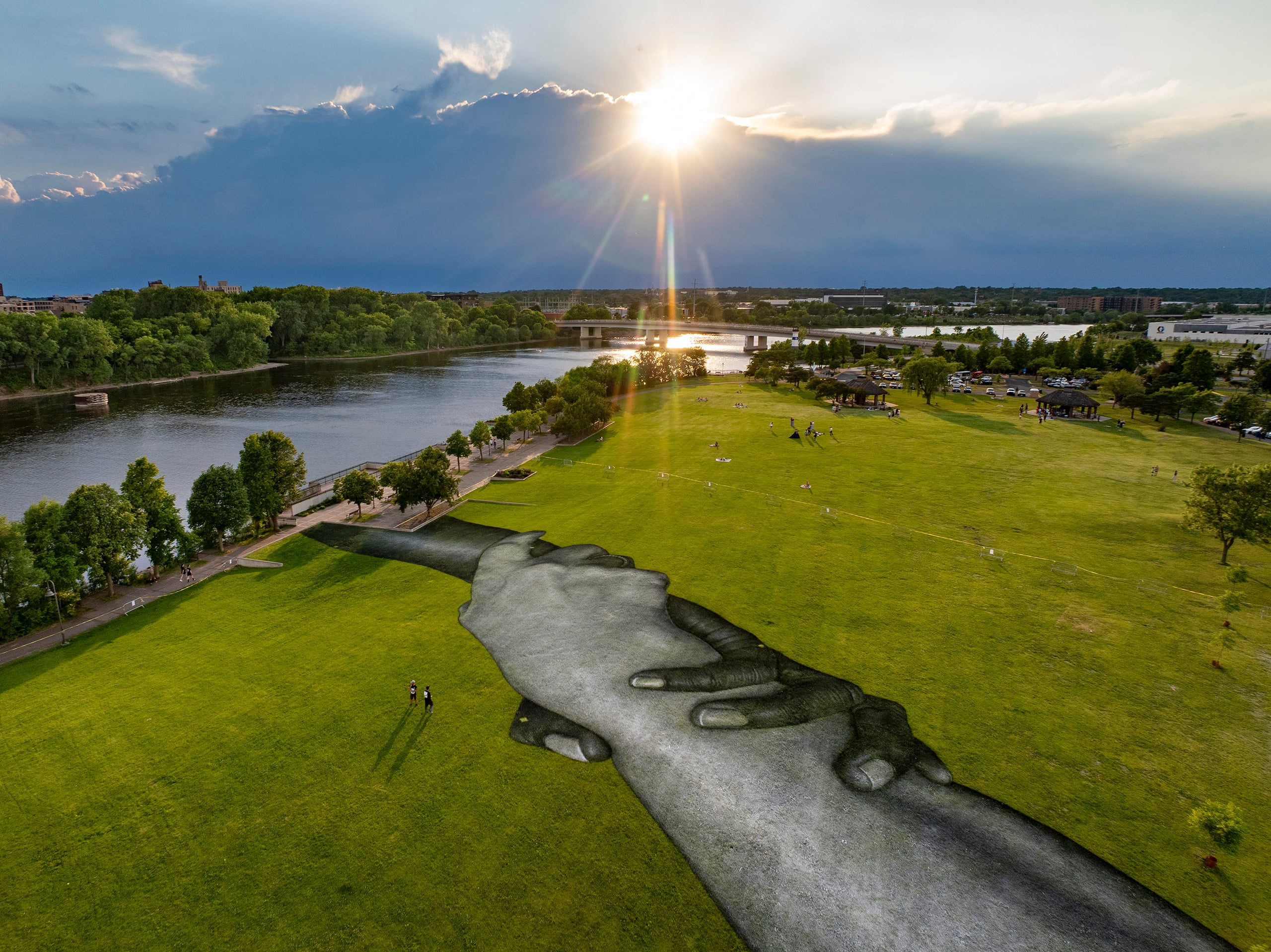
Between 2027 and 2030, he plans to roll out an American chapter of “Beyond Walls,” targeting roughly a dozen cities including Chicago, Austin, Detroit, Los Angeles, New York, St. Louis, and Miami. He aims for twelve stops over three years, beginning with two or three murals in 2027. His next destination is Montgomery, Alabama, to explore themes of civil rights. “The spot I’ve chosen that best showcases my artwork is in front of the State Capitol, whose park measures 100 meters by 50.”
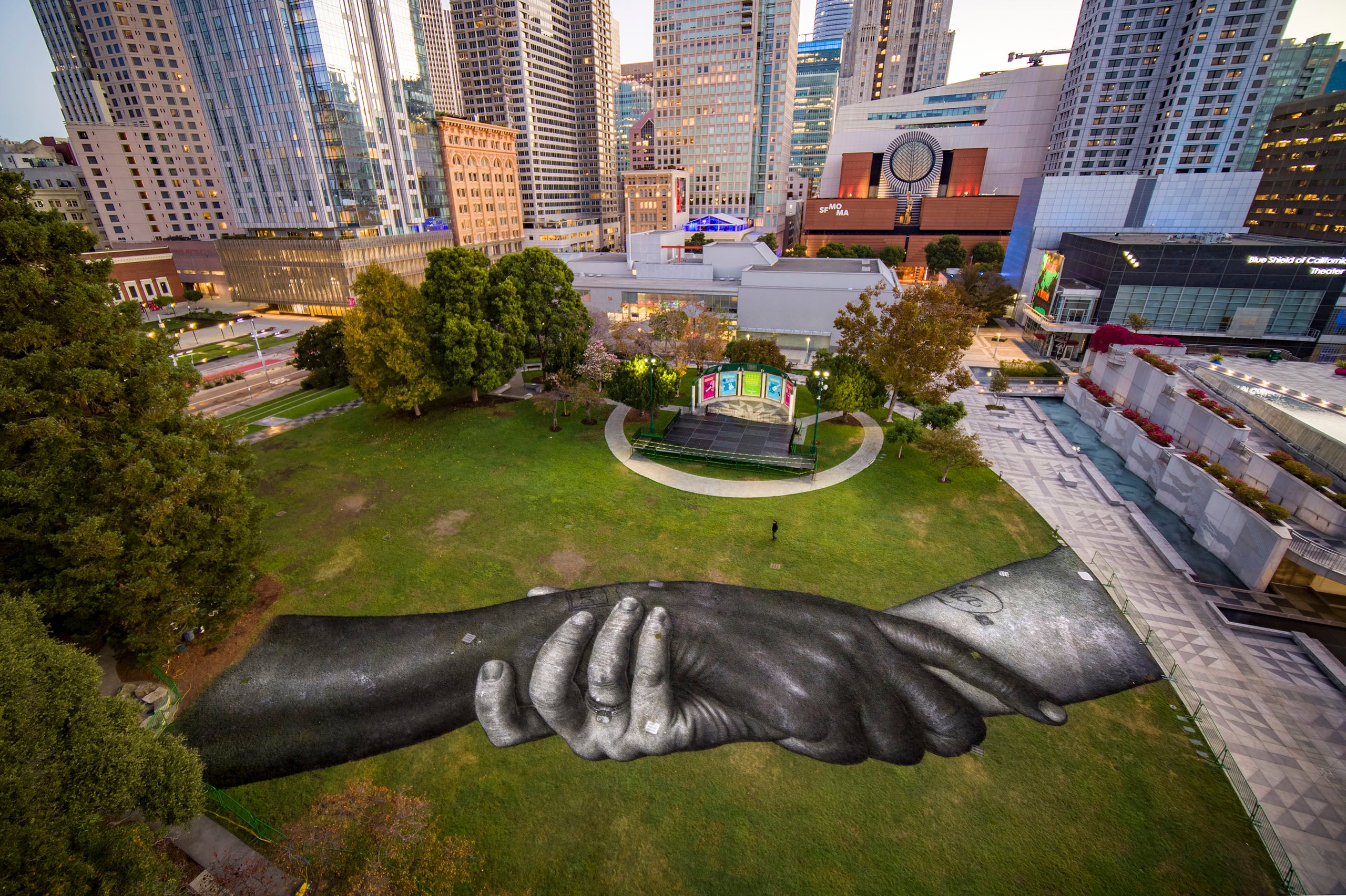
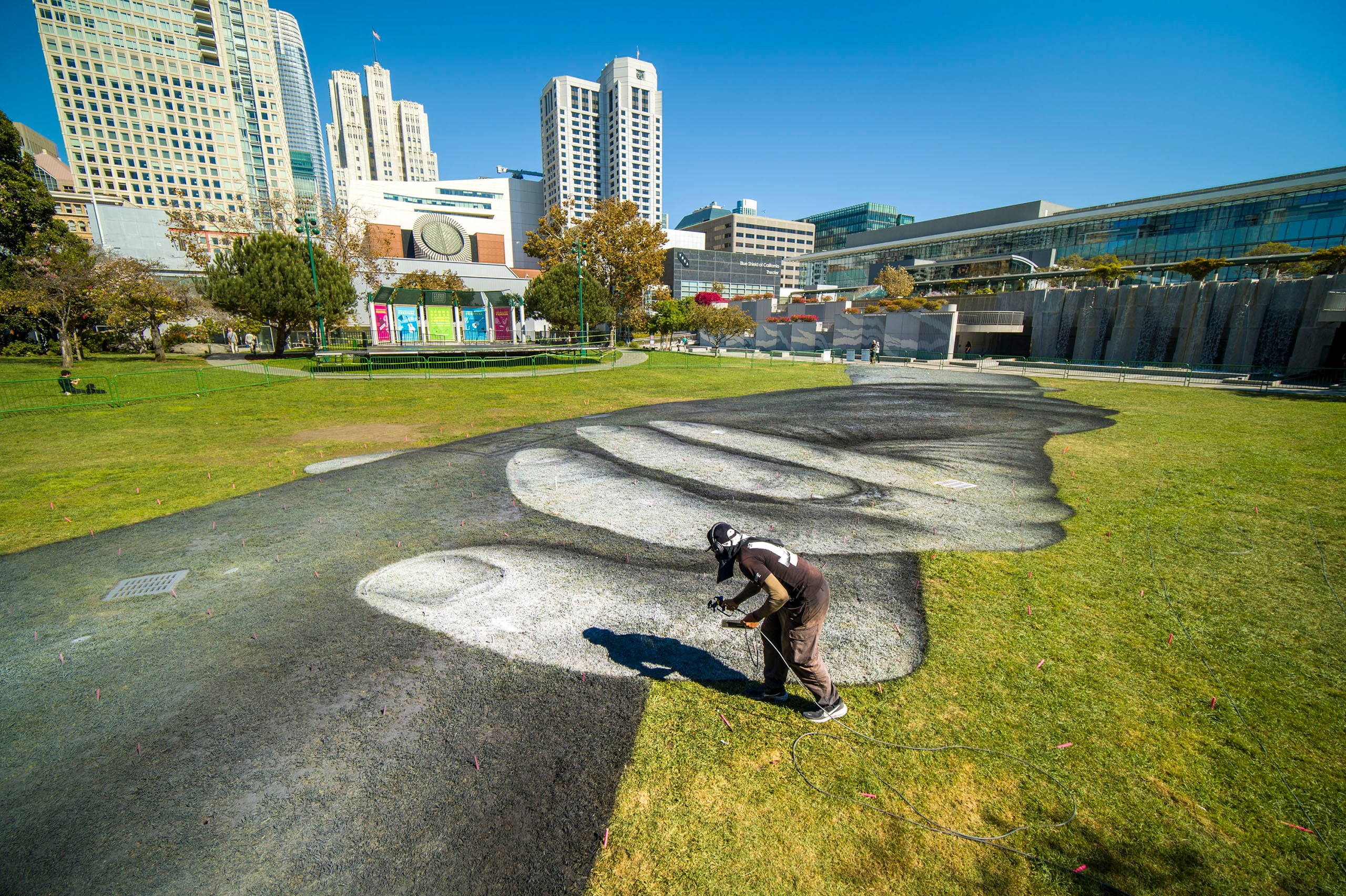
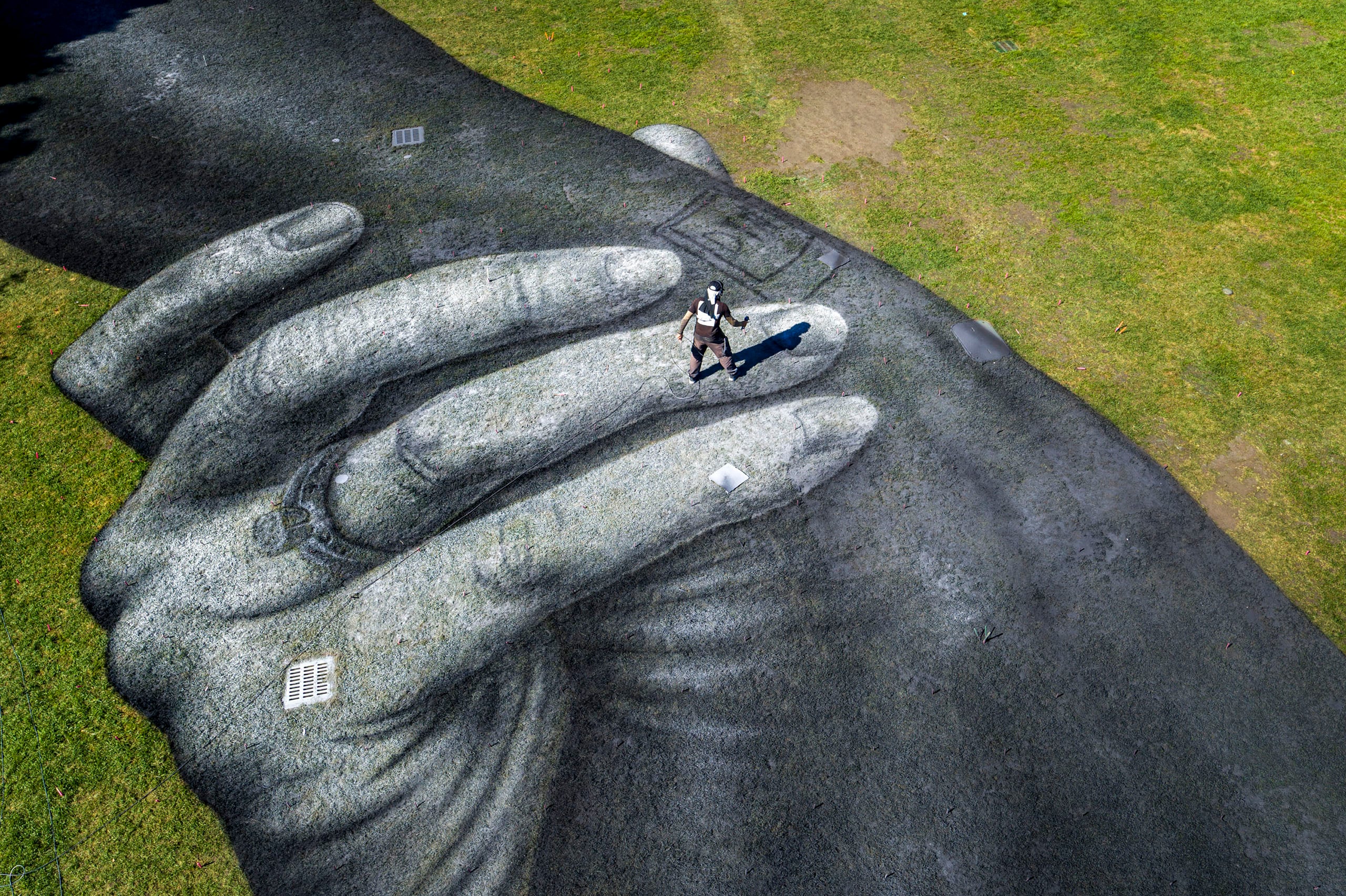
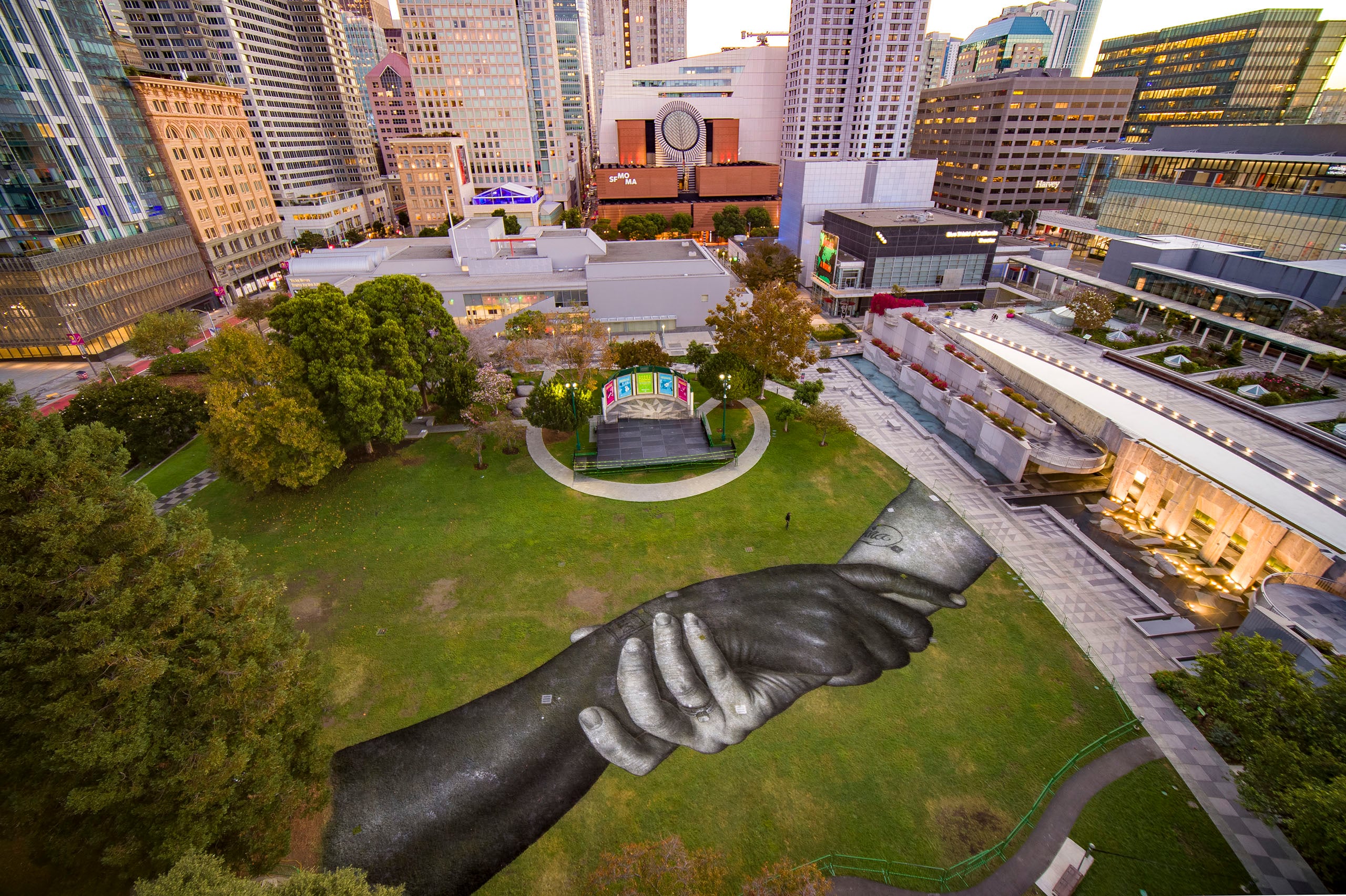
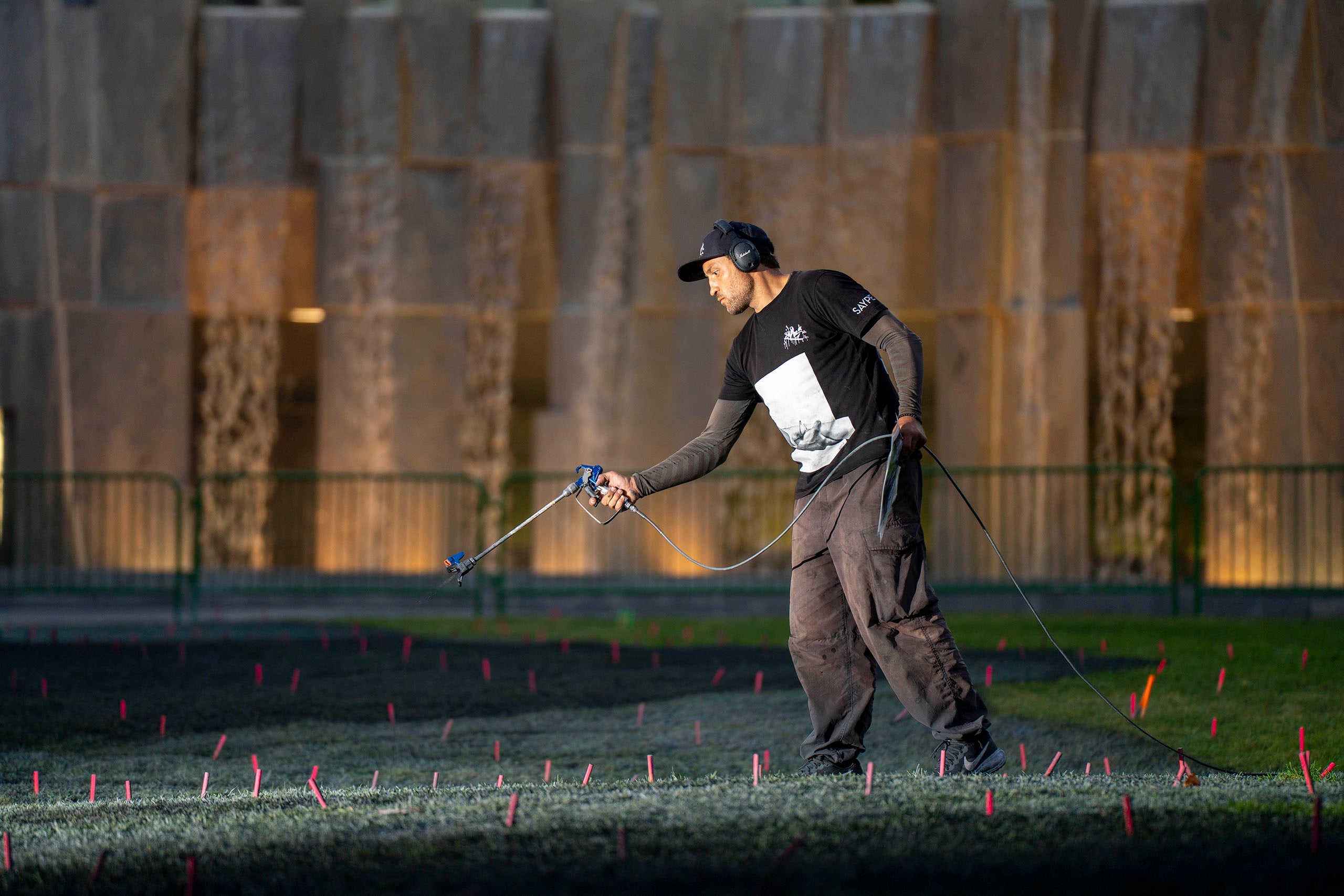
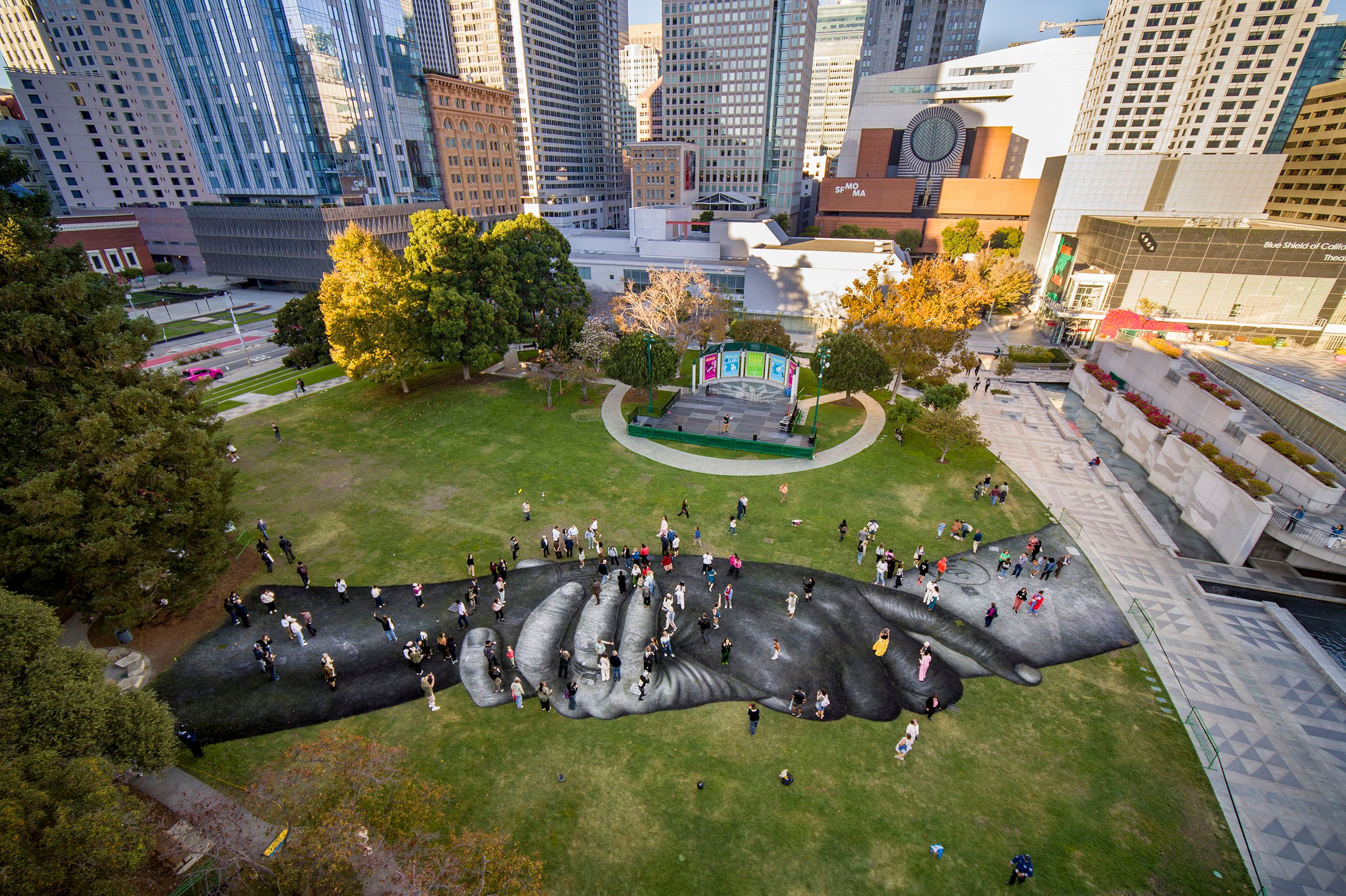
When considering the future of humanity and land art, Saype feels both concerned and hopeful. Children are a recurring motif in his work, embodying the promise of a kinder world amidst rapid global change. “I feel a sense of mission in my work because I have an artistic voice that carries weight in terms of visual impact on society. I am deeply convinced that we will face unprecedented and unique choices. I always try to frame my messages in a positive light, even when addressing fundamental issues that remain complex. I think it harder to create beauty, nuance, and poetry than to make provocative art that forces people to question.”
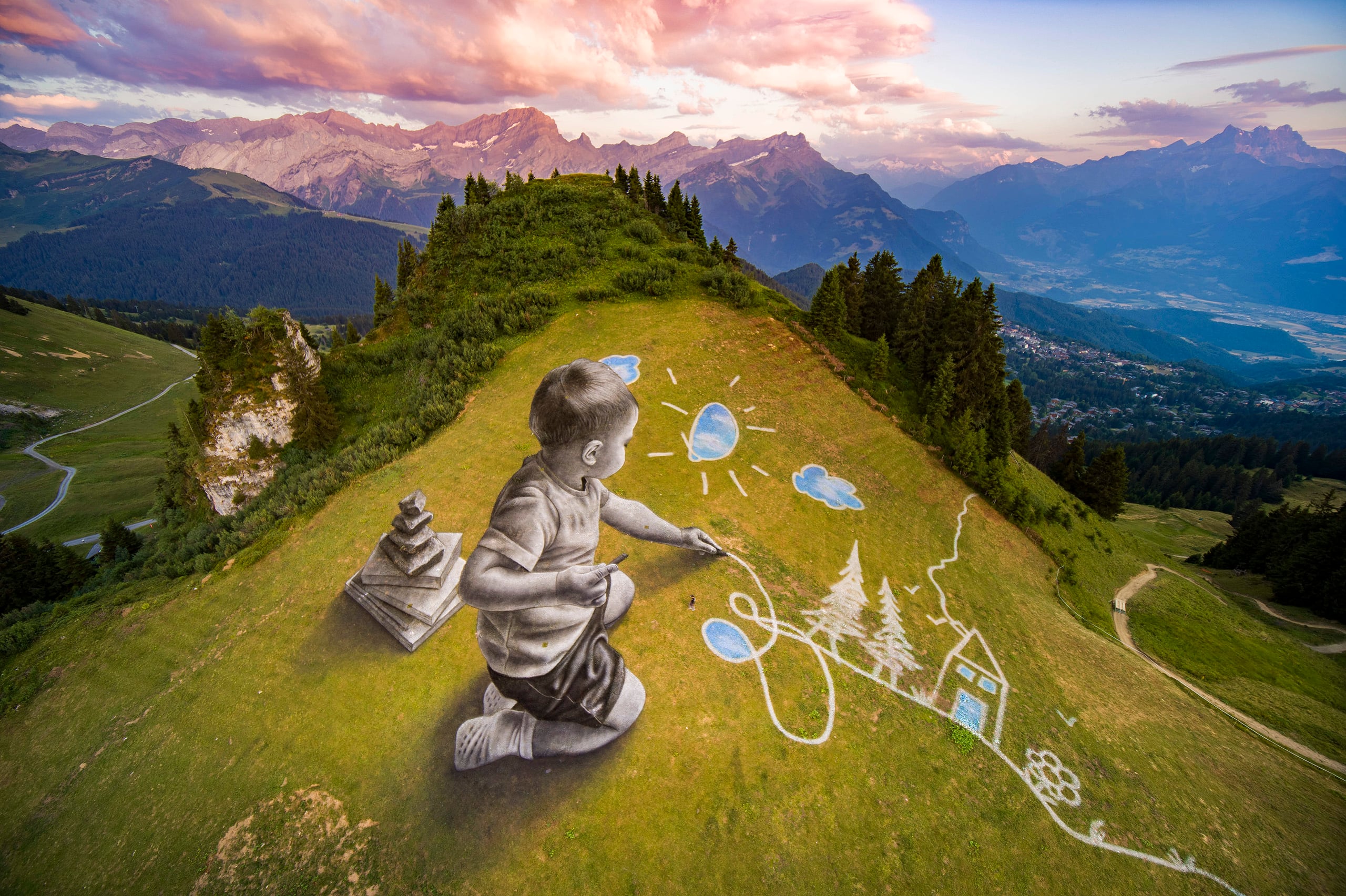
Faced with global warming, landslides, tornadoes, and widespread flooding, the artist is mindful of his carbon footprint and actively seeking ways to limit air travel. Still, Saype remains optimistic about the future of land art: “Land artists will have plenty to say and share about this ever-changing landscape.”
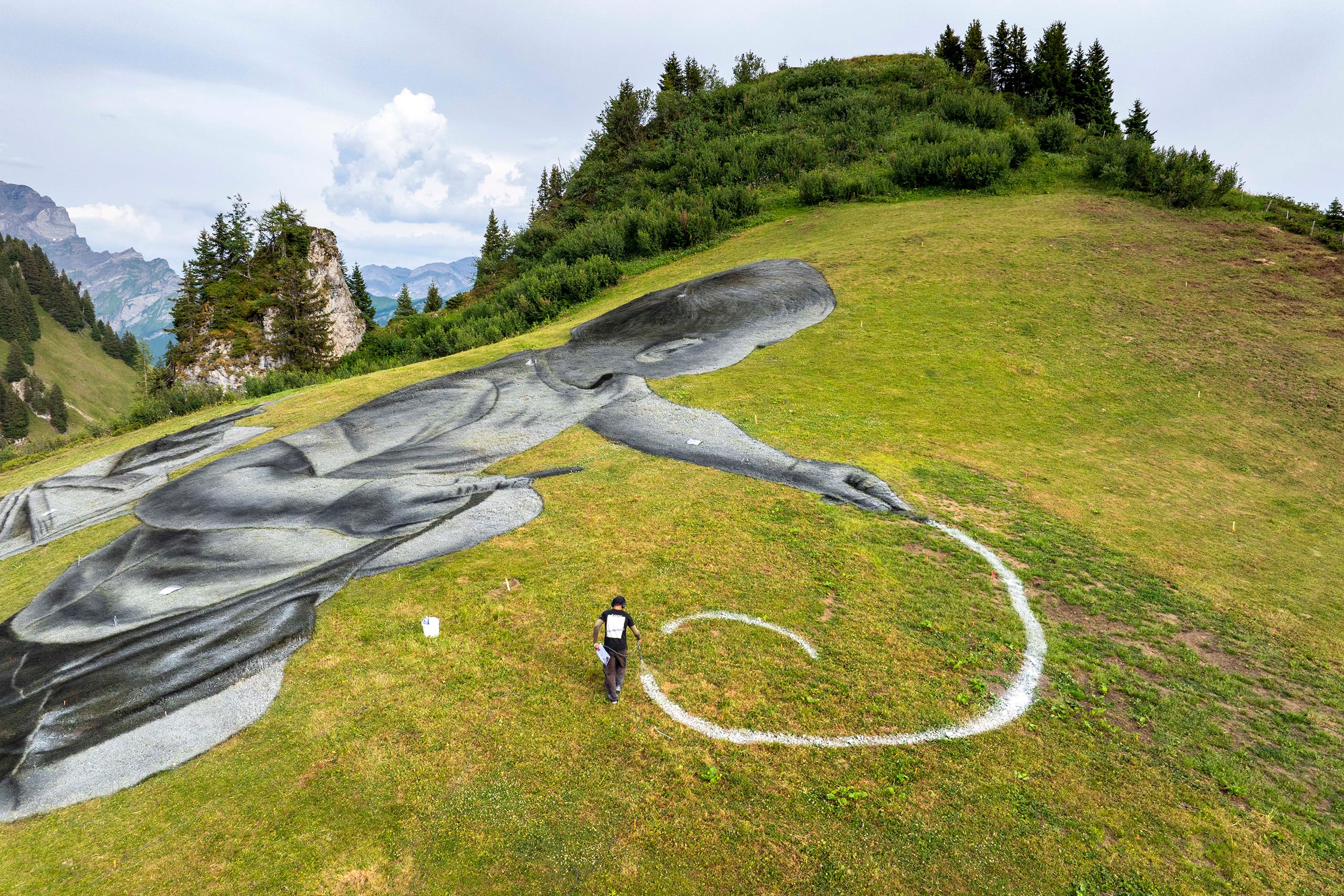
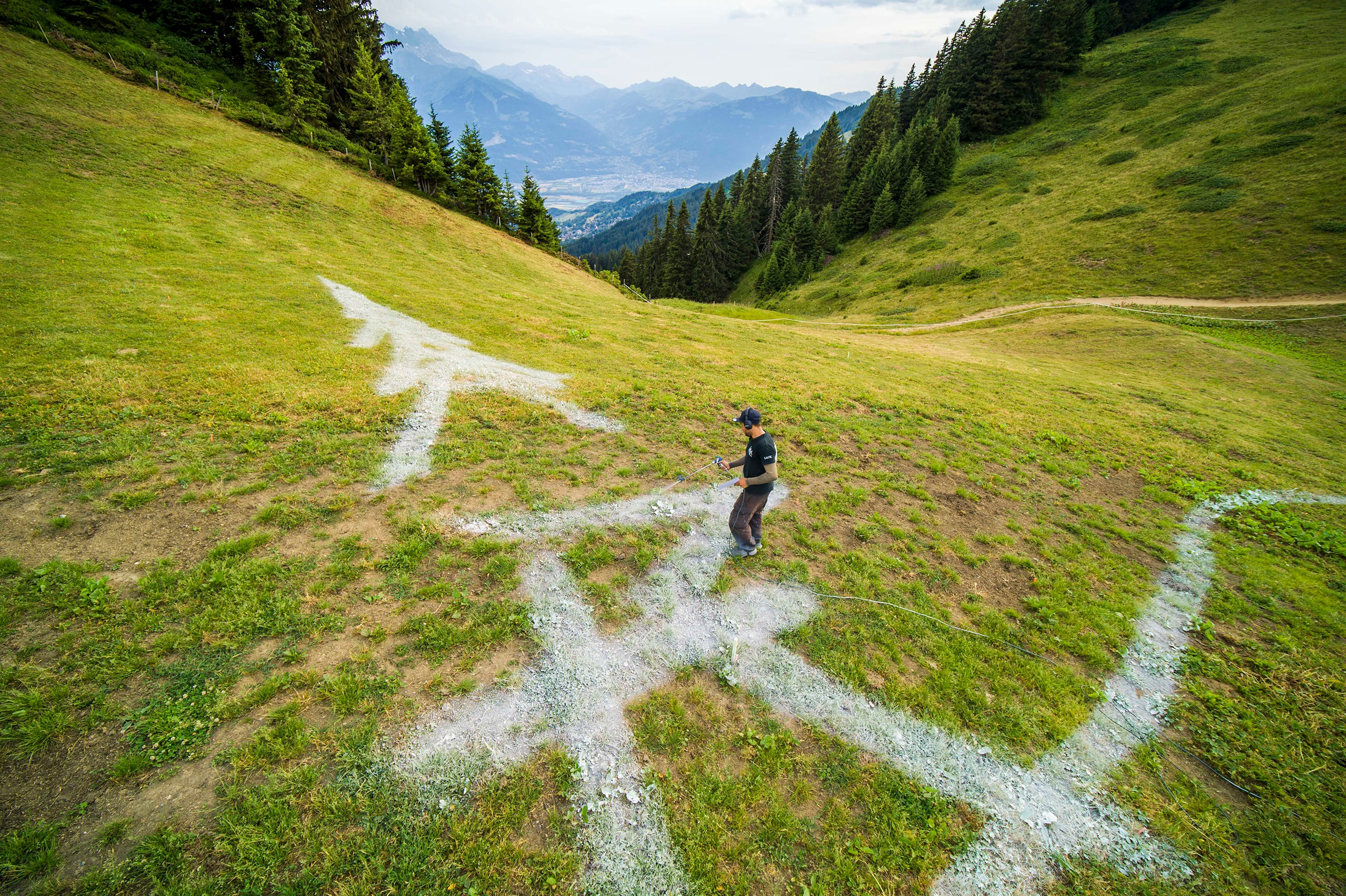
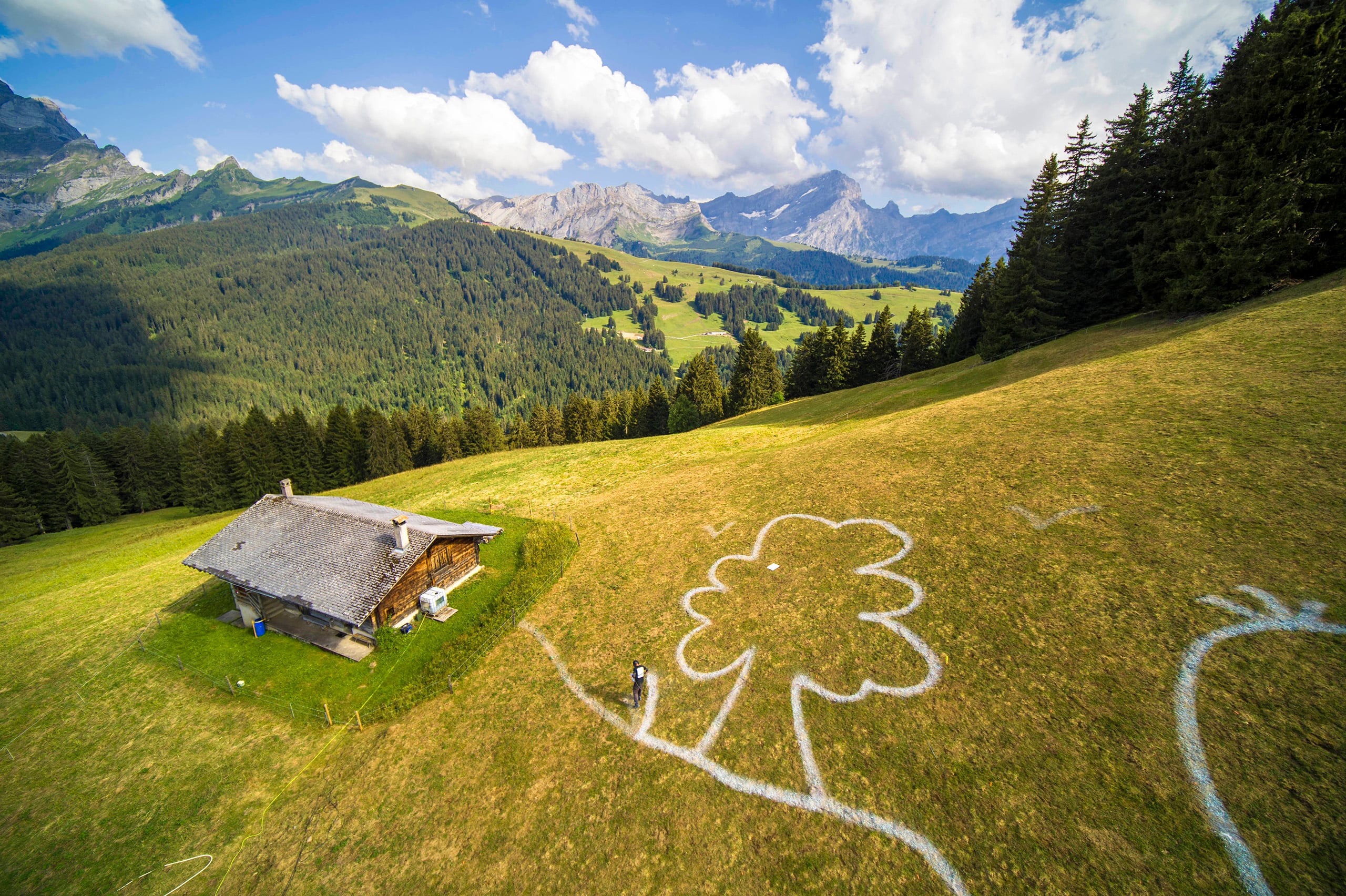
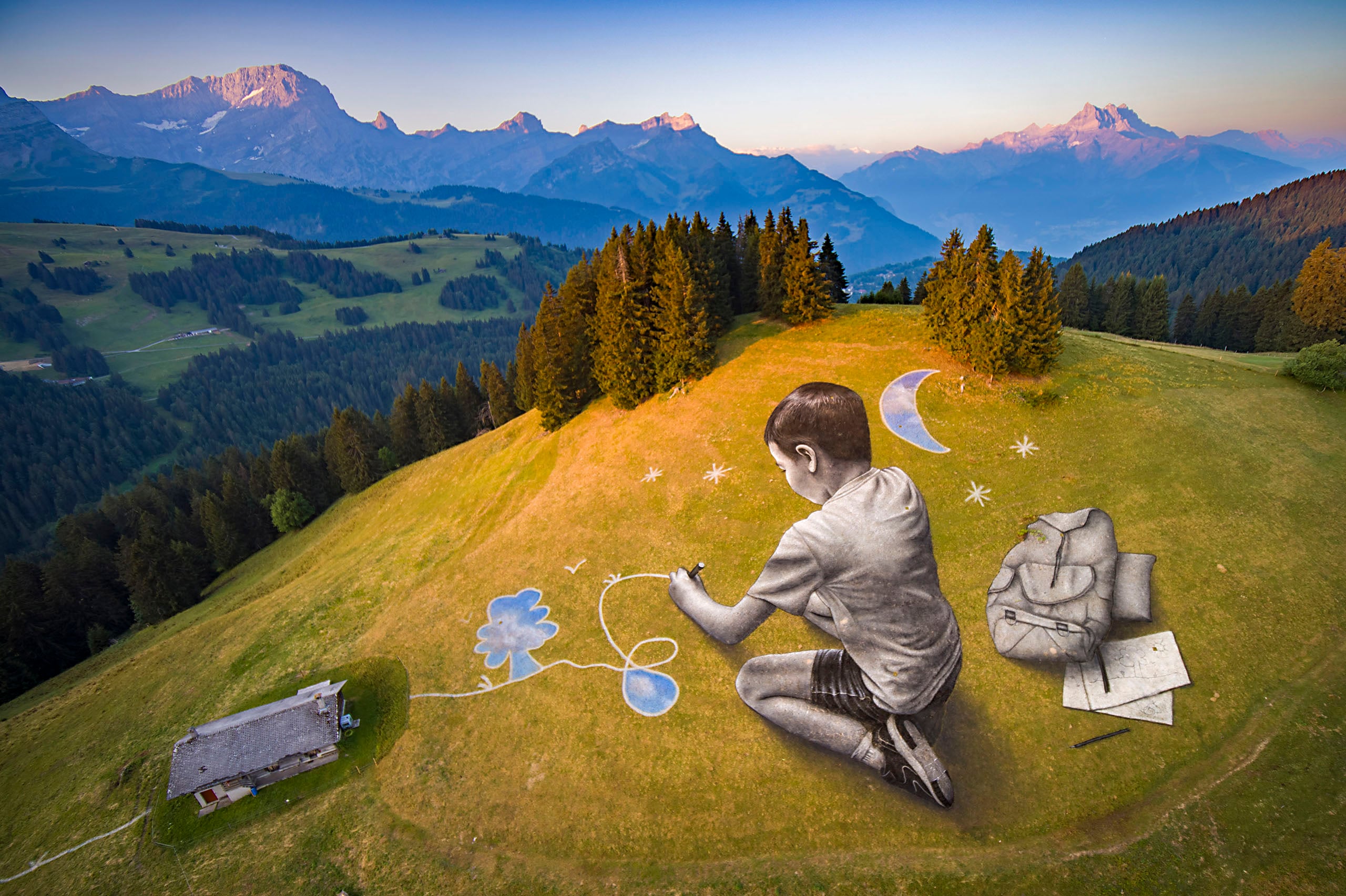
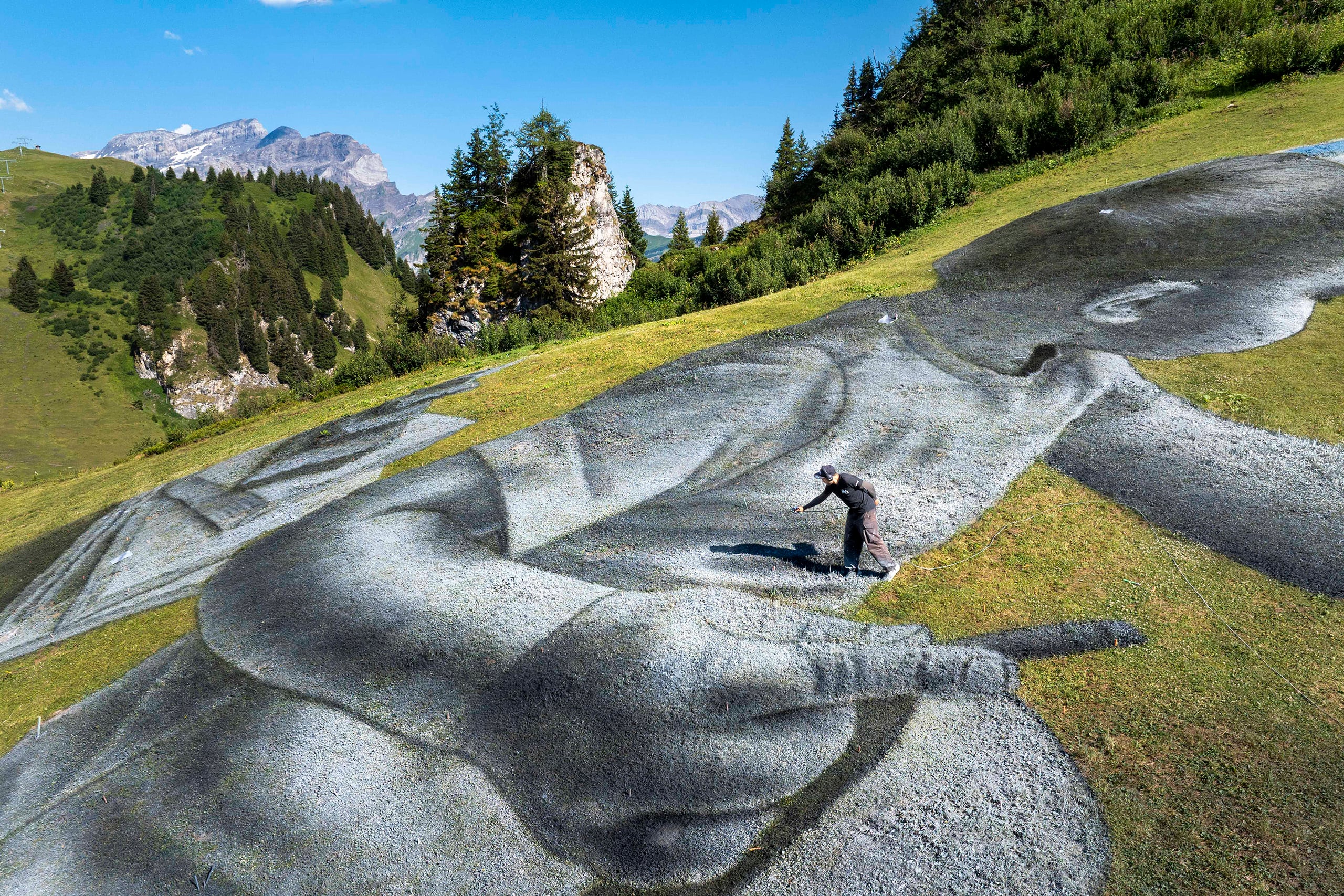
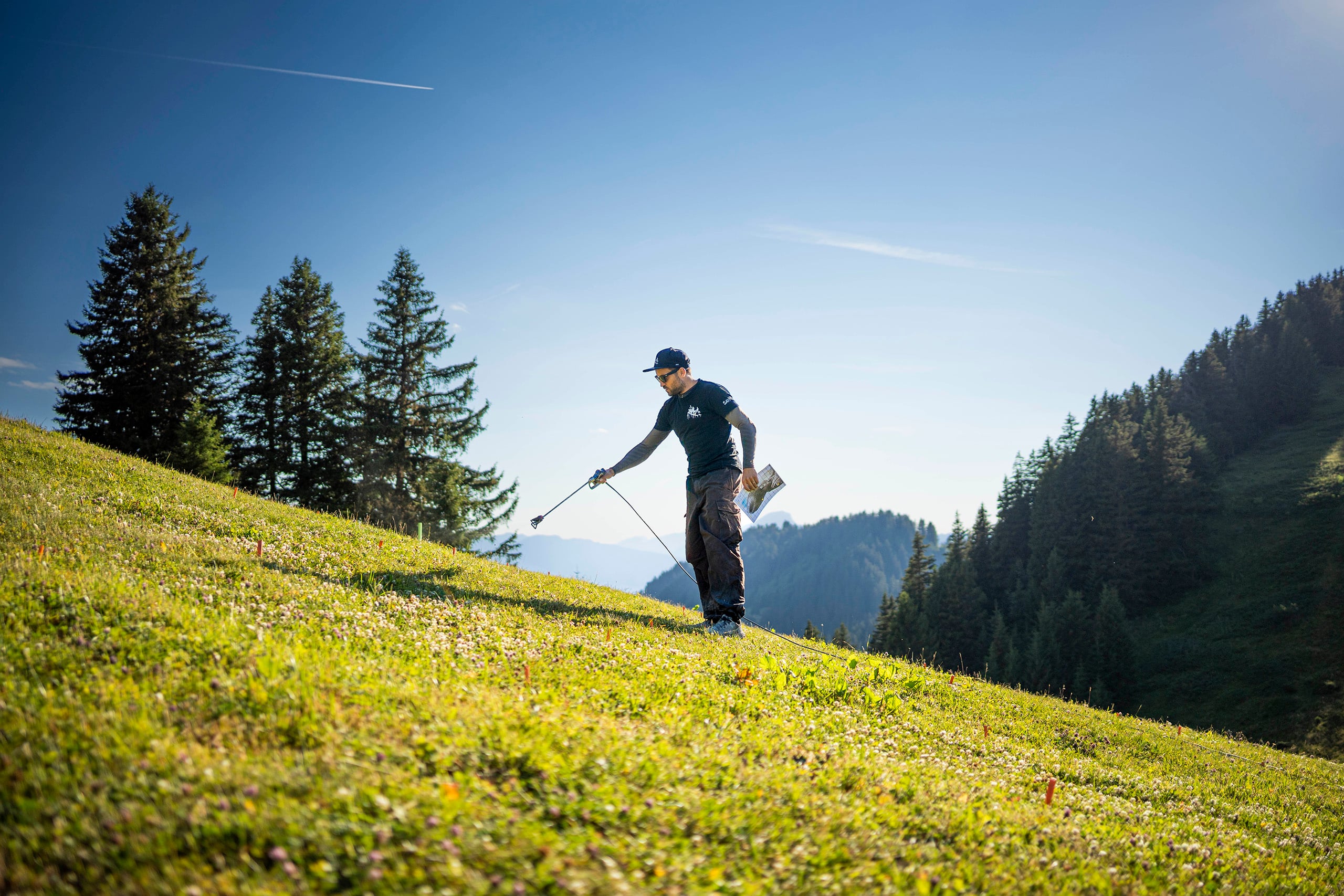
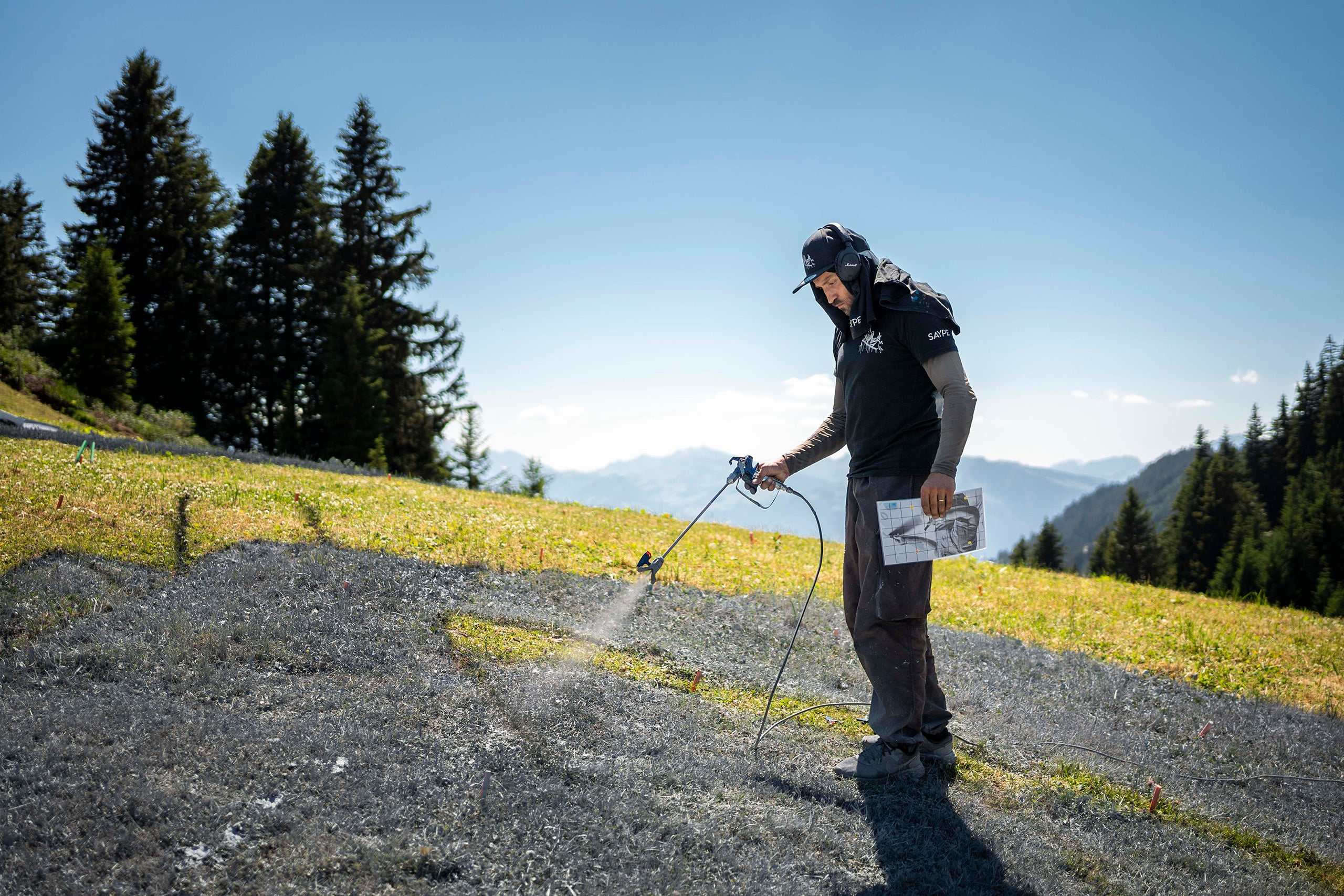
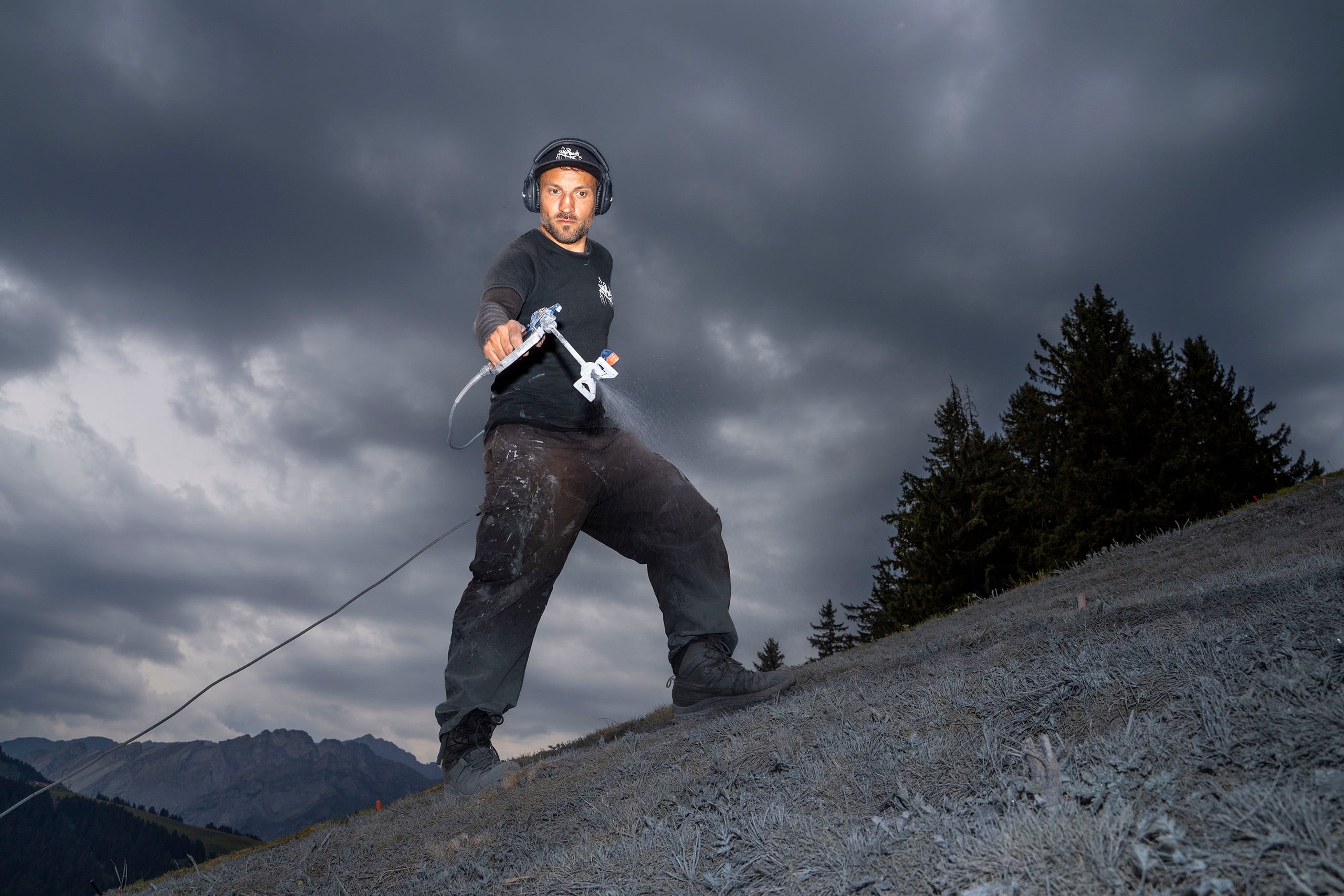
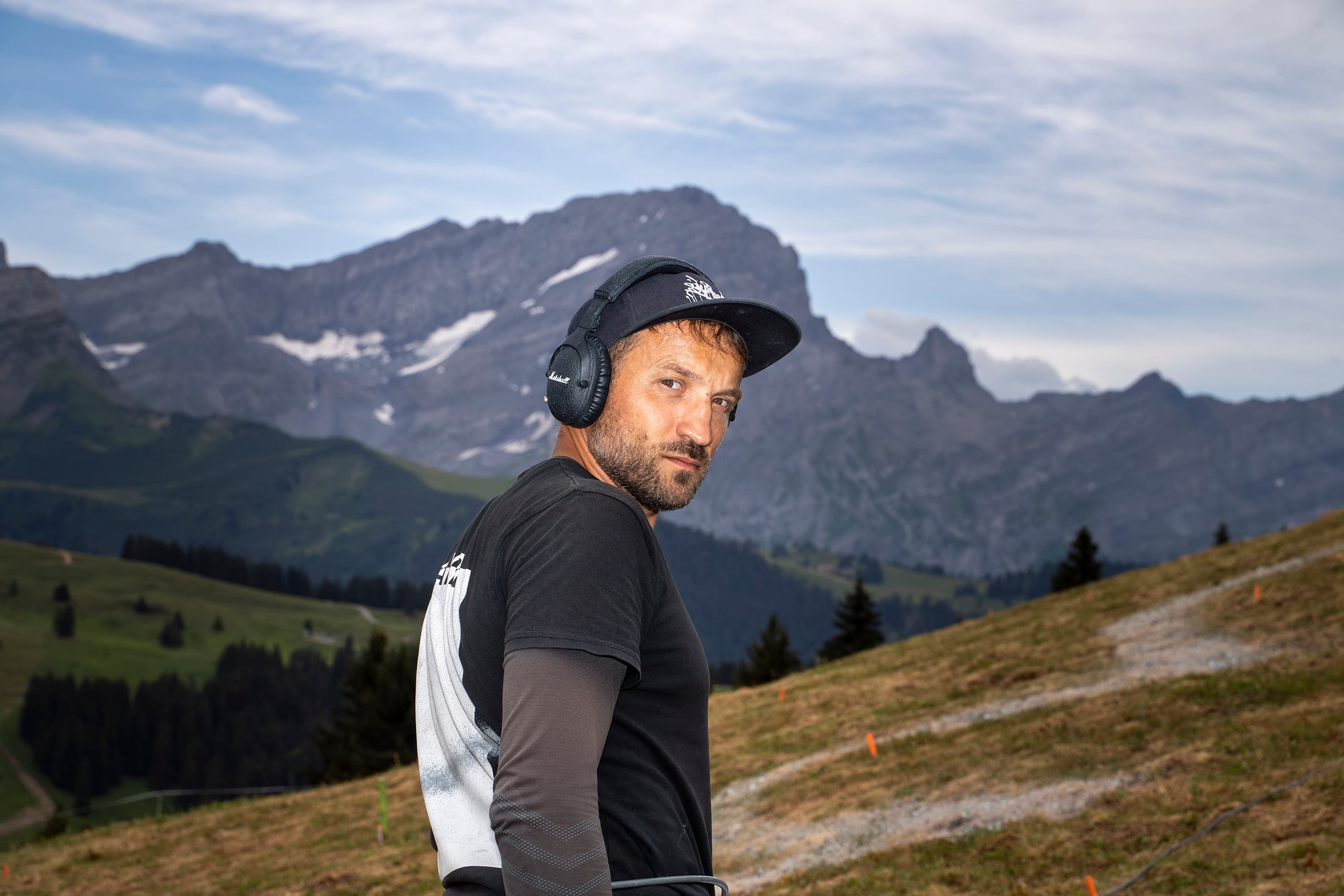
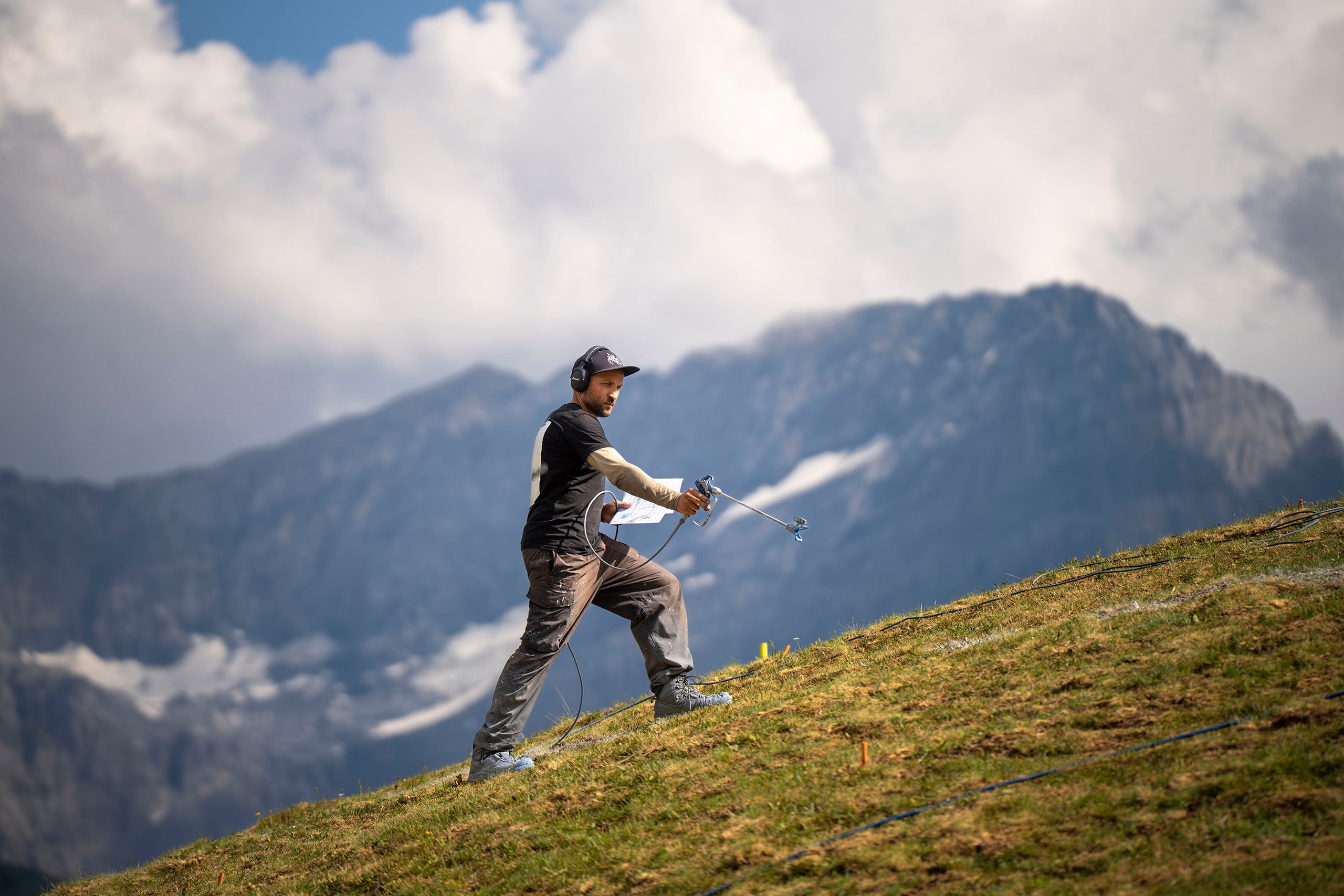
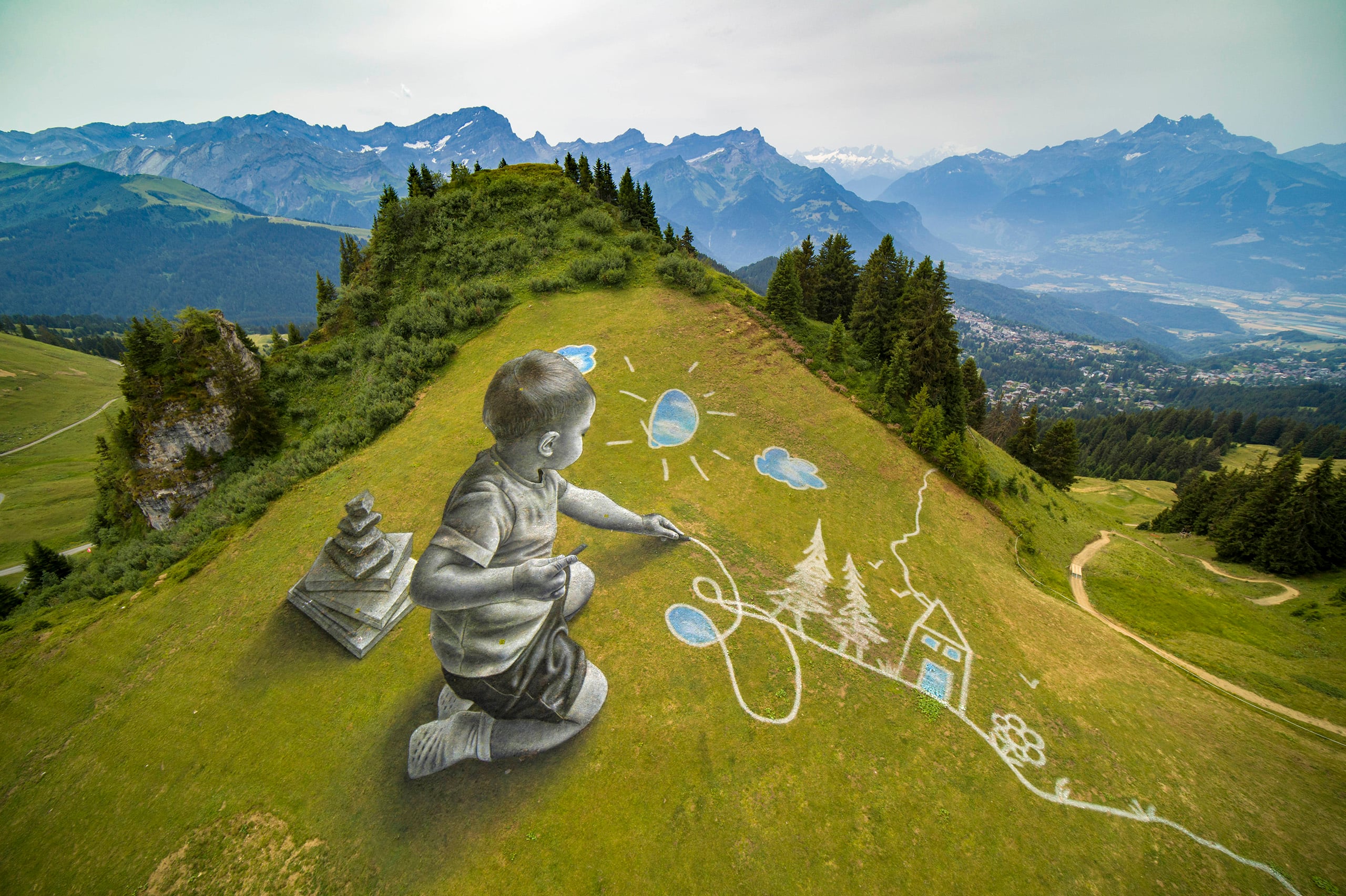
Image creditsPhotographs by Saype
Affiliate Disclosure PetaPixel articles may include affiliate links; we may earn a commission if you buy through one.