Special Feature
Fujifilm GFX100RF: From Japanese Design Studio to Real-World Photography
A camera is a powerful tool. It requires a careful blend of engineering, science, precision, and design, and what it lets us do is feel connected to our world and the people within it. It’s also easy to take for granted how a camera comes to be when we fixate on what our camera can do for us, instead of how it was made possible in the first place.
Full disclosureFujifilm provided the access and accommodations necessary for the production of this feature.
I’ll be the first to admit that my career is explicitly based on judging what a camera or lens can do for us, with little thought to where it comes from. Fujifilm offered us an opportunity to rectify this, and I found the experience intensely rewarding.
From Design to the Field With Fujifilm: It Starts With a Design
A camera always begins with an intention and a hope for that intention to bring happiness to its user. I had previously used the Fujifilm GFX100RF in the lovely city of Prague, and I came to truly enjoy my experience with it, capturing ancient castles and the lively people of Czechia. The GFX100RF has a very specific goal in mind.
It is about harnessing the massive ability to capture detail inherent in its 100-megapixel sensor, all contained within a compact and stylish camera body. This camera, coupled with a razor-sharp wide-angle lens, is intended to be a faithful companion that travels all around the world with you. If you need a closer frame or a different aspect ratio, the GFX100RF sensor and lens can provide the detail required to handle the crop. I was skeptical at first about whether this intention would succeed, but it was clear that the camera could handle it because it was designed so thoughtfully.
However, I could only appreciate this concept in a very superficial way. What I needed to do was speak to the people who designed it in the first place to learn about what was involved. Every camera must start as a dream, and it requires a very talented group of hard-working people to make it a reality.
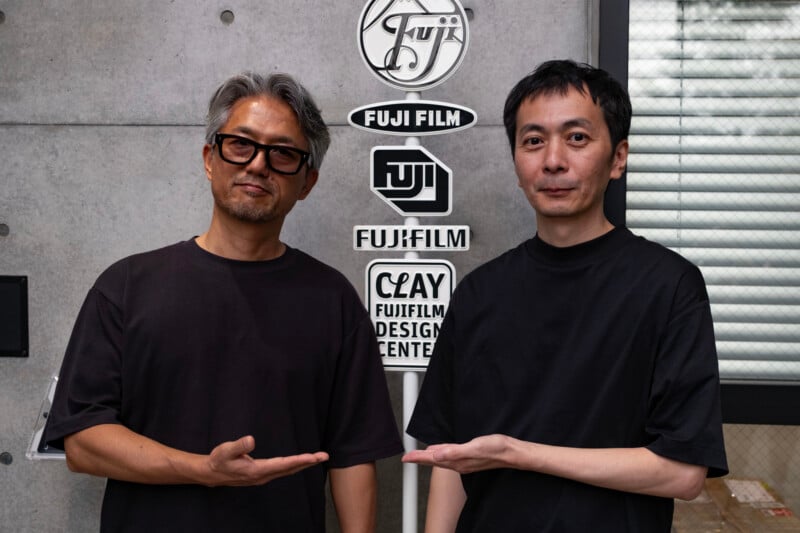
The first step to understanding the whole process was to meet the people who designed the camera, so I sat down with Masazumi Imai, the product strategy leader, and Takeo Hyodo, the lead designer on the RF100 project.
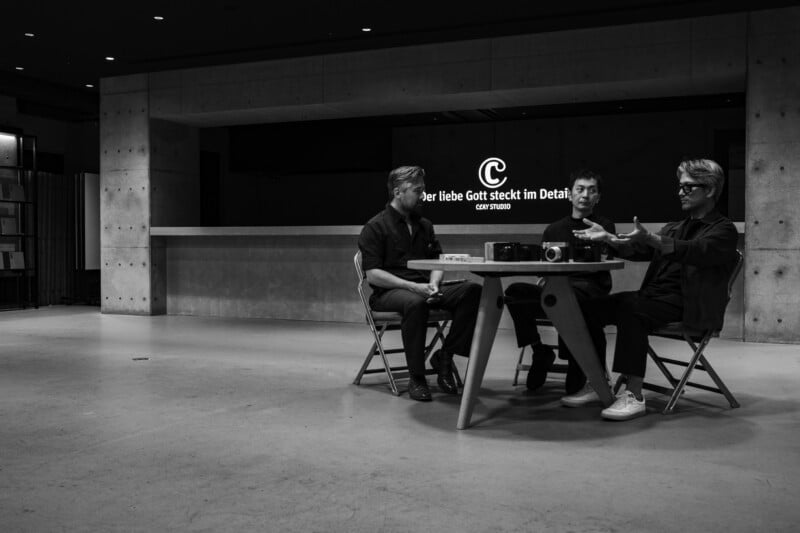
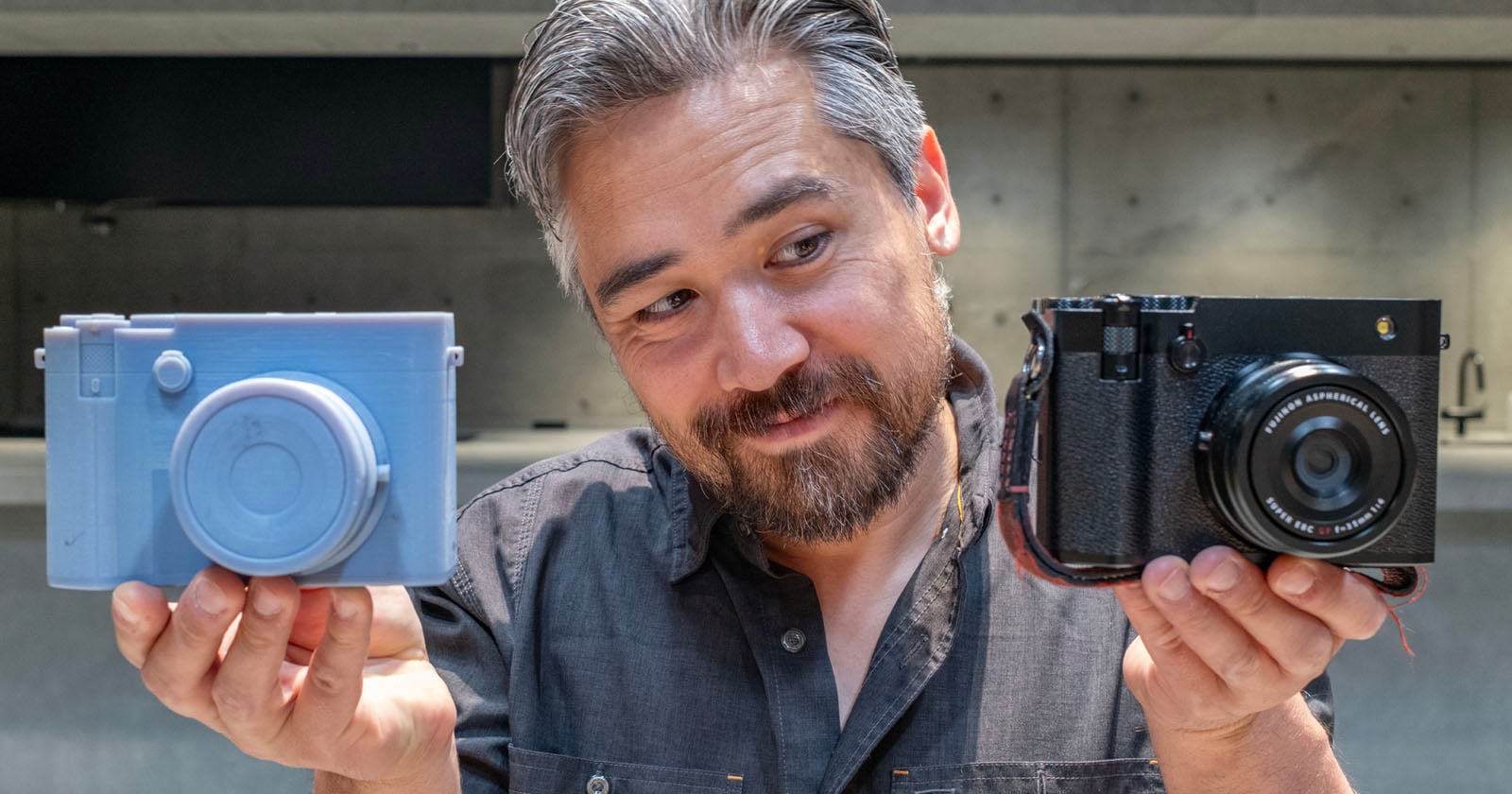
I asked them what the main design goal was for the GFX100RF, and, chiefly, they wanted to build as compact a camera as possible while still managing to fit the 100-megapixel sensor inside. However, they also wanted the 100RF to be quite luxurious, and desired fully machined metal hardware and the highest level of attention to detail in the dials and surfaces. This all presented some very interesting challenges, and I began to feel that building a camera is about working within and around the limitations that arise.
The team of designers worked closely with the marketing department and the engineers to craft a body that had a premium level of refinement while also being functional from a handling point of view. They experimented with different chassis silhouettes and wider or taller concepts. Eventually, settling on a taller body design not only made sense from a practical standpoint, but also from a historical one.
The analog GA645 medium format camera had a similar profile, which suited the 100RF beautifully. Hyodo-san eloquently explained that the true talent of a camera designer lies in the ability to meld different materials and size constraints with the technological demands of a digital camera, all into something truly beautiful to hold and functional to use. This is not an easy thing to do, nor does it happen overnight. What was very apparent, though, was the teamwork required among many different departments all cooperating to make it happen.
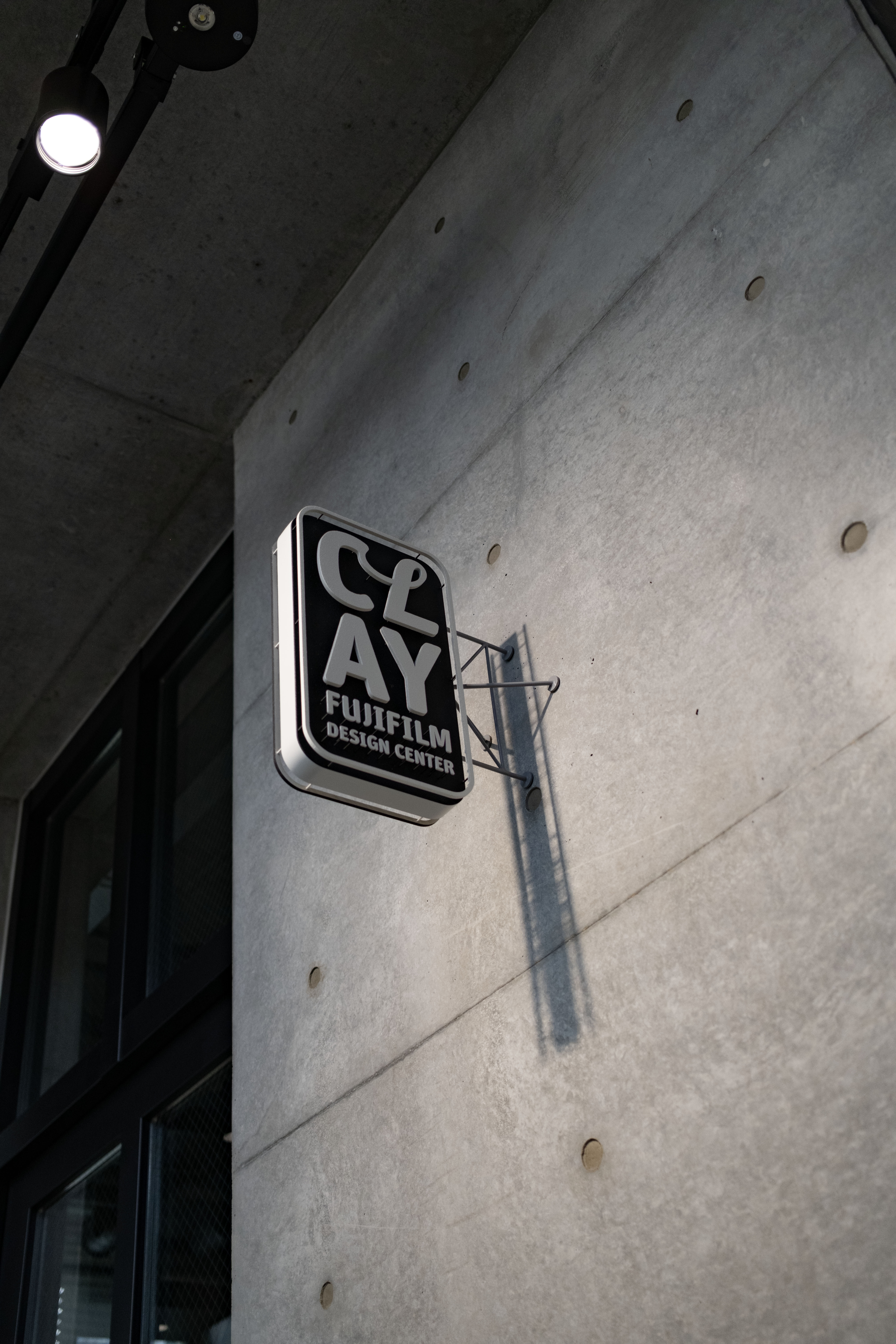
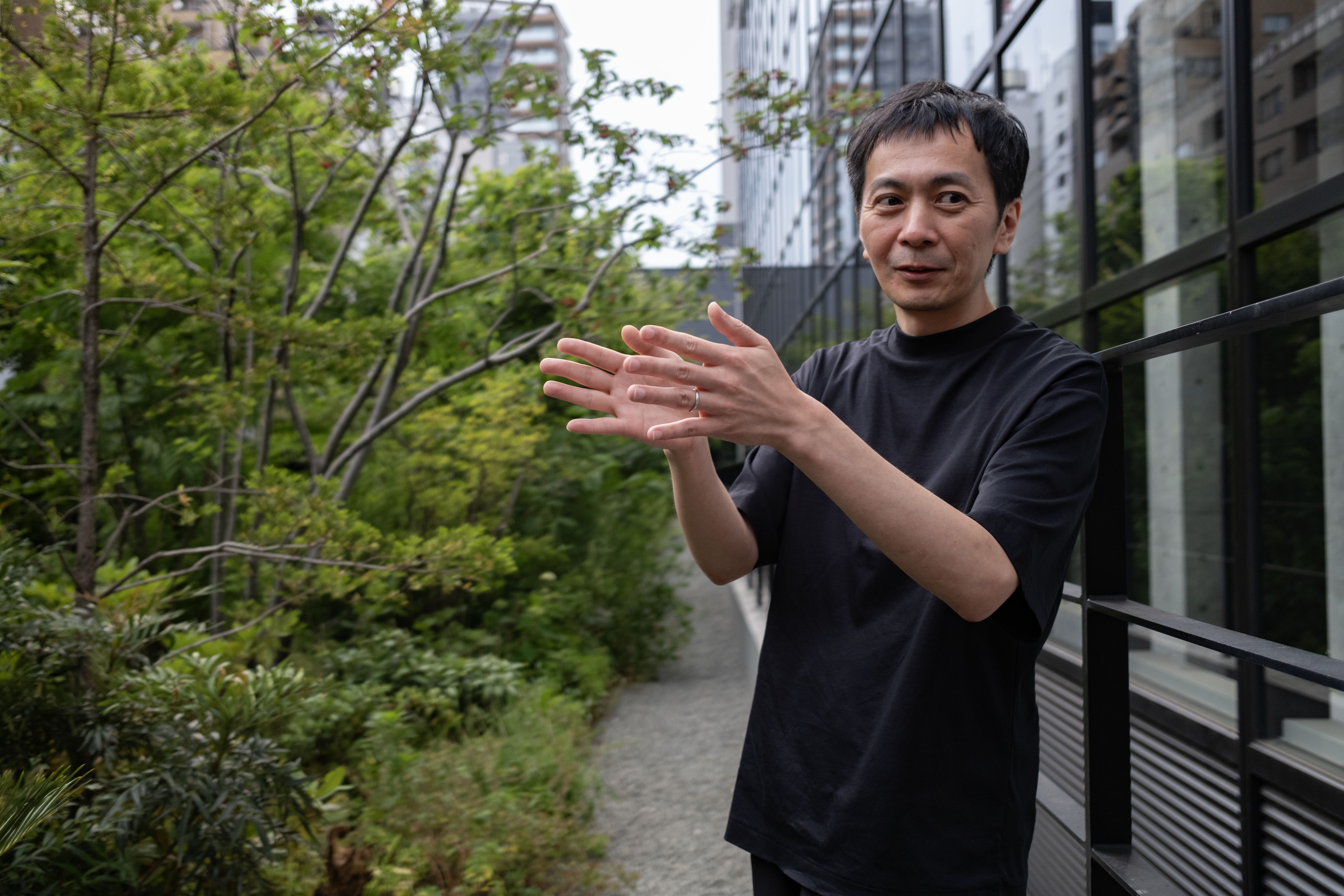
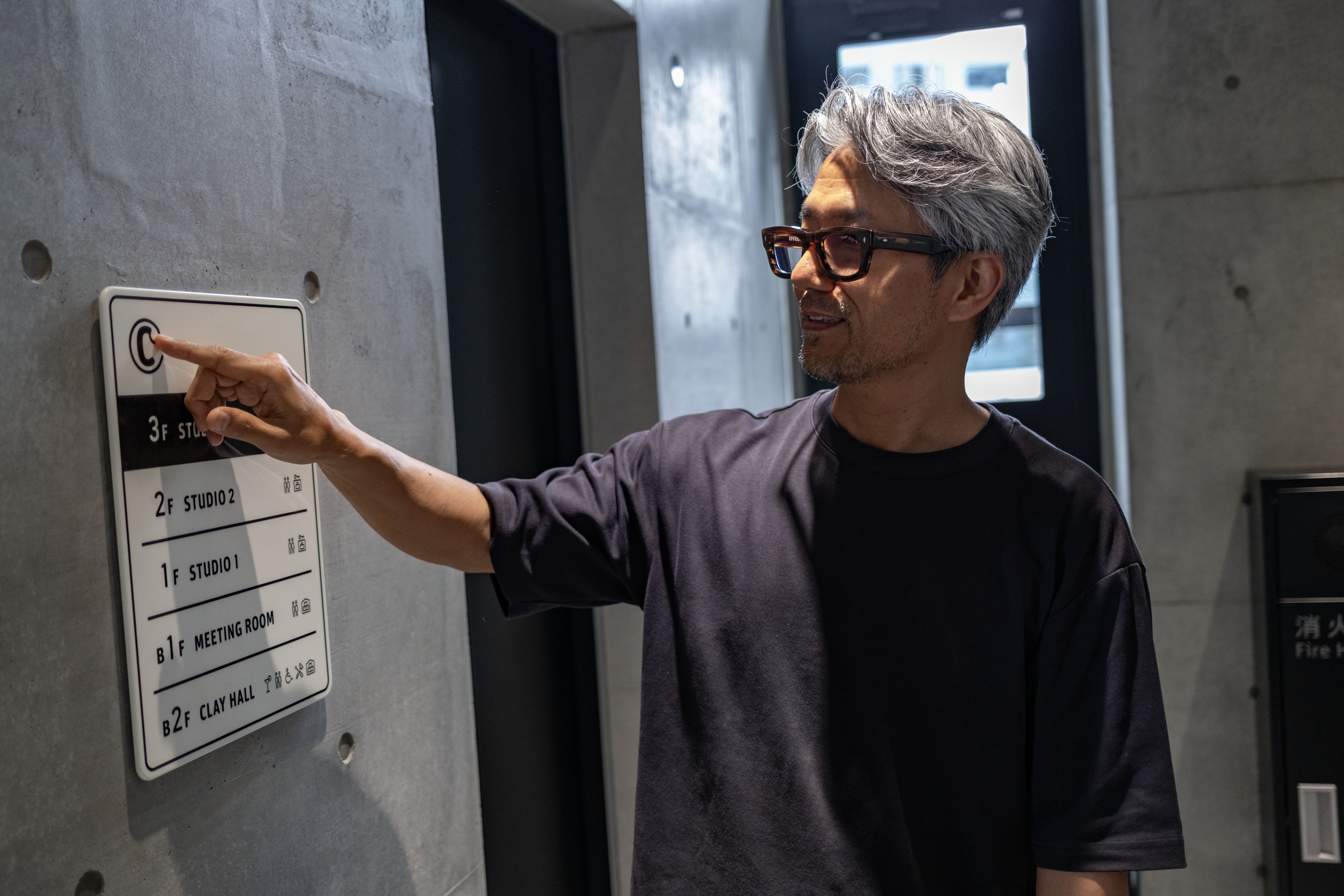
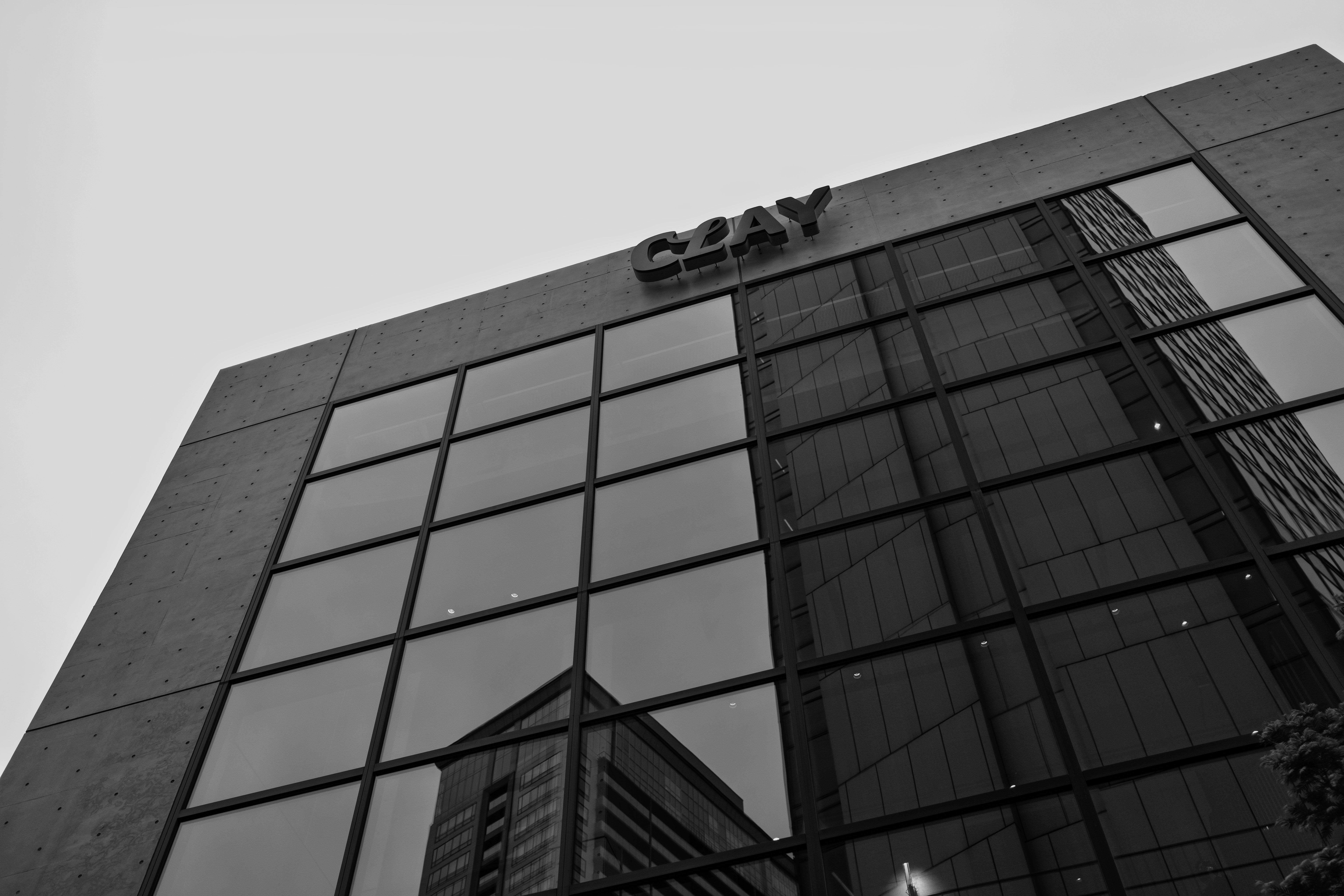
Imai-san said something very interesting as well about the whole process. There is a magic to creating something that is both artistically ideal and technologically functional. Most importantly, the design of a camera is not about making compromises, but rather about the various teams working together to discover new value through novel dial concepts, grip size and feel, and harmonious placement of the controls to transform challenges into solutions. He explained that overcoming these challenges is a difficult process, but it is also exactly what inspires and motivates the designers and engineers in the first place. The value that they create and the final concept that they agree on are all about bringing happiness to the customer who will use the camera in the field.
I had a newfound appreciation for how much work is involved in the design of a product, how much of a team effort it truly is, and where the designers find their inspiration to create something photographers will enjoy using. Hyodo-san, for example, wanted to bring a little bit of a vintage feel to the camera with the aspect-ratio dial, which hearkens back to a classic period of camera design and is easily one of the most striking parts of the camera. Both designers explicitly stated that they wanted to make cameras that people will see on the shelf and immediately want to pick up and hold in their hands, but also find enjoyment in using day after day beyond that. They wanted to make something beautiful that photographers will truly treasure.
From Design to the Field With Fujifilm: Building Something Beautiful
Once the design and concept are laid out, the product has to be manufactured with precision and skill. We headed to the Fujifilm X-Factory to see the GFX100RF being assembled.
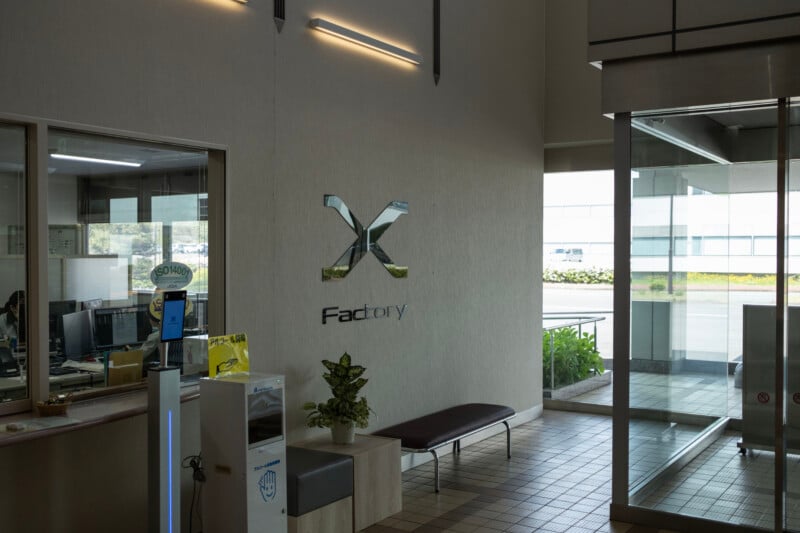
This is where the concept evolves from art into reality, and I was fascinated to see what goes into the construction of a GFX camera. We were greeted with wall upon wall of previous cameras and lenses designed by Fujifilm, and it’s important to remember that the GFX100RF isn’t just a camera body but also an integrated Fujinon lens. It’s the perfect example of both camera design and optical engineering in one package.
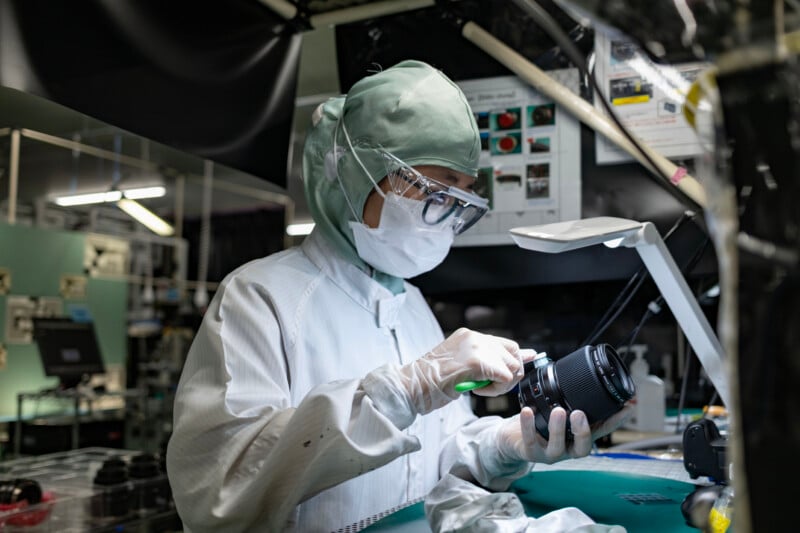
We donned the required clean suits and proceeded to the factory floor to see the process from start to finish. I was immediately impressed by how many people are involved in hand-crafting the GFX100RF.

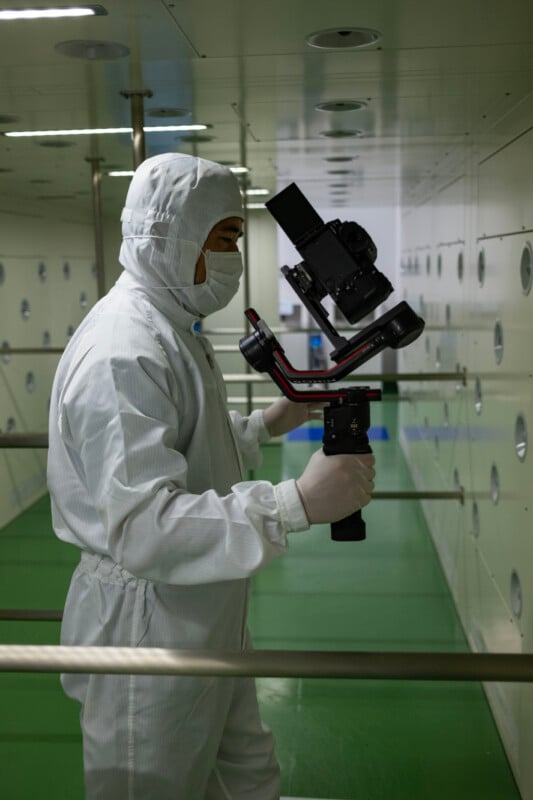
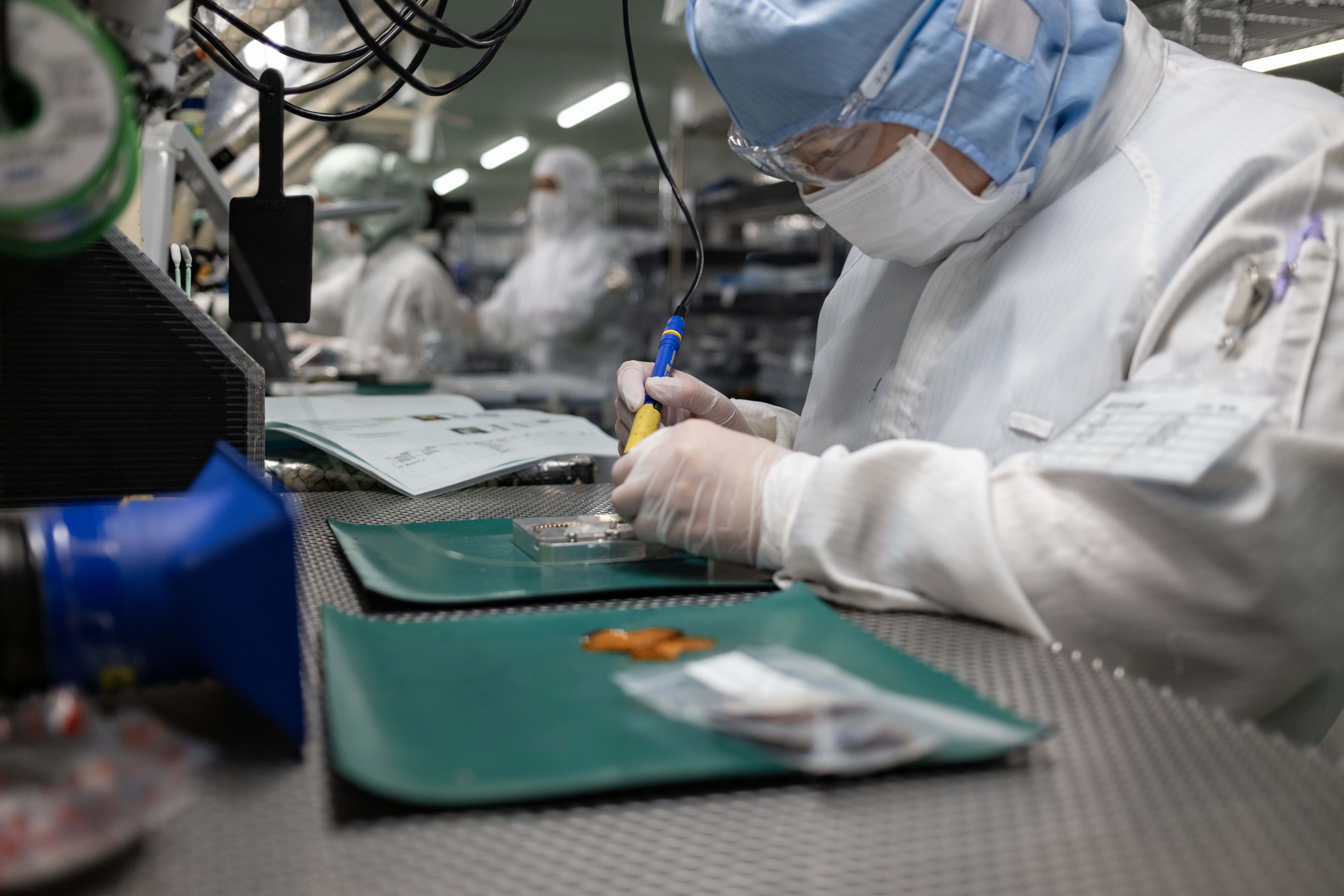
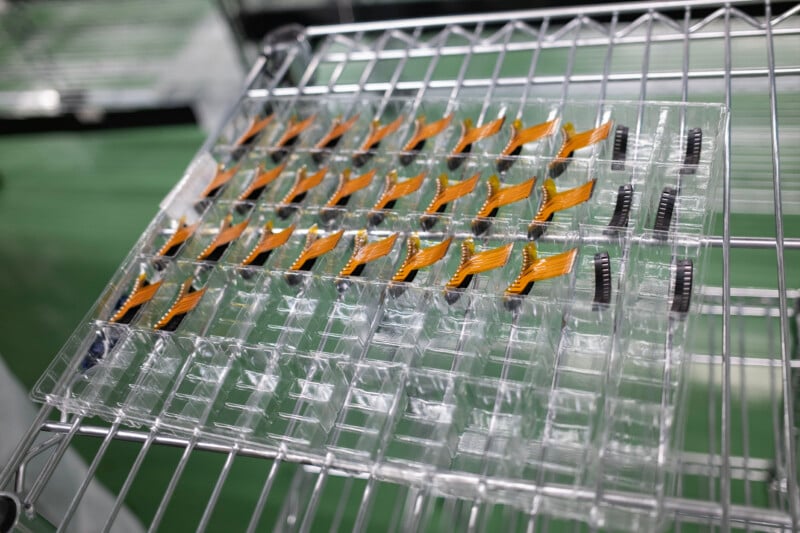
Every GFX100RF that leaves the assembly line and finds its way into the camera bag of a photographer is a culmination of the skill and dedication of hundreds of people. Every screw has to be torqued and every wire soldered into place. There is a fascinating blend of automated precision measurement using advanced robotics alongside hand-applied construction of delicate components.
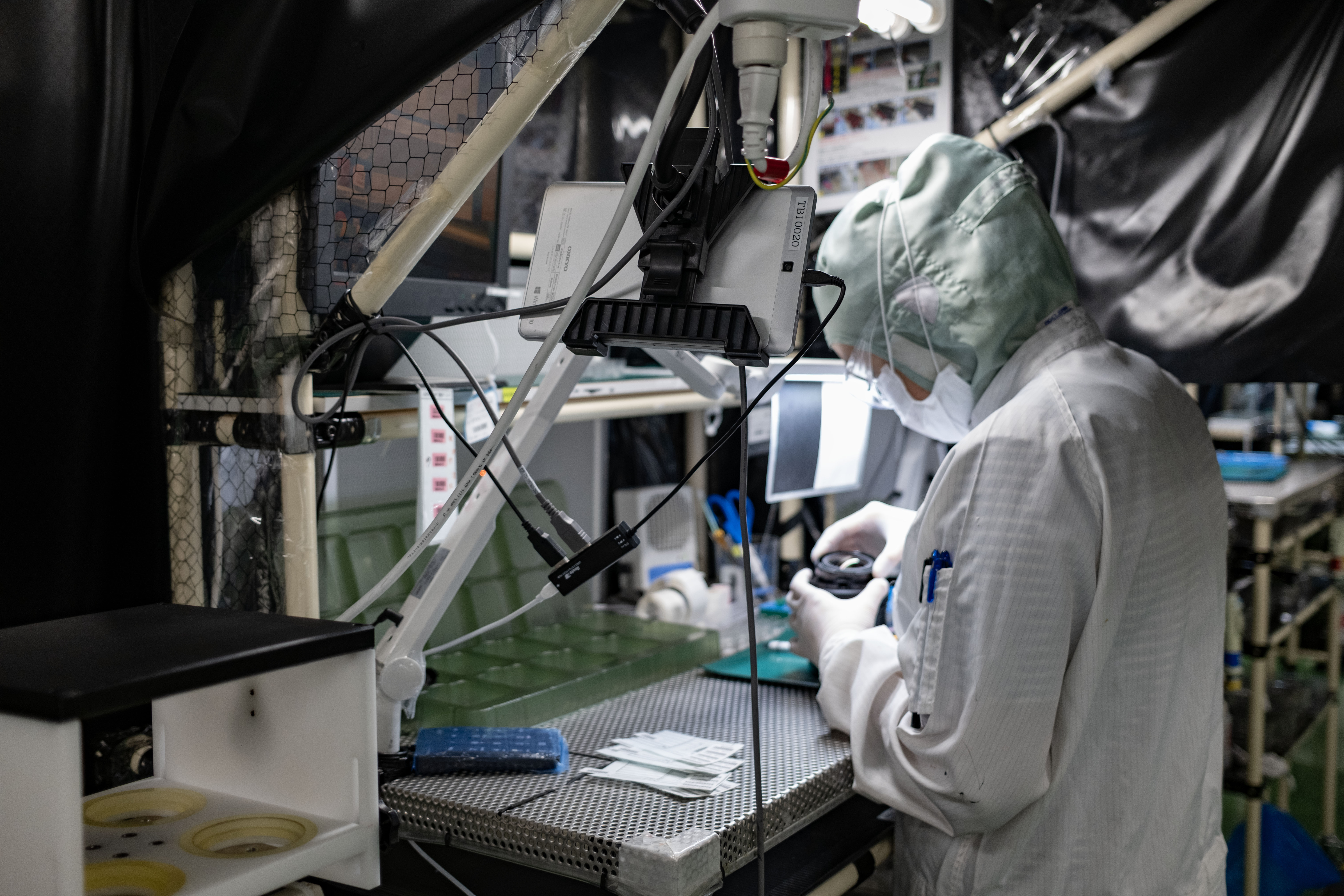
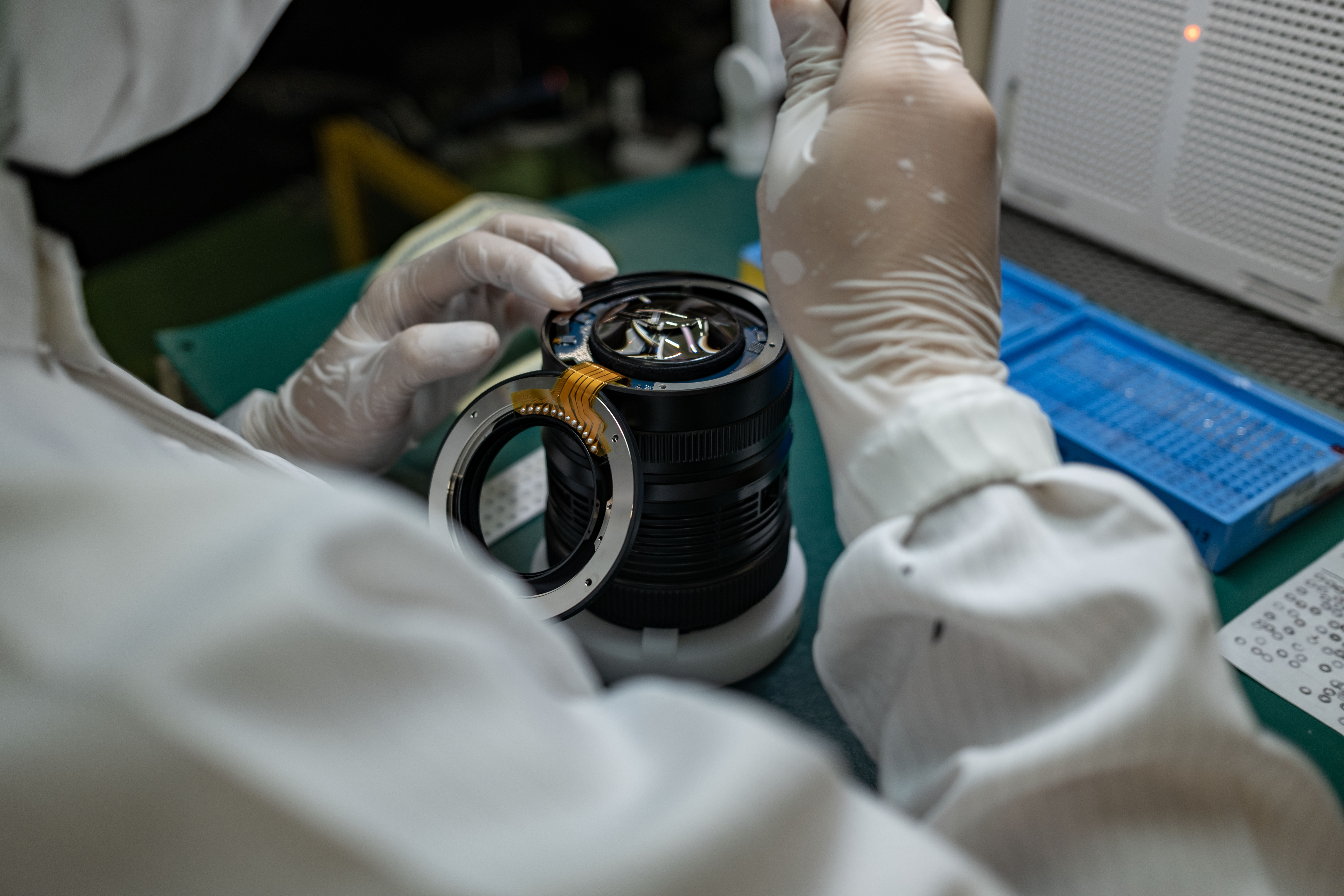
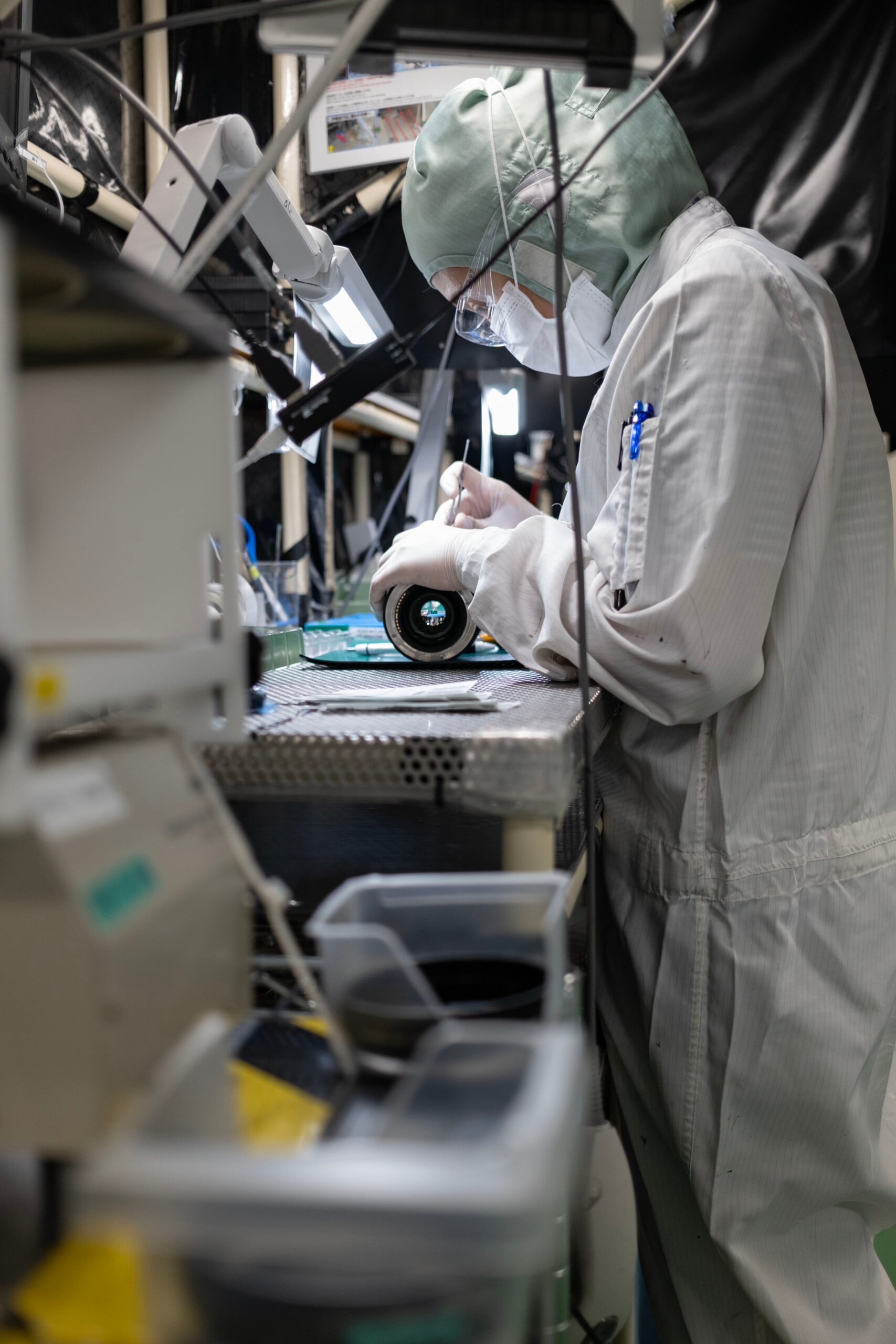
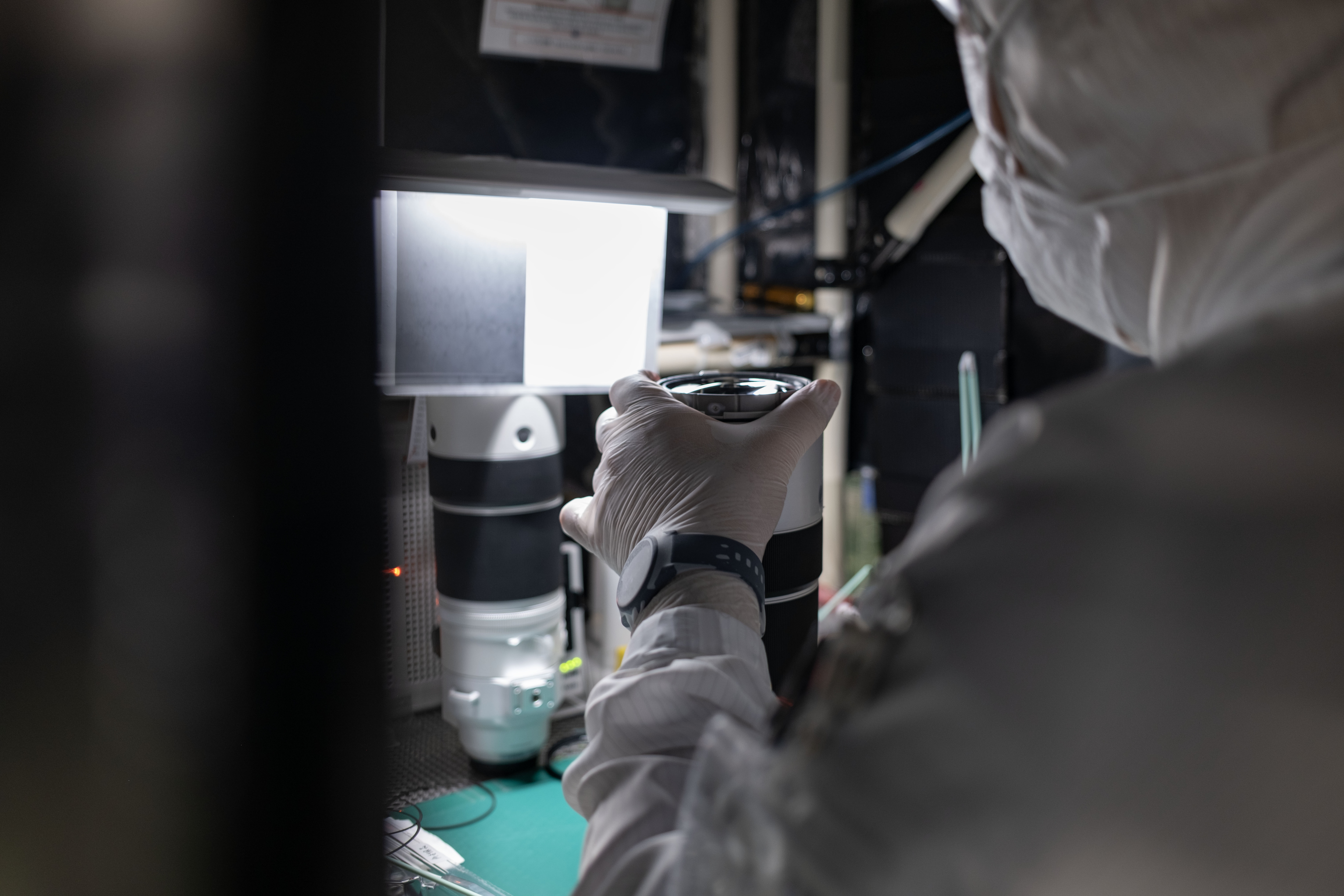
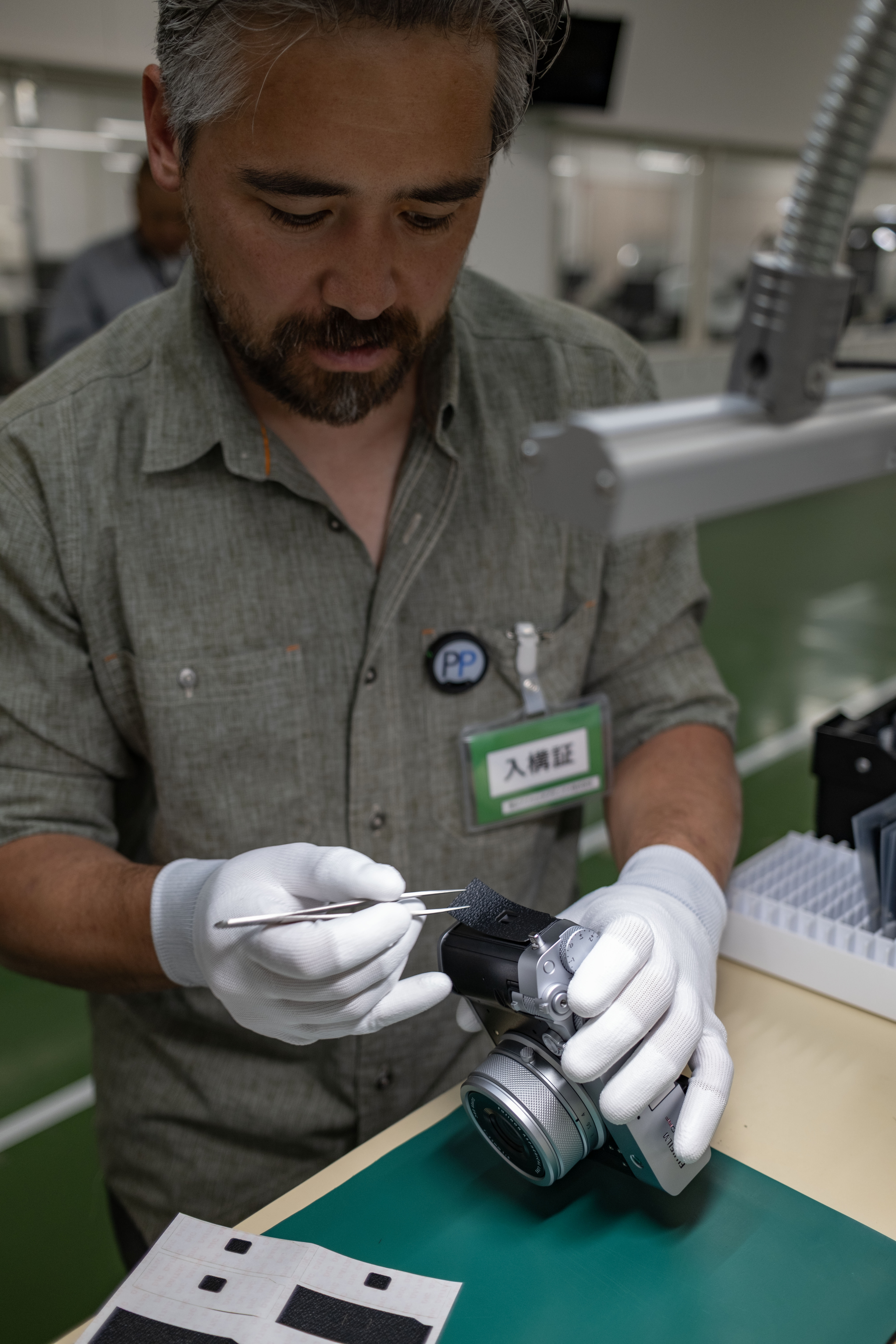
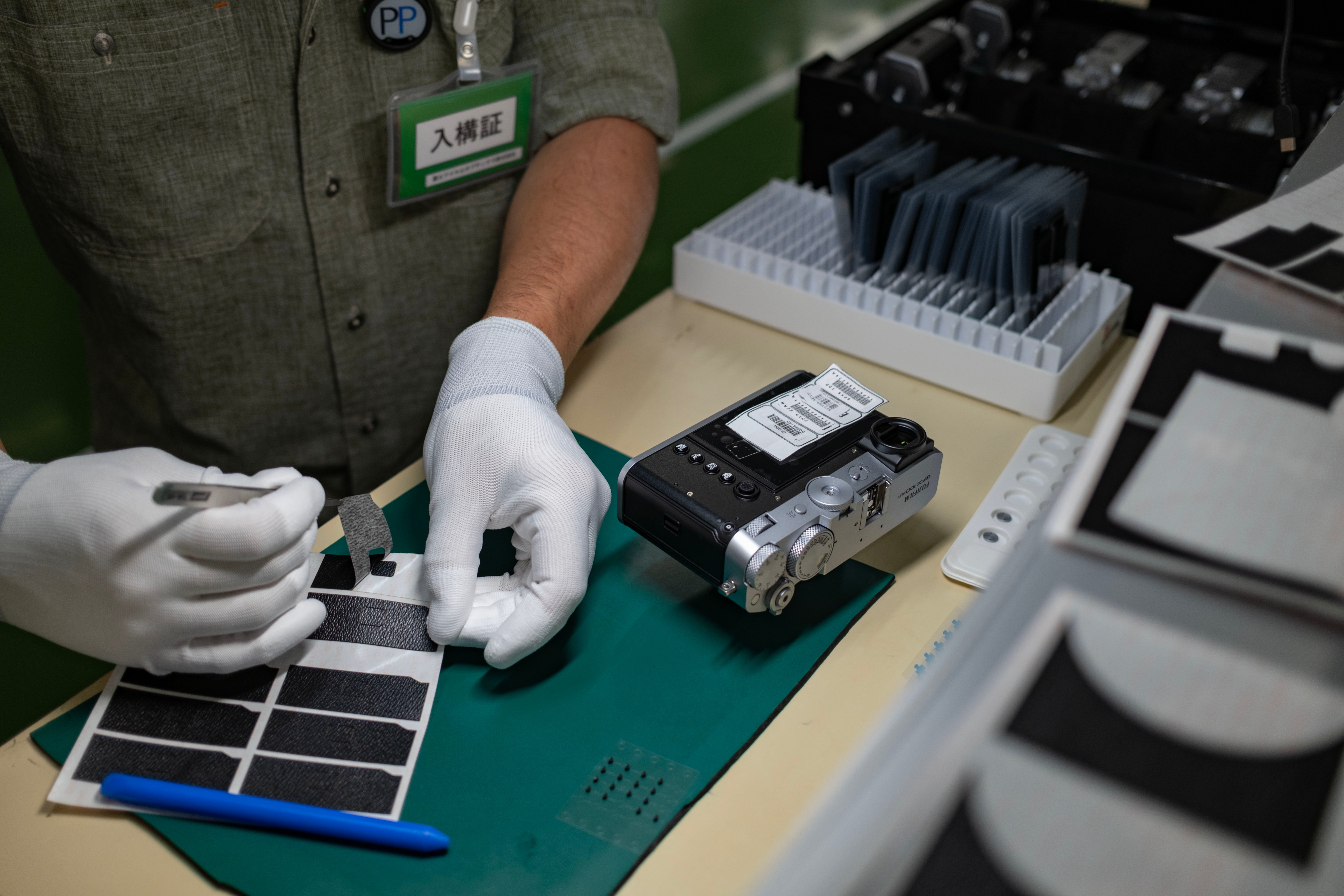
In fact, the PetaPixel team even got to try our hand at applying the leatherette panels to a GFX100RF body fresh off the assembly line. With a little instruction, we took turns carefully adjusting and applying these very sticky panels with varying levels of success. The best way to appreciate how much skill is involved is to try it for yourself. Sadly, I do not have a future at the Fujifilm X-Factory.
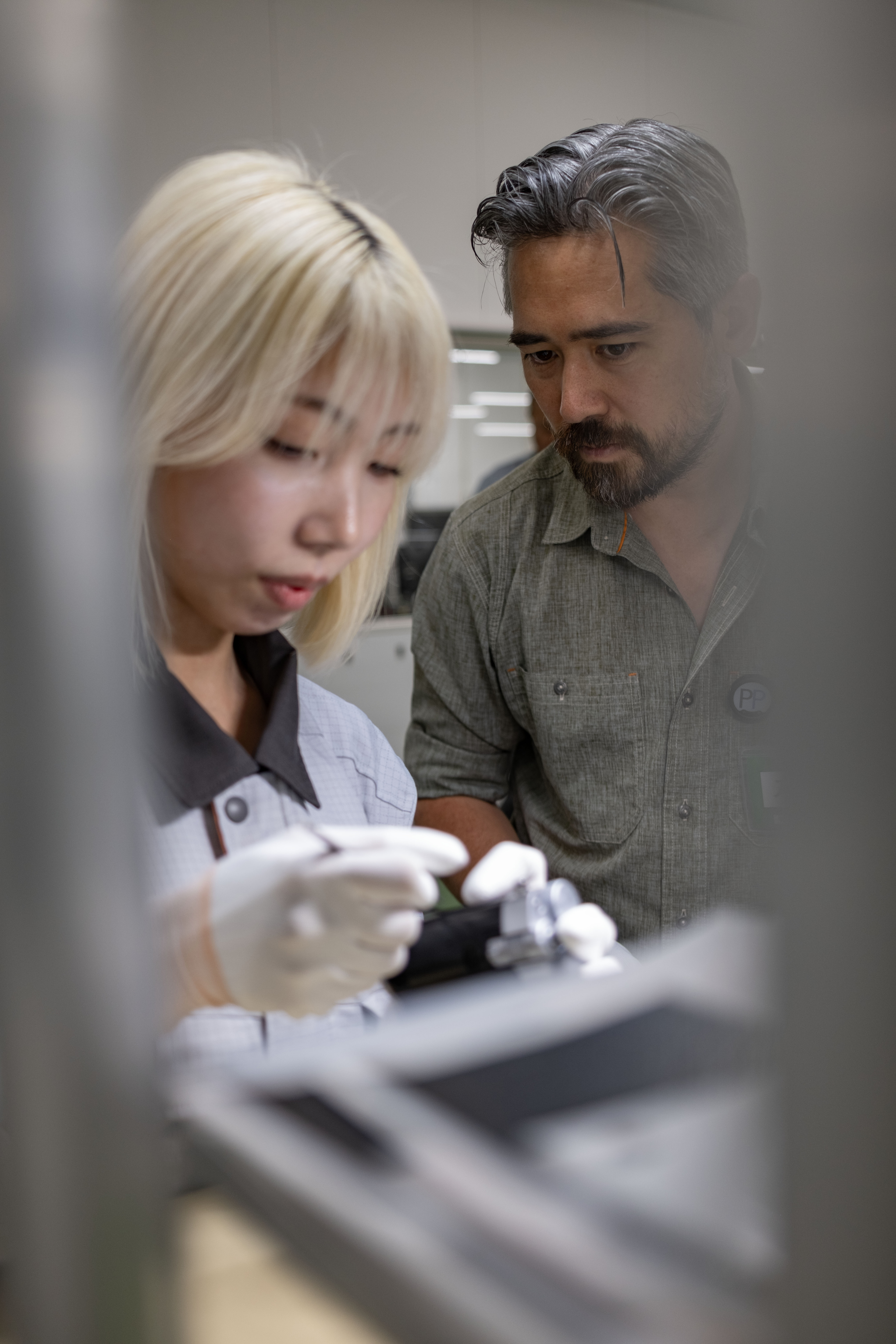
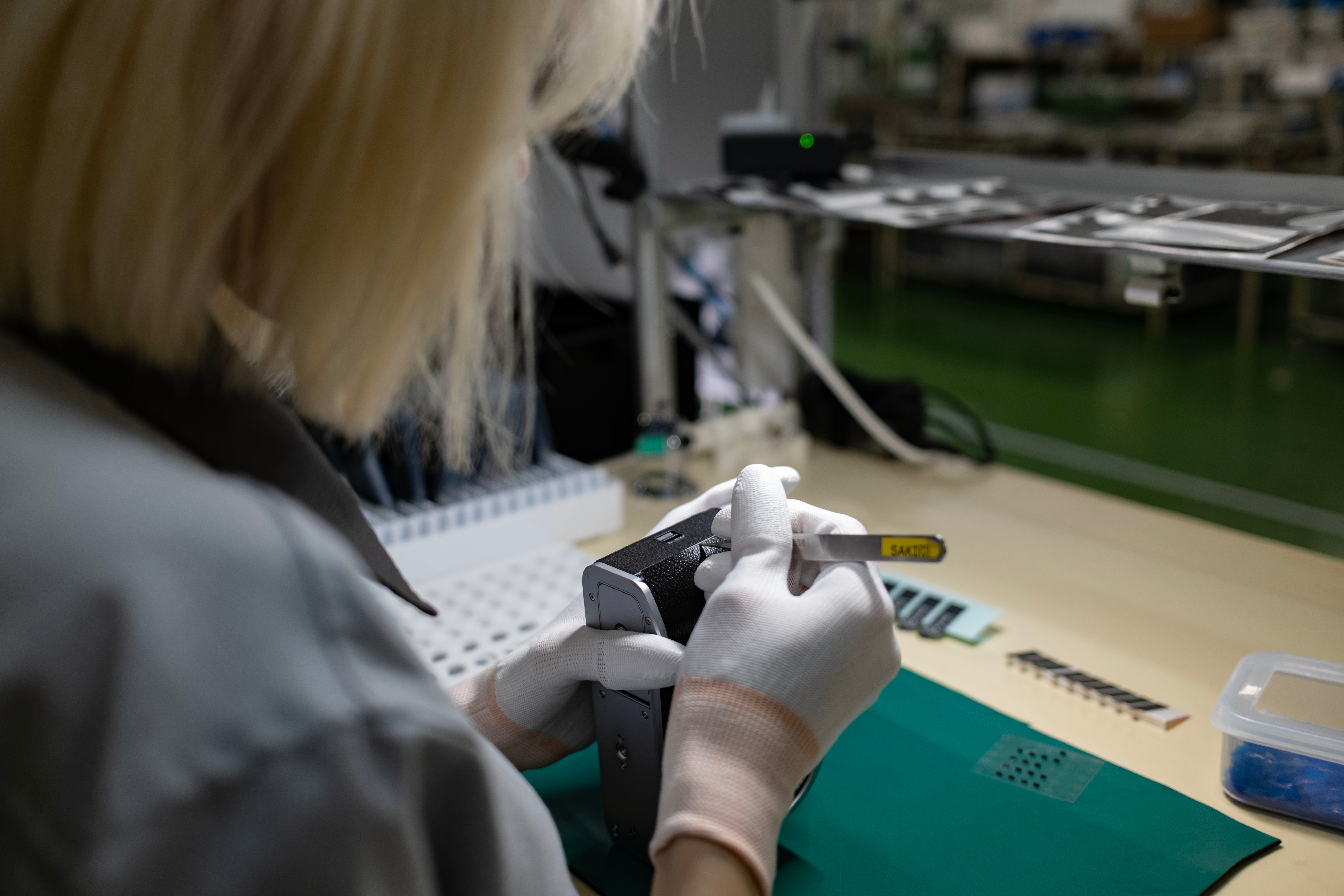
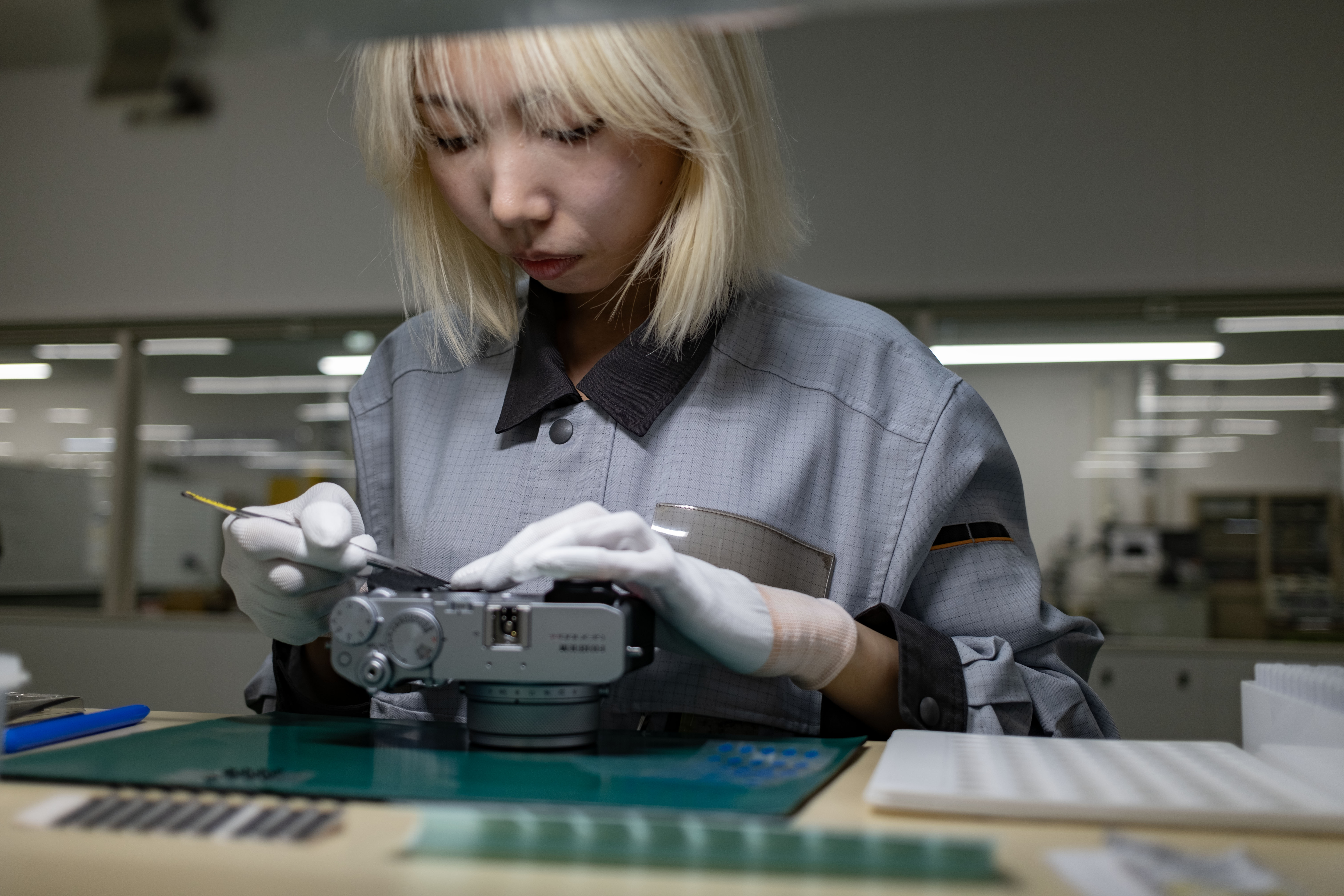
We witnessed the production line of the GFX100RF all the way to the packaging stage as future cameras prepared to ship out to all corners of the world. I’ve seen many lens and camera production lines over my career, and I’m always left with a deep respect for the training involved and the sense of craftsmanship that is passed from senior staff to the next generation.
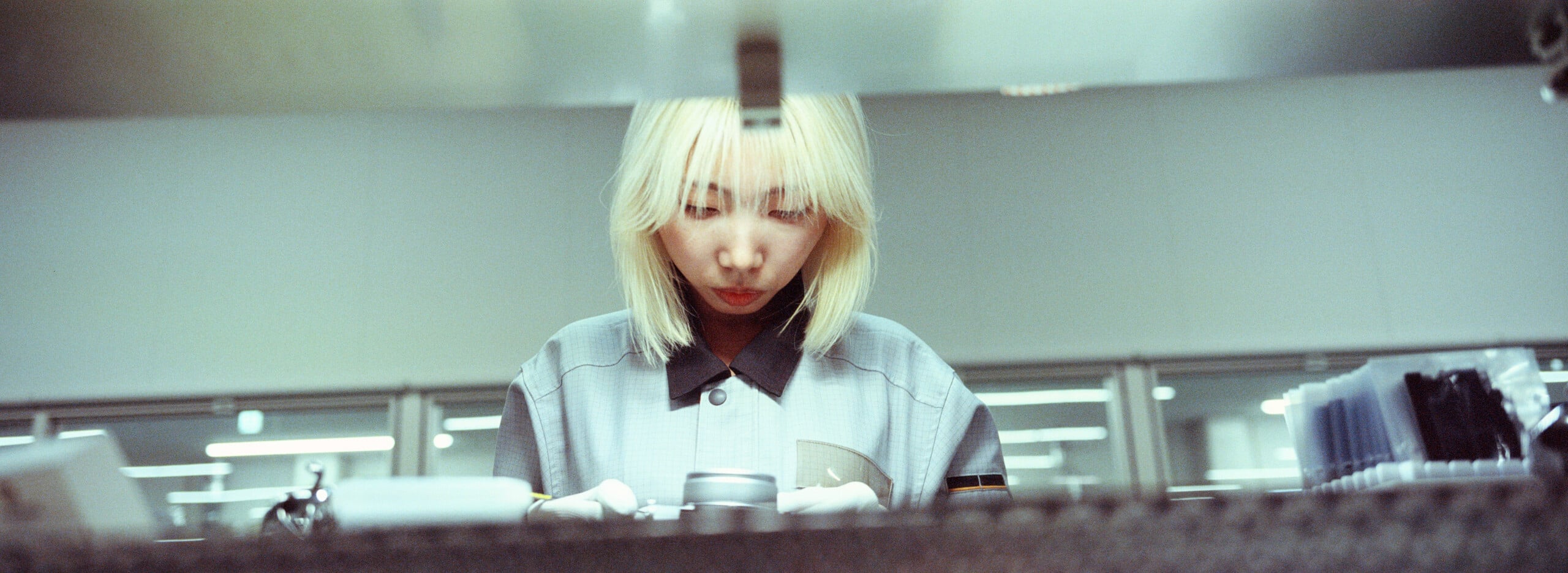
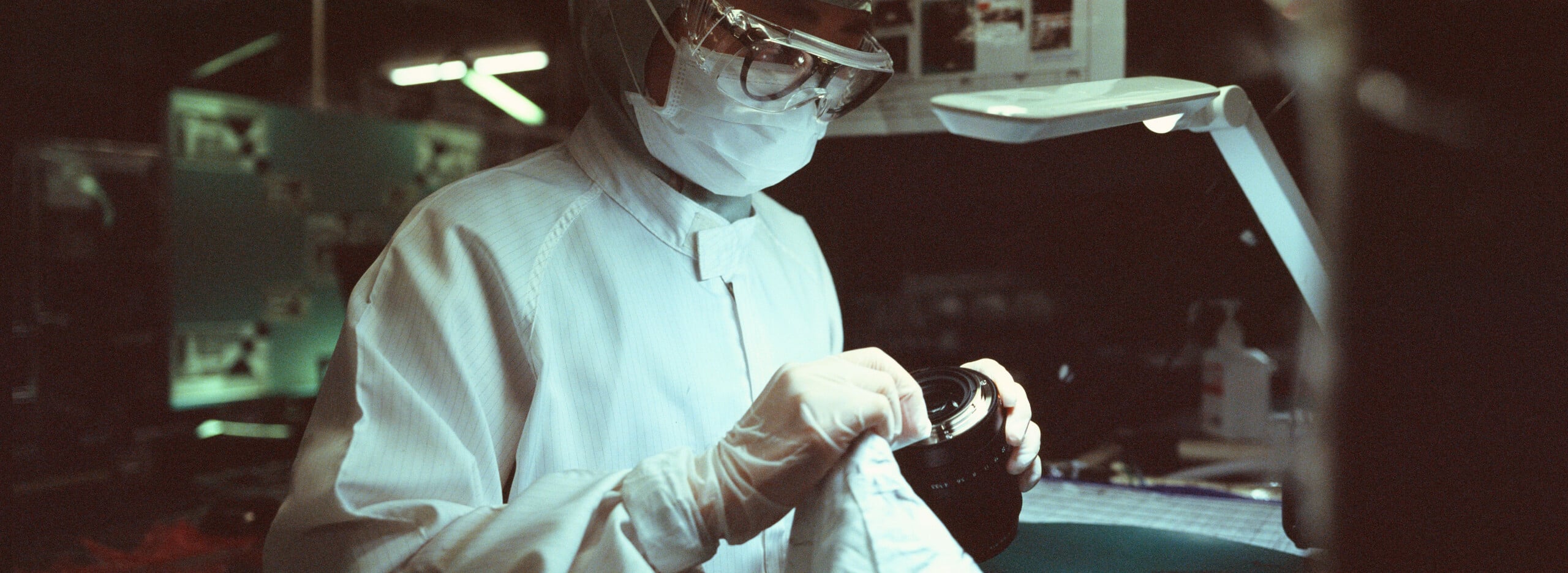
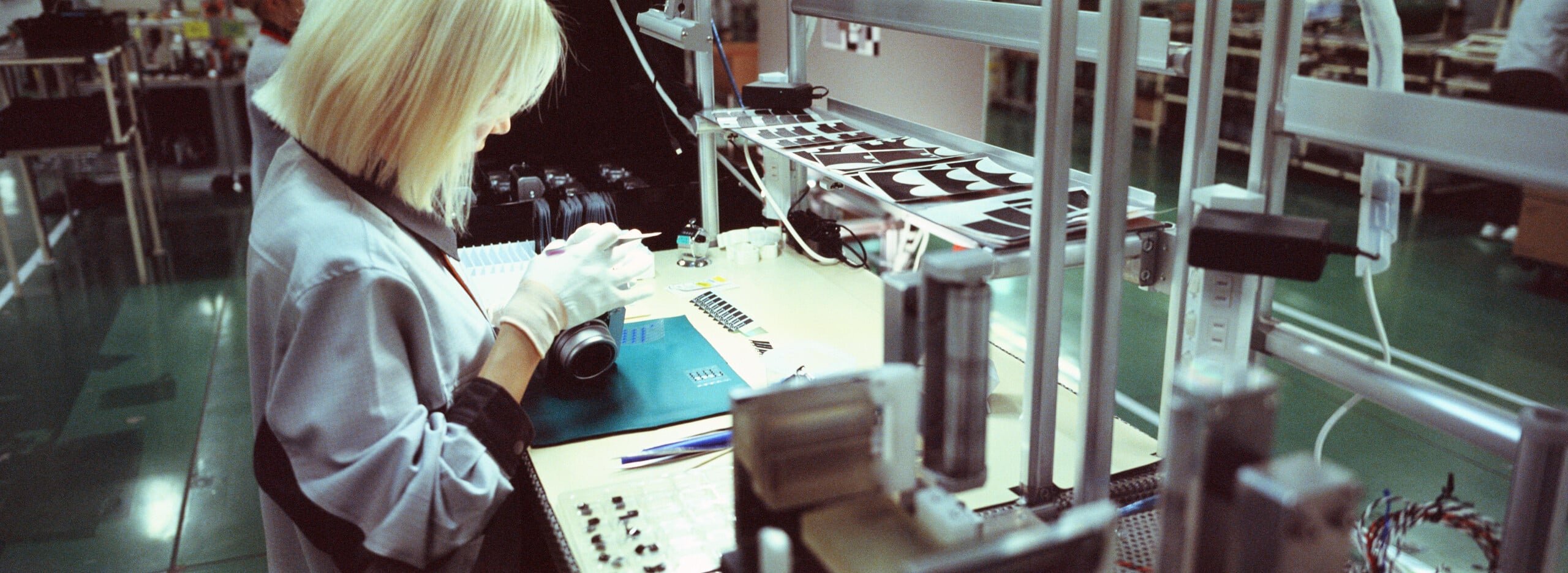
However, what I found most interesting about the whole experience was getting to see the different concepts of the design stage coalesce into the machining and manufacturing of the parts that make the camera, and to have all of the digital components and computer parts blend together to create something that not only feels good in the hand, but also lets me express my creative vision.
This left us with the final stage of our journey ahead: using the camera in the field in the exact way that all of this effort and skill were intended.
From Design to the Field With Fujifilm: What It Is All About
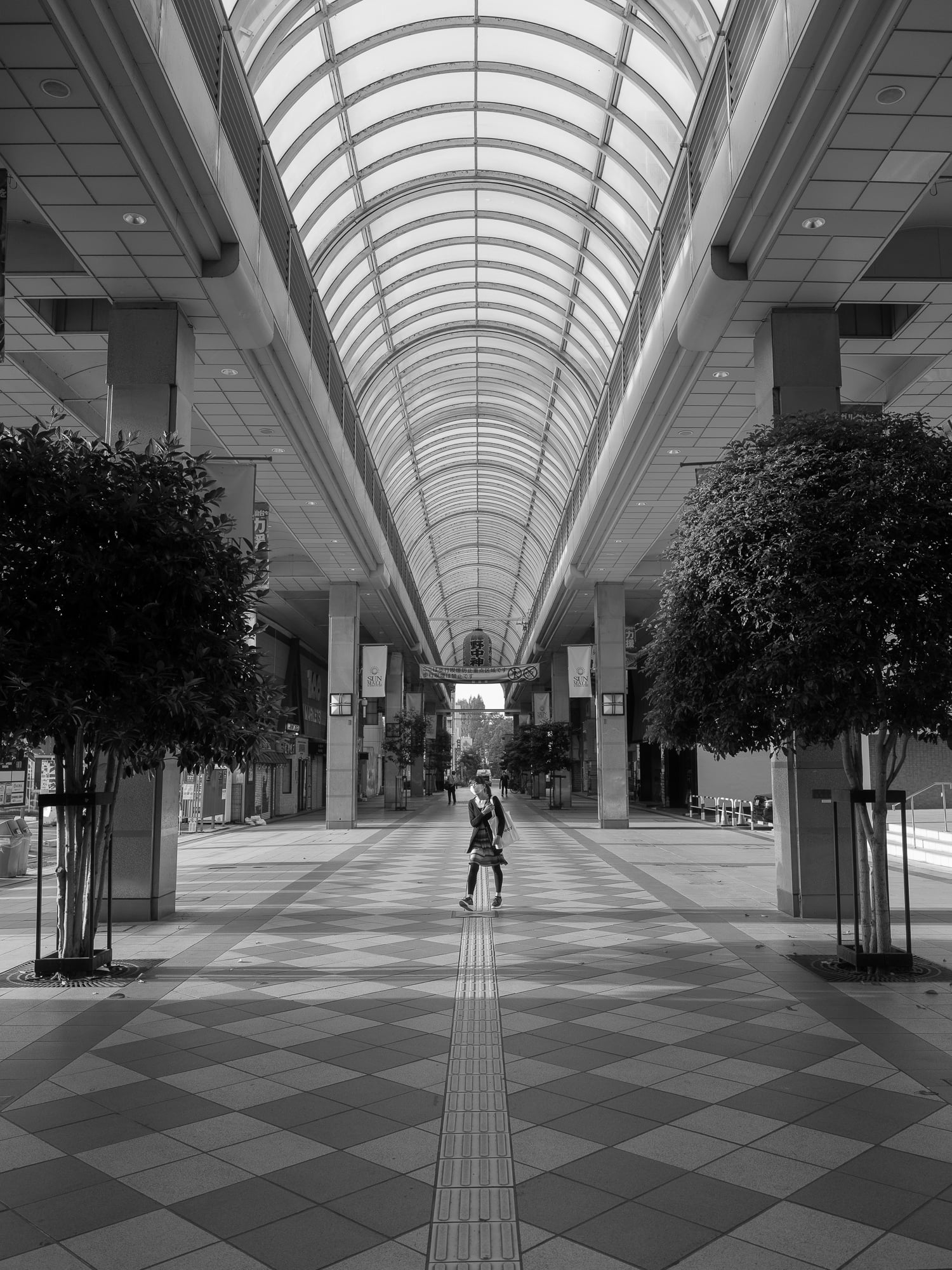
The Fujifilm factory is located near Sendai, Japan, so I explored the city of Sendai itself and the nearby area of Matsushima. I loved being able to use panoramic aspect ratios to better feature the famous red bridges along the coastline, and push and pull raw files with plenty of dynamic range to spare. I also found a deeper appreciation for why dials were designed as they were, and how the placement of the controls allowed me to take photographs more naturally.
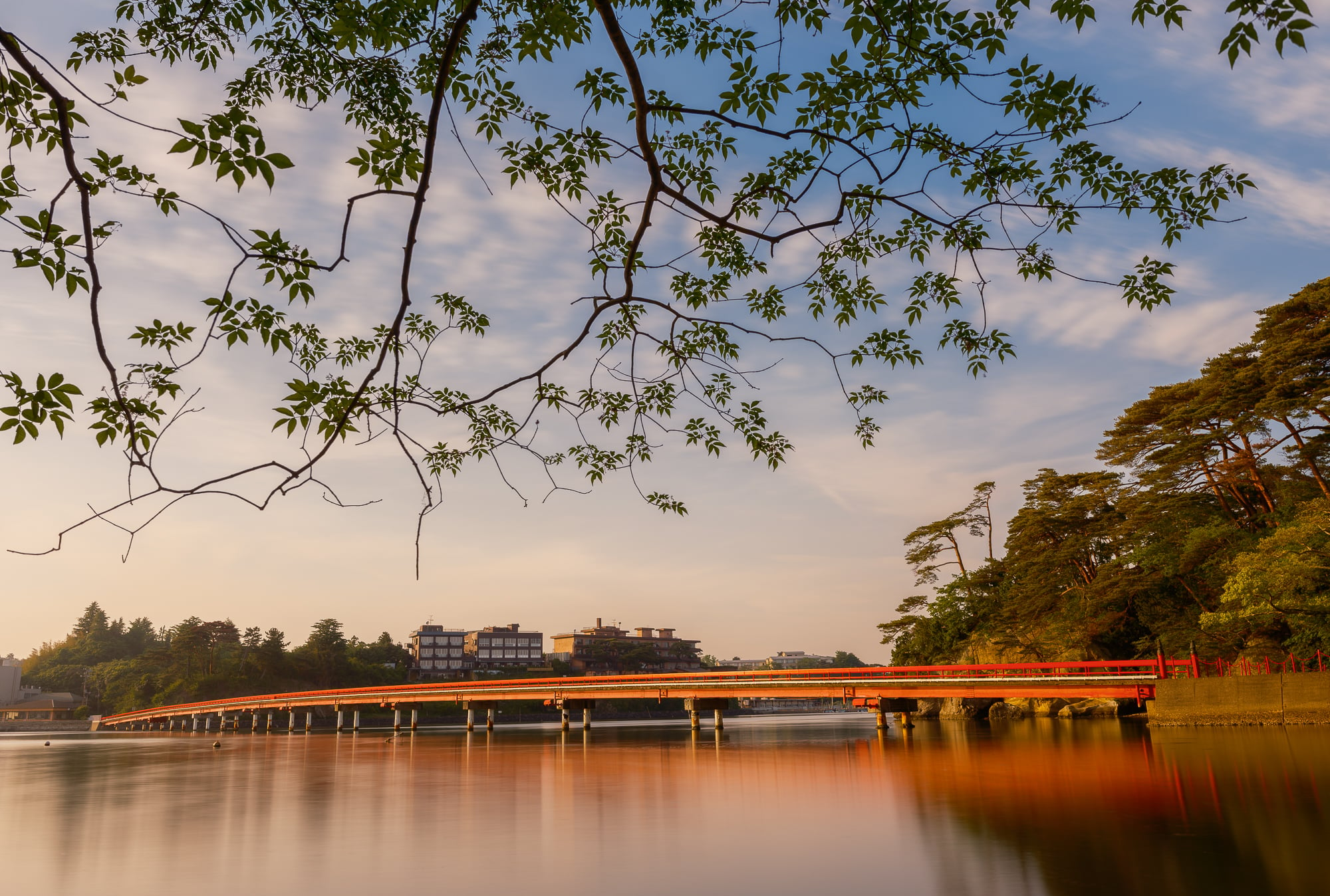
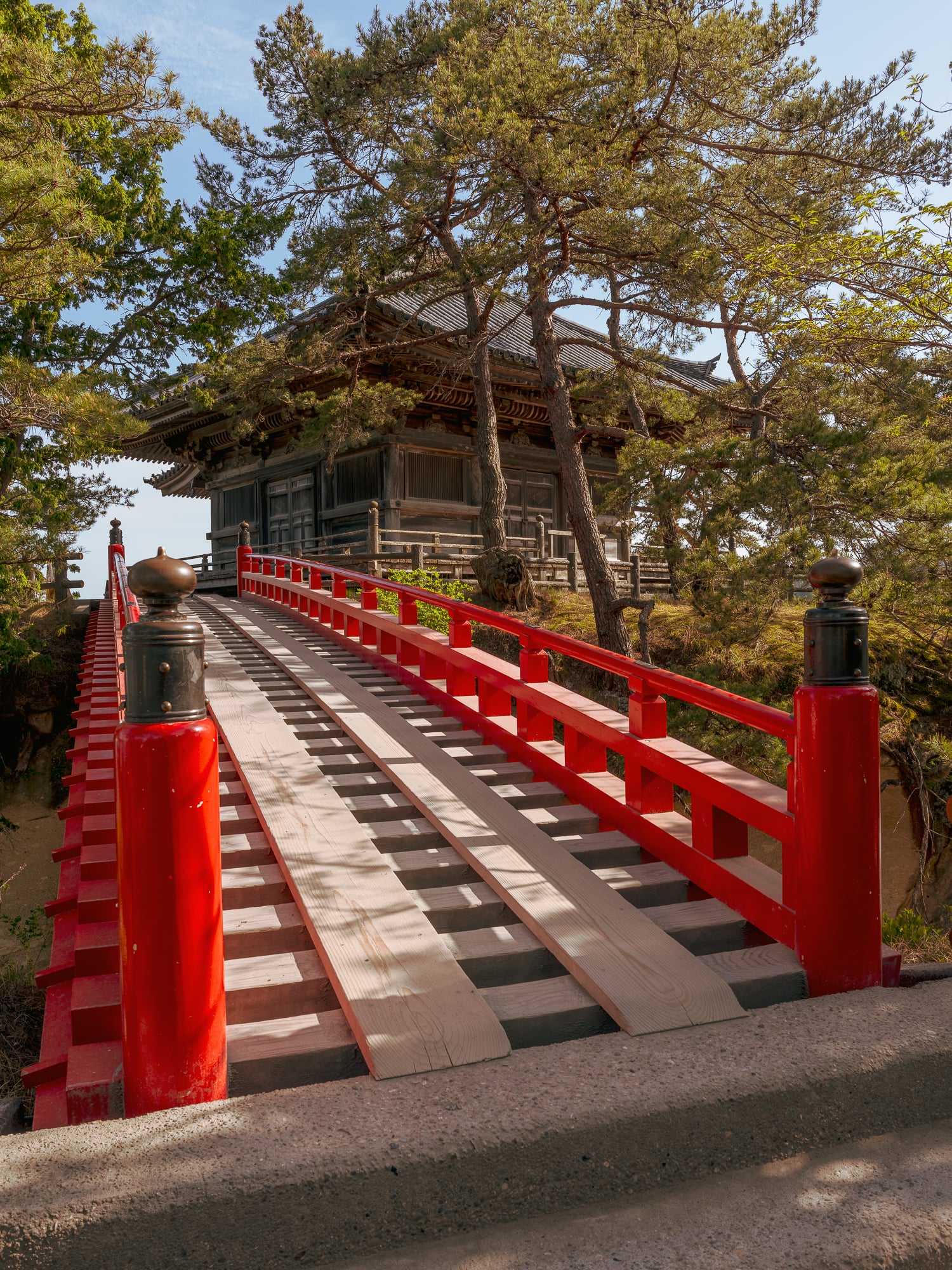
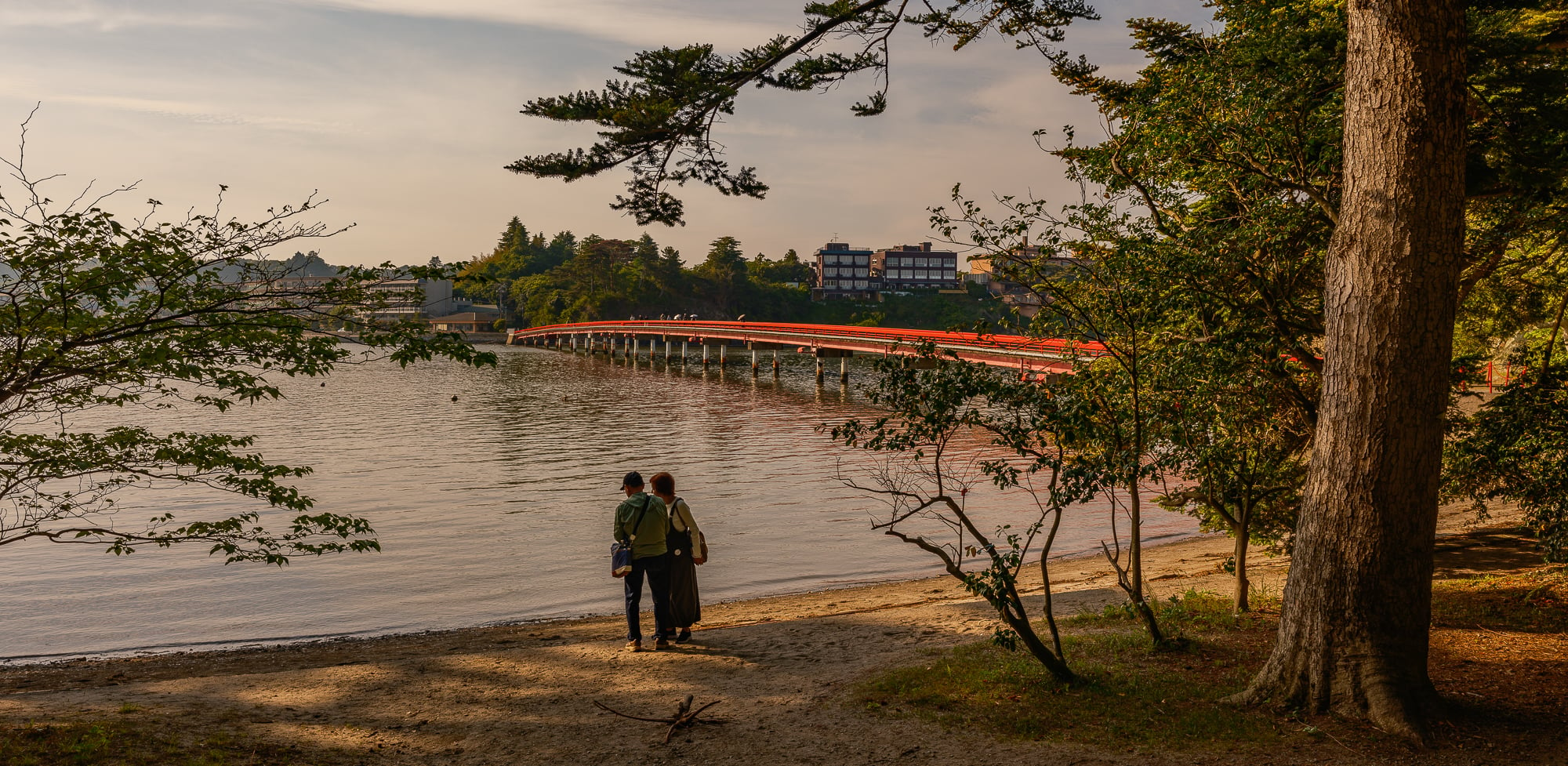
By understanding better why choices in the design structure were made, I could see the logic and intention behind the designers’ thoughts. I wasn’t struggling with the camera and forcing it to work the way I wanted, but rather using the camera with more insight into how it was intended and appreciating the decisions made.
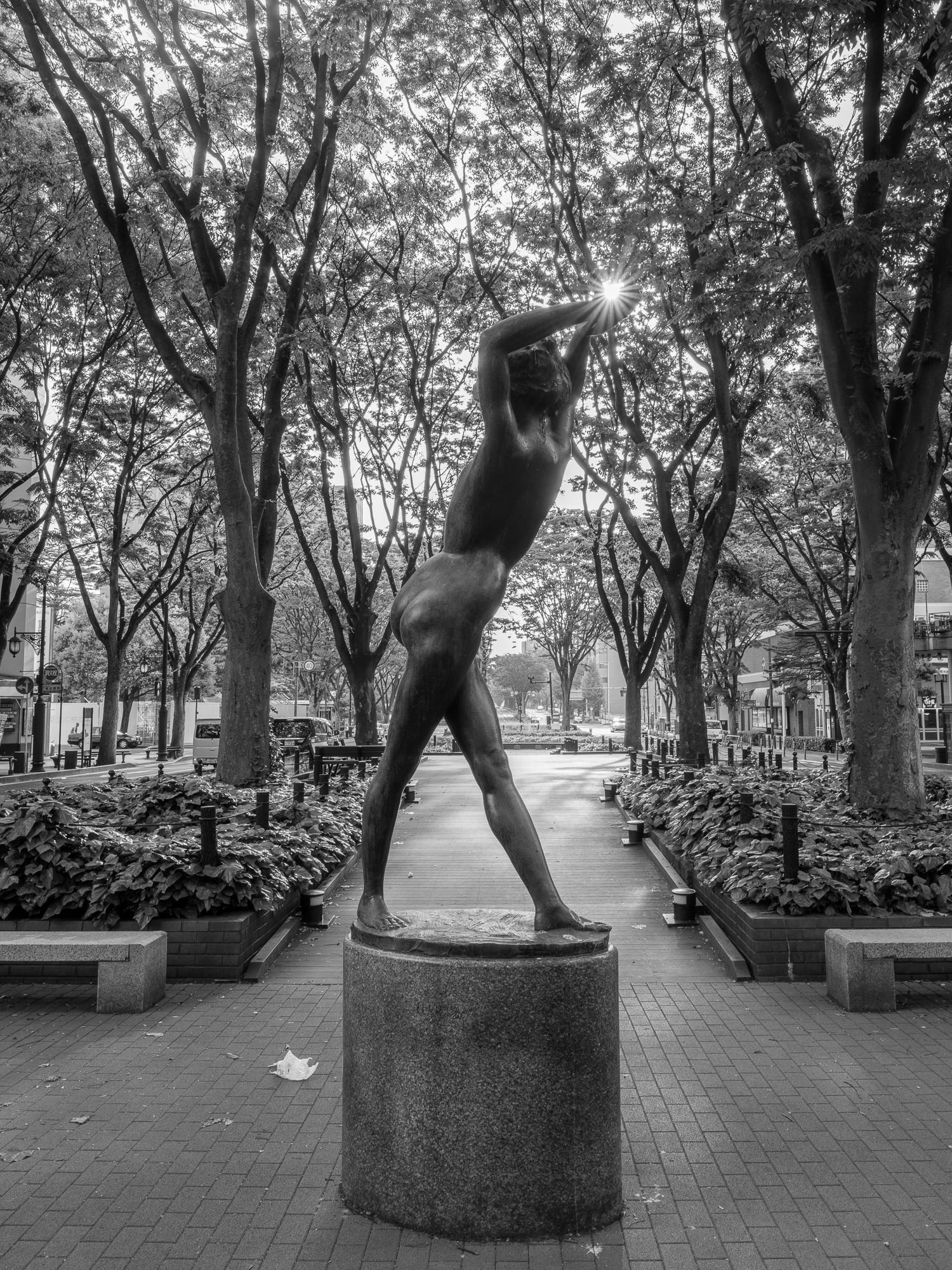
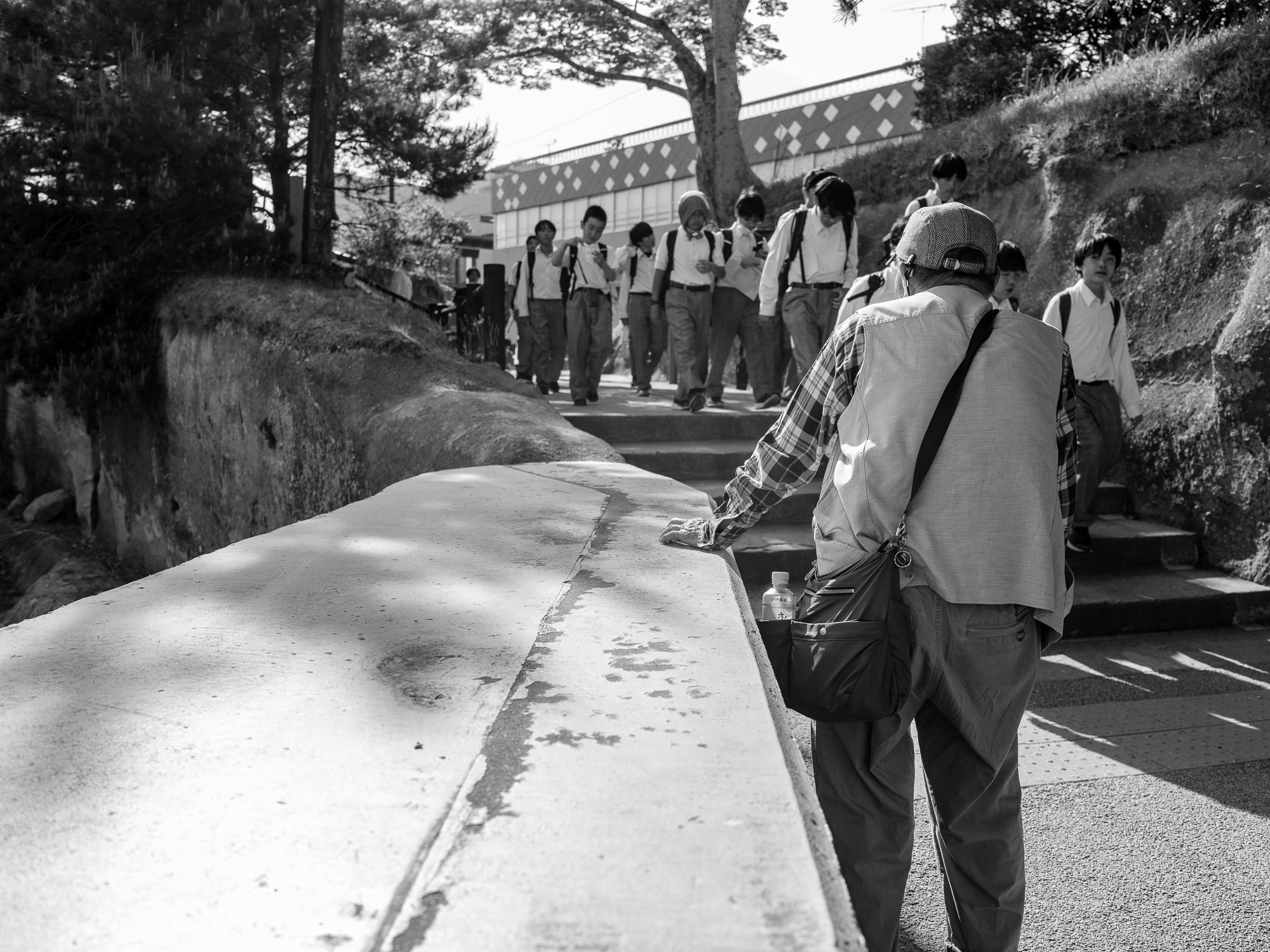
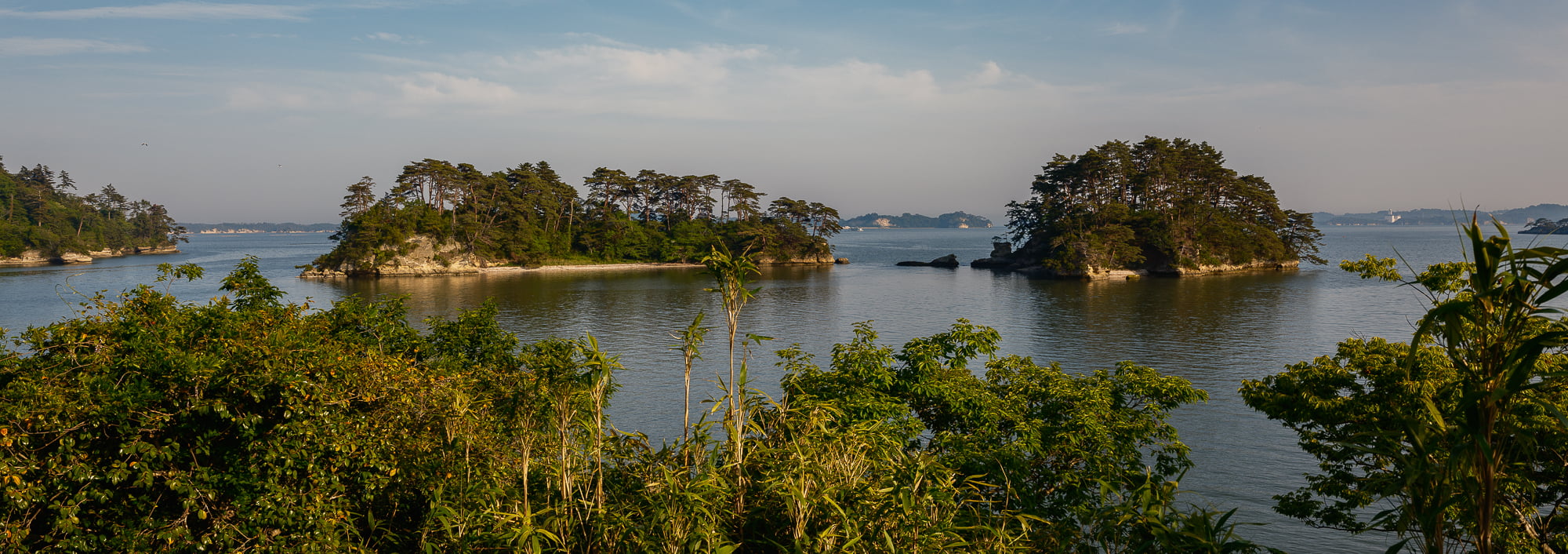
To be honest, I found the GFX100RF quite a natural and easy camera to use when I first played with it in Prague, and having it in my hands again felt familiar and welcoming. This is surely a testament to well-thought-out design on the part of the Fujifilm team. I was experiencing the joy of being in a new part of the world that I had never before visited, and the fun I was having with a camera that made sense in my hands.
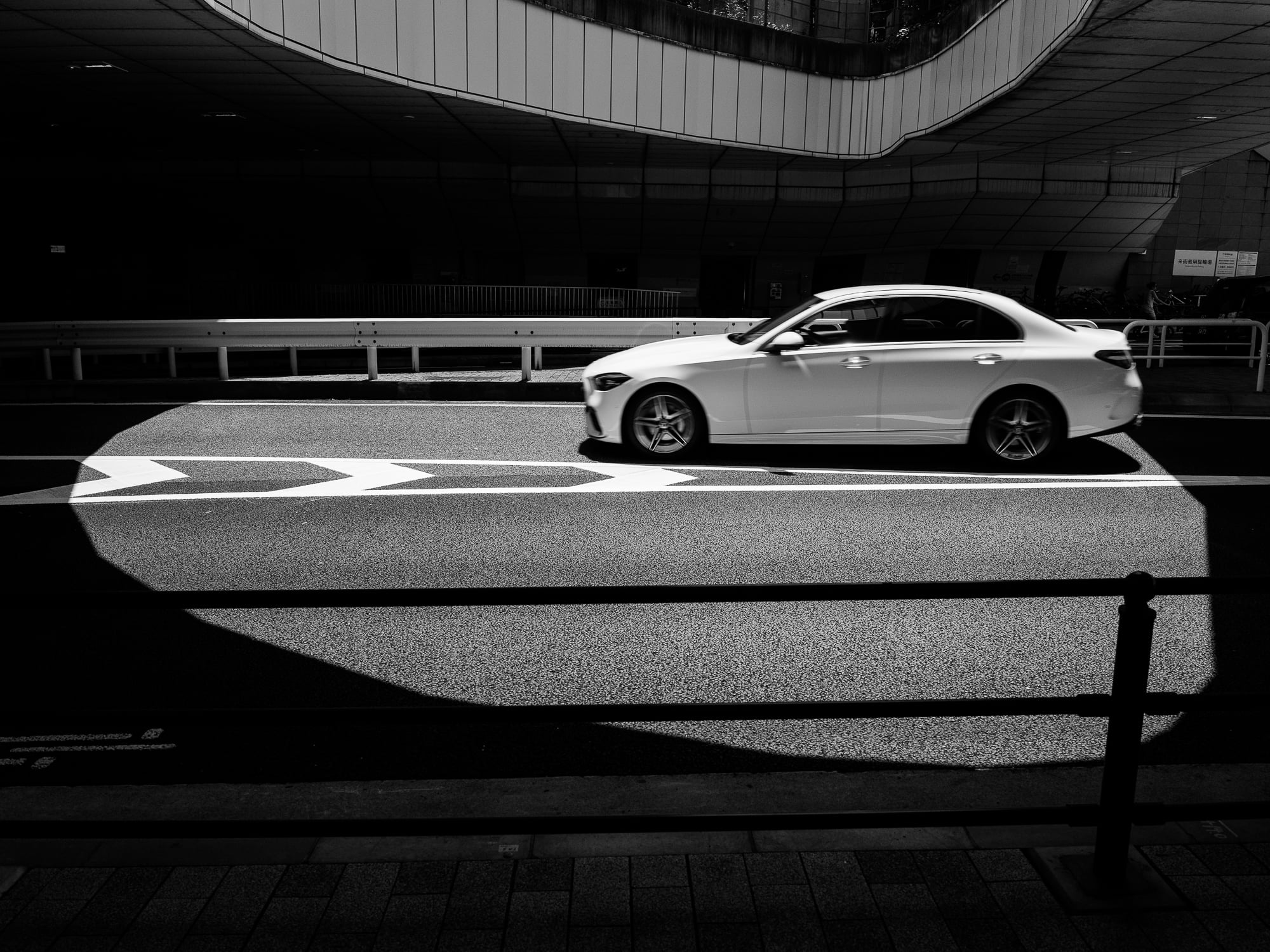
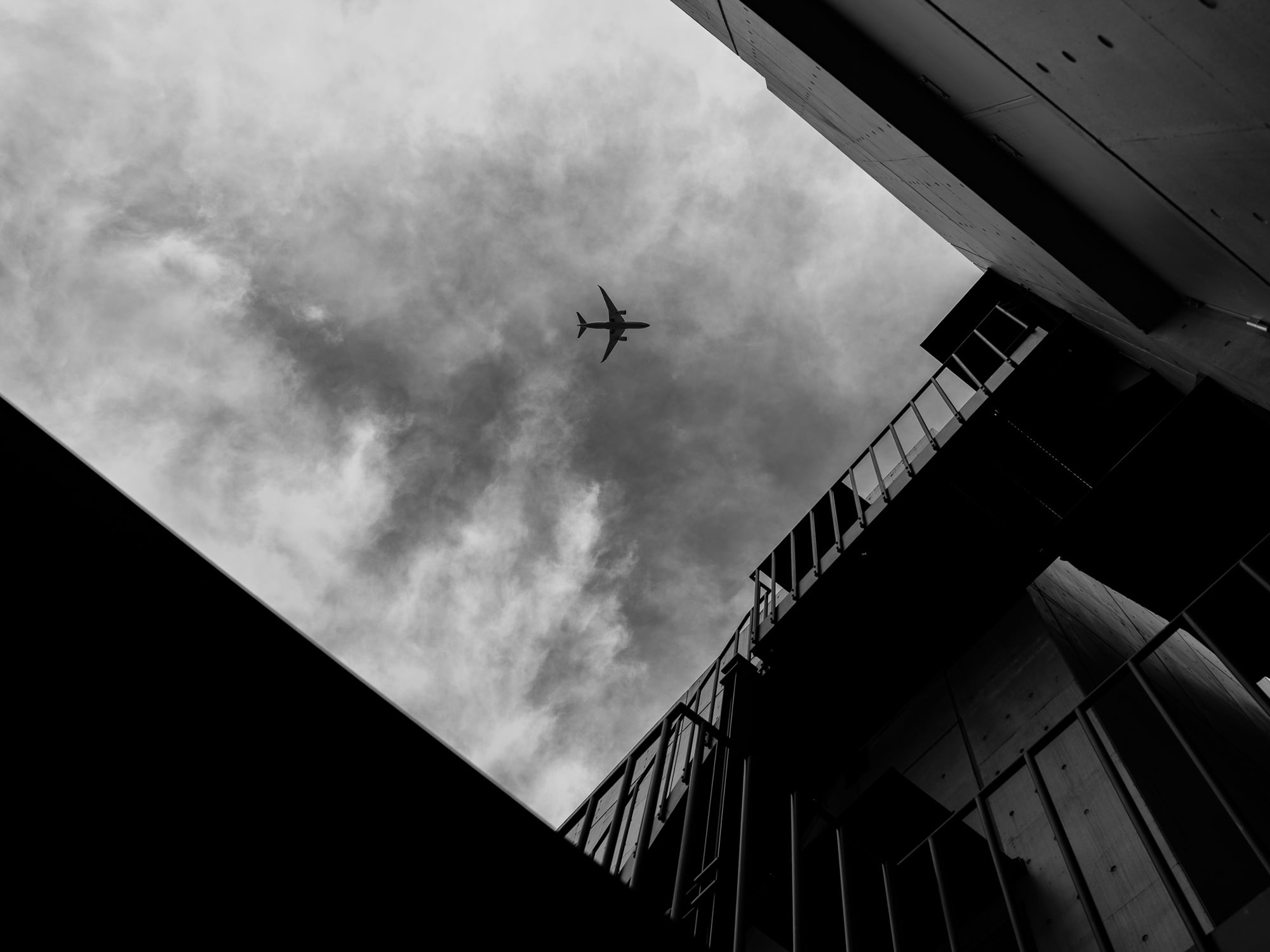
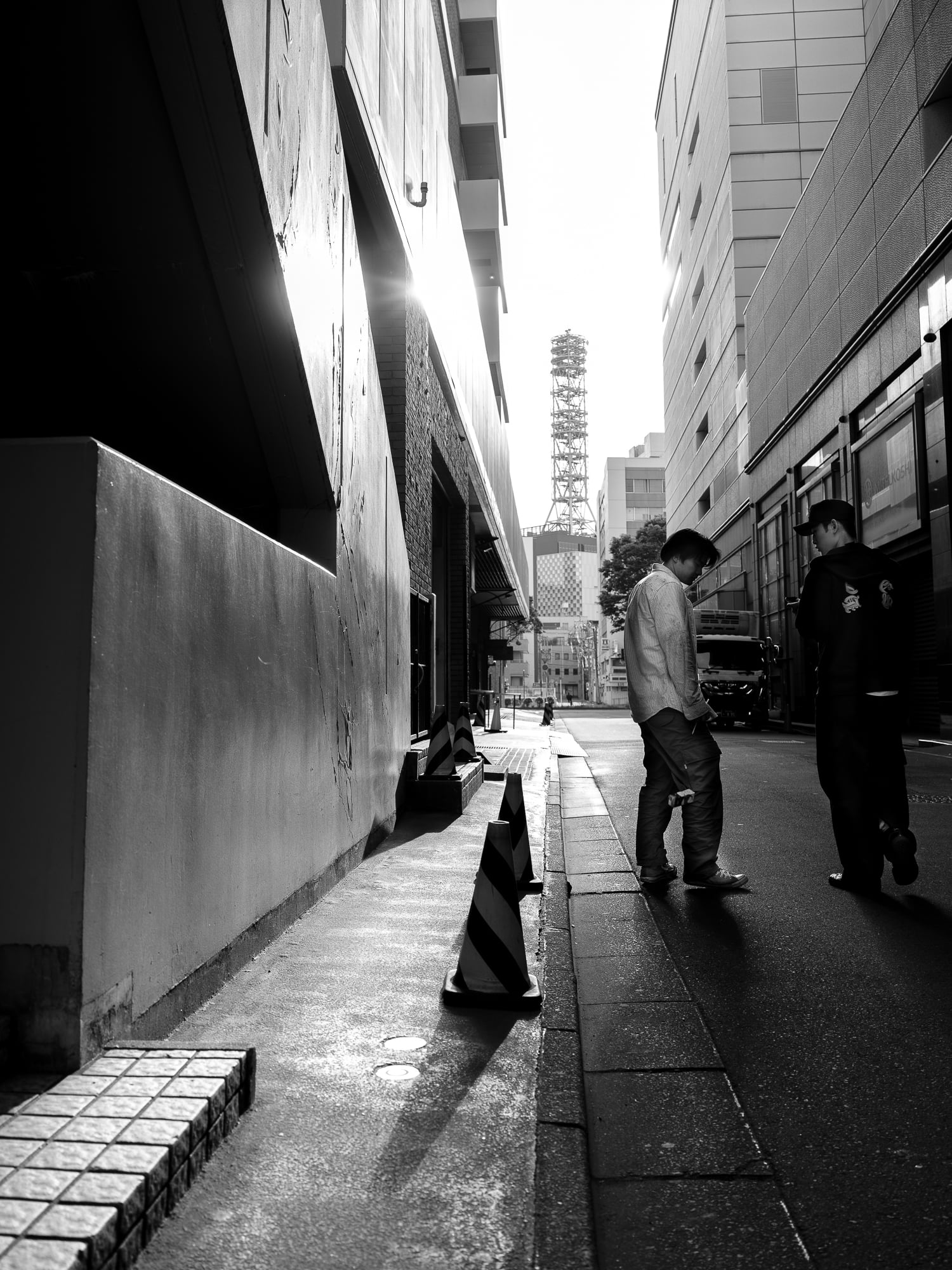
No camera is ideal for every situation that a photographer will come across, but taking the kind of pictures I was taking in the locations I was visiting felt very much the way the GFX100RF was intended to be used.
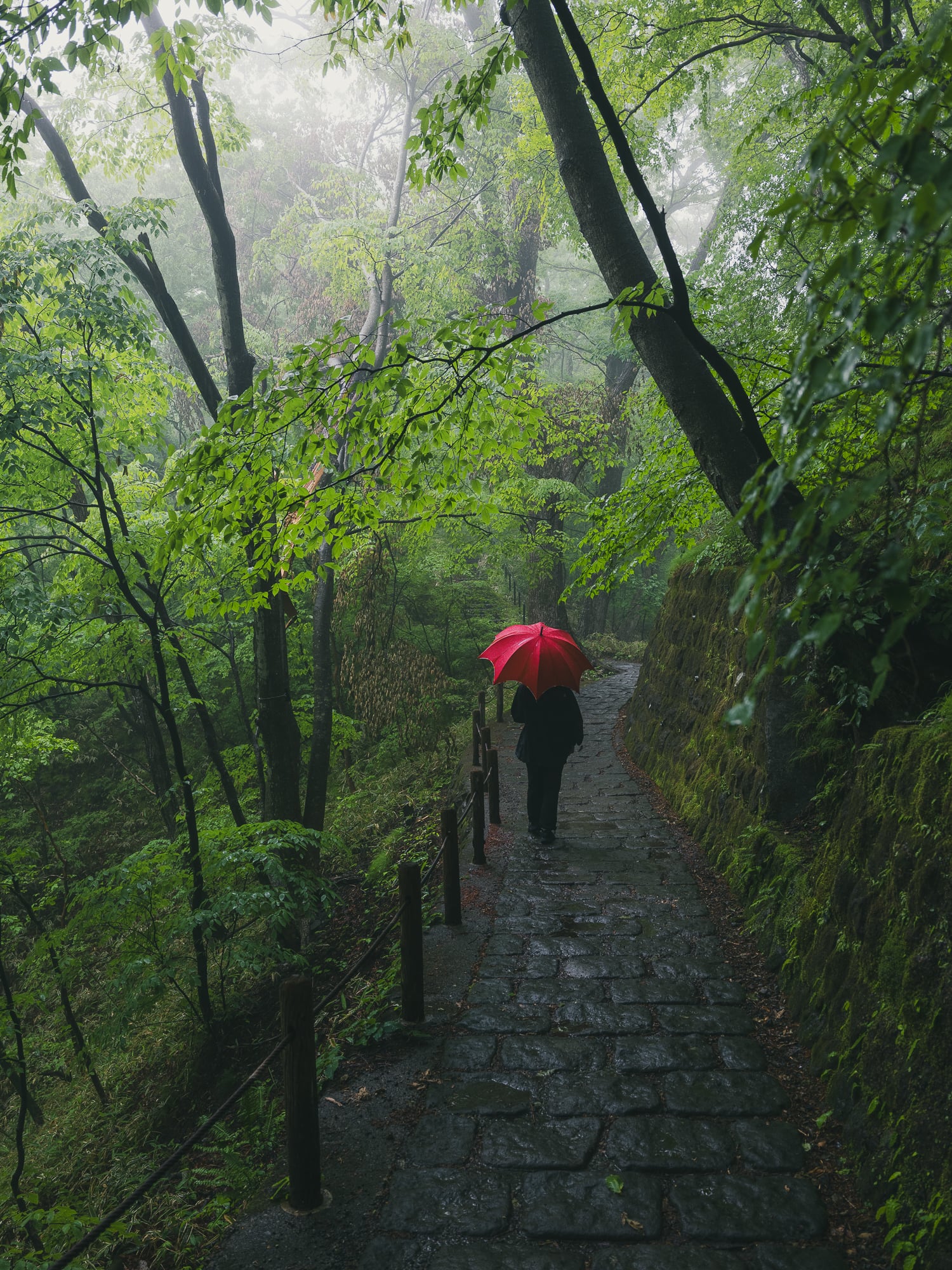
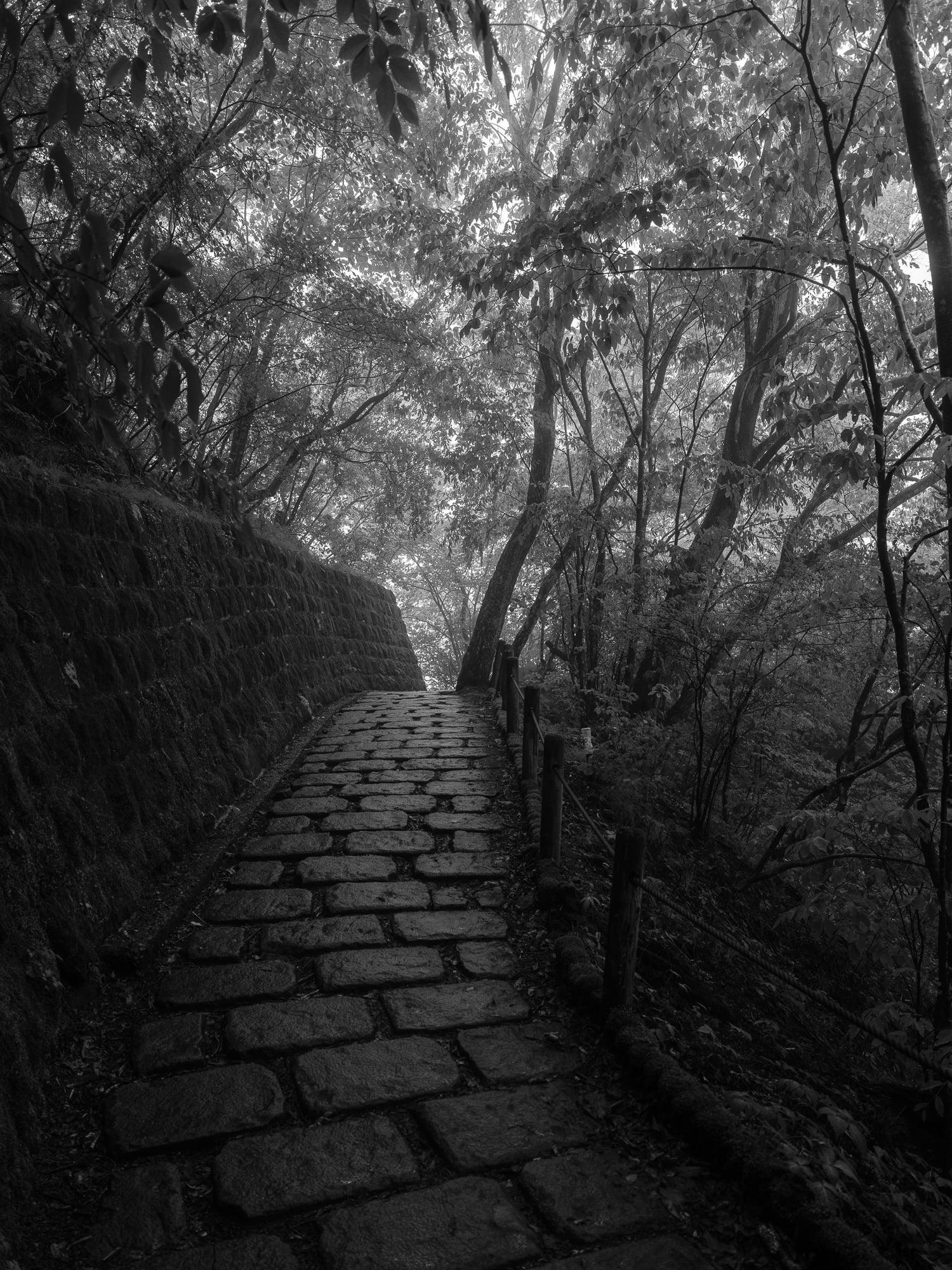
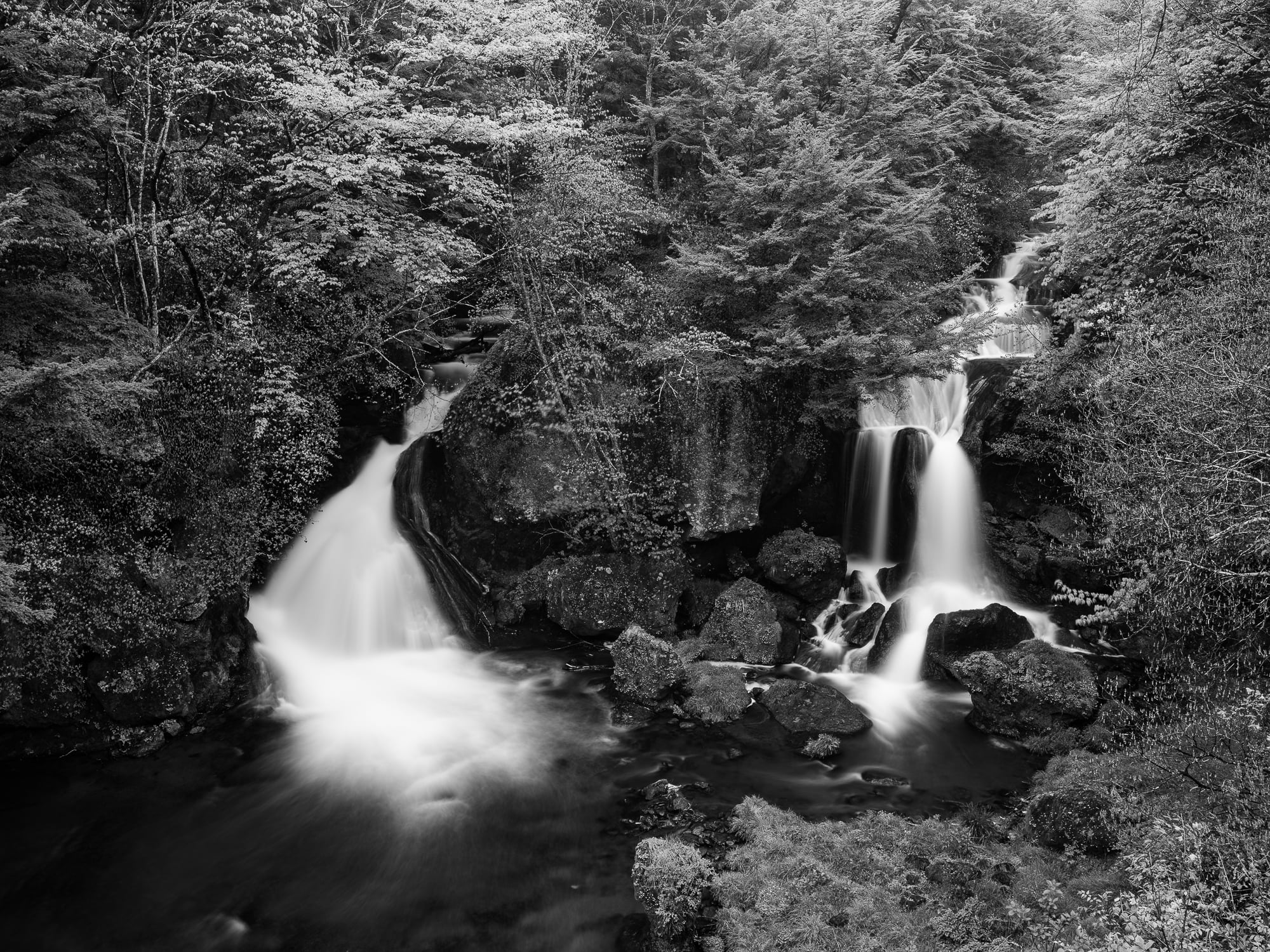
In the end, I was having fun, and my enjoyment was due in no small part to the camera that I was using, and in the moments between photographs I would stop to appreciate what I had learned about creating a camera from start to finish. It was with a profound sense of gratitude that I would head off to the next location in search of the next photo, with a much better understanding of all the people who made it possible.
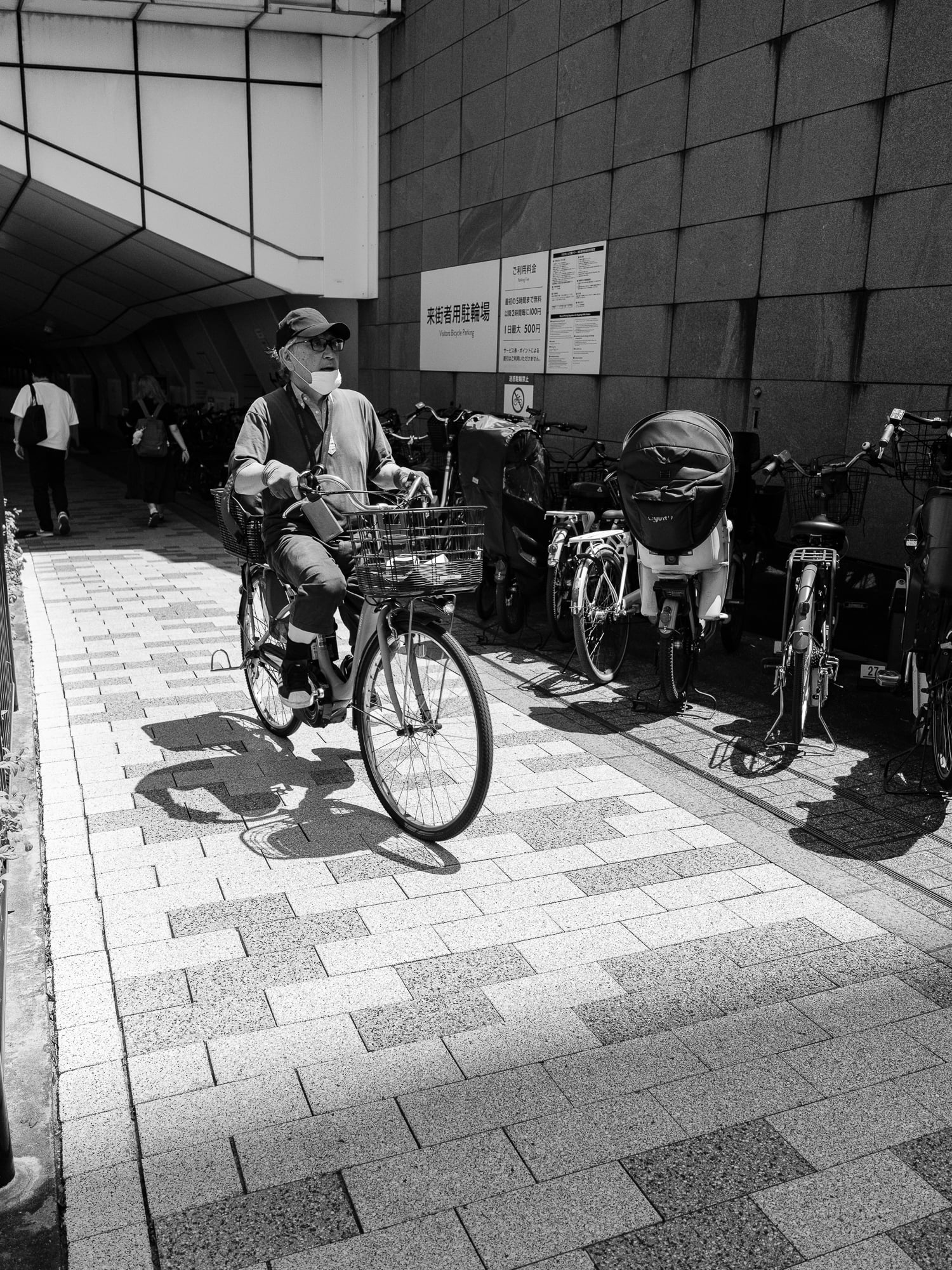
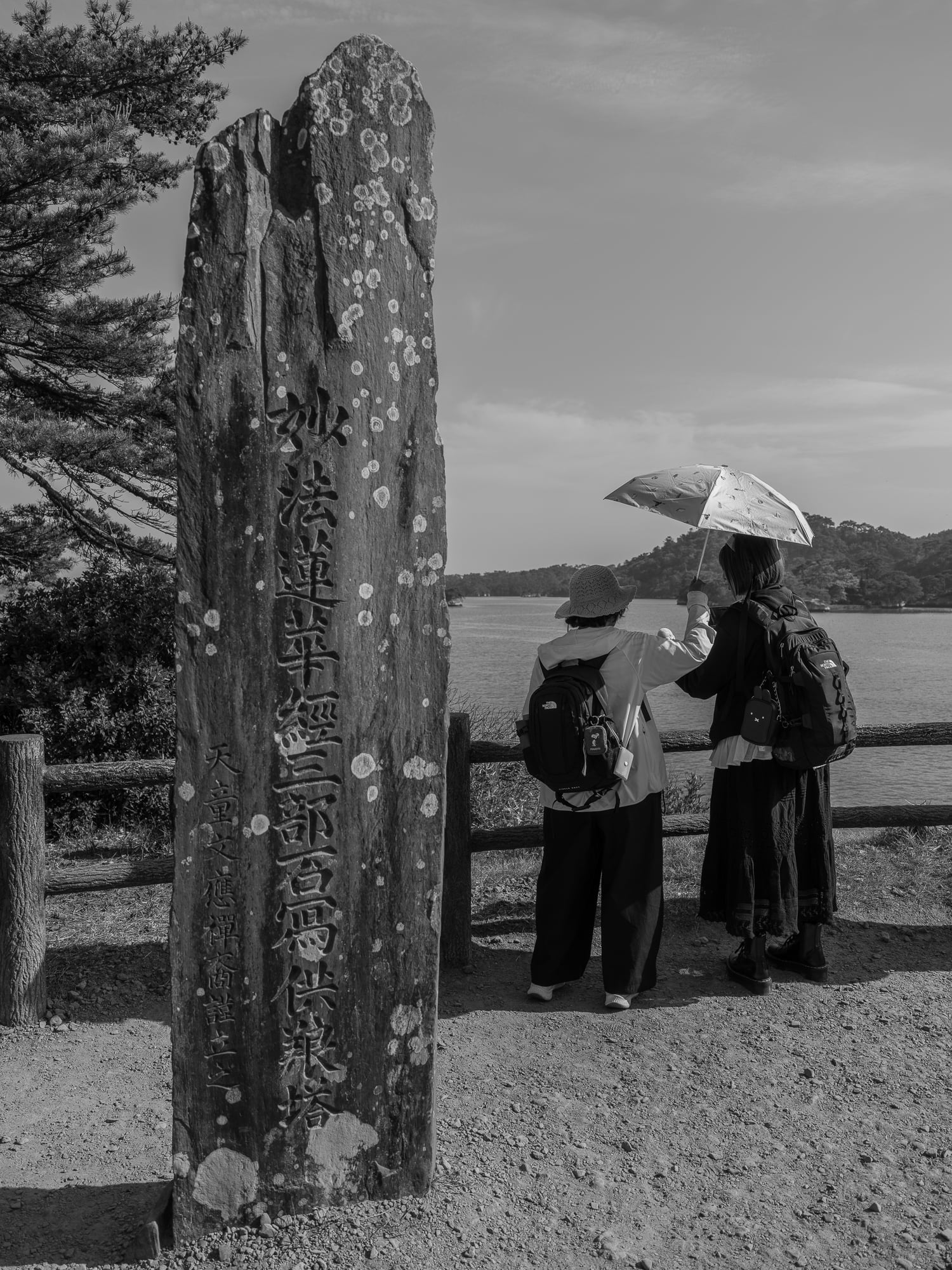
Full disclosureFujifilm provided the access and accommodations necessary for the production of this feature.