
Curiosity Rover Got its Arm Stuck in a Martian Rock
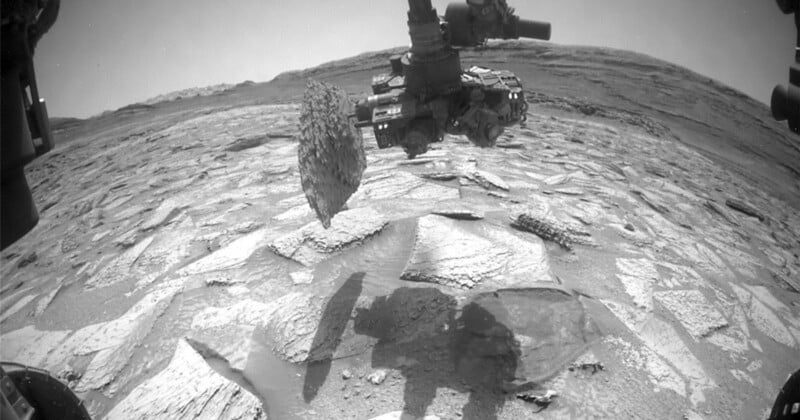
A robotic arm from a Mars rover holds a rock sample above a cracked, rocky Martian surface, with the rover's shadow visible on the ground and hills in the distant background.
The 29-pound rock didn’t budge for almost a week.

You know the feeling, you’re exploring an alien planet and drill into a rock, but the rock clings onto you and won’t let go. You wave your arms around in a desperate bid to shake it off.

Actually, you probably don’t know that, but the Mars Curiosity Rover does after a rock estimated to be 1.5 feet in diameter and weighing 28.6 pounds (13 kilograms) got stuck on its drill.
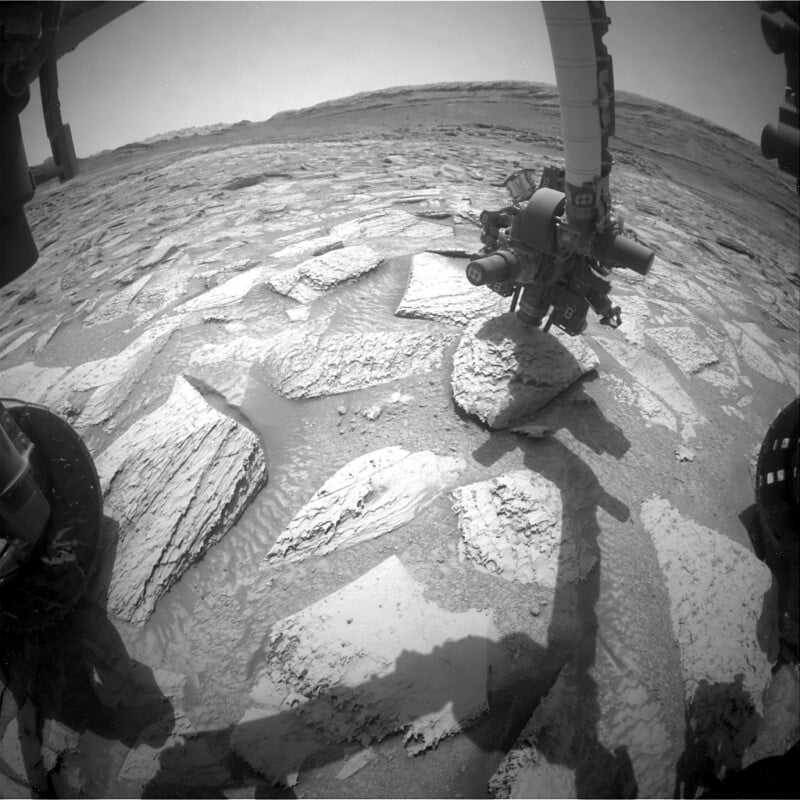
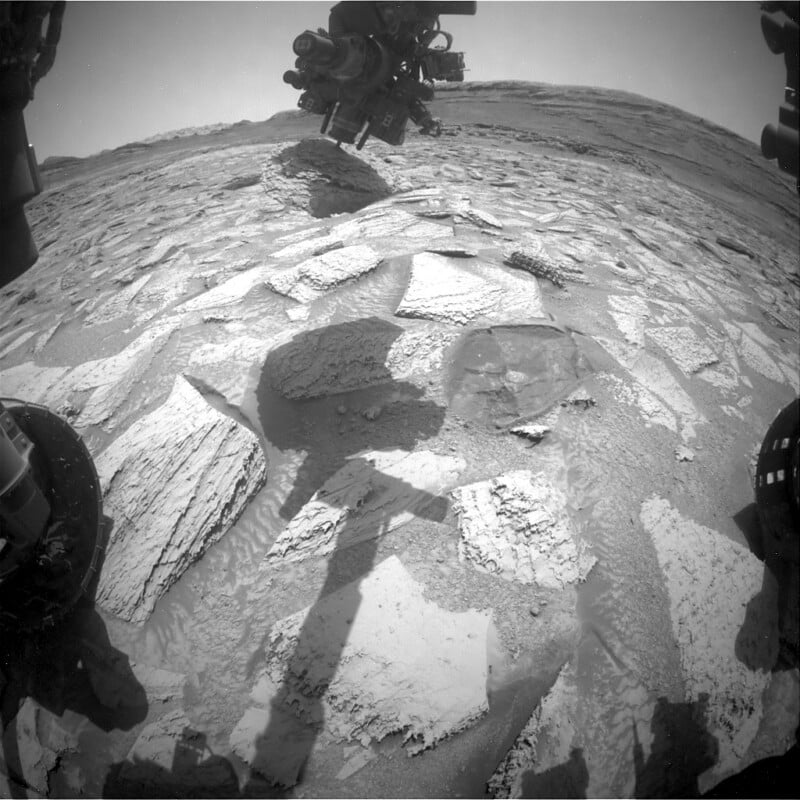
Black and white image of the Mars Curiosity rover’s robotic arm extended over cracked, flat rock slabs on the Martian surface, with part of the rover’s wheels visible in the foreground. The landscape is barren and dusty.
Curiosity was trying to get a sample.
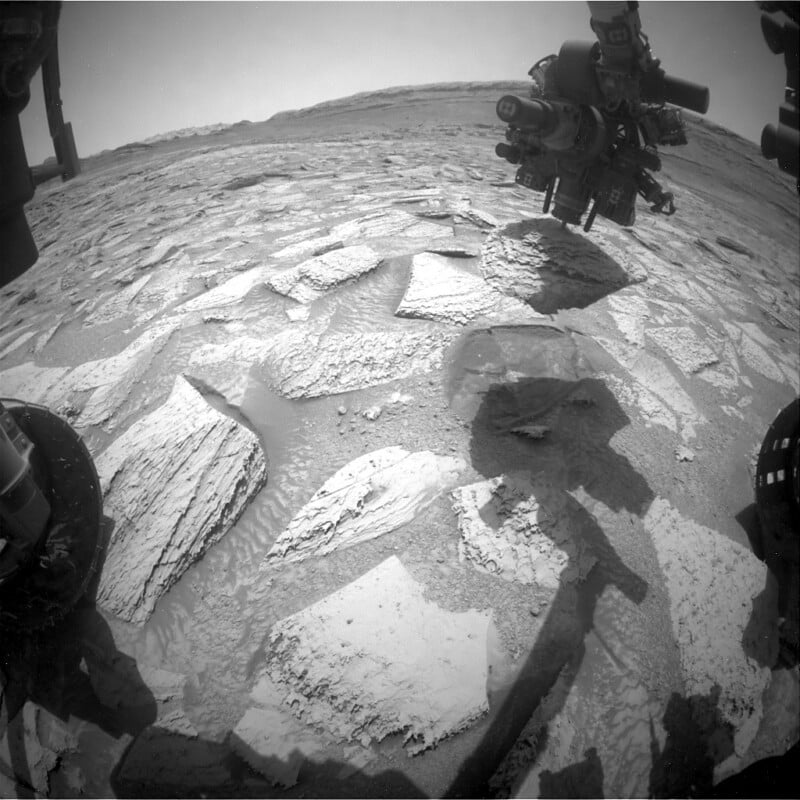
Black-and-white image showing rocky terrain with flat, layered stones on Mars. A robotic arm and wheel from a rover are visible, along with the rover's shadow cast on the ground. The horizon is faint in the distance.
But got more than it bargained for when it lifted the entire rock from the surface.
Black and white image from a Mars rover shows rocky, uneven terrain with layered flat stones. Parts of the rover, including its arm and wheel, are visible, casting shadows on the Martian surface under a clear sky.
Then couldn’t get rid of it.
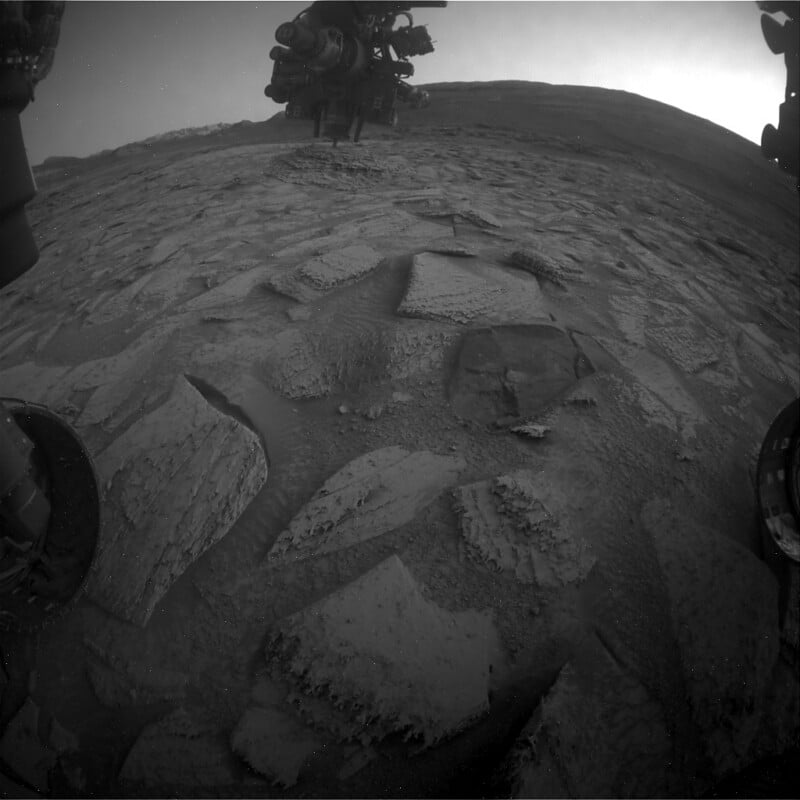
Black-and-white image from a Mars rover shows rocky, cracked terrain with square and irregular stones in the foreground; rover wheels and equipment are partially visible at the edges and top of the image.
Day turned to night, and still the rock clung on.
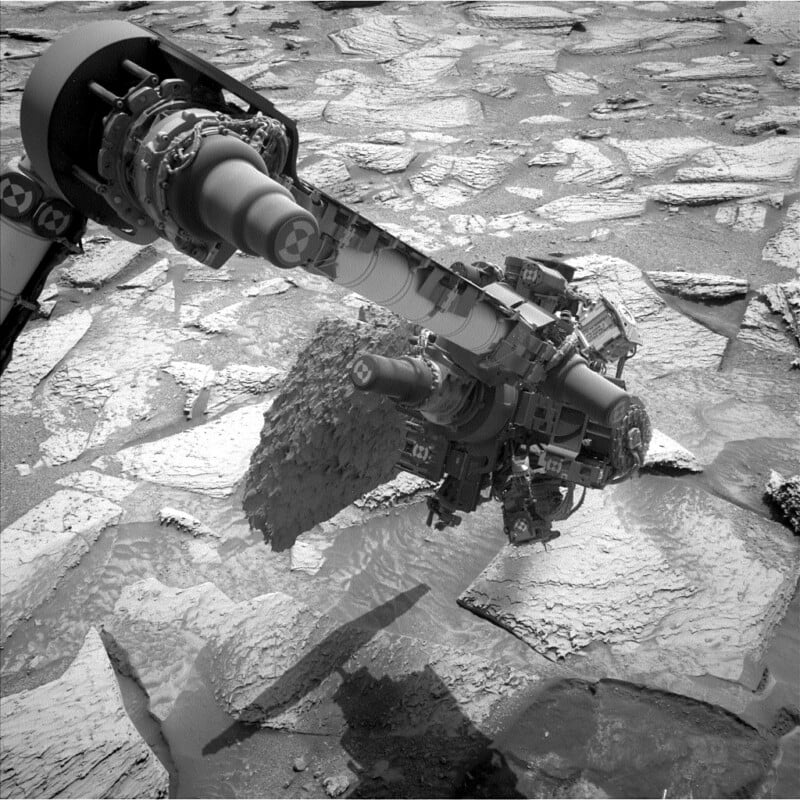
Robotic arm of a Mars rover hovers over cracked, layered rocks on the Martian surface, with the arm’s instruments extended and shadow visible among the textured terrain.
Another angle.

It would be easy to fix on Earth, but Curiosity is 140 million miles from home, and radio signals can take 30 minutes to travel between planets. It meant the stuck rock, which has been nicknamed “Atacama”, took a week to sort out.

“When the rover retracted its arm, the entire rock lifted out of the ground, suspended by the fixed sleeve that surrounds the rotating drill bit,” NASA explains in a blog post.

“Drilling has fractured or separated the upper layers of rocks in the past, but a rock has never remained attached to the drill sleeve. The team initially tried vibrating the drill to shake off the rock, but saw no change.”
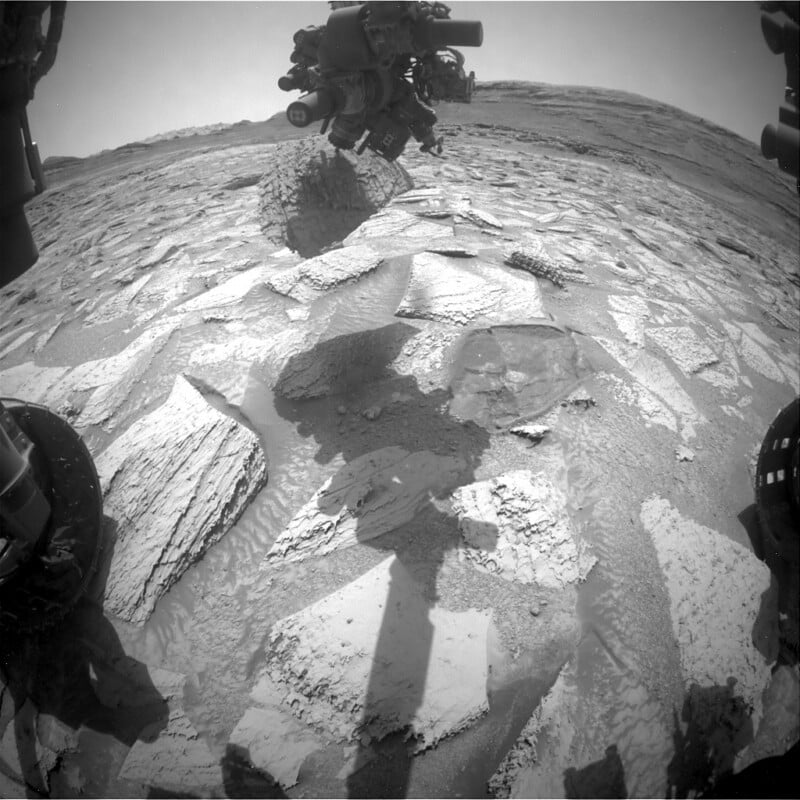
Black and white image from a Mars rover shows rocky, cracked terrain with the rover's shadow and part of its mechanical arm visible, as well as distant hills on the horizon under a clear sky.
The arm tilted this way and that but the stubborn rock held on for days.

Curiosity drilled into the obstinate rock on April 25, and after a few days of getting nowhere, NASA reoriented the robotic arm and vibrated the drill.

“Finally, on May 1, Curiosity’s team tried again, tilting the drill more, rotating and vibrating the drill, and spinning the drill bit,” says NASA. “The team planned to perform these actions multiple times but the rock came off on the first round, fracturing as it hit the ground.”
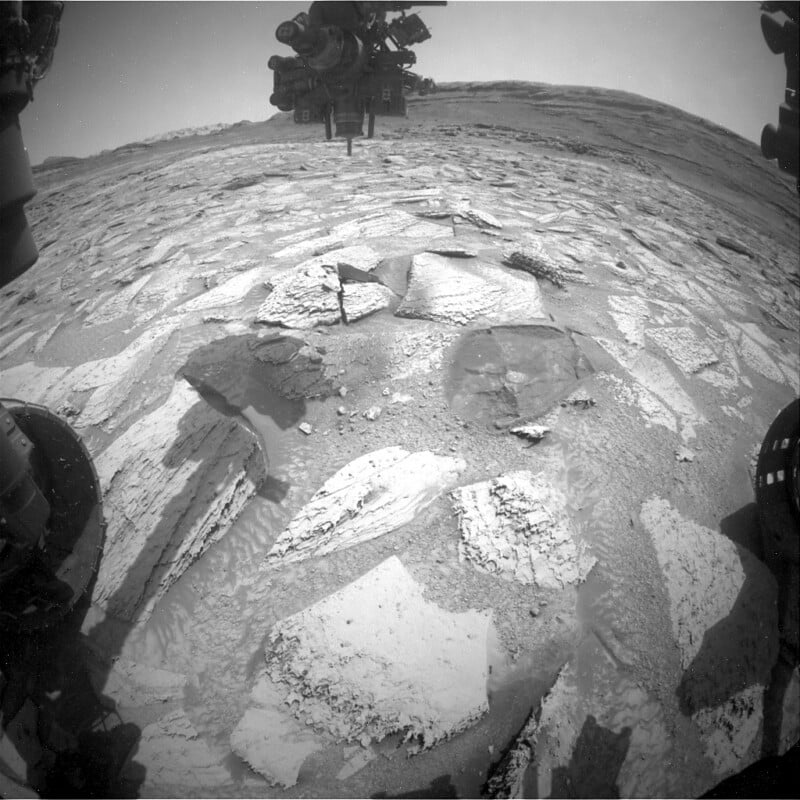
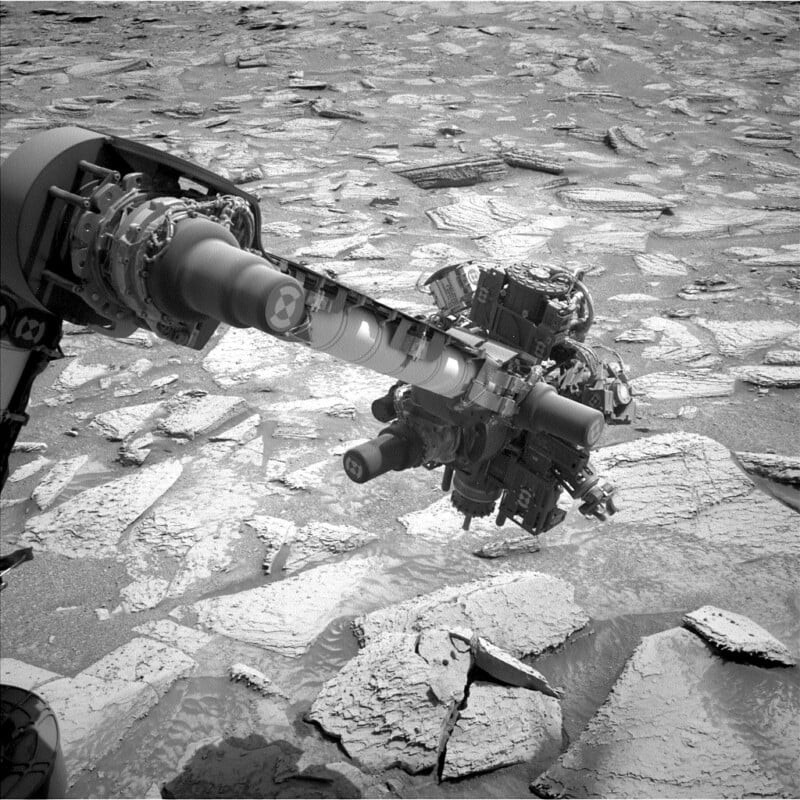
Black and white image taken by a Mars rover showing rocky terrain with flat, cracked slabs in the foreground. Parts of the rover are visible on the sides and top, with a distant ridge under a hazy sky in the background.
The arm looks down at the rock that had finally fallen and shattered on the Martian surface.
A robotic arm extends over a rocky, cracked surface on Mars, with scientific instruments visible at the arm’s end. The ground is covered in large, irregular stone slabs. The image is in black and white.
Good riddance.

Curiosity has been on Mars for almost 14 years now, and the hostile Martian surface has taken its toll: those pesky rocks are also contributing to the vehicle’s deteriorating wheel health.
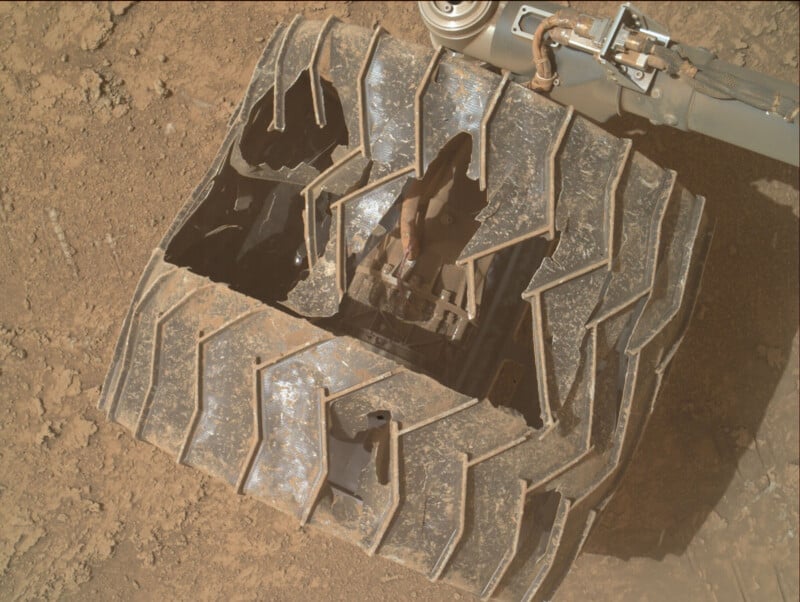
A close-up view of a damaged rover wheel on a dusty, rocky surface. The metallic wheel shows significant cracks, holes, and deformation along its treads, revealing internal mechanical components.
The Mars Hand Lens Imager, a camera at the end of a robotic arm, took this photo of one of Curiosity’s severely damaged wheels.

In March, Curiosity sent back photos of its wheels, some of which are in a terrible state. The rover has six wheels, and the most damaged one is its middle-right wheel.


Image credits: JPL/NASA

Discussion