Judge Rejects Evidence Because Man Was Wearing Smart Glasses in Court

A High Court judge in London has found that a claimant gave evidence while using smart glasses to receive assistance during cross-examination, leading to the rejection of his testimony.
The case involved Laimonas Jakstys, a Lithuanian businessman, who brought proceedings concerning the ownership and directorship of a property development company. During the hearing, Judge Raquel Agnello KC observed irregularities in his evidence, noting that he appeared to hesitate before answering questions.
BBC News reports that concerns were raised when defense counsel reported hearing interference while Jakstys was speaking. His interpreter also confirmed the noise. He was then asked to remove his glasses. It was subsequently established that he had been wearing smart glasses connected to his cell phone. It’s not clear whether he was filming proceedings with the camera that’s embedded into the glasses.
“It was later ascertained that Mr. Jakstys was wearing smart glasses,” Judge Agnello wrote in her summary. “I asked him to remove them before continuing with his cross-examination. After a few further questions, when the interpreter was in the process of translating a question, Mr. Jakstys’s mobile phone started broadcasting out loud with the voice of someone talking.”
“There was clearly someone on the mobile phone talking to Mr. Jakstys,” the judge continued. “He then removed his mobile phone from his inner jacket pocket. At my direction, the smart glasses and his mobile were placed into the hands of his solicitor.”
Jakstys denied using the glasses to receive answers and said the voice heard from his phone may have been caused by ChatGPT. The judge rejected that explanation.
She concluded that the glasses had been connected to his phone during questioning: “In my judgment, the smart glasses were clearly connected to his cell phone during his cross-examination because no voice was heard out loud until his smart glasses were removed and disconnected.”
Evidence before the court showed that multiple calls had been made from Jakstys’s phone to a contact saved as “abra kadabra”, which he said was a taxi driver. The judge also did not accept this explanation.
“In my judgment, from what occurred in court, it is clear that call was made, connected to his smart glasses, and continued during his evidence until his mobile phone was removed from him,” she said.
After the devices were taken away, Jakstys continued to hesitate before answering questions. The judge noted that he frequently delayed his responses or asked for questions to be repeated, concluding that “it was clear to me he simply did not know what his reply should be”.
Agnello ultimately found his evidence unreliable: “Not only have I held that Mr. Jakstys was untruthful in denying his use of the smart glasses… but the effect of this is that his evidence is unreliable and untruthful… In conclusion, I reject Mr. Jakstys’ evidence in its entirety.”
The ruling comes amid wider attention on the use of smart glasses, which incorporate discreet cameras, microphones, and audio features. Their increasing availability has raised concerns about their potential use in courtrooms.
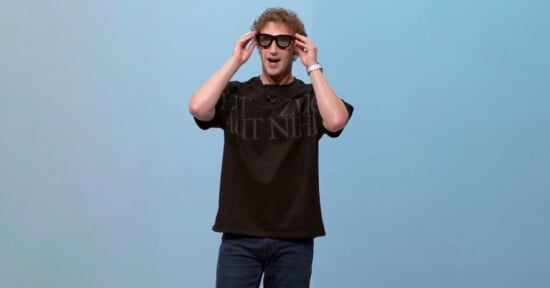
It comes after a judge “upbraided the Meta team”, including CEO Mark Zuckerberg, for wearing Meta Ray-Bans at the Los Angeles Superior Court during a social media addiction trial.
Image credits: Header photo licensed via Depositphotos.