This Is the Greatest Film Camera Ever Made (And None Of You Agree)
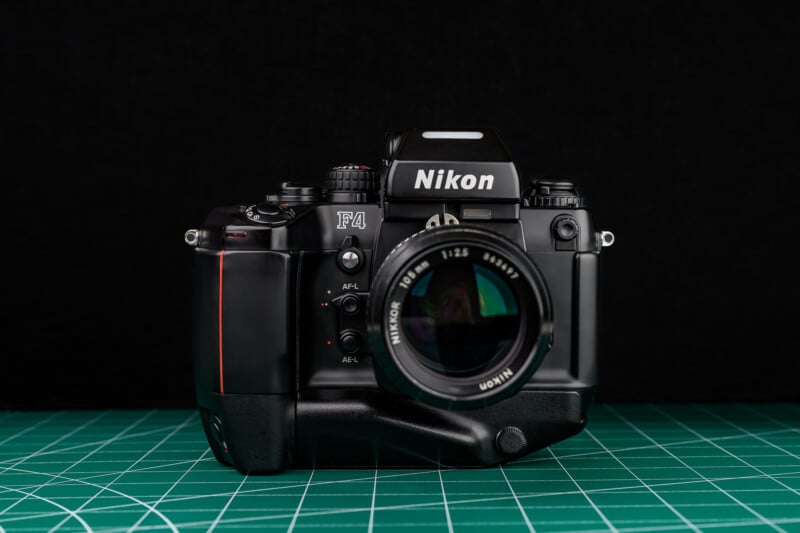
The passage of time has not been kind to the Nikon F4. At the time of its release, it was a modern superstar, highly sought after, and bristling with modern advancements. It truly bridged the gap between classic manual-focus SLRs and modern autofocusing and advanced metering, flagship cameras.
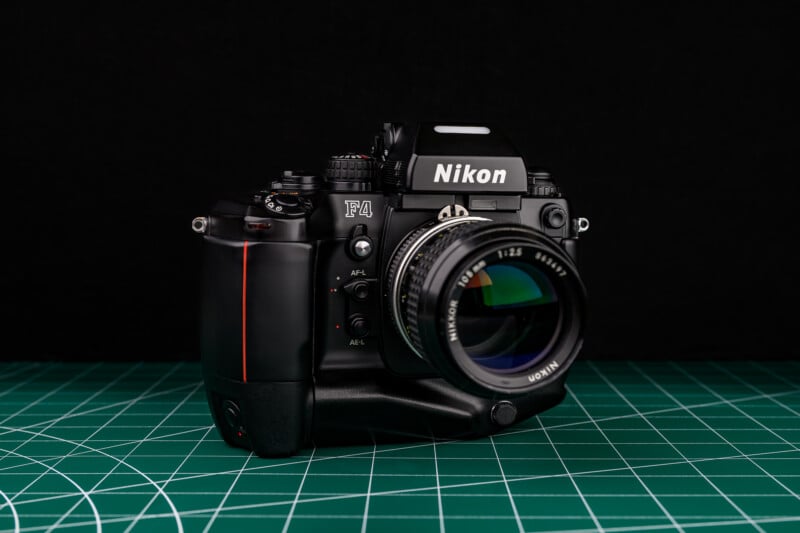
However, these days the F4 is seen as too modern to be a classic marvel but simultaneously too archaic to be an everyday-carry film camera. While the Nikon F3 has become a highly desirable classic, the Nikon F4 is seen as the redheaded stepchild among Nikon pro bodies.
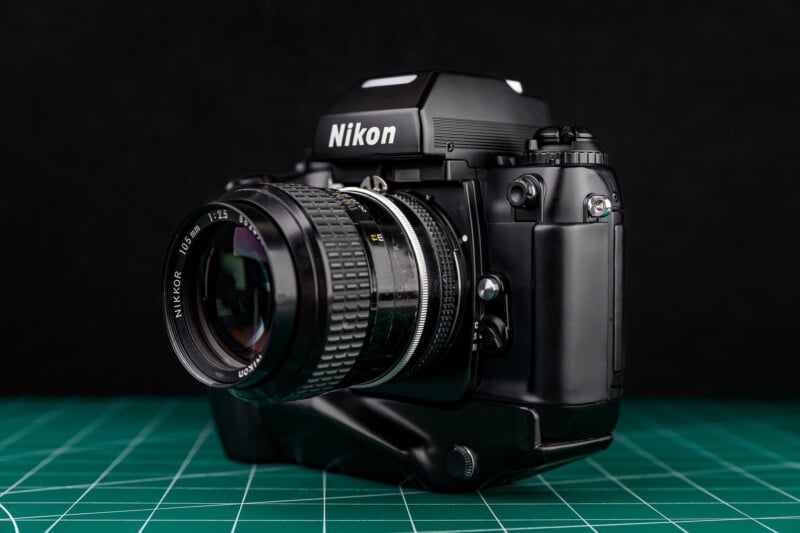
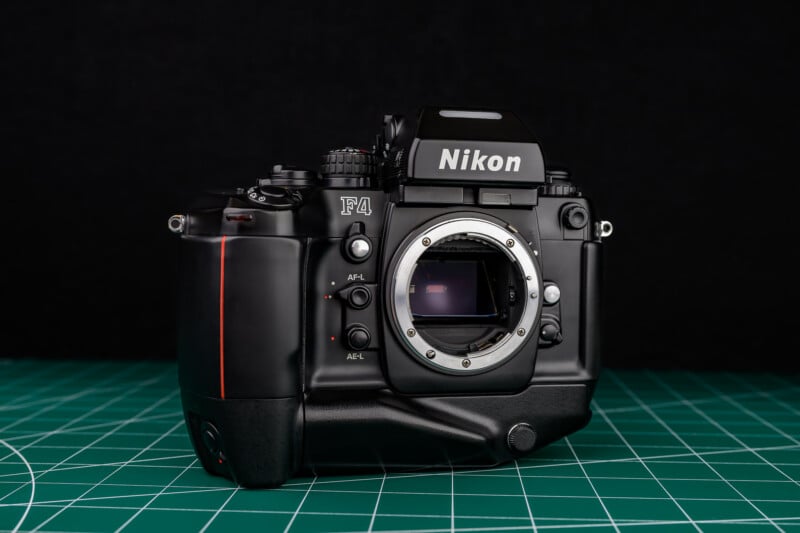
Well, I happen to love redheads, and this is my love letter to what I would argue is at least the greatest manual-focusing film camera of all time.
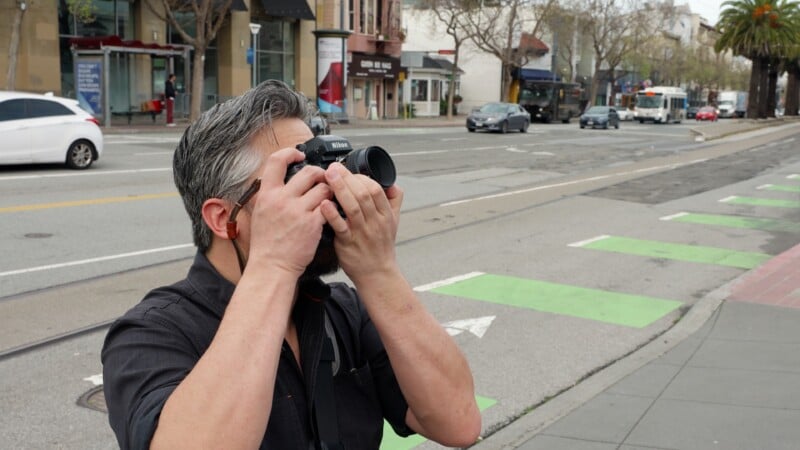
The Nikon F4: My Second Love
To give a little context, I want to talk a little about my own personal experience with Nikon cameras. My first SLR ever was a classic Nikon FE, which I still use today. I wandered the streets taking photos of everything I saw, and learned all the basics of photography and film development on that camera.
I collected a decent quiver of manual focus lenses and soon found myself shooting album covers, weddings, and more journalistic endeavors. I decided it was time to get a more powerful SLR that would still make use of my vintage glass, yet be more capable at shooting professional gigs, and I immediately fell in love with the F4.

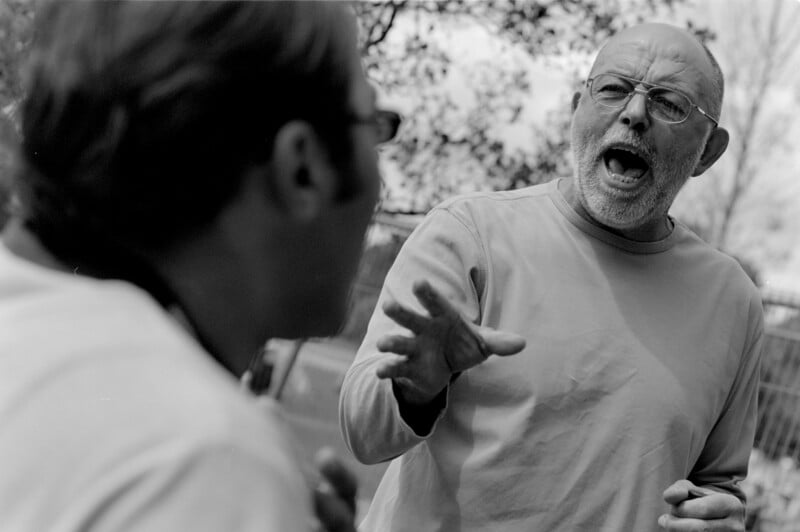

It’s important to note that I was a young man in my very early twenties, living in London, England, with very little disposable income. At the time, the Nikon F4 was already considered an old model, being roughly 13 years old by then, but it still commanded a premium flagship price, although it was substantially less than the prestigious F5. So I saved up and found one in London, sunk everything I had into it, and got to grips with a camera far more advanced than anything I had previously used.
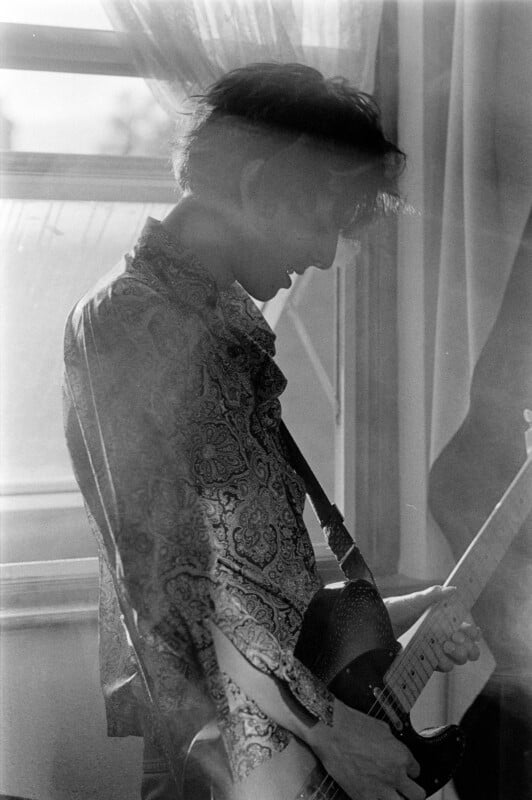

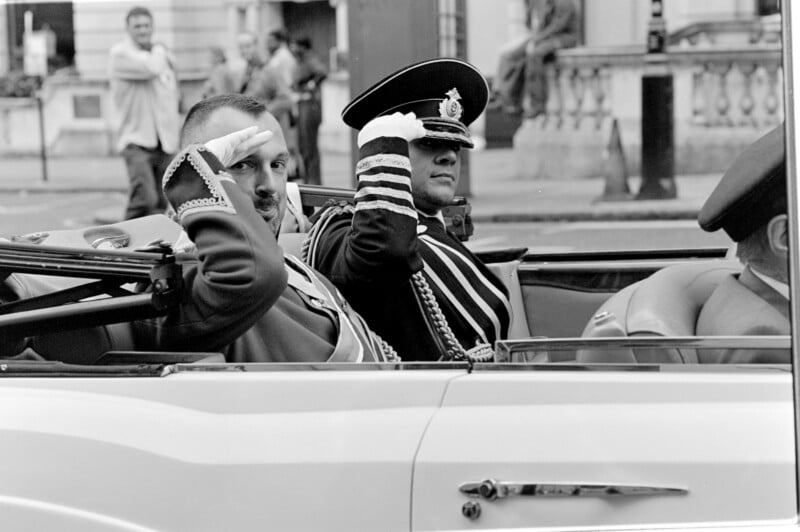
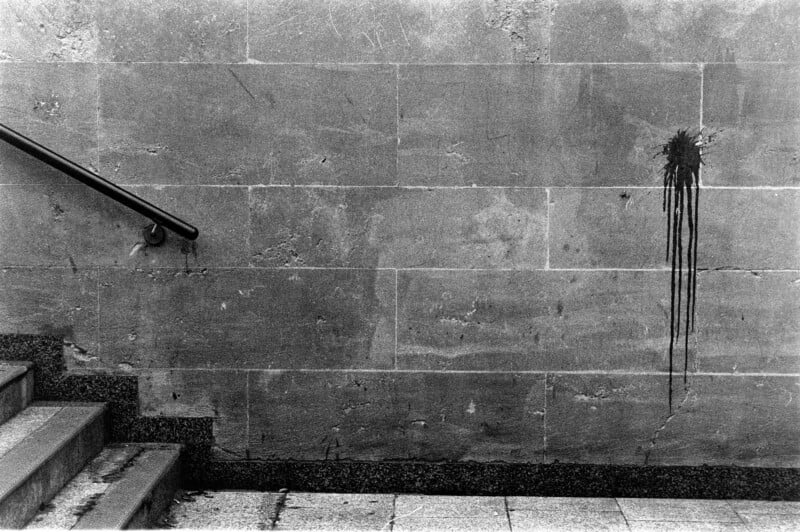
What really drew me to the F4, besides its muscular good looks, was its modern technology that elevated the use of manual focus glass. Now, the F4 was an autofocus-capable body but you have to remember that at the time, autofocus was still relatively new for Nikon and, as a result, quite ponderous. The F4 wasn’t exactly a race car, even if it was designed by a race car designer. Later Nikon AF-S lenses with their more modern motors actually breathed some life back into the F4 autofocusing experience, but that is beyond the scope of this discussion.



The Nikon F4: What’s So Great About It?
The first thing we should talk about is the radically different, modern body design of the F4. Giorgetto Giugiaro designed the previous F3 camera, but decided on a larger and even more modular body design was necessary for the F4. There is no denying it was large and heavy, but this was at a time when many manufacturers were building bigger, more powerful flagship SLRs.
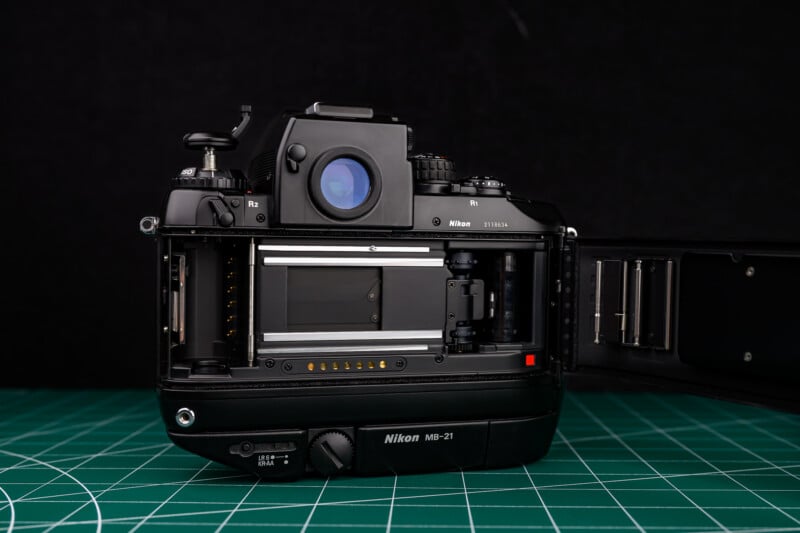
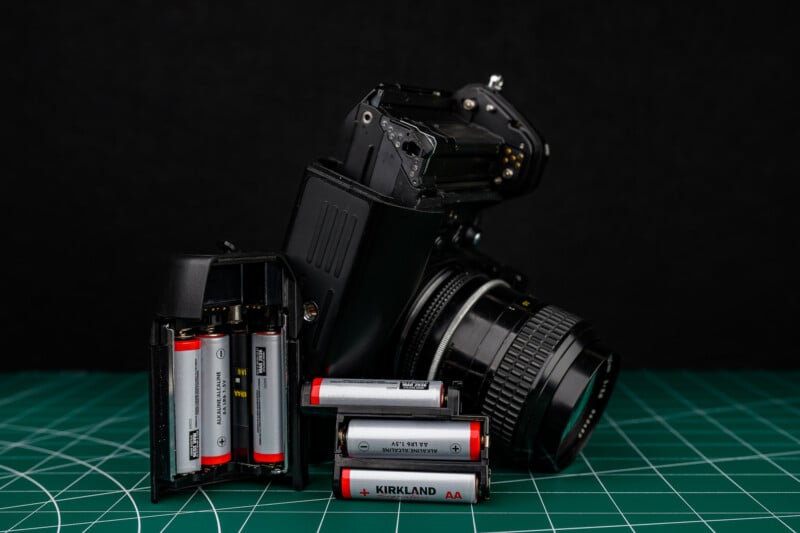
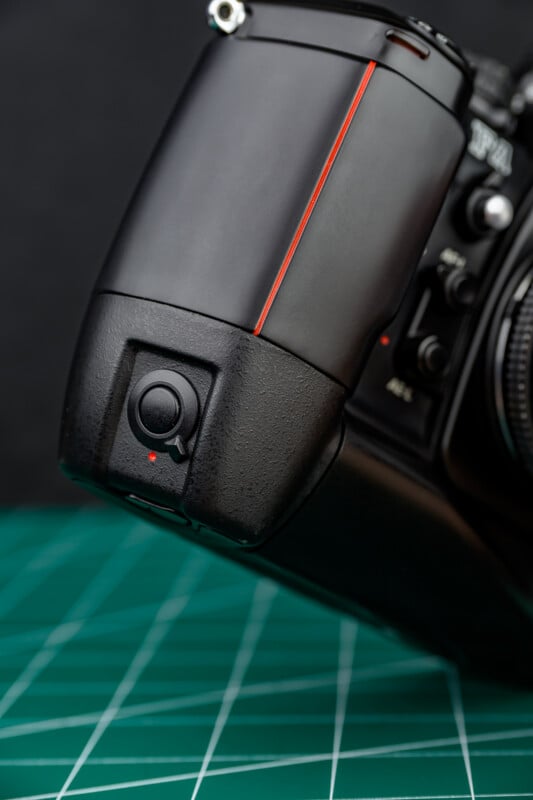
With the basic MB-20 grip and four AA batteries, the camera weighed around 1,090 grams, and this went up substantially if you used the vertical grip MB-21 or even larger MB-23 for extra battery life and burst rates. As a side note, the F4 is called an F4S when coupled with the MB-21 grip, and an F4E when using the MB-23 version. You get a bump up in burst rate from just under four pictures per second with the MB-20 grip, and almost six with the larger ones.

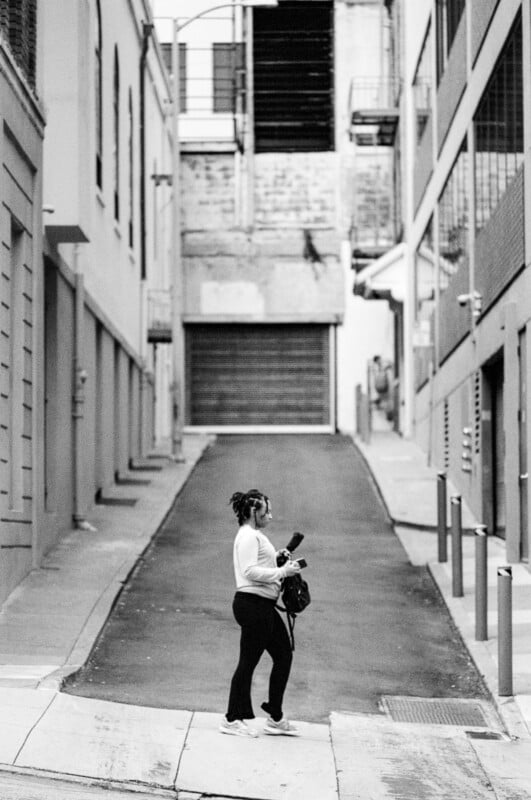
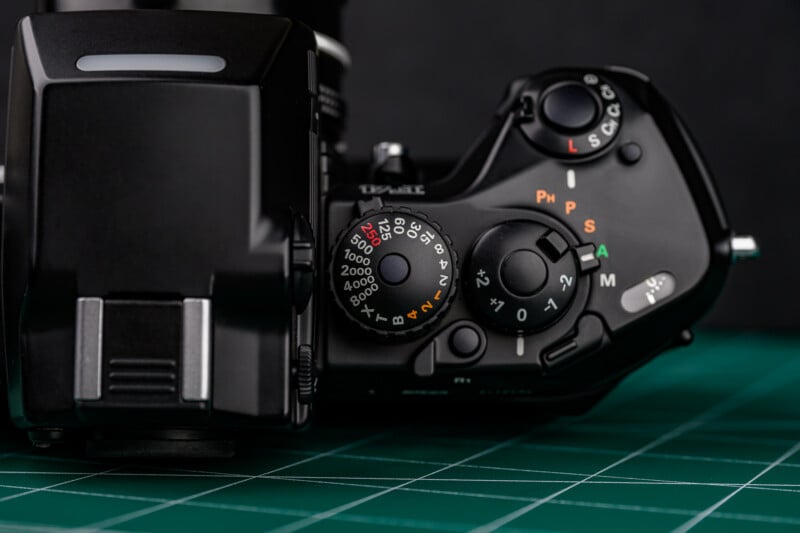
This large body provided plenty of real estate for customizable buttons and controls. Everything was easy to use, even with gloved hands, and the camera itself was supremely rugged in order to handle everything from inclement weather to war zones. It had a beautifully designed mirror-lockup mechanism, oversized control dials with locking switches, DX coding to automatically recognize film speeds, and an incredibly advanced mirror box system.
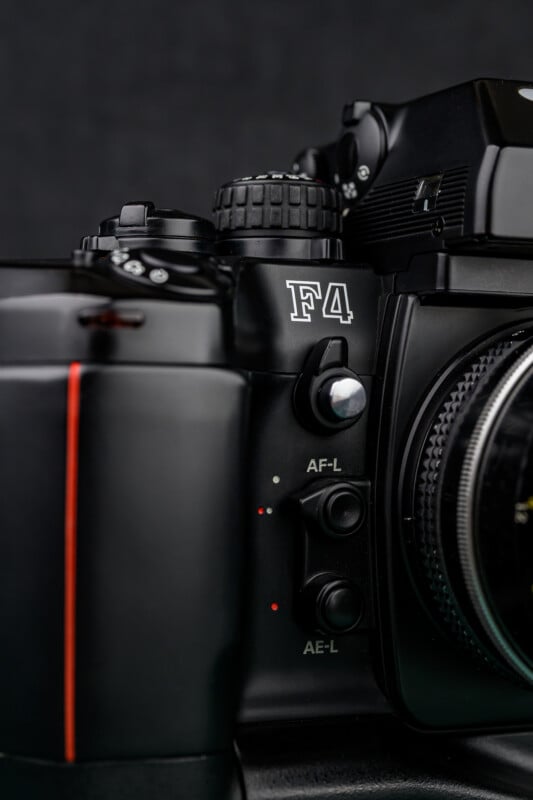



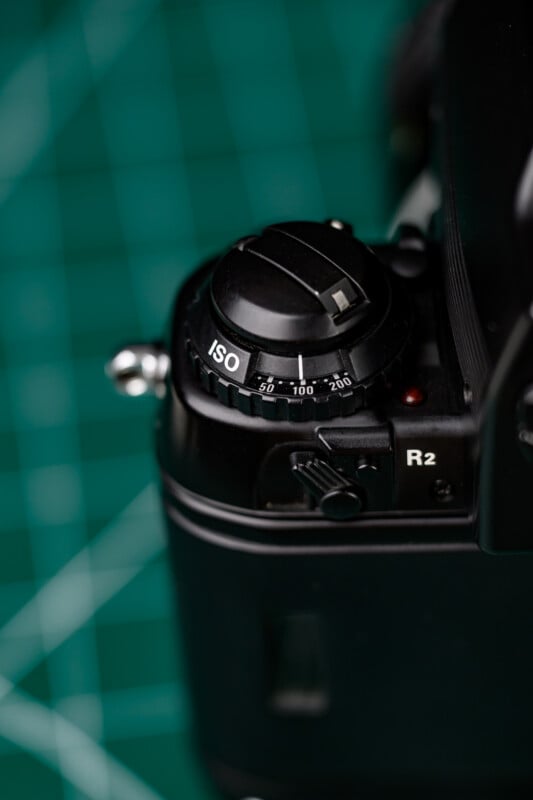
I like the rugged exposure compensation dial and full mechanical shutter speeds up to 1/8000 second. I always enjoy the more classic ISO dial, where you can easily set the “wrong” ISO setting, whether you want to push or pull film, or just to set a global exposure compensation. You can also set a global exposure metering change on the prism unit. It also has a charming manual rewind knob, which I prefer to the more modern automatic electric rewind systems.
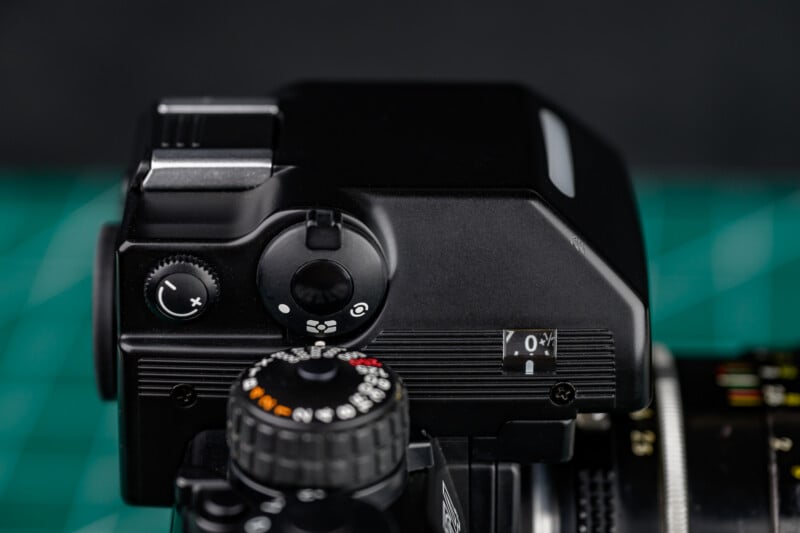


The Nikon F4 continues the tradition of removable prisms to accommodate a series of alternate shooting styles. The main DP-20 prism is the regular option, which gives 100% viewfinder coverage as well as advanced matrix metering to go along with the spot meter built in to the body. The F4 also returned to a standardized hot shoe rather than the yucky novel design on the F3. You also get TTL flash support with the F4, thanks to a proper hot shoe that accepts triggers and attachments universally. There is a PC sync port as well.
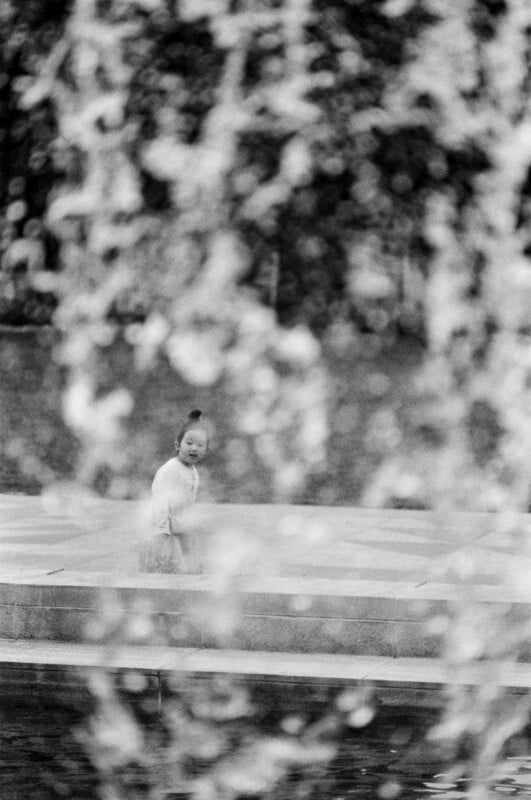


You can do multiple exposures with the F4 via the small flip-out lever, which conveniently resets after every exposure. You also have the option to close the viewfinder shade so as not to alter the camera meter when standing away from the camera. There is also a handy viewfinder illuminator built-in to the camera for night time use.
The Nikon F4: The Best Manual Focus Film Camera Ever Made
I sold my F4 years ago, and immediately regretted it. I have this thing about cameras sitting around doing nothing; I always feel like someone should be out using them, and I’m only one man, so I often end up selling them. This was also at a time when DSLRs were exploding and I was getting deeply invested there.



Recently, in Tokyo, I came upon a stunningly beautiful F4 in great condition. Because of the relatively low desirability, the prices are very reasonable on this amazing flagship. I grabbed it without hesitation and decided to revisit my experiences as a young photographer, especially considering that I did hold onto all my Nikon AI and AIS manual focus glass.
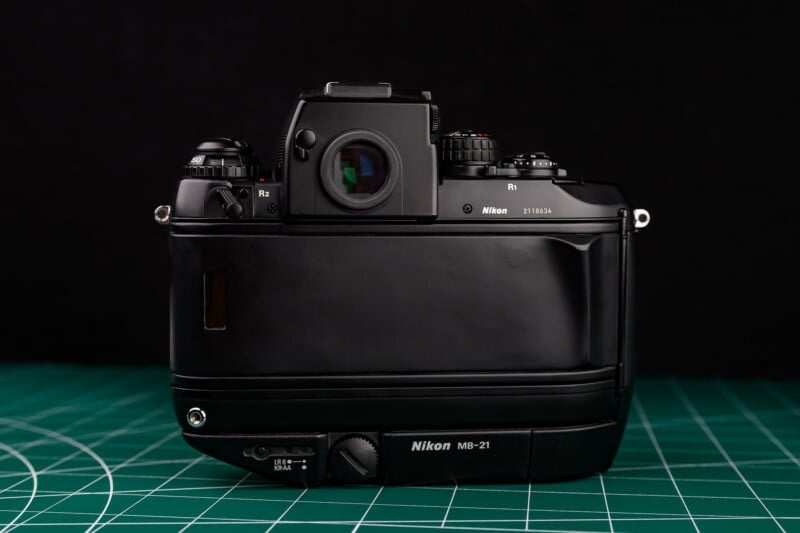



So why is it the greatest film camera? The awesome control scheme is very easy to use under stressful situations, and the large and bright viewfinder makes manual focusing a breeze, even for older eyes. You also get focus confirmation via the AF system. Red arrows tell you which direction to focus and a green dot confirms it. This is a super helpful system when using the faster lenses.
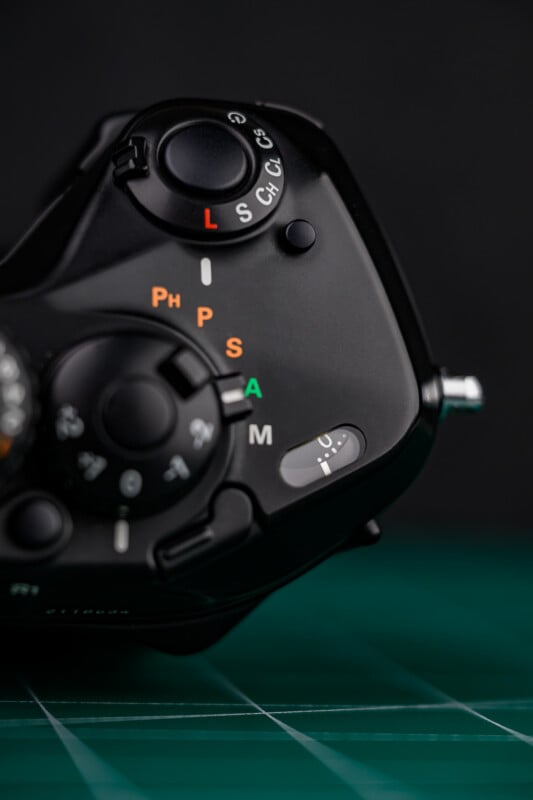

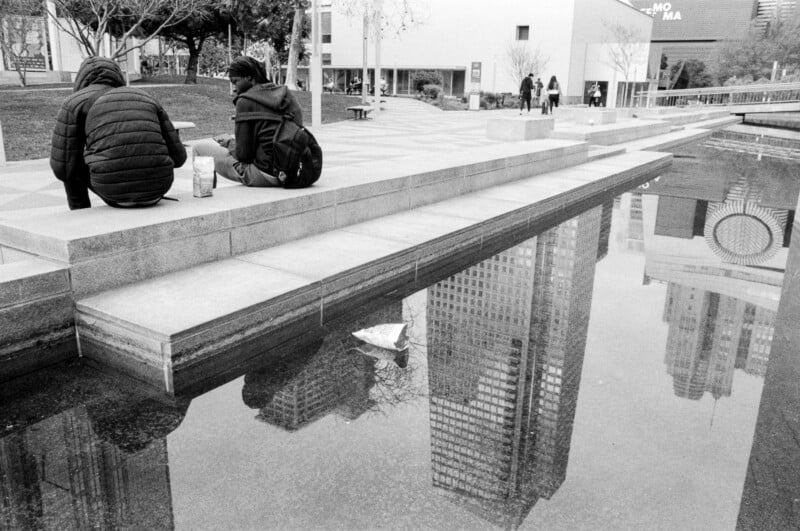

The advanced metering is far superior to anything that the Nikon FE/FM bodies offer and I like it much better than the 80/20 center weighted meter in the F3. The Nikon F4 was the first flagship to offer Nikon Matrix metering and, other than the Nikon FA, this is the body to go for to get multi-segment Matrix metering when using vintage glass. You get access to all the metering modes when using AI and AIS glass such as center-weighted and a spot meter, and you get access to aperture priority and full manual shooting modes as well.


The camera is heavy and large, there is no denying that, and that fact will turn off some potential buyers. However, we take for granted modern benefits like image stabilization and electronic shutters. Back in the day, lighter cameras such as the Nikon FE were easy to travel with but could be too light and unstable to shoot with at slower shutter speeds. In fact, I almost always used the MD12 battery grip on mine to increase the weight.
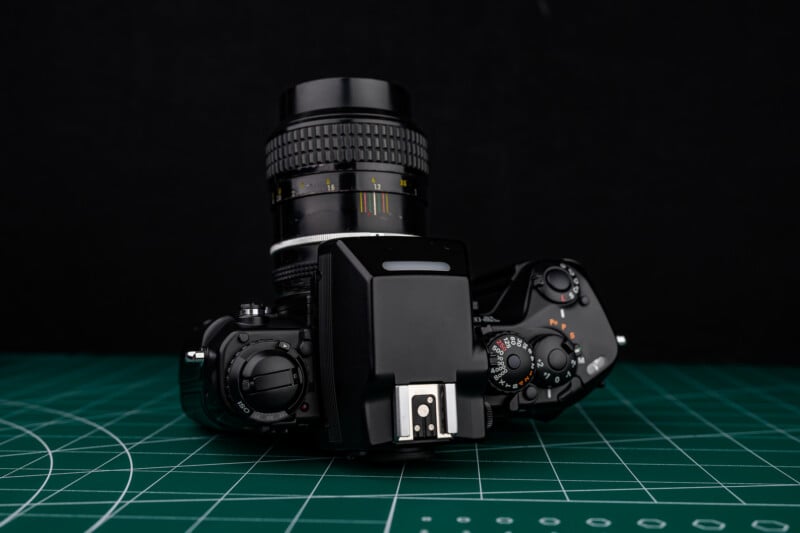


When I first got my F4, I noticed a major benefit to shooting at slower shutter speeds when push came to shove in low light situations. The F4 not only has a heavier design that absorbs some movement but also an innovative series of counter weights incorporated into the mirror box and shutter mechanism, which effectively counters most of the mirror slap and shutter movement.
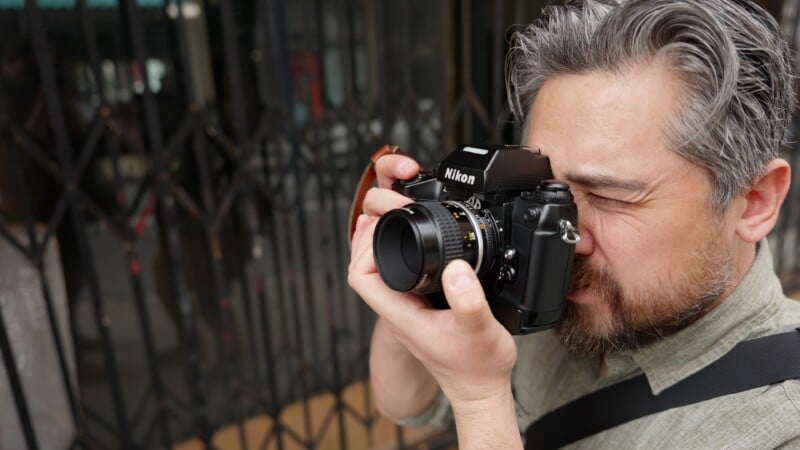
The battery grips also tend to put the camera weight directly under the hand so it’s not a strain to hold on target, and they balance longer lenses perfectly. I actually see a quality improvement on many of my final shots when using the F4 instead of the FE.
The Greatest Film Camera Ever Made: Give the F4 Some Love
So with the F4, you get an incredibly stable shooting platform, ruggedized for rough environments, with advanced metering and focus confirmation, and full support for vintage lenses. It’s certainly a bit of a battery hog, and practically (but not technically) needs battery power to run the shutter mechanism, but AA batteries are never hard to find.
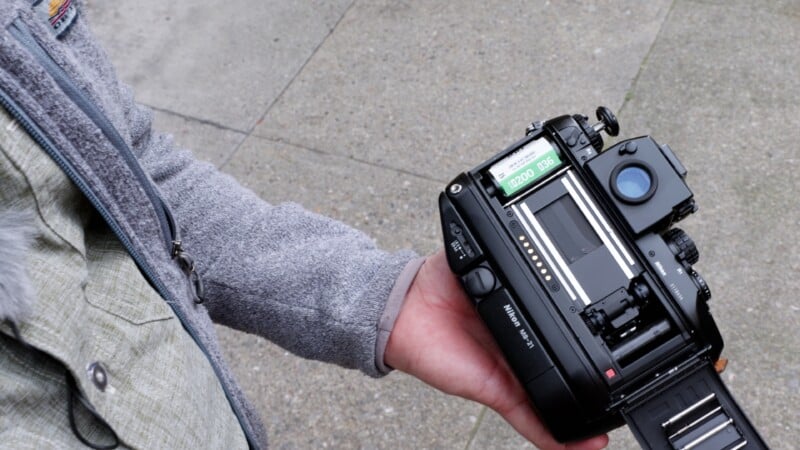
You also get decently fast burst rates for action and sports, especially with the larger grips, and a quick and easy film loading system that has never failed me. The viewfinder is among the best you’ll ever look through and I love that the classic optical window to see the painted apertures on your lens is still present. I would argue that it would be hard to find a more capable and advanced system that suits older manual focusing lenses as well as the F4 does.

I really think this platform deserves more love than it gets. I admit that as a modern autofocusing body, it felt a little obsolete right out of the gate, especially when considering that this was the time when Canon pulled far ahead in the focusing department. I think the negative stigma follows the F4 to this day.
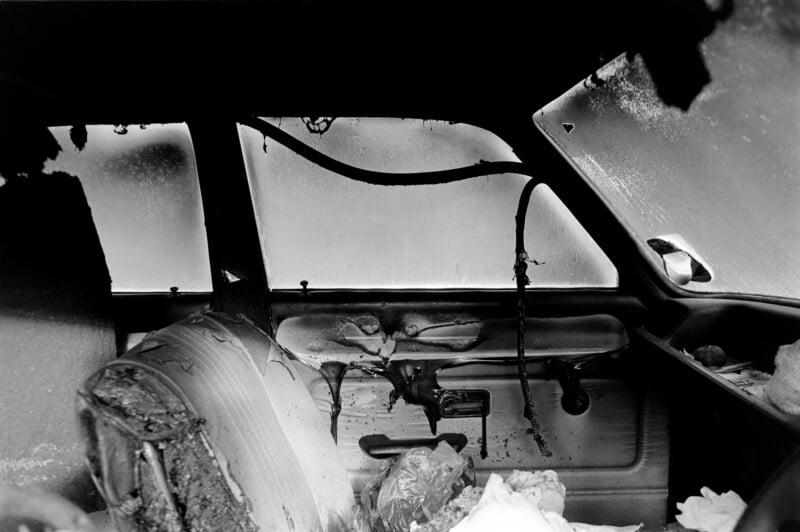
However, we need to appreciate how many iconic award-winning photos were taken on Nikon pro bodies during the 1980s and 1990s, and how many of those shots were taken on Nikon F4 cameras. As a young boy, I poured endlessly over my National Geographic magazines, never stopping to think that the photos that brought me wonder back then would have been shot on the camera I would eventually own.
The F3 is still going to be the more popular camera due to its vintage cache, and the F5 or F6 are better choices for autofocus lenses. But the Nikon F4 provides a unique shooting experience and is worthy of some love for the photographers out there that really admire the Nikon AI and AIS lenses.
My main assertion is that this is the best manual focus camera that Nikon ever made and I am overjoyed to be reliving the shooting experiences that I started out my career with.
I can promise you that I won’t be selling my F4 ever again.