Robert Frank’s Historic New York Townhouse Hits the Market for $6.5 Million

Nestled between a boxing club and a Korean restaurant on Bleecker Street in New York’s NoHo district sits a studio townhouse once occupied by legendary photographer Robert Frank and his sculptor wife, June Leaf. The historic building has just hit the market for $6.5 million.
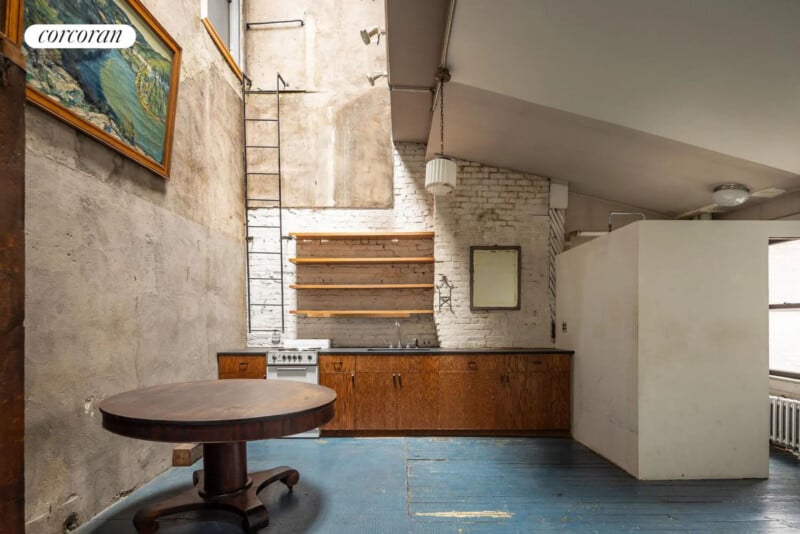
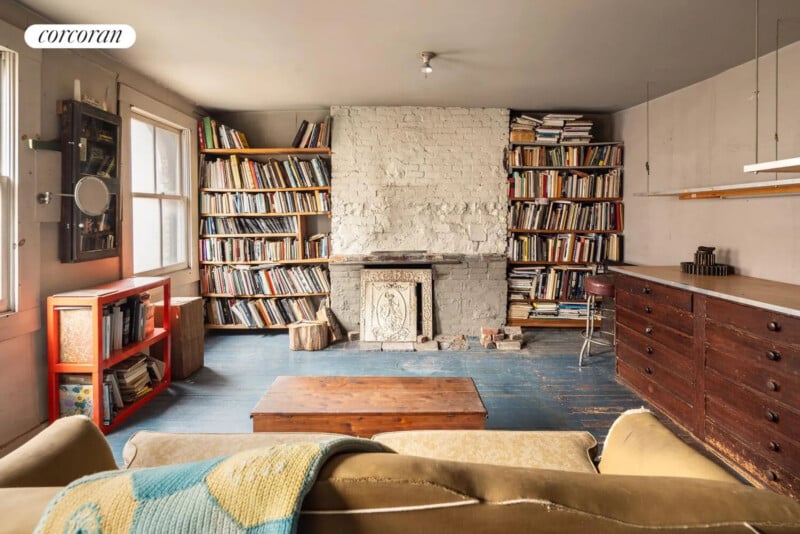
As one might expect from the home of such interesting people, the building and interior are well worth a look. Artnet reports it is one of the oldest homes on Bleecker Street and the interior is a hodgepodge mix of bare walls and odd mezzanines.


Frank moved into 7 Bleecker in the 1970s, over a decade after he released his influential photobook, The Americans. Initially, Frank and Leaf occupied just a single floor of the building before buying its entirety in 1982.
Curbed reports that Frank would often put out a chair on the sidewalk and sit there alongside Leaf. This made the famous photographer very easy to find, and photography devotees would often arrive in NoHo to seek him out.
Frank used the building for assignments, including taking beat poet Allen Ginsberg’s portrait and filming bands like New Order and Patti Smith for music videos.
While some photographers who revere Frank tell Curbed that they “wouldn’t change a thing,” the listing by Corcoran encourages prospective buyers to “bring your architect and imagination to re-envision this historic property as a bespoke masterpiece.”




Who was Robert Frank?
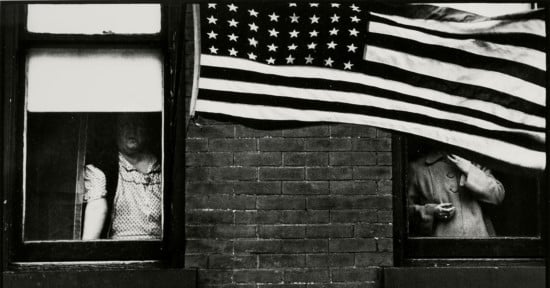
Robert Frank was a Swiss photographer and documentary filmmaker whose 1958 book titled The Americans has been heralded as perhaps the most influential photography book of the 20th century.
Born in Zurich, Frank began photographing in the 1940s before emigrating to the United States in 1947. After working for magazines such as Harper’s Bazaar, he grew disillusioned with polished editorial photography and began pursuing a more subjective, spontaneous approach.
Frank initially ventured out into the 1950s American landscape with optimism, but that was quickly quashed as he was hit with the emotional side effects of the fast-paced lifestyle and overemphasis on money. The result was that he felt America was a bleak and lonely place, and his photos gave off an air of sadness.
The book presented a stark, sometimes unsettling portrait of American life—capturing loneliness, inequality, race relations, and everyday moments with grainy, off-kilter compositions that broke with traditional photographic standards. Though initially controversial, it later became one of the most important photobooks ever published.
He died in 2019.
Image credits: Corcoran