Nick Ut Files Defamation Lawsuit Against Netflix Over ‘The Stringer’ Documentary
Lawyers representing photojournalist Nick Ut have filed a criminal defamation lawsuit in France against Netflix and the VII Foundation over claims made in The Stringer documentary, PetaPixel can reveal.
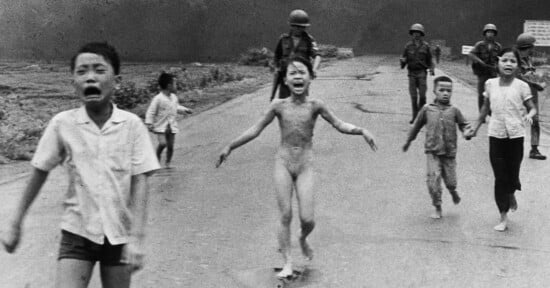
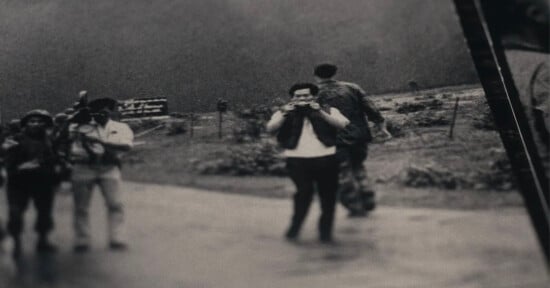
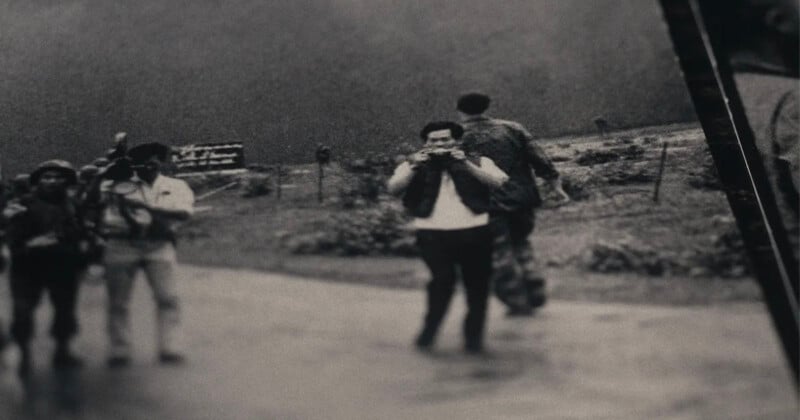
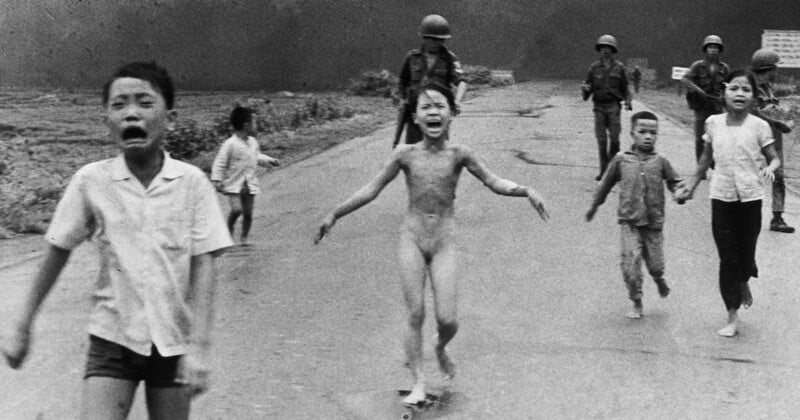
The Stringer: The Man Who Took the Photo was released on Netflix on November 28, 2025, and it follows Gary Knight of the VII Foundation as he investigates claims that Nick Ut did not take the famous photo best known as Napalm Girl and alleges it was actually taken by an unknown freelancer named Nguyen Nghe.
The film proved divisive within the photojournalist community; many sided with Ut who was working for the Associated Press (AP) in 1972 when the photo was taken and continued working for the news agency for decades in the United States. Others believe the film’s claims, which include a reconstruction of the event in Trang Bang that day. World Press Photo suspended Nick Ut’s credit on Napalm Girl after being shown the film.
Court Case
The matter may now be decided in a French court after Ut’s counsel filed for public defamation under the country’s Press Law of 1881. Ut is seeking €100,000 ($118,000) in damages and €20,000 ($27,000) in legal costs.
In the court filing viewed by PetaPixel, Gary Knight, CEO of the VII Foundation, is named as one of the defendants and so is Netflix France. They are accused of defaming Ut by asserting in the film that he is not the author of Napalm Girl and that he misrepresented his role in transporting Kim Phuc to medical care following the attack.
“These allegations, presented through investigative framing and cumulative narrative construction, are considered to gravely undermine Mr. Ut’s professional reputation, personal integrity, and humanitarian legacy,” Ut’s lawyers write in a press release.
In the court filing, timestamps of the film are provided where Ut alleges he is being defamed, including in the opening sequence when Knight says, “When you’re photographing with film, there’s always some mystery. But what you do know is what you didn’t take.”
Ut’s lawyers claim that the film portrays the photographer as a “shameless liar who, over the years, has skillfully cultivated a narrative that he knew to be false and a stolen attribution” and presents him as a “man who built his reputation on an act of appropriation and who knowingly persists in this betrayal.”
Ut released the following statement:
“Ever since the VII Foundation and Netflix released a film claiming that I didn’t take the ‘Napalm Girl’ photograph, and that I have been lying about it for more than 50 years, it has caused great pain to me and my family. These accusations strike at the very core of who I am. My entire career has been built on telling the truth, often at great personal risk.
I have put my life in danger countless times as a Vietnamese photojournalist to faithfully and honestly document history starting with the Vietnam War and beyond.
I am grateful for the many friends and colleagues around the world who have stood by me, and especially thank those in France. Their support means more to me than I can express. It feels only natural to seek justice there, surrounded by people who understand my work and my character. I know that one day justice will be done so we can all breathe a sigh of relief that will also bring peace in our hearts.”
Why France?
Viewers of The Stringer will be aware that some of it is filmed in France; the reconstruction was made by the Paris-based non-profit Index. The filing makes it clear that Netflix intentionally distributed the film in France and translated it into French. Moreover, the VII Foundation has an office registered in southern France.
Le Figaro notes that under French criminal law, “a direct summons allows a person who believes they are the victim of an offense to summon the alleged perpetrator before a criminal court so that they can be tried without a prior investigation by a magistrate.”