Which Mid-Range Camera Has the Best Image Sensor?
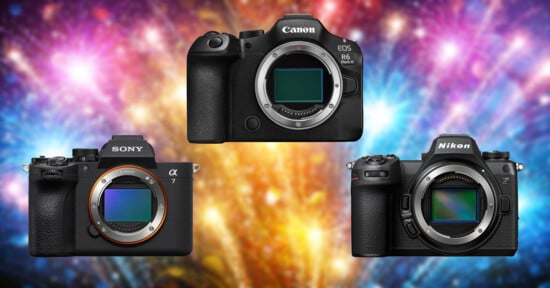
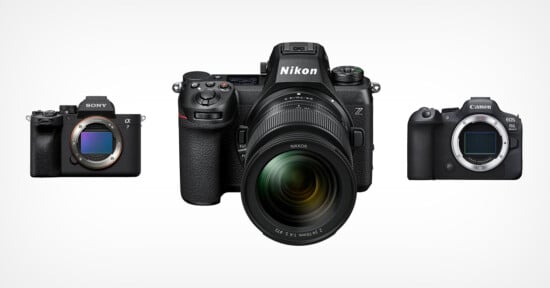
No matter what you call it, mid-range, enthusiast, or semi-pro, this segment of mid-priced full-frame cameras has never been as competitive or exciting. Canon, Nikon, Panasonic, and Sony have all recently released cameras in this tier, and each has taken a different approach to image sensor technology and to balancing photo and video performance. Which one is best? That’s what we’re here to find out. But one thing is for sure, it’s going to be one heck of a showdown.
Introducing the Combatants
Before putting all four of these mid-range cameras into the ring, we must meet the competitors.
We have two 24-megapixel full-frame cameras to consider, the Nikon Z6 III and the Panasonic Lumix S1 II.
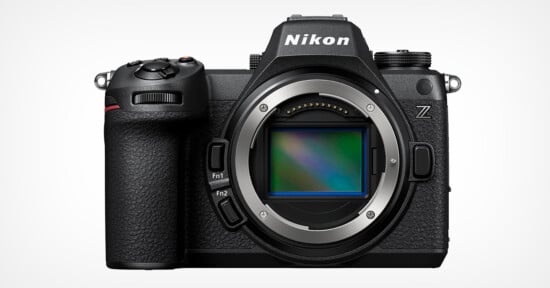
The Nikon Z6 III is the oldest of the bunch, although it only came out about a year and a half ago. It was the first full-frame camera to sport a partially stacked image sensor, promising much of the speed and performance of a fully stacked chip without the high cost. Alongside being the oldest battler, it is also the most affordable. At the time of writing, the Nikon Z6 III costs just under $2,100, which is fantastic value.
The Panasonic Lumix S1 II also has a 24-megapixel partially stacked image sensor but costs nearly $3,200. While that is a significant price jump over the Z6 III, the S1 II offers class-leading video features and some fascinating image-processing technology.
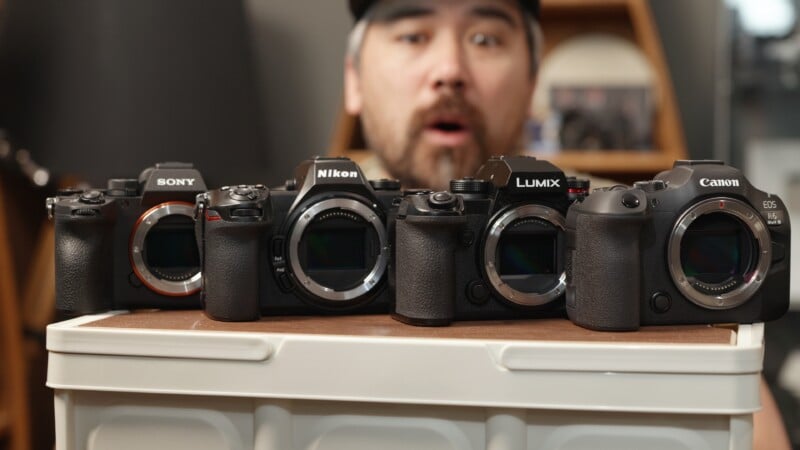
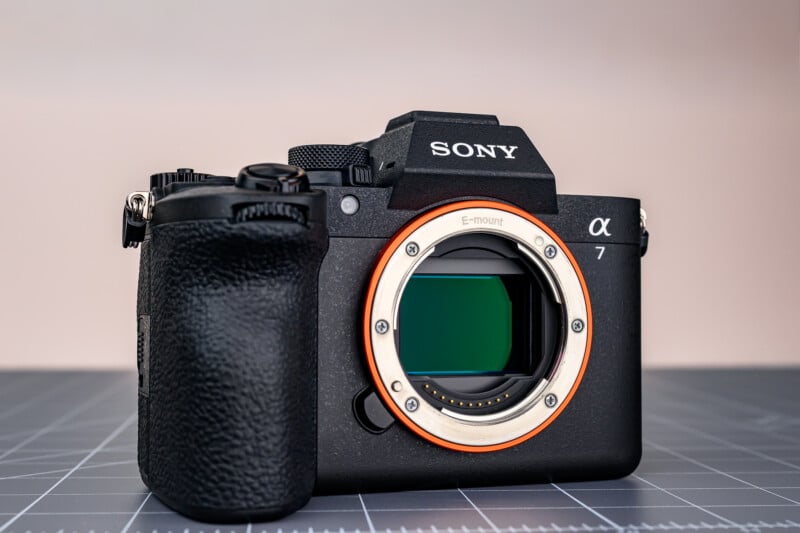
Next up are the two newest entries into the space, each with a 33-megapixel image sensor. The $2,898 Sony a7 V has a brand-new 33-megapixel partially stacked Exmor RS image sensor, a brand-new Bionz XR2 image processor, and a ton of significant improvements compared to its predecessor, the a7 V. The a7 V also has some seriously impressive dynamic range, as we’ll discuss in greater detail shortly.
Finally, the 33-megapixel Canon EOS R6 III is the only camera in the showdown to not have a partially-stacked image sensor. However, that doesn’t stop the R6 III from being impressively fast or from delivering excellent image quality. At $2,799, it is nearly the same price as the Sony a7 V.
Dynamic Range
We’re kicking things off with a very contentious and complex category: dynamic range. Before diving headfirst into the weeds, it is worth pointing out at the top that all four of these cameras are perfectly capable of capturing sharp, detailed photos with very good dynamic range. While there is a “worst” camera of the bunch, there is no bad camera here.
But the worst camera for dynamic range is the Nikon Z6 III. Although both Panasonic and Sony have devised clever ways to overcome the limitations of a partially stacked image sensor in terms of peak dynamic range, Nikon prioritized other concerns with the Z6 III.
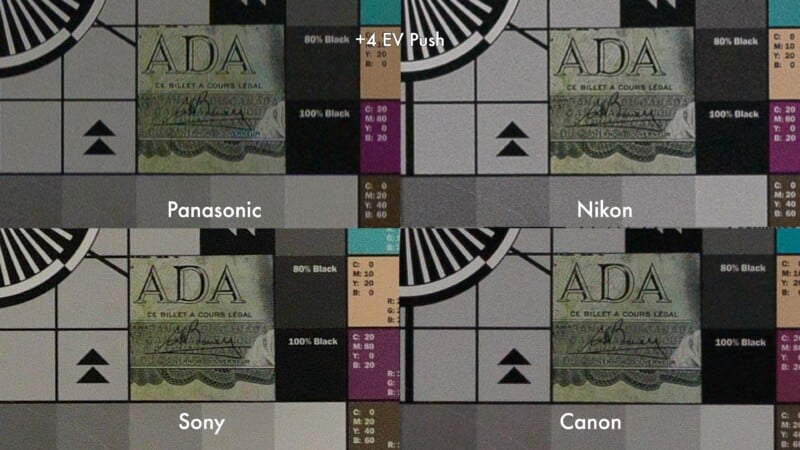
On the plus side, the Z6 III offers the same dynamic range whether using the mechanical or electronic shutter, unlike the other three competitors, which means photographers will know exactly what to expect even when they are shooting at the camera’s top continuous shooting speeds, which always require the use of an electronic shutter, which in turn almost invariably reduces dynamic range performance.
The Nikon Z6 III, bringing up the rear in the dynamic range category, isn’t surprising, and it lines up with our initial testing when we reviewed the Z6 III in mid-2024.
What is perhaps a little surprising is that the non-stacked Canon EOS R6 III finishes third. Canon adds a bit of noise reduction to its RAW files, which we don’t particularly like. Nonetheless, the R6 III’s RAW files offer pretty good detail without a lot of noise.
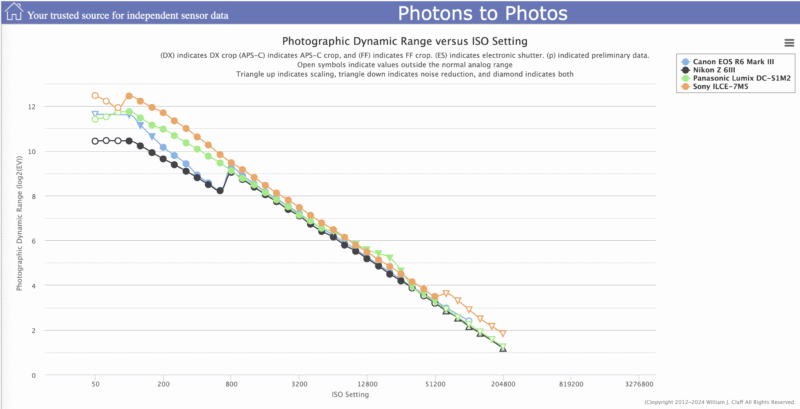
In the runner-up spot is the Panasonic Lumix S1 II. As we reported last year, the Panasonic S1 II employs clever image stacking and processing to overcome any of the limitations of its partially stacked image sensor. It’s clever trickery that works very well. Speaking of image stacking, the S1 II is the only camera of the four to offer in-camera stacking to achieve a higher-megapixel output. The other cameras can do this with external software, but the S1 II does it all in camera, and it works very well.

Finally, number one is the Sony a7 V. Sony has done something very special and impressive with its new 33-megapixel partially stacked image sensor. The performance, at least when using the mechanical shutter, is excellent, rivaling even some medium-format cameras. While it is not always easy to extract this peak performance in real-world situations, and certainly not when using the camera’s electronic shutter, the a7 V is undoubtedly capable of the best dynamic range of the mid-tier cameras without relying on any sort of pixel-shift capture.
Resolution
Let’s suppose, for a second, that you could account for every possible variable related to resolution, including lens selection, shutter speed, image stabilization, and so on.
With that elephant-sized caveat out of the way, the Sony a7 V, all else equal, wins this category. It has a 33-megapixel sensor, like the Canon R6 III, but unlike the R6 III, the a7 V doesn’t use baked-in noise reduction.
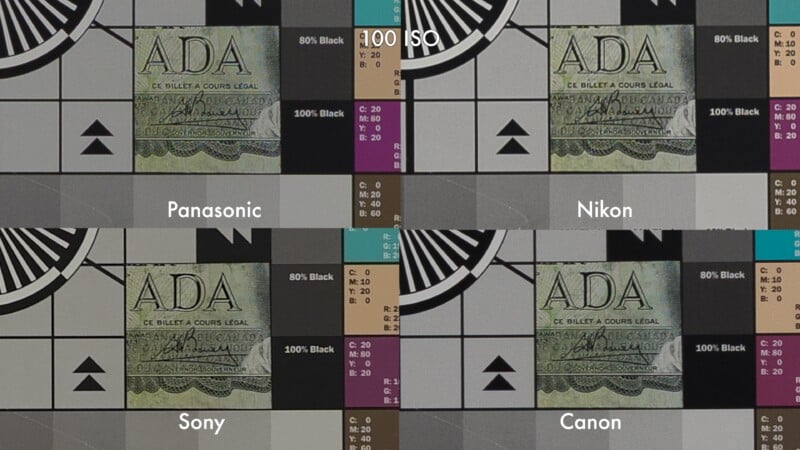
With the R6 III squarely in second place, the Nikon Z6 III and Panasonic S1 II battle it out for third place with their 24-megapixel sensors. At 24 megapixels, the Z6 III and S1 II are neck and neck. However, as mentioned above, the S1 II has that in-camera pixel-shift mode. The resulting 96-megapixel images, which are relatively straightforward to capture, are very sharp and clean, so the tiebreaker goes to the S1 II.
High ISO
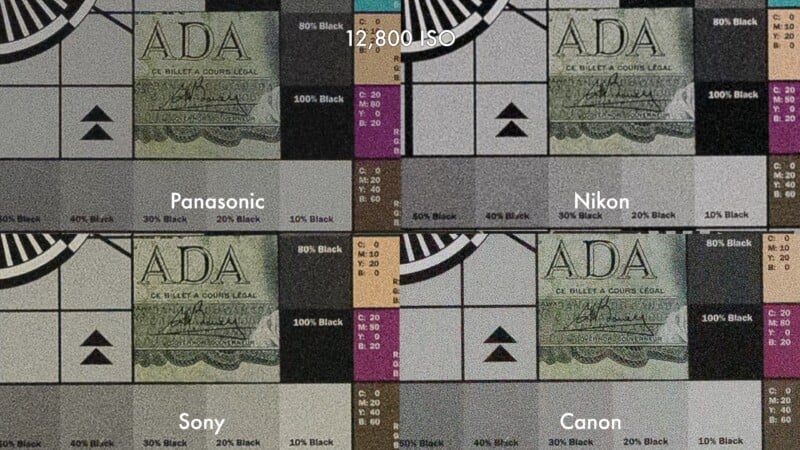
Every modern mirrorless camera can run circles around old DSLRs when it comes to high ISO performance, and the Nikon Z6 III, Panasonic S1 II, Canon EOS R6 III, and Sony a7 V are no exception. Photographers are spoiled when it comes to high ISO performance these days.
Although all four cameras are capable of taking clean, detailed shots at high ISO settings, especially at speeds like ISO 3200 and 6400, the two 33-megapixel cameras do fare a bit better than the 24-megapixel ones once the images are downsized to 24-megapixel output. The noise gets smaller and less noticeable. More megapixels aren’t always better, but it is in this case.
Sensor Readout Speeds
By now, you may be noticing a pattern: All four cameras have very impressive image sensors. That remains true for sensor readout speed, though the ways each sensor differs are actually pretty interesting.
Sensor readout speed is important because each of these cameras requires its electronic shutter to shoot at very high speeds, and all four enthusiast-level cameras can shoot really fast. The faster a sensor’s readout, the less rolling shutter is a problem. Nobody wants to photograph baseball with warped bats or hockey with weird-looking sticks, right? Sensor readout speed is really important for video, too.
What’s pretty interesting here is that, despite being the newest partially stacked sensor on the block, the Sony a7 V’s readout speed is the worst at 15 milliseconds. Granted, 15ms is not slow, and is much faster than the 33-megapixel non-stacked sensor in the a7 IV, but it is nonetheless the slowest of the four cameras we tested.
In a two-way tie for second spot are the Nikon Z6 III and Panasonic S1 II at about 14.5ms. They are neck and neck.
That leaves the Canon EOS R6 III as the winner. Despite being the only non-stacked sensor in the competition, the R6 III has the fastest sensor readout speed. At 13.5ms, Canon’s engineers achieved something super impressive with the 33-megapixel sensor in the R6 III.

There is clearly very little to separate the four cameras when it comes to sensor readout speed, but there is a winner, and it’s the EOS R6 III.
Image Sensor Technology Has Never Been Better
For a long time, cutting-edge image sensor technology was exclusive to the professional flagship segment, locked behind wallet-busting prices far outside the reach of most photographers. No longer is that true.
While yes, flagship cameras still offer the best blend of resolution, performance, and speed in the photo industry, the mid-tier offerings these days are superb, and each of them includes technically impressive, fast image sensors that not only live on the bleeding edge of photographic technology but do so at prices accessible to passionate hobbyists as well as working pros.

All four of our combatants have something special to offer photographers and hybrid users alike. From the exceptional value of the Nikon Z6 III to the barrier-breaking Sony a7 V, from the spectacular video performance of the Panasonic S1 II to the PetaPixel Award-winning excellence of the Canon EOS R6 III, these four mid-range cameras can’t all win every category, but they are all winners when it comes to overall image sensor performance.
Each manufacturer delivers great image quality, but they all got there in different ways, utilizing varied approaches to sensor tech and processing. Ultimately, the real winner of this showdown is us photographers. No matter which brand’s flag we fly, our options have never been better.
Image credits: Camera product photos by Erin Thomson for PetaPixel