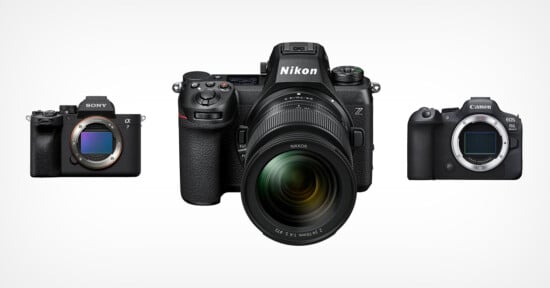

Mid-Range Showdown: Sony a7 V vs Canon EOS R6 III vs Nikon Z6 III
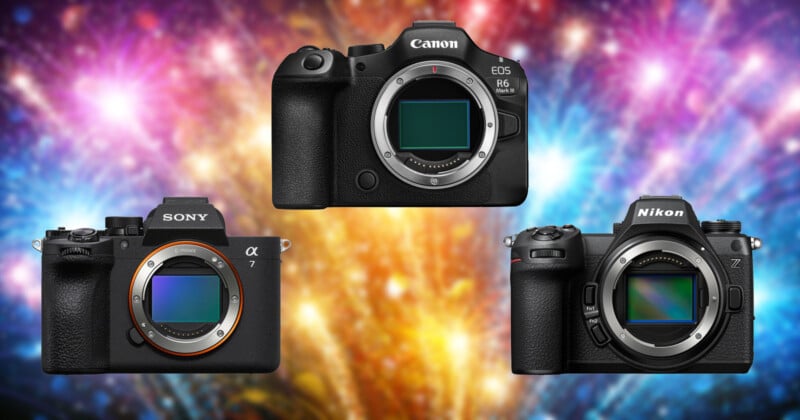
With this week’s reveal of the very impressive Sony a7 V, the mid-range full-frame camera market has never been hotter. The oldest competitor of the bunch, the Nikon Z6 III, has been out just a little over a year, while the Canon EOS R6 III and Sony a7 V are brand-new. All the major players have put their best foot forward, but which of them is actually the best when it comes to key specs and features?
Before diving into it, we must address a key question: Where is the Panasonic S1 II? The Panasonic S1 II is great, and we will take a closer look at how it compares to competitors another time. However, for the purposes of this comparison, we are only looking at cameras that cost under $3,000. Is it an arbitrary cutoff? In a way, but the Sony a7 V, Canon EOS R6 III, and Nikon Z6 III are all mid-range models in their respective lineups, while the pricier Lumix S1 II is Panasonic’s best hybrid offering. It is not filling quite the same role for Panasonic as these other cameras are for their makers, even if there is significant feature and specification overlap.
But, if you must know how the 24-megapixel Panasonic Lumix S1 II stacks up against the competition going under the microscope today, I will offer this summary: The Panasonic Lumix S1 II offers a very high-resolution electronic viewfinder, the fastest continuous shooting rates, and the best overall video features of the bunch while coming up short against its peers in terms of overall image quality, resolution, and autofocus performance. The Panasonic S1 II is a superb camera for hybrid creators, but it is not a better option than the a7 V, R6 III, or even the Z6 III for photo-only and photo-first applications.
Without further ado, which of the big three full-frame cameras is the most compelling on paper, and which has the best specs and features?
Sony a7 V vs Canon EOS R6 III vs Nikon Z6 III: Image Sensor
The image sensor is the heart and eyes of any digital camera. Sensor design, architecture, and performance inform the rest of the camera’s features, and all three cameras under consideration offer something distinct.
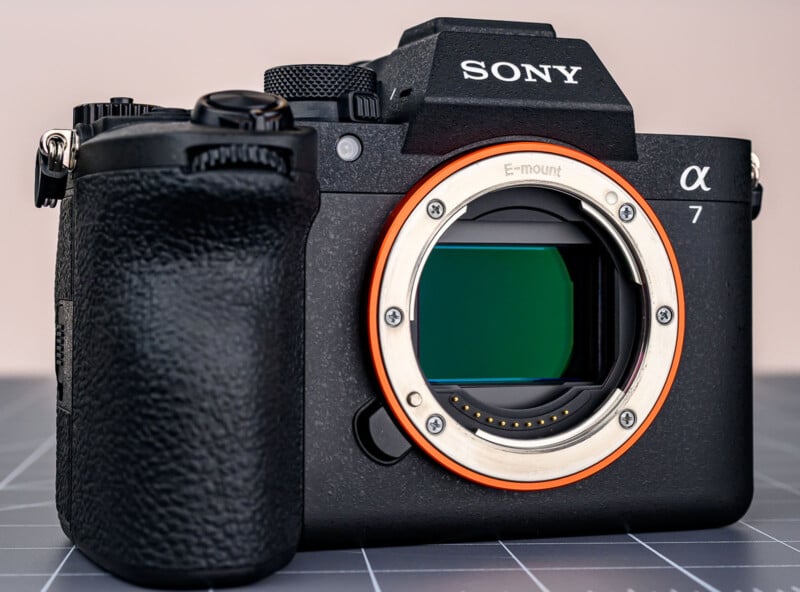
The newest camera of the three, the Sony a7 V, has arguably the best image sensor in terms of its specifications. The 33-megapixel partially stacked image sensor is the highest-resolution partially stacked chip on the market and goes toe-to-toe with the R6 III’s unstacked 33-megapixel sensor in terms of pixel count. The a7 V is, somewhat surprisingly, Sony’s first Alpha camera to incorporate a partially stacked sensor design.
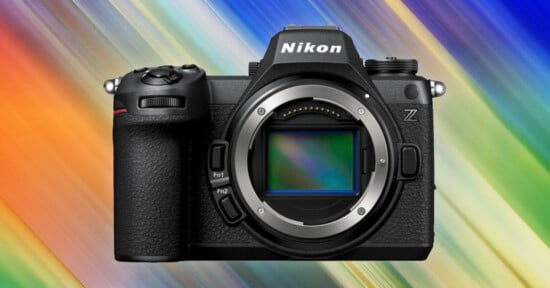
The partially stacked sensor architecture makes the same promises as the Z6 III’s 24-megapixel partially stacked sensor, aiming to deliver faster readout and more speed than a traditional sensor design without the cost of a fully-stacked sensor. However, despite offering more resolution than the Z6 III, the a7 V is actually the faster camera, as we’ll cover in the next section.
The a7 V also promises better dynamic range performance than the Z6 III, which has proven true in PetaPixel‘s real-world testing. When it comes to pure image quality, the real battle then is between the Sony a7 V and the Canon EOS R6 III. Both are excellent in testing, especially when using their mechanical shutters at base ISO. However, the a7 V offers perhaps just a bit better image quality, while the Canon EOS R6 III delivers what some consider better color rendering.
All three cameras bring something interesting to the table, but there’s little doubt that, on paper, the Sony a7 V is the most impressive when it comes to image sensor technology, while the Canon EOS R6 III is extremely good, too. They both offer more dynamic range and resolution than the Z6 III, too.

Sony a7 V vs Canon EOS R6 III vs Nikon Z6 III: Speed and Performance
Photographers are absolutely spoiled when it comes to speed and performance these days. Despite these three cameras using different image sensors, they all share one thing in common: speed.
The Sony a7 V, thanks to its new partially stacked sensor and Sony’s brand-new Bionz XR2 processor with unified artificial intelligence, delivers excellent overall speed, though not class-leading.

The a7 V is much faster than the a7 IV, now capable of shooting full-resolution RAW images with full AF/AE at up to 30 frames per second using its electronic shutter, up from just 10 FPS on the a7 IV. That is very fast, and the a7 V also now has pre-continuous shooting and Speed Boost, two features the a7 IV lacks.
The Canon EOS R6 III, despite not having a stacked or partially stacked image sensor, is actually even faster, capable of shooting at 40 frames per second, albeit in a 12-bit RAW capture mode rather than the a7 V’s 14-bit shooting. The R6 III’s mechanical shutter is also a little bit faster — 12 fps.

The third camera of the bunch, the Nikon Z6 III, is the slowest of all but still very fast. The Nikon Z6 III captures full-resolution photos at 20 frames per second with its electronic shutter and a very impressive 14 fps with its mechanical one.
While all three cameras are fast, and plenty fast for sports and wildlife photography, the Canon EOS R6 III is the fastest of all. All three cameras have similar sensor readout speeds, despite different sensor architectures. Where the R6 III and a7 V excel is in pure speed and the fact that they offer pre-continuous RAW image capture — the Z6 III does not.
Sony a7 V vs Canon EOS R6 III vs Nikon Z6 III: Autofocus
To the surprise of nobody, all three of these cameras have excellent autofocus performance. Thanks to the a7 V’s new Bionz XR2 processor with its integrated AI capabilities, all three of these newest mid-range cameras feature the maker’s best AI-powered autofocus features and modes. They all offer AI-driven subject-detection modes that work extremely well in the real world.

The Sony a7 V features Sony’s 759-point hybrid autofocus system that covers around 94% of the image area. The Canon EOS R6 III’s Dual Pixel CMOS AF autofocus system has more points and covers the entire image sensor. Meanwhile, the Nikon Z6 III has the fewest autofocus points of all, but it has the best rating for low-light autofocus performance.
PetaPixel has extensively used all three of these cameras, and while all of them deliver great autofocus performance, we think the Canon R6 III is the most reliable of the bunch, followed very closely by the a7 V and then the Z6 III. It’s splitting hairs between the R6 III and a7 V. In very specific situations, any one of them might be ever-so-slightly better than the rest, but overall, the R6 III has proven the most impressive. That said, photographers can’t go wrong with any of them in terms of autofocus accuracy and reliability. All three of Sony, Canon, and Nikon are firing on all cylinders when it comes to AF technology.
Sony a7 V vs Canon EOS R6 III vs Nikon Z6 III: Video
While all three of these cameras are built with photographers in mind, they each have plenty of hybrid power for those who care about video, too.
In broad strokes, the Canon EOS R6 III is the most impressive video performer on paper. The R6 III captures 7K DCI RAW video at 60p and can capture 7Kp30 open gate. It also does full-width 4Kp120, internal C-RAW, and includes waveform, false color, and custom LUT support.

The Nikon Z6 III lacks the megapixels to do 7K video, but it can capture 6Kp60 N-RAW and 6Kp30 ProRes RAW. It also captures 4Kp120 video, albeit with an APS-C crop. It’s an extremely capable video camera.
The Sony a7 V, on the other hand, is among the very best 4K video cameras available, but does not support higher-resolution video or internal RAW. It also lacks open gate recording capabilities, which will no doubt attract criticism.
In terms of practical usability, all three of these cameras are excellent for video. The R6 III has the most diverse feature set, but can struggle in certain situations with thermal management, an issue the a7 V and Nikon Z6 III effectively avoid, at least when recording 4Kp60 video.
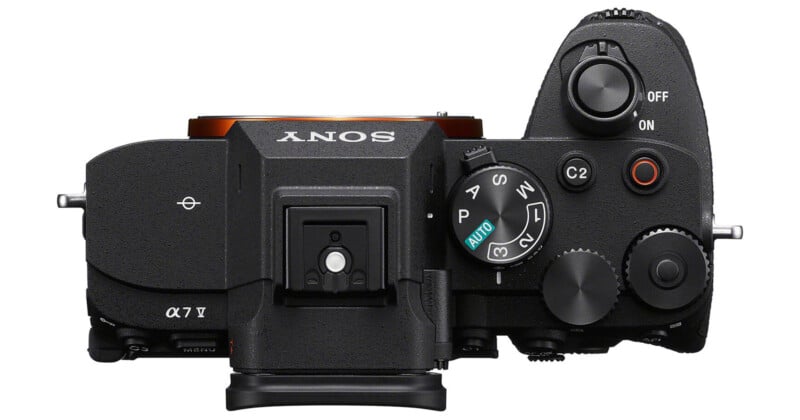
When the Nikon Z6 III launched in 2024, we considered it the most compelling full-frame hybrid camera on the market. While a lot of new competition has arrived, including the Sony a7 V, Canon R6 III, and Panasonic S1 II, the Z6 III remains excellent. It’s no longer obvious that the Z6 III is the clear hybrid winner of the bunch, but it and the R6 III have more robust feature sets for demanding hybrid shooters than the Sony a7 V.
Sony a7 V vs Canon EOS R6 III vs Nikon Z6 III: Usability and Handling
It’s important to be clear that handling is, by far, the most subjective aspect of any camera. There are plenty of reasons a photographer might prefer a Sony, Canon, or Nikon camera. They each have distinct approaches to ergonomics, menu navigation, and camera controls. We enjoy using all three of them, and none have any glaring design or usability weaknesses.
That said, certain design elements and specifications can be fairly compared on paper. Let’s start with the electronic viewfinders.
The Sony a7 V uses the same 3.69M dot OLED EVF as the a7 IV, but thanks to the faster sensor and processor, it is now blackout-free. The Canon EOS R6 III’s EVF has the same resolution but has ever-so-slightly less magnification than the a7 V — 0.76x vs 0.78x. The R6 III’s EVF is also not completely blackout-free during continuous shooting.
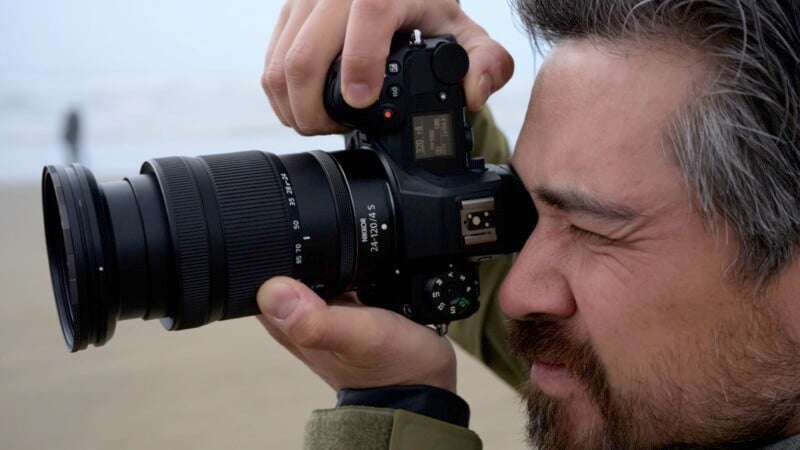
The Nikon Z6 III, on the other hand, has the best EVF of all. At 5.76 million dots, it’s the sharpest of the bunch. It’s also the biggest, with 0.8x magnification. And, like the a7 V, the Z6 III’s EVF is totally blackout-free when using its electronic shutter.
All three EVFs are good, but the Z6 III comes out on top.
All three cameras also have great rear displays. The a7 V gets the 3.2-inch four-axis touchscreen from the a7R V, which is sharper and bigger than the a7 IV’s panel and has excellent articulation. The Canon R6 III likewise has an articulating panel, albeit a smaller 3-inch one with “just” 1.62 million dots that doesn’t regularly tilt; it must be swiveled out to tilt. The Nikon Z6 III also has a big 3.2-inch screen with good articulation and 2.1 million dots, like the a7 V.
The Sony a7 V and Nikon Z6 III are the winners when it comes to their rear displays.
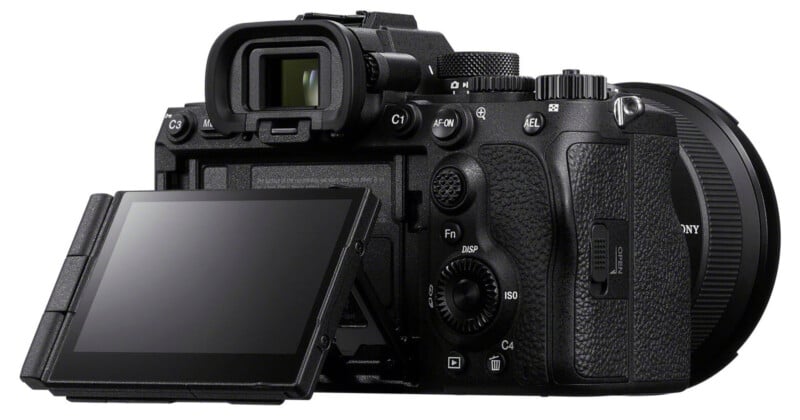
All three cameras have dual card slots, although the Sony a7 V combines the smaller, pricier CFexpress Type A with UHS-II SD, while the R6 III and Z6 III use CFexpress Type B cards. Technically, CFexpress Type B cards are superior, all else equal, but CFexpress Type A is plenty performant. All three cameras also have full-size HDMI ports, mic and headphone jacks, and competent battery life. The Sony a7 V does have the best battery life of the bunch, for what it’s worth.

Sony a7 V vs Canon EOS R6 III vs Nikon Z6 III: Value and Lenses
The Nikon Z6 III doesn’t win many categories on paper, but it does reign supreme in one that might matter most to some photographers: Value. As of writing, the Nikon Z6 III is $2,096.95, while the newer Canon R6 III and Sony a7 V are $2,799 and $2,898. They are great cameras, and arguably worth every penny, but the Z6 III is an absurdly good value, offering very strong performance at a more accessible price than the R6 III and a7 V.

A new camera is not just a one-and-done purchase, though, it is buying into a broader system that evolves. Sony has been in the full-frame mirrorless game the longest and, as a result, has the most complete, broadest lens selection of the bunch. Beyond having the most first-party lenses, Sony Alpha cameras also have the best third-party lens support by a wide margin.
Nikon is likely next up, thanks in part to its third-party full-frame lenses with autofocus, something Canon has thus far prohibited in its RF mount system. Canon has great first-party lenses, but not as many compelling ones as Nikon or Sony.
In terms of glass, the Sony a7 V is the clear winner.
Sony a7 V vs Canon EOS R6 III vs Nikon Z6 III: Which One is the Best?
This is arguably the best the mid-range full-frame market has ever been, DSLR or mirrorless alike. There is no bad choice here, and there is a strong case to be made for any of the cameras.

We plan to do a full-blown shootout among all three cameras, but based on our review experience and straight-up specs, the Sony a7 V and Canon EOS R6 III are both better all-around options than the Nikon Z6 III, especially for photography.
For my money, the Sony a7 V is the better choice for photographers and photo-first users, while the R6 III is the better option for hybrid and video-oriented users. I would happily recommend either of them for anyone with about $3,000 to spend on a mid-range full-frame mirrorless camera, though.
For those who have just over $2,000, though, the Nikon Z6 III remains a dynamite choice.
Image creditsCanon, Nikon, and Sony. Header photo created using an asset licensed via Depositphotos.
Affiliate Disclosure PetaPixel articles may include affiliate links; we may earn a commission if you buy through one.