Only Known Daguerreotype Photos of Computer Pioneer Ada Lovelace Join UK National Portrait Gallery Collection
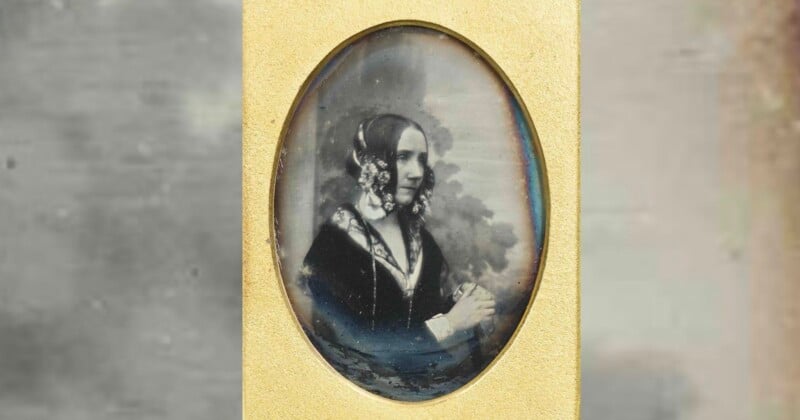
The only known photographs of Ada Lovelace, widely regarded as the world’s first computer programmer, have been acquired by the National Portrait Gallery in the U.K.
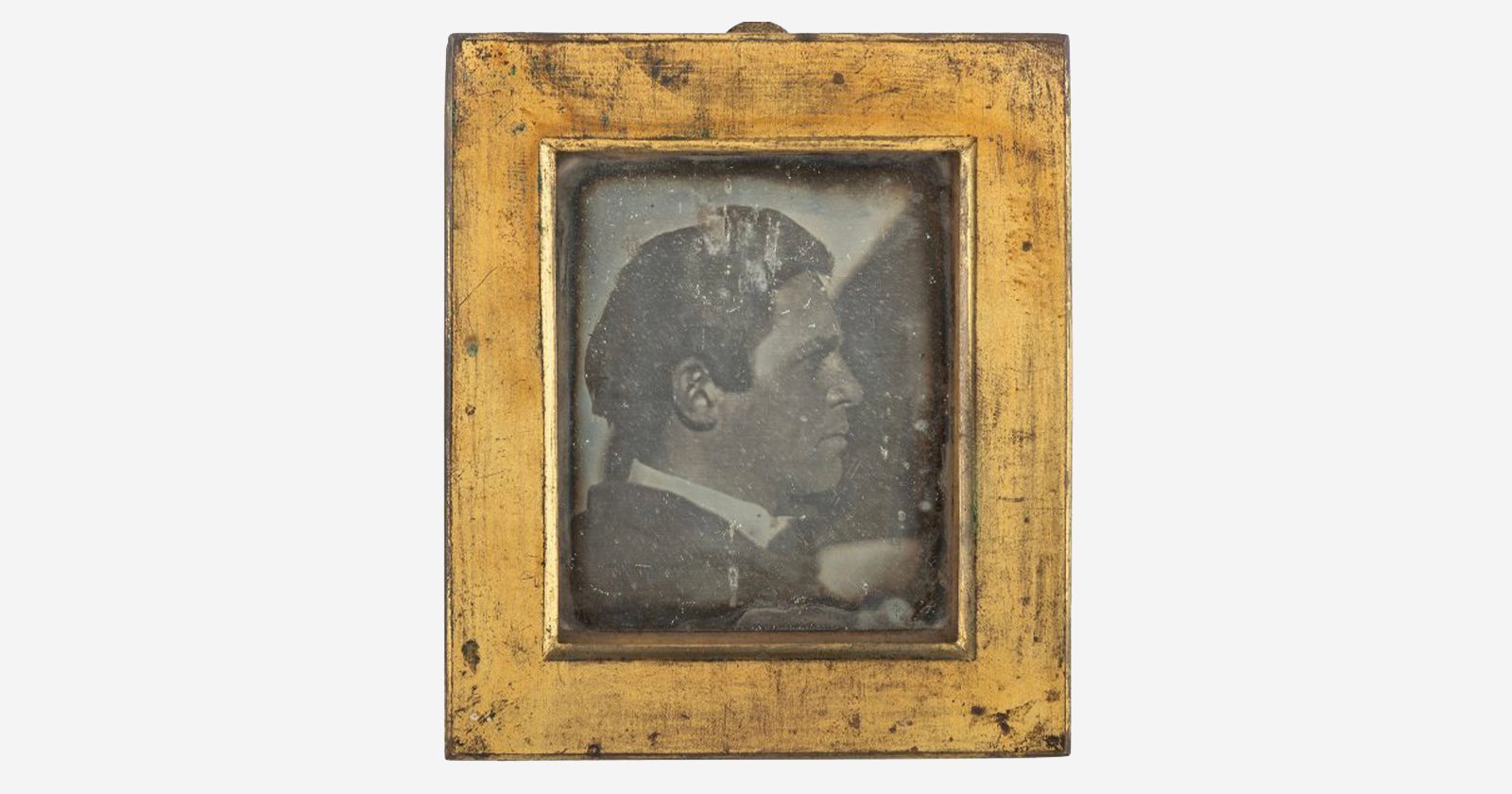
The images consist of three daguerreotypes — two of which were taken by Antoine Claudet, a former student of Louis Daguerre, the inventor of the daguerreotype photographic process. The photographs are believed to be the only surviving photographic portraits of Lovelace, the 19th-century mathematician and writer whose work laid the foundations for computer programming.
Claudet is thought to have taken the daguerreotypes around 1843, a significant year in Lovelace’s life. That was when she published her influential paper on Charles Babbage’s proposed mechanical computer, known as the Analytical Engine. In her writing, Lovelace was the first to explain that the machine could be used for purposes beyond basic arithmetic, identifying its broader potential for computation.
In the photographs, Lovelace appears in two different outfits, seated before the same detailed painted backdrop featuring foliage. Claudet learned photography directly from Daguerre in the late 1830s and went on to open his first daguerreotype studio in London in 1841. He also photographed a number of prominent scientists of the period, including Charles Babbage, physicist Michael Faraday, and Sir Charles Wheatstone. It is believed that Lovelace may have been introduced to Claudet through one of these figures. Lovelace had a strong interest in photography herself. In an unpublished piece, she wrote that “it is as yet quite unsuspected how important a part photography is to play in the advancement of human knowledge.”
The extremely rare daguerreotypes were offered for sale at Bonhams in London in June, where they were estimated to sell for about $162,000. The lot was later withdrawn before being acquired by the National Portrait Gallery through a private treaty sale. This type of sale allows U.K. institutions to purchase important works directly from private owners through confidential negotiations, according to a report by Artnet.
“This recent acquisition of three rare daguerreotypes includes the only known photographs of Ada Lovelace,” the National Gallery says in a statement. “It presents a once-in-a-lifetime opportunity to represent her from life in the Gallery’s Collection. It will enable the Gallery to celebrate her pioneering work and inspire future generations.”
As well as Claudet’s portraits of Lovelace, the National Portrait Gallery have also acquired an anonymous daguerreotype photo of Henry Wyndham Phillips’ painting of the mathematician towards the end of her life in August 1852, when her health had seriously worsened.
Ada Lovelace was born in 1815, the only legitimate child of the poet Lord Byron and his wife Anne Isabella Milbanke. Between 1842 and 1843, she translated an Italian article on the Analytical Engine written by Luigi Menabrea and added extensive original notes of her own. Within those notes, she set out an algorithm designed to be executed by a machine, including detailed steps for calculating a sequence of Bernoulli numbers. This work is widely considered to be the first published computer program.
Image credits: All photos by Bonham’s