Affinity Hits 3M Downloads of Its New Editing Software in Just 33 Days
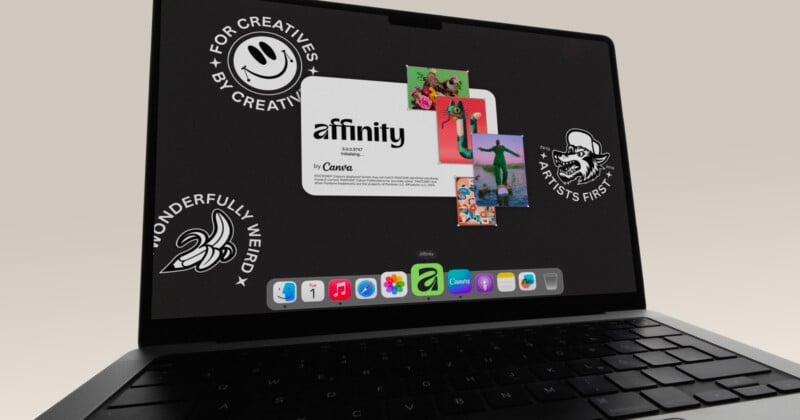
Affinity has hit three million downloads of its new software in just over a month. For context, it took the company nine years to hit this mark with its previous software offering before its acquisition by Canva last year.
“We’re blown away by the response to the new Affinity and the number of people choosing creative freedom in such a short space of time,” Ash Hewson, Affinity CEO, tells PetaPixel. “It reaffirms our core belief that the industry is desperate for a change in the status quo and represents an incredible start to a movement which we believe will change professional design forever.”
Affinity software has been available for many years, but last month it changed its model to not only combine all of its tools into one app but also it chose to make that app free to use. The only features locked behind a Canva subscription are the more powerful AI tools, many of which aren’t necessary for many photographers and graphic designers.
“Making Affinity free is a continuation of Canva’s founding belief that great design should be accessible to everyone. It’s made possible by Canva’s sustainable business model — one built on offering powerful creative tools for free, while optional paid features like premium content, collaboration, and AI tools fund continued innovation. This approach has powered Canva’s growth for more than a decade and now enables Affinity to remain free, forever — while continuing to evolve for the world’s most ambitious creators,” Canva said at the time.
New user signups spiked in the first week of the software’s availability last month when Affinity saw one million downloads in just a week. It slowed down slightly after that, but clearly momentum remains. The free strategy is a sound one and has been successfully deployed before by the likes of Blackmagic’s DaVinci Resolve. In this case, though, Affinity is growing at a rate that is 36 times faster than Resolve reportedly did.
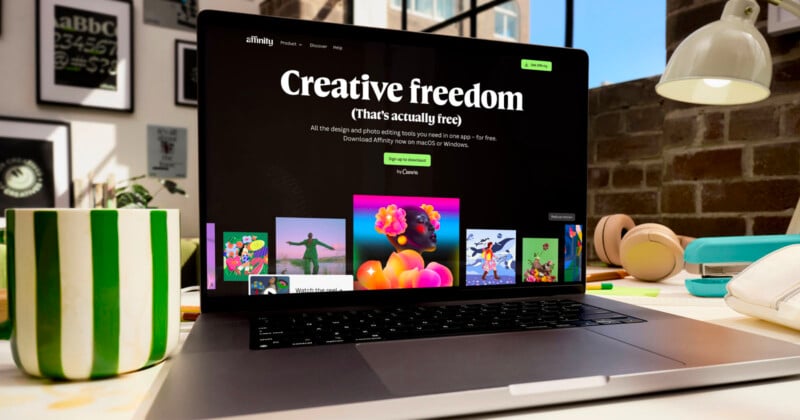
Experts refer to this as a “break the lock-in” strategy. By offering a tool that comes close to Adobe and doing so for free, immediately Affinity is able to capture the entire educational pipeline (students and institutions) while also offering a no-risk off-ramp for freelancers who are worn down by subscriptions. Once in Affinity’s system, upgrading to a Canva subscription isn’t strictly necessary, but can be done with relatively low impact since it’s not particularly expensive — they start at $7.50 a month, which gives access to the extra Affinity tools — especially compared to Adobe’s offerings.
In a study from KeyBanc Captial Markets, a survey of Adobe customers found that two-thirds of its customers said they use it more than they’d expected and 41% said the amount of time spent using it is up over 50% since signing up. Even more telling is that 78% expect to spend incremental dollars away from the Adobe ecosystem in which they are already entrenched.
“This is probably the most worrisome data point for Adobe,” the study notes. “We asked people if they expected to spend more incremental dollars at Adobe or away from Adobe in the future. 53% said they expect to spend more with Canva and Figma specifically and another 25% said they expect to spend more with other AI tools from OpenAI, Google, Flux, etc. Only 12% said they expect Adobe to keep pace and just 5% said Adobe will get more future share.”
Image credits: Canva Affinity