Sony’s New 200MP Sensor Promises Nearly 17 Stops of Dynamic Range
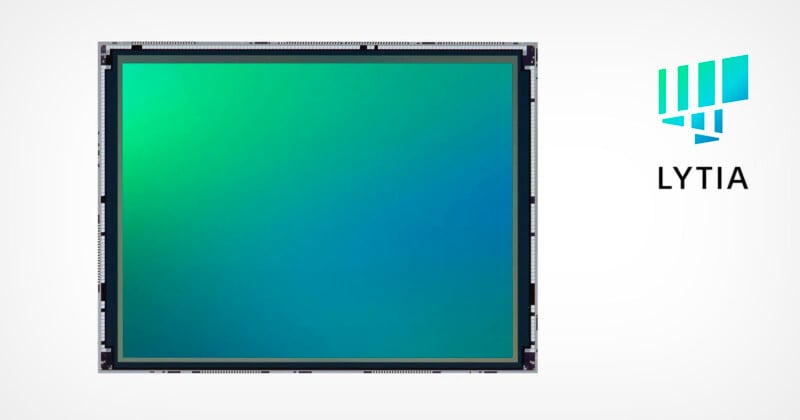
Sony Semiconductor Solutions Corporation has announced the launch of the new Lytia 901 mobile image sensor. The 200-megapixel sensor is slightly smaller than the Lytia 900 found in many high-end smartphones, but promises many more megapixels and improved HDR.
The Sony Lytia 901 is a 200-megapixel Type 1/1.12 sensor, meaning its pixel size is 0.7μm. In contrast to the Lytia 900, which is a 50-megapixel Type 1/0.98 sensor with 1.6μm pixels. Both sensors promise 4K recording at rates of 120 frames per second and include Sony’s DCG-HDR technology for capturing single-frame HDR photos. However, the Lytia 901 sensor has a new trick up its sleeve: Hybrid-Frame HDR.
Hybrid Frame-HDR, or HF-HDR, composites frames captured using short exposure with dual conversion gain data. HF-HDR promises to significantly improve dynamic range compared to conventional HDR technology, Sony says, and can deliver performance “over 100 dB,” which equates to over 16 stops of dynamic range.
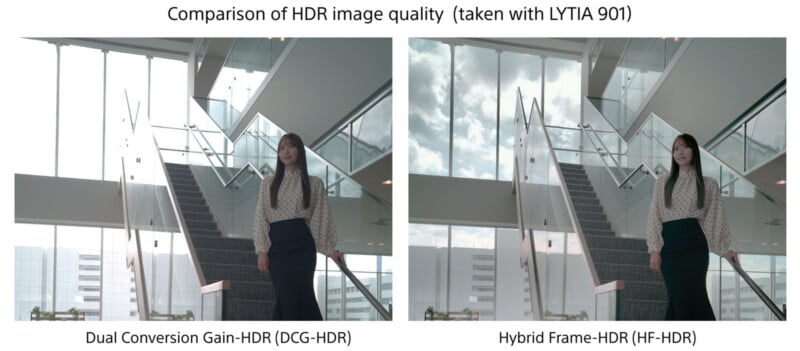
“This significantly suppresses highlight blowout in bright areas, as well as blackout in dark areas, delivering images that more closely resemble what the human eye actually sees,” Sony Semiconductor says of its new HF-HDR tech.
The new Sony Lytia 901 has other fascinating technological advancements. The sensor has a new Quad-Quad Bayer Coding (QQBC) array, which combines 16 (4×4) adjacent pixels into a cluster with a filter of the same color, red, green, or blue. In typical shooting situations, these clusters are treated as a single pixel, ensuring a strong balance between resolution and sensitivity. However, during zoom shooting, the sensor can remosaic the pixels to replicate a regular pixel array.
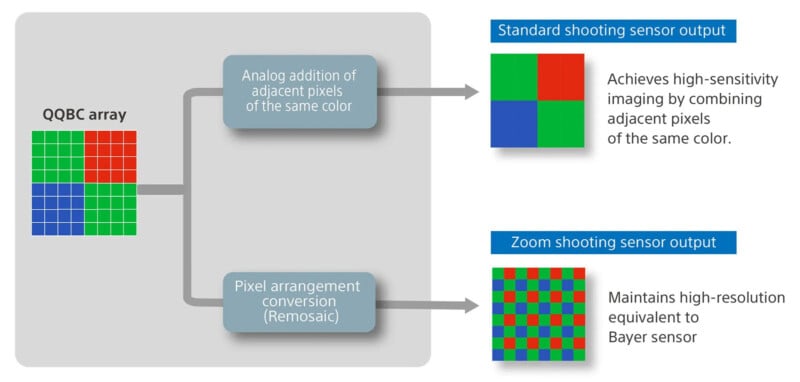
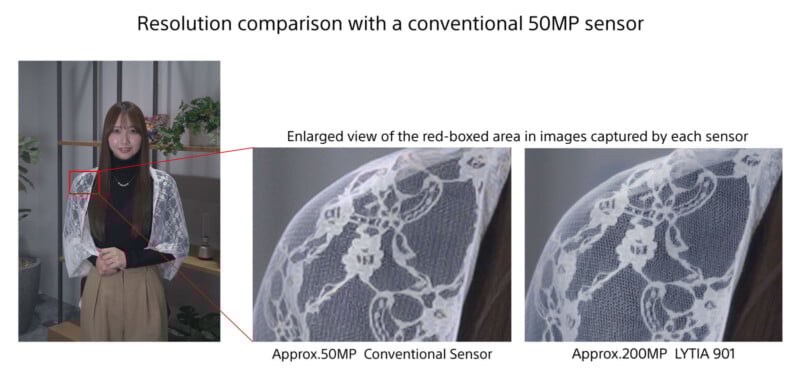
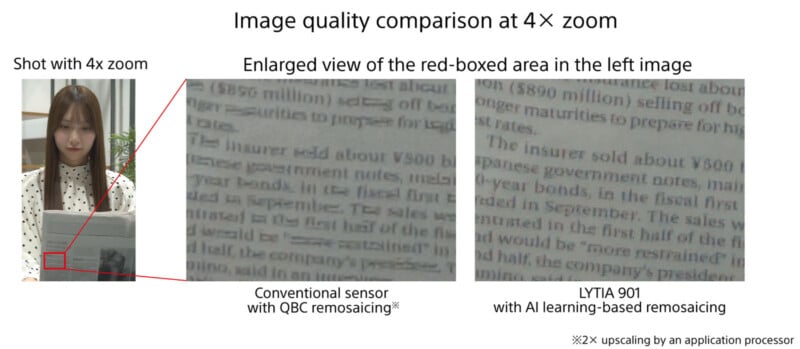
This conversion processing technique requires significant processing power, Sony says. As a result, the Lytia 901 features a new AI-based processing circuit mounted inside the sensor, a “Sony industry-first.”
“This new technology makes it possible to process high-frequency component signals, which are generally difficult to reproduce, offering superior reproduction of details such as fine patterns and letters,” Sony promises. “Furthermore, incorporating AI learning-based remosaicing directly in the sensor enables high-speed processing and up to 30 fps high- quality video capture when shooting with up to 4x zoom in 4K resolution.”
The new sensor’s other specs are similarly impressive. The Lytia 901 can shoot full-resolution, 200-megapixel RAW images at up to 10 frames per second and 50-megapixel ones at 30 frames per second. The sensor can also shoot 8K video at 30p plus 4Kp120, as mentioned earlier.
The new Sony Lytia 901 image sensor is available to customers now and should be implemented in new smartphones in the very near future.
Image credits: Sony