Legendary Leitz Cine Launches its First Lenses for Mirrorless Cameras
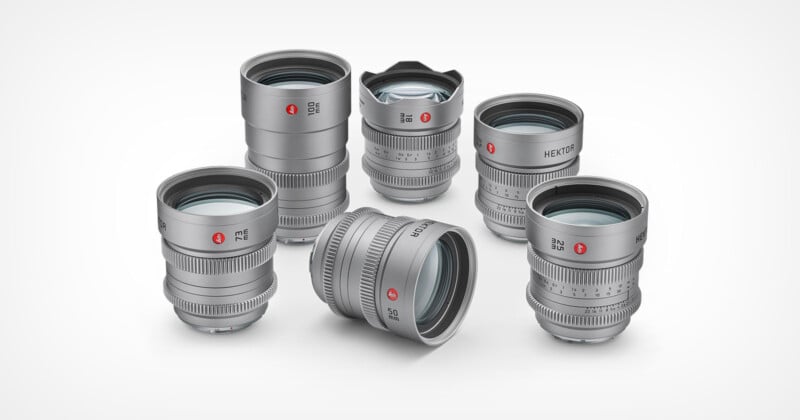
Leitz Cine, a legendary brand in cinematic optics, has entered the mirrorless lens market. The new Leitz Cine Hektor lens lineup comprises six T2.1 primes, ranging from 18mm to 100mm, all designed for full-frame mirrorless cameras.
The fully manual Leitz Cine Hektor 18mm T2.1, 25mm T2.1, 35mm T2.1, 50mm T2.1, 73mm T2.1, and 100mm T2.1 lenses include user-interchangeable mount options for Sony E, Canon RF mount, Nikon Z, and, of course, L-Mount.
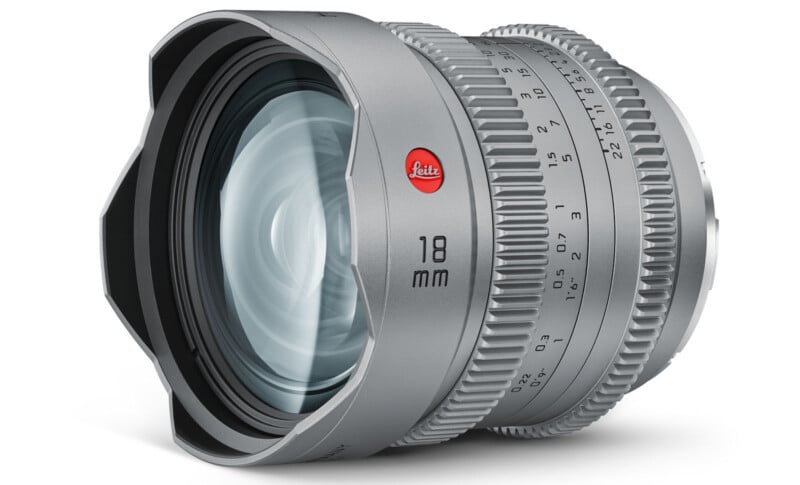
Like Leitz Cine’s other lenses, the new Hektor series prioritizes character and build quality. The German company tailored the “Hektor” look by examining Leica’s classic M lenses from the mid-20th century as well as Petzval lenses from the 19th century. The team wanted to capture the timeless rendering from the past century-plus of cinema.
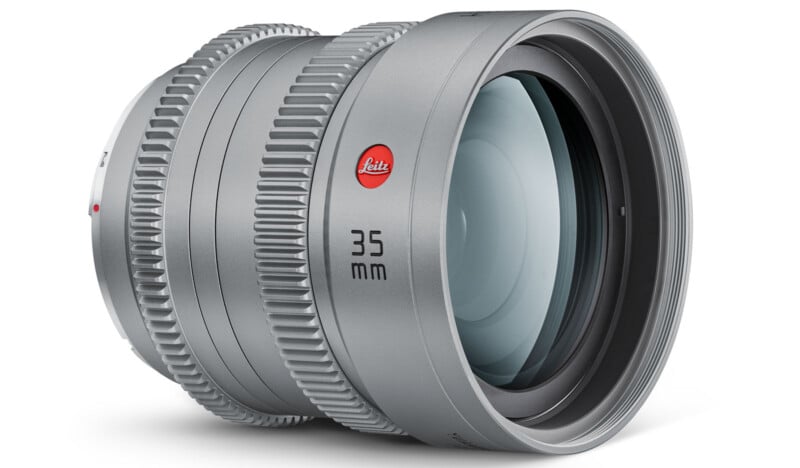
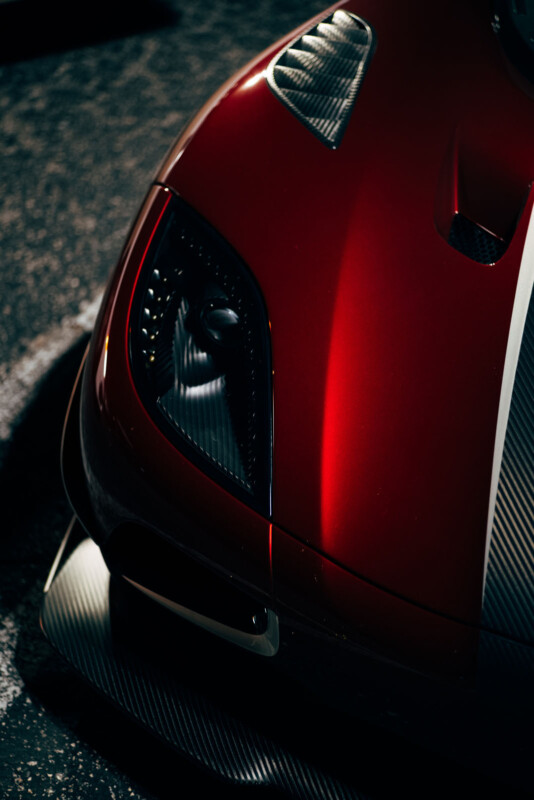
The Hektor lenses promise interesting dynamic flare, field curvature, and spherical aberration to deliver “wholly unique” rendering characteristics. By using non-aspherical designs, similar to those from 30-40 years ago, the lenses promise a less clinical, softer look with warm color rendering, and lively flare.

Since they are Leitz Cine primes, they are designed and assembled in Germany by the same team that works on Leitz’s very expensive high-end cinema lenses. Leitz admits that its new Hektor lenses are “more expensive than most mirrorless lenses,” but notes that its lenses are built to last, easily serviced, and will be supported by readily available parts for many years to come.
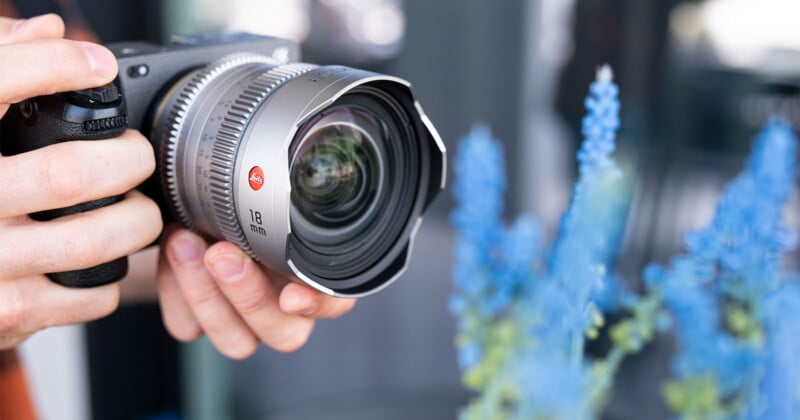
All six lenses cover the same 47.8mm image circle and feature unified 80mm front diameters, which is relatively narrow in the full-frame cinema lens space. Five of the lenses, the 18mm, 25mm, 35mm, 50mm, and 73mm primes, are 88.2mm (3.47 inches) long, while the 100mm T2.1 is 123mm (4.8 inches) long. Weighs range from 0.66 kg (1.5 pounds) to 0.97 kg (2.1 pounds). The entire Hektor series features 120 degrees of focus rotation, 49 degrees of iris rotation, and nine-bladed aperture diaphragms. Every lens, except the 18mm T2.1, accepts 77mm front filters, and they all have 0.8 MOD gears.

“We spent a lot of time exploring and testing to get the character of these lenses right, to make them something that would be appealing to modern cinematographers but timeless in their beauty,” says Leitz Cine’s managing director, Rainer Hercher. “Too often lenses are designed to be as fast, clear and as inexpensive as possible without giving attention to the attributes that create a great, compelling image. In listening to our customers we heard them asking for something with soul, with emotion, something that could help elevate their work. The Leitz Hektor lenses are for them.”
The name “Hektor” comes from the original Leica Hektor lenses built in the 1930s by Leica’s legendary lens designer, Max Berek. These lenses were originally built for Leica’s early screw-mount 35mm cameras. While the new cinema primes are not a recreation of these original lenses, they pay homage to those nearly 100-year-old lenses through their anodized silver finish and, in the case of the 73mm lens, their unique focal length.
Sample Stills








Pricing and Availability
The Leitz Cine Hektor lenses are available to order now and will begin shipping soon. They ship in E-mount versions, and the 25mm to 100mm primes are $7,390 each. The 18mm T2.1 is slightly pricier at $7,590. The lenses come in a three-lens set as well, including the 25mm, 50mm, and 73mm primes, for $21,590. A complete six-lens set is $42,490. The bundles offer slight discounts compared to buying the lenses separately.
Image credits: Leitz Cine