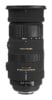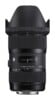
[I] think it is fair to call the Sigma 18-35mm f/1.8 is a game-changer. The f/1.8 aperture is not just a gimmick that Sigma managed to toss into a lens.

[I] think it is fair to call the Sigma 18-35mm f/1.8 is a game-changer. The f/1.8 aperture is not just a gimmick that Sigma managed to toss into a lens.
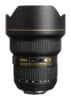
Simply put, the Nikon 14-24mm f/2.8 is the best ultra wide angle lens you will ever touch.
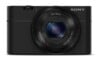
The Sony RX100 will have other manufacturers playing catch-up for years, and even though its successors are now out, the Sony RX100 still remains my #1 overall point and shoot camera pick because of its robust feature set and lower price than its successors.
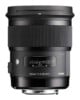
The Sigma 50mm f/1.4 DG HSM lens is the latest Sigma “Art” line, and it doesn’t disappoint.
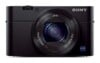
The Sony RX100 III is sort of a ‘have your cake and eat it too’ type camera for those who want point and shoot size, yet still having a heavy feature set and near-DSLR image quality…but all of that comes at a steep price.
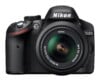
The Nikon D3200 offers great bang for buck, and its performance definitely earns it a “highly recommended” status from us.
In that regard, anyone considering this lens and knowing that its features will suit their needs should definitely jump at it, as its quality does not disappoint.
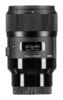
At $900 it’s an inexpensive full frame alternative to the first party 35mm lenses made by Canon and Nikon, and it certainly doesn’t have any of the typical characteristics of a budget lens. I highly recommend the Sigma 35mm f/1.4 lens as a go-to, fast prime lens.
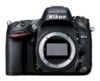
[I]t should be pretty clear from this review that I think the Nikon D600 is a worthy entry into Nikon’s lineup, and one that I highly recommend.