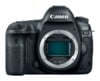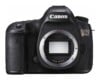
The 50MP high resolution sensor gives images of outstanding resolution, rivalling those from medium format digital cameras and exceeding those of any other 35mm DSLR.

The 50MP high resolution sensor gives images of outstanding resolution, rivalling those from medium format digital cameras and exceeding those of any other 35mm DSLR.
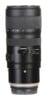
Given the lower price, better warranty and high optical quality, I'd say the Tamron lens is a very competitive alternative to the manufacturers' lenses and for most photographers would probably be better value.
If you need (or just want) a full frame DSLR, I suspect that deal on the current 5D (maybe with the 24-105/4L IS) is about as good as you'll get anytime soon.
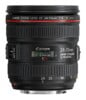
The Canon EF 24-70/4L is a good lens. It's pretty sharp wide open and that sharpness extends across the whole (full) frame at all focal length settings.
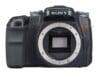
I think the Sony A100 is competitive in general performance with similar cost Canon and Nikon bodies, though the noise level is slightly higher at high ISO settings. However for most users I think the built-in stabilization system may often more than makes up for that.
[I]s clearly the winner when it comes to a combination of quality and convenience.
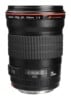
Despite being one of Canon's earlier lenses, the EF 135/2L USM is very sharp and fast both in the sense of optical speed and focusing speed.
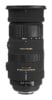
The bottom line is that the Sigma 50-500mm f/4.5-6.3 APO DG OS HSM is a very useful lens.
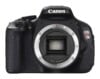
The bottom line is that the Digital Rebel T2i displays a remarkable level of performance and a comprehensive set of features.
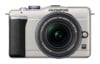
Right now the Olympus E-PL1 is something of a "best bang for the buck" camera even though it might not be quite on the cutting edge of 4/3 MILC technology.
The T3i is clearly aimed at the novice user, with "assist" screens available for most functions, but it's also a very capable camera in the hands of more experienced users and the "helper' messages can be turned off and almost all the camera defaults can be manually overridden.
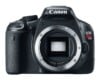
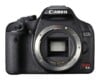
I think the Digital Rebel T1i is one of the best bargains in Canon's (or anyone else's) DSLR lineup. You get a high resolution sensor, ISO capabilities up to 12,800, HD video and most of the "bells and whistles" that the average photographer will ever need.
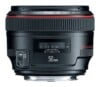
There's little doubt that if we ignore the price then the Canon EF 50/1.2L USM is Canon's best 50mm lens. It's sharp, fast, well built, weathersealed and supports E-TTL II flash operation. The only question is one of value rather than cost.
[F]its the bill as an ideal "walking around" lens for nature, travel and sports photographers.
The 28-135 is clearly the winner from an optical and functional viewpoint. Optically it's as good as or slightly better than the 28-105 at equivalent settings, plus it has an extra 30mm of reach.
[A] very nice lens indeed. [...] It can be used wide open at f4 and still yield very sharp images and with the 3 stops of stabilization which the IS system provides, it's useful for low light work as well.
The Canon and Tamron 70-300 zooms are pretty much equal in terms of sharpness in the center of the image at all focal lengths from 70mm to 300mm. Both are very good for this class of lens.
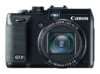
The Powershot G1 X provides the best compromise between size, weight and image quality of any compact zoom lens digicam. It's image quality can rival that of many APS-C DSLRs.
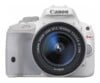
[T]he Canon EOS SL1 would be a fine choice for anyone wanting to upgrade from an earlier EOS Rebel camera, anyone buying their first DSLR, anyone wanting to minimize the size and weight of their DSLR or indeed an experienced EOS shooter [...]
While its optical quality is excellent, it's really the versatility of the lens that makes it so useful.