Insane Video Shows Killer Whale Ramming a Sunfish to Smithereens
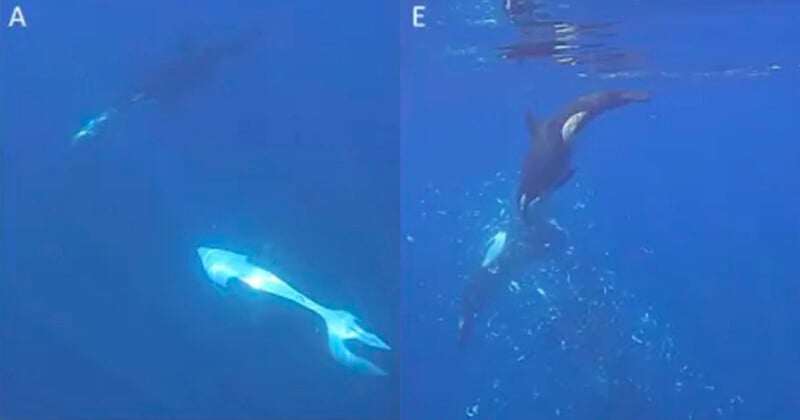
A marine biologist filmed an orca slamming into the side of a sunfish — causing it to explode into literal pieces.
The remarkable footage was filmed by Kathryn Ayres in July 2024 in the Gulf of California while shark diving.
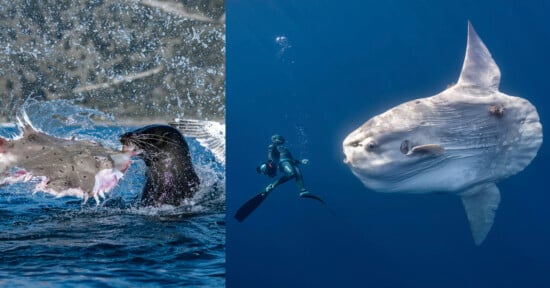
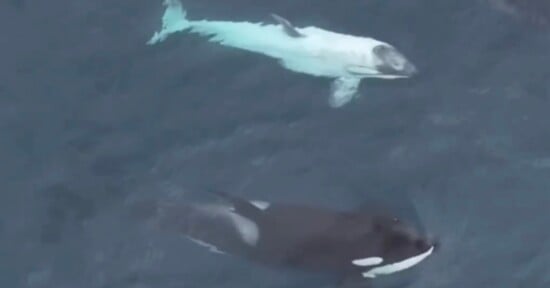
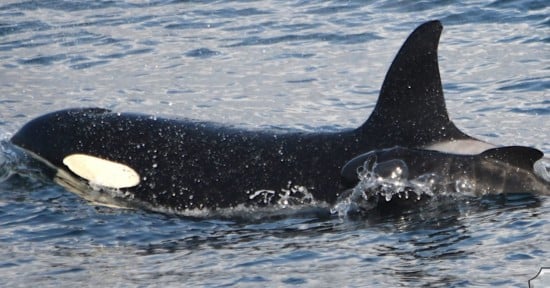
Having hopped in the water to get a better look, Ayres witnessed one of the whales holding a dead sharptail sunfish in place so that another whale, arriving belly up at speed, could ram the sunfish.
The impact makes a crunching sound — the sunfish is one of the ocean’s largest bony fish — as the fish disappears into thousands of little pieces. Ayres can be heard reacting in amazement to what she just witnessed.
According to Scientific American, the fish had already had its internal organs stripped out by the orcas.
It isn’t clear why the orcas coordinated such an explosive move. Ayres and her fellow researchers published a report in the journal Frontiers in Ethology today (Thursday), suggesting the ramming makes it easier to share out a meal for the whole orca pod.
However, orcas are known to play with their food: the apex predators have been recorded tossing around seals and even wearing dead salmon as “hats.”
“They had already consumed the sunfish’s internal organs, which are the most nutrient-rich parts of the prey,” Ayres tells CNN. “This suggests that causing the sunfish to explode may not have served an immediate feeding purpose and could have just been for fun.”
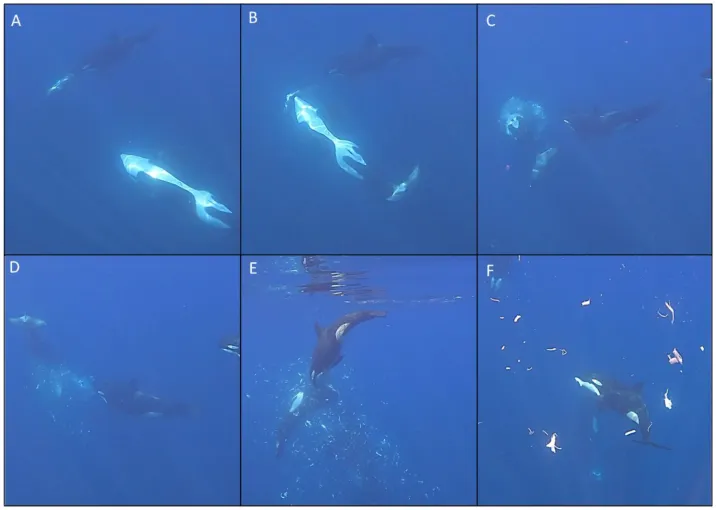
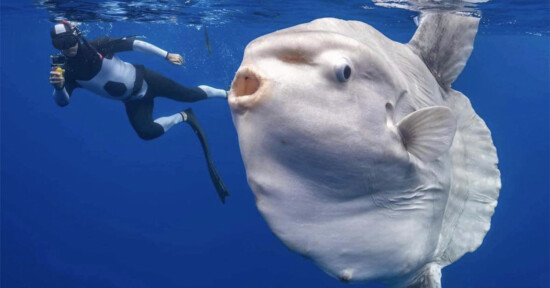
The orcas may have realized that because sunfish have an unusually large and flattened anatomy, it is more likely to explode on impact.
“Their bodies are laterally compressed,” adds Ayres. “Once the nutrient-rich internal organs have been removed, the remaining tissues may be more accessible to rupture under high-impact ramming.”
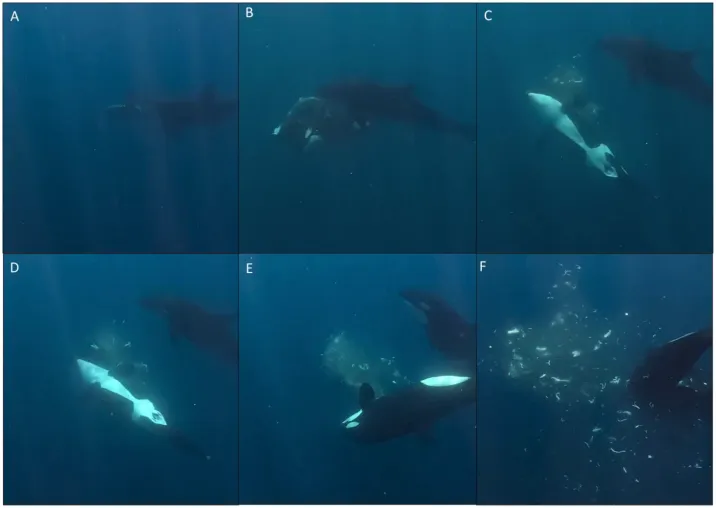
A second video of sunfish ramming was captured by a tour operator also in the Gulf of California in September last year. That video follows a similar pattern to the one Ayres filmed, with one orca holding the fish in place, while another swims at high-speed.
Sharptail sunfish can measure up to 10 feet (three meters) long and weigh more than 4,000 pounds (1,800 kilograms), making them one of the heaviest fish in the ocean.
Image creditsAyres KA, Gallagher AJ, Avena CV, Duarte CM and Higuera Rivas JE (2026) Fragmentation of sharp-tail sunfish (Masturus lanceolatus) caused by high-impact ramming behavior in orcas (Orcinus orca). Front. Ethol. 5:1835536. doi: 10.3389/fetho.2026.1835536
Affiliate Disclosure PetaPixel articles may include affiliate links; we may earn a commission if you buy through one.