How Shutter Speed Affects Your Photos
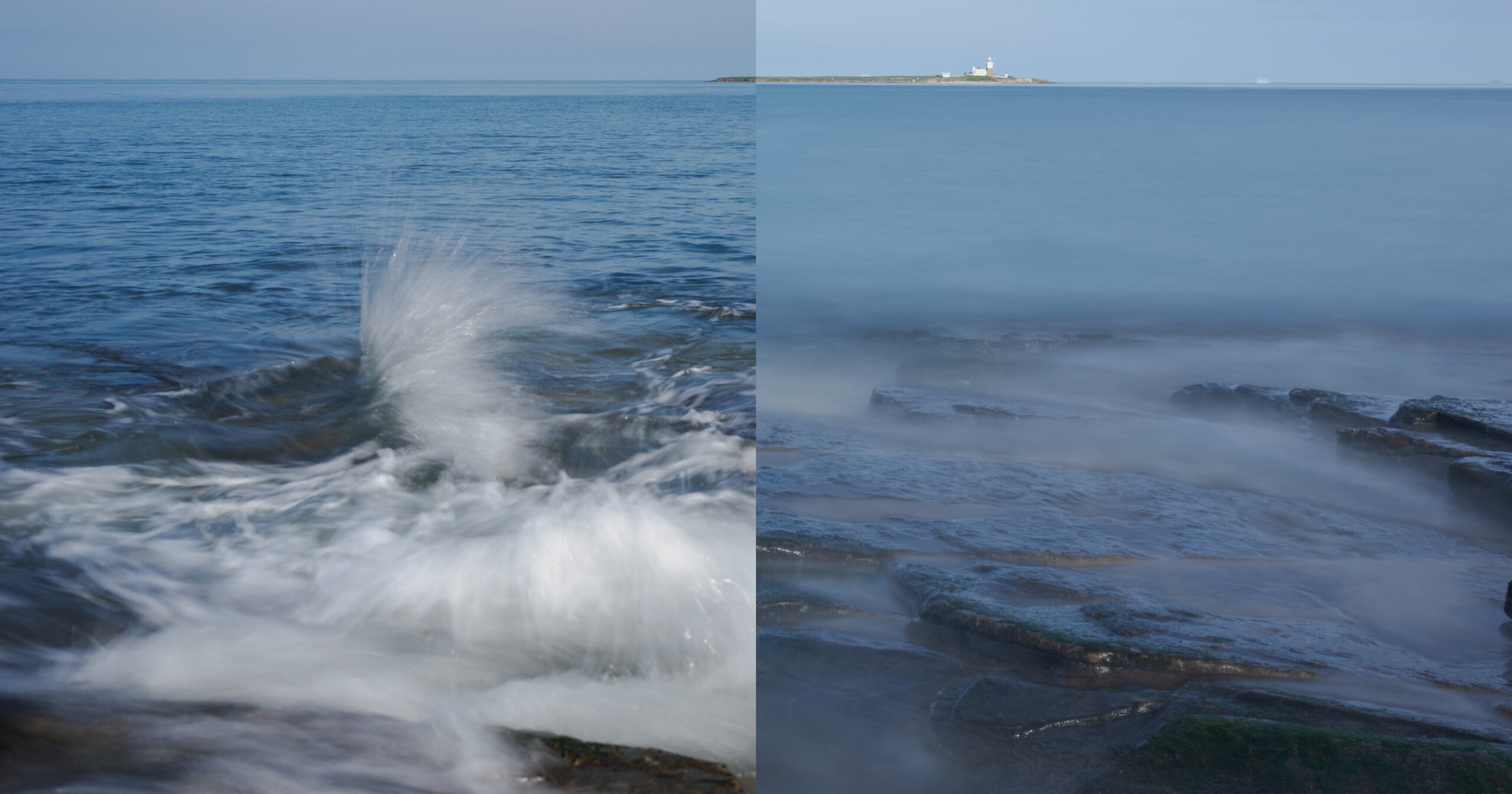
Have you ever thought closely about how much or little your photos change with just one stop of shutter speed? Here’s what happens to the same scene shot from 1/3200 to 60 seconds.
There’s a lot to think about when holding your camera to your eye. Besides the overall layout of the frame and how bright you want the photo to be, there’s the depth of field: how much of the subject do you want in focus? Then there’s the shutter speed. If anything is moving, how close it is to the camera, and what shutter speed do you need to stop or blur the movement?
Moreover, when you change the shutter speed, you will have to adjust either the aperture or the ISO. The former will, of course, change the depth of field, and the latter will make noise more noticeable in the picture.
Take the following failed photo as an example: I needed the shutter speed to be 1/3200s; however, at 272mm and f/4.5, with the bird suddenly in close proximity, that resulted in too shallow a depth of field. Although the wing movement stopped, the tips of the wings are slightly out of focus. Usually, I would consign this to the bin, but it is useful to keep mistakes as teaching aids.
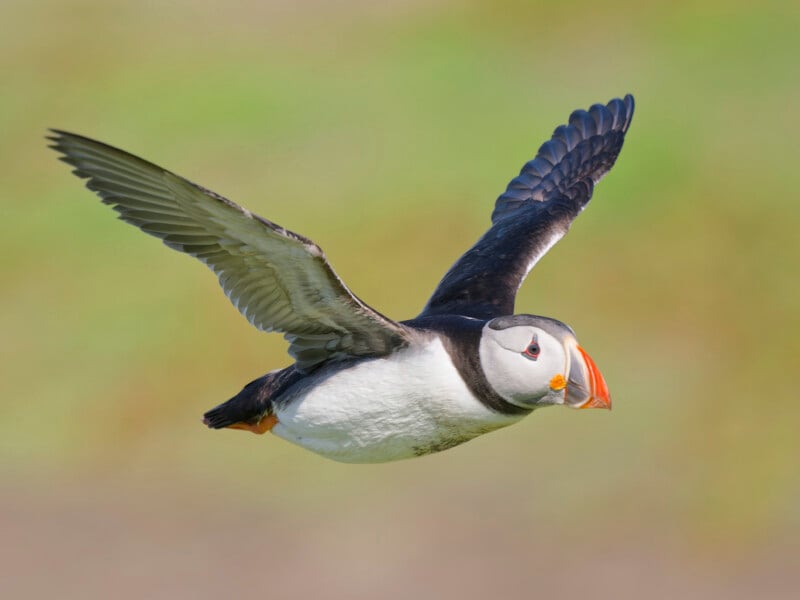
With the fabulous quality of the latest release of DeepPRIME XD3, the noise reduction in DxO PhotoLab 9, and the performance of contemporary sensors, I can now routinely increase the ISO to achieve both a fast shutter speed and a greater depth of field from a smaller aperture, without compromising image quality. I should have done that for that photo.
Why is it Called Shutter Speed?
I always think that shutter speed is a misnomer. The mechanical shutter curtains in a camera always open and close at the same speed, and it is the gap between them that changes. Canon’s nomenclature, time value, is possibly a more accurate description, but only the most pedantic call it that. Shutter speed is what everyone in their right mind uses.
An Observation About Movement
If you are ever a passenger in a vehicle, you cannot help but notice that the ground nearby rushes past. The farther you look away, the slower the objects seem to pass by.
We have a total horizontal binocular field of view of about 120°, although our peripheral vision is wider, up to 180°, and our high-resolution central vision is around 40°.
At two meters, our binocular vision can see about 2.3 meters from side to side. Therefore, things will cross out of the field of vision much faster than at 200 meters. Then, we can see 230 meters horizontally. At 2 km, we see a visible width of 2.3 kilometers. (If you prefer imperial measurements, change the meters to yards.)
The same is true in photography with moving subjects. Close to the camera, an object will pass quickly through the lens’s view. Therefore, we will need a faster shutter speed to stop the movement. At a greater distance, the same object seems smaller, and we can also see a much wider vista. Therefore, the distance traveled across the frame is reduced, allowing us to use a slower shutter speed to stop the movement.
Of course, if we use a telephoto lens, the angle of view is reduced. Therefore, once again, a faster shutter speed is needed.
The Experiment
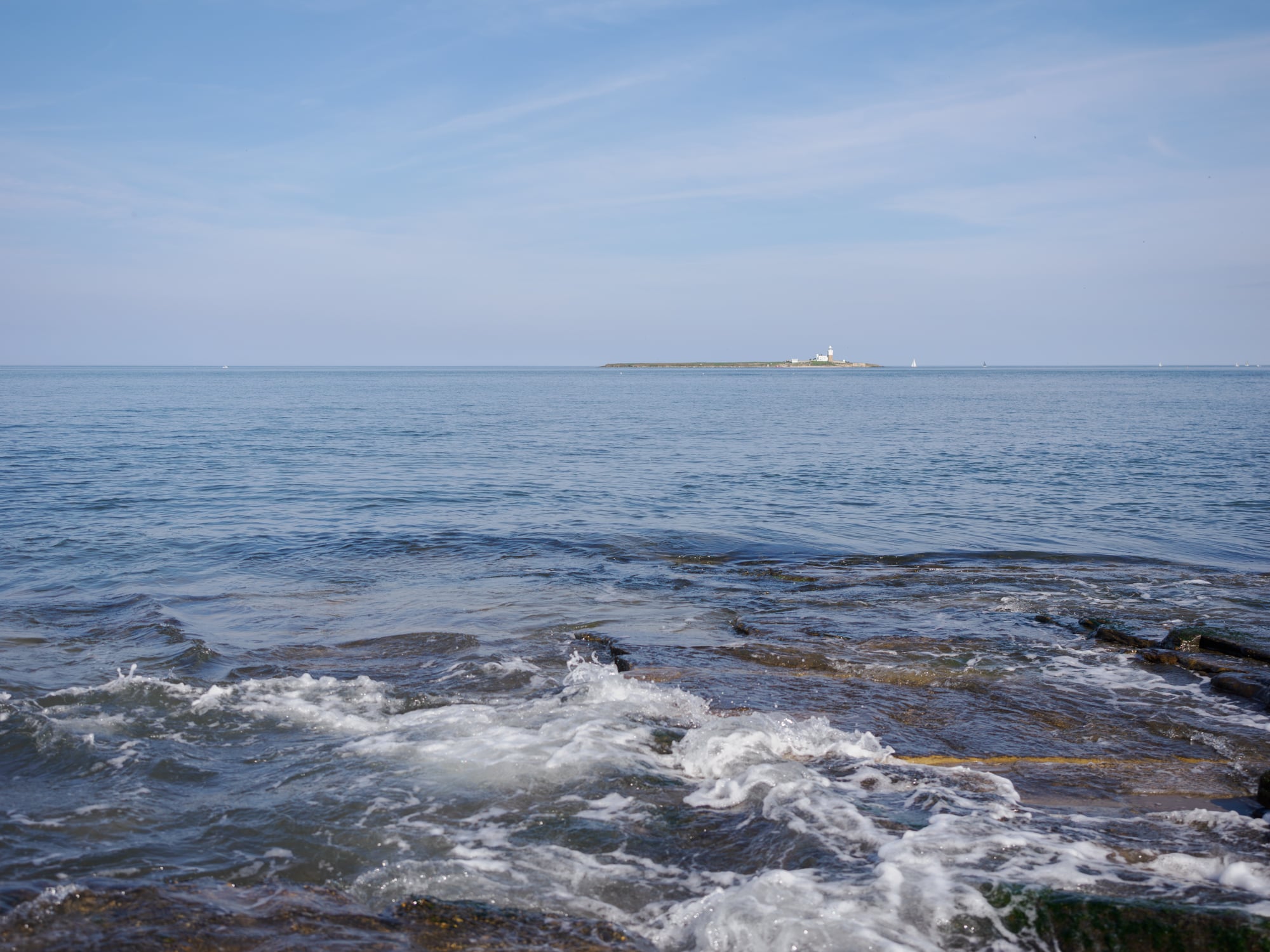
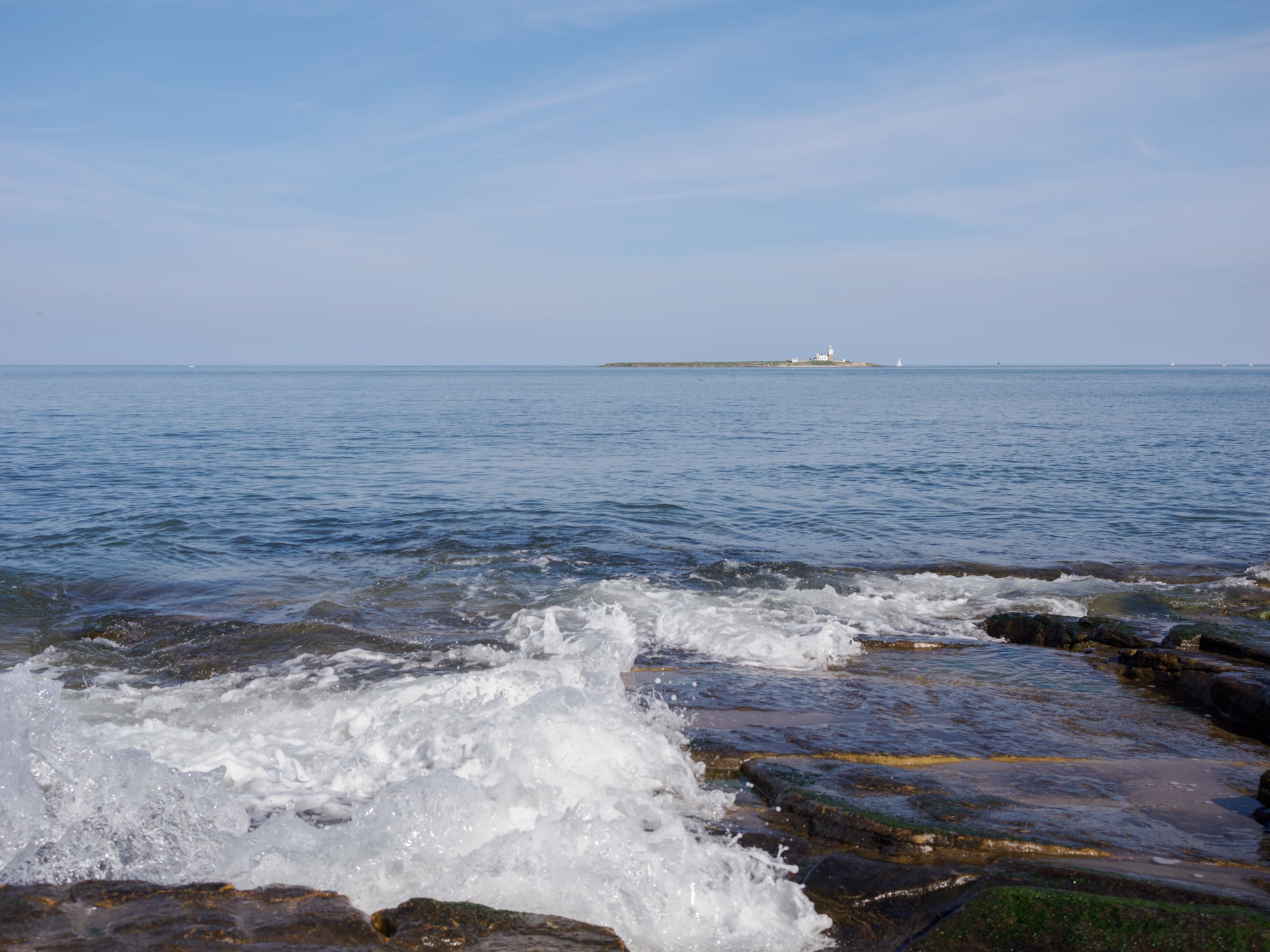
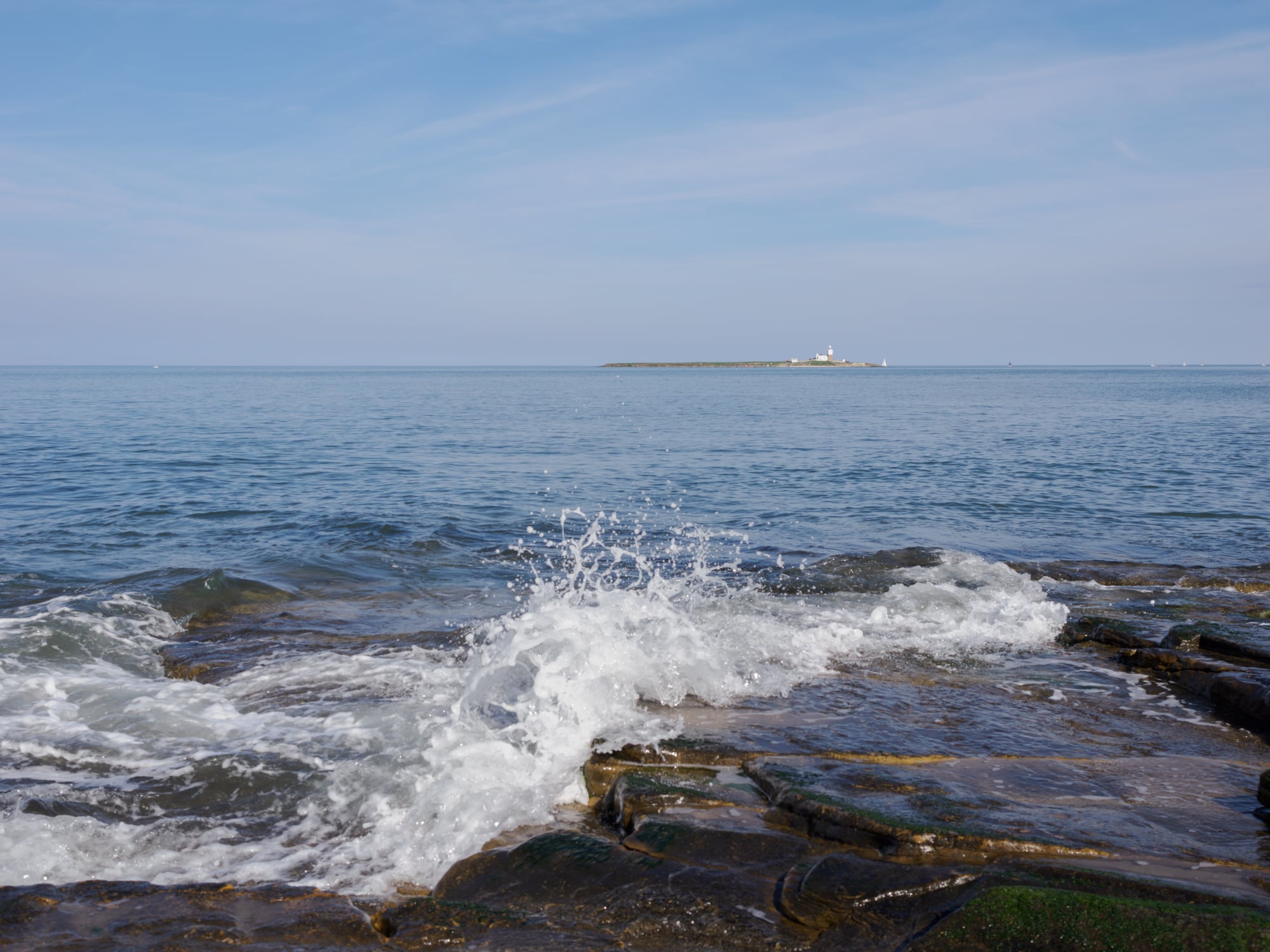
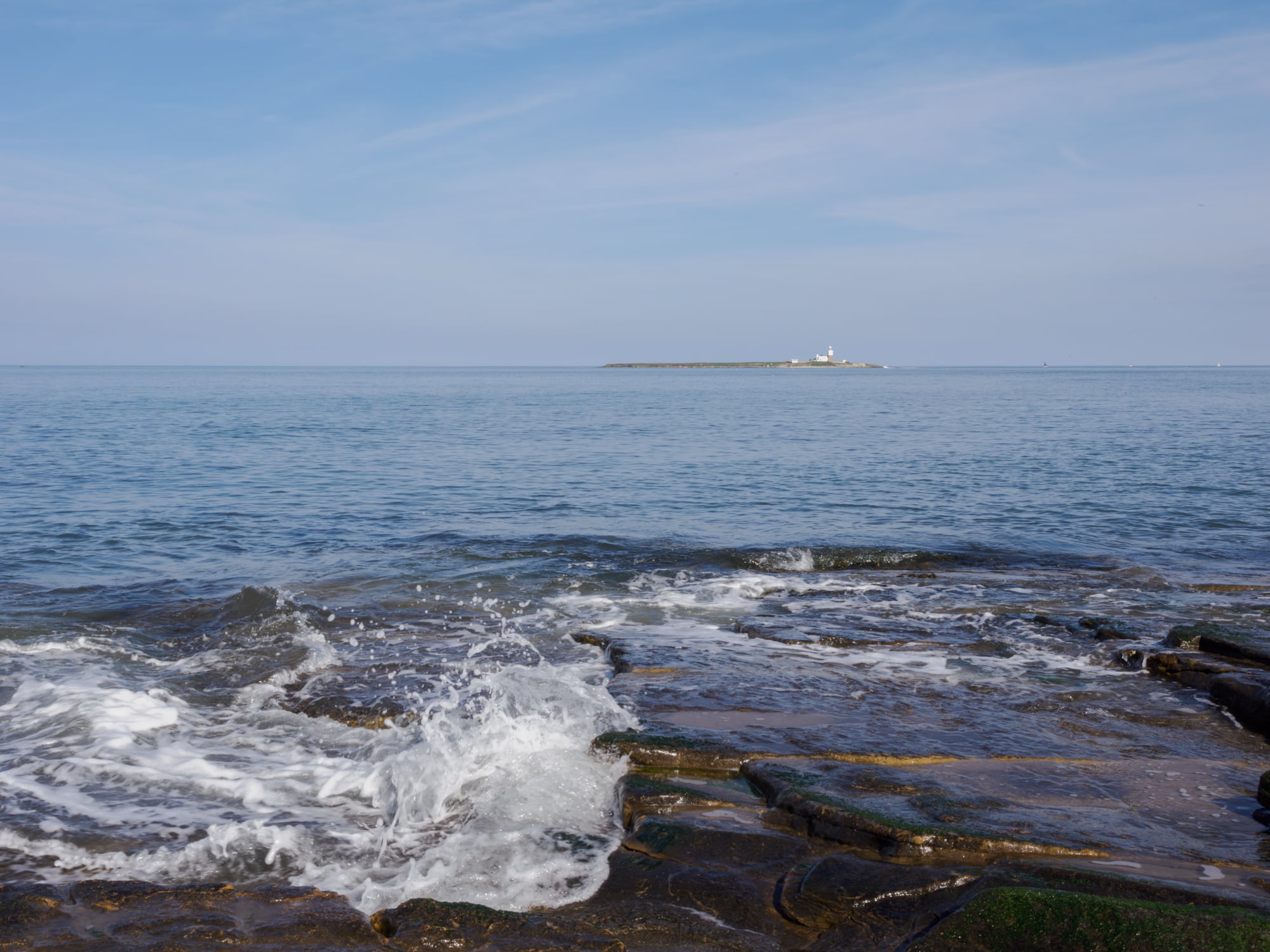
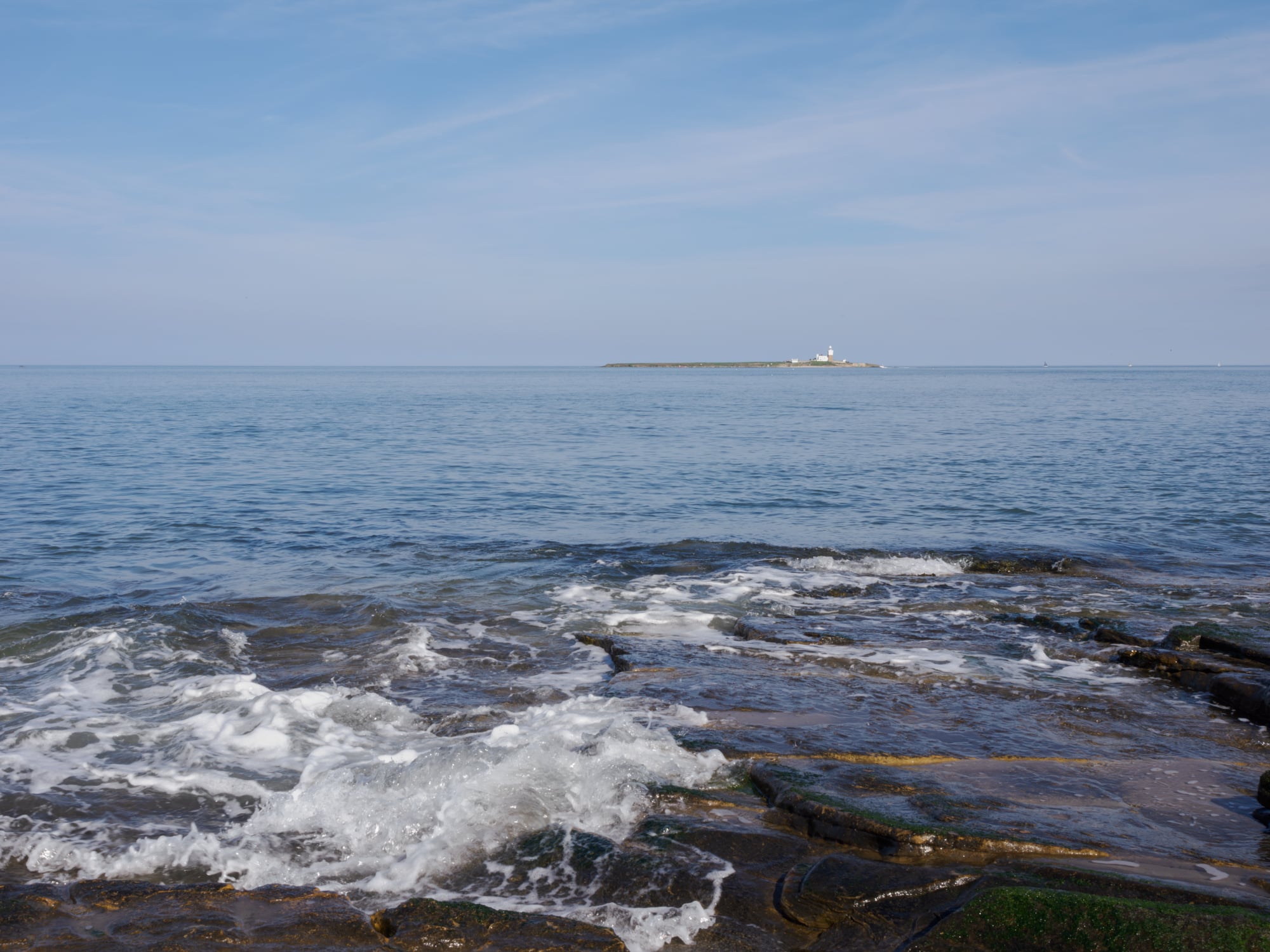
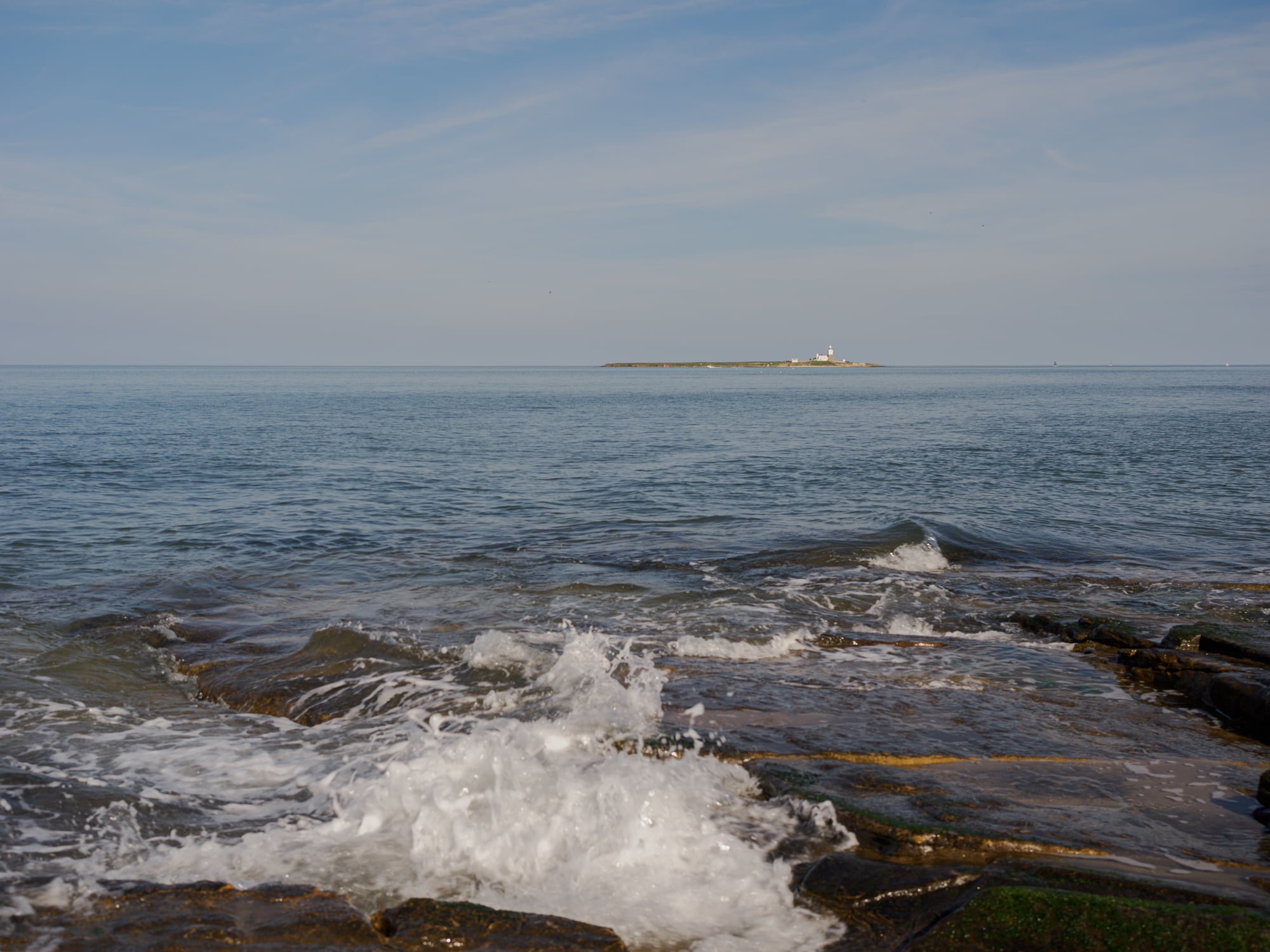
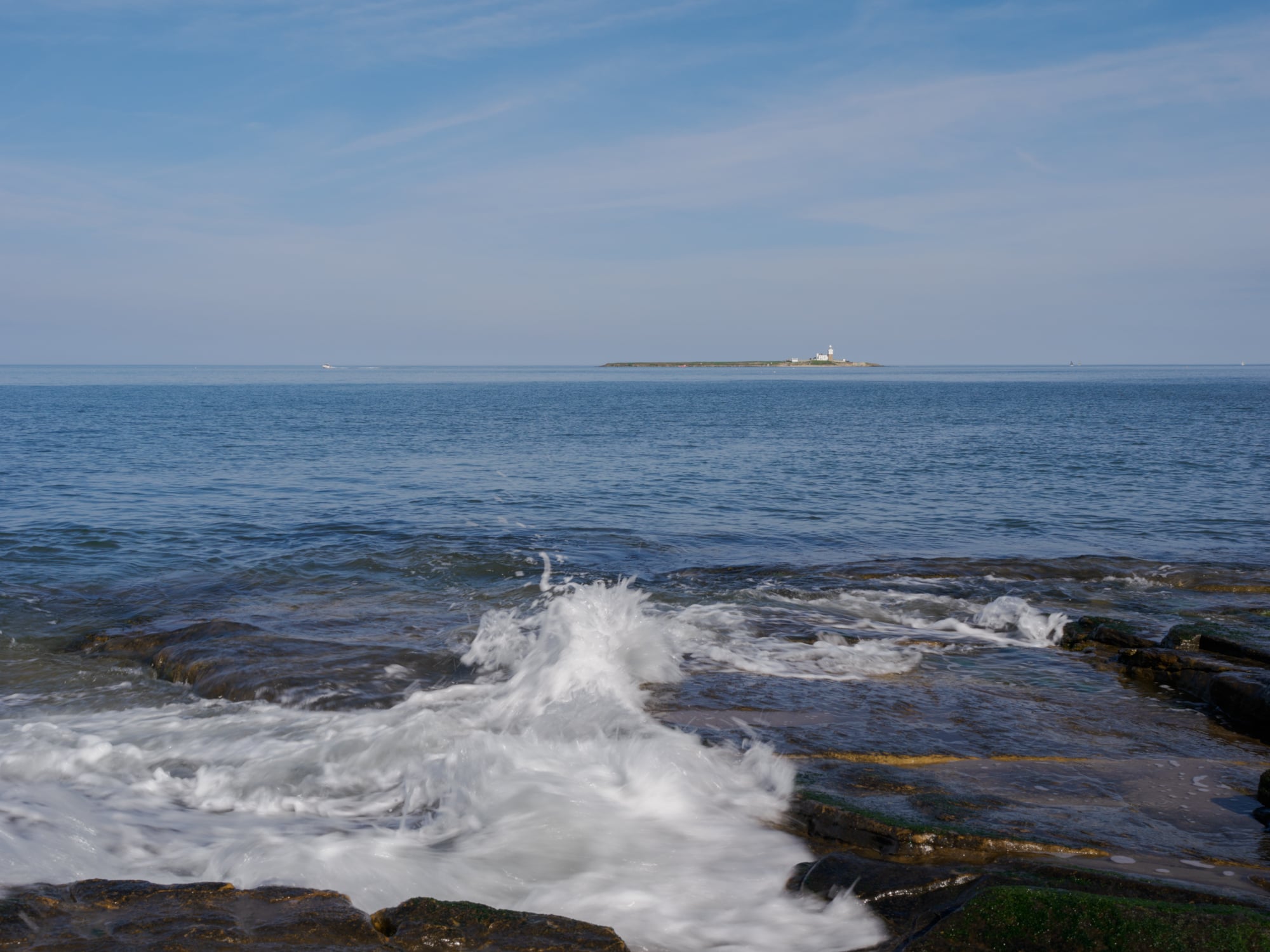
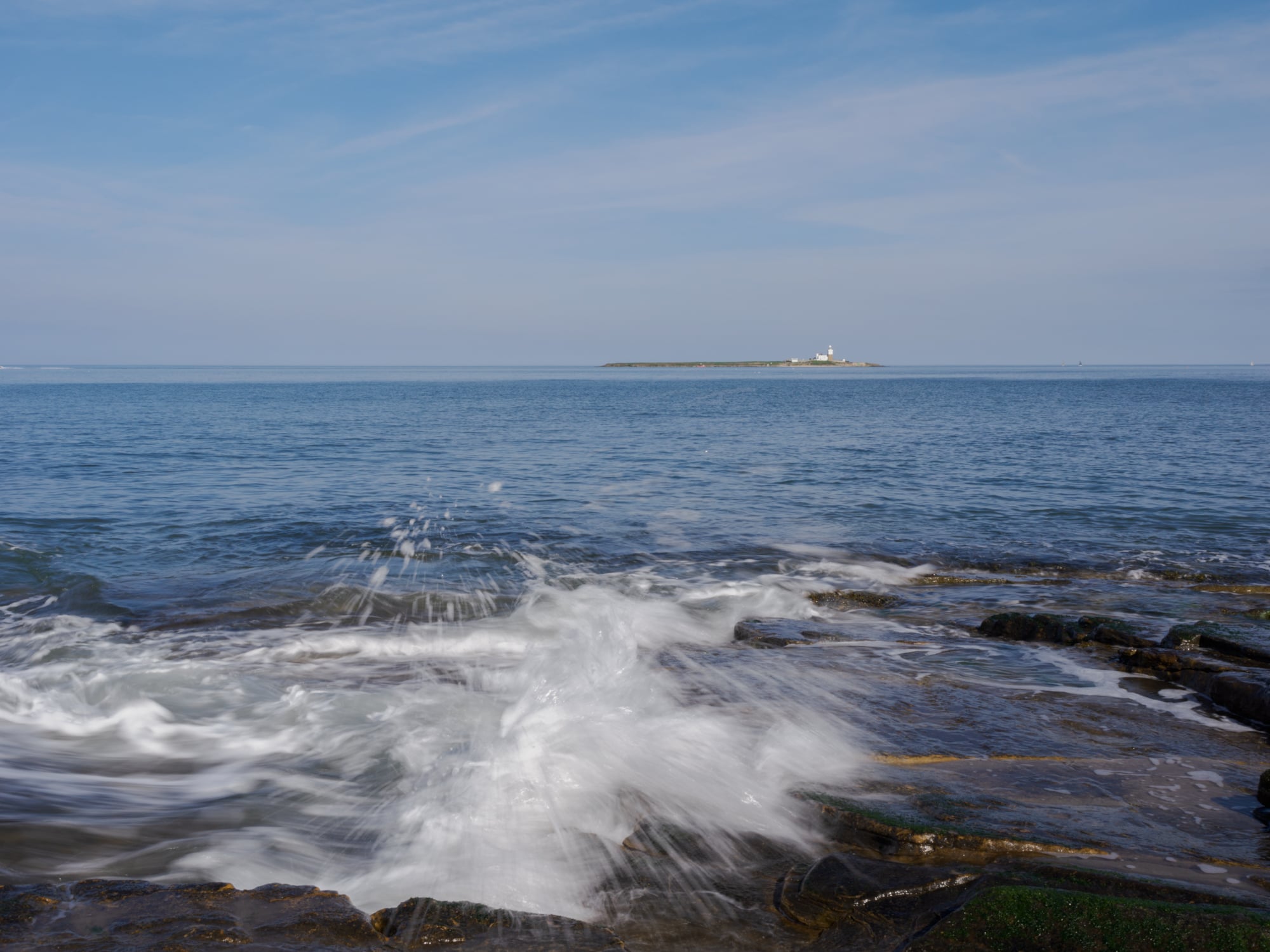
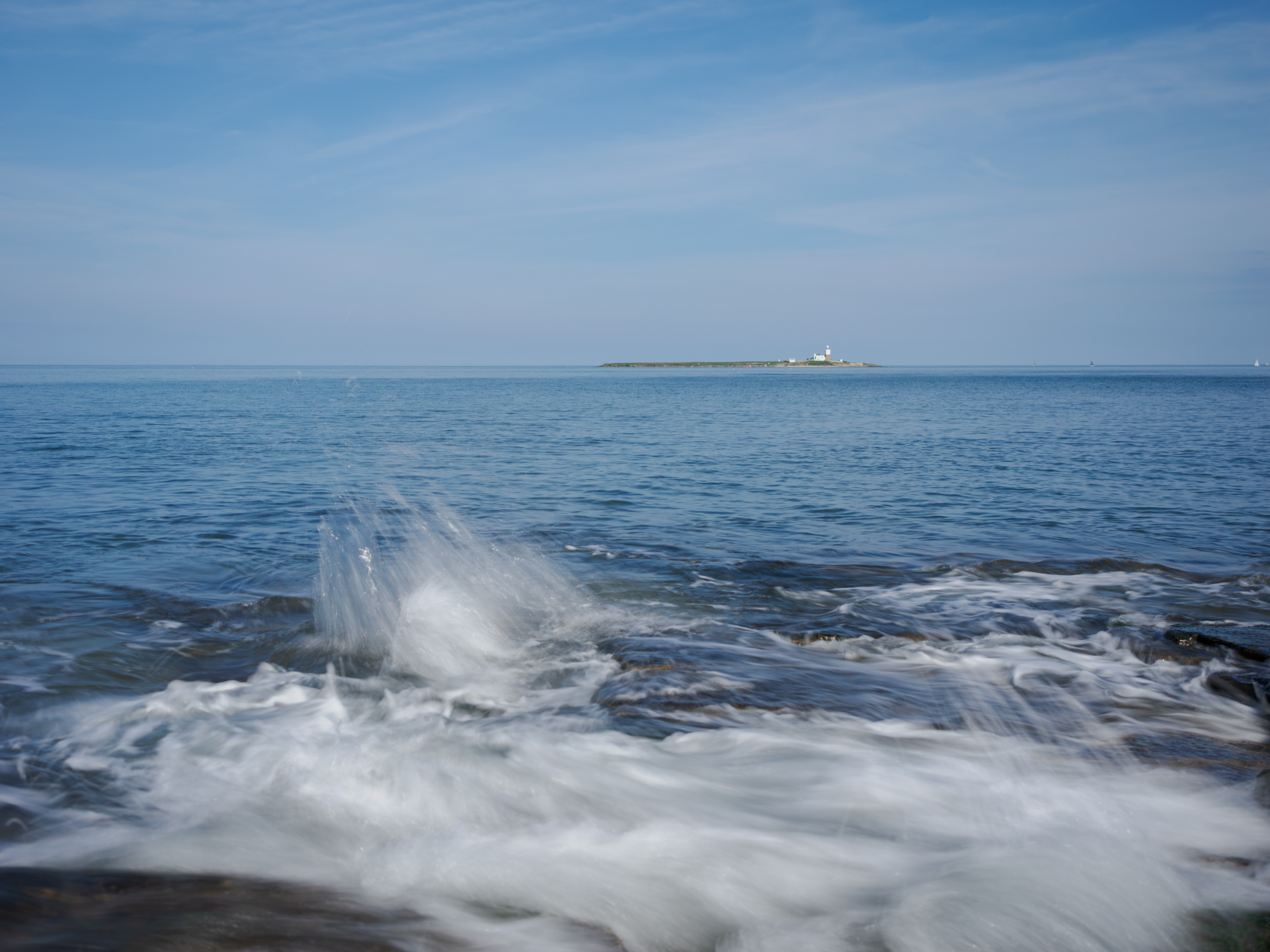
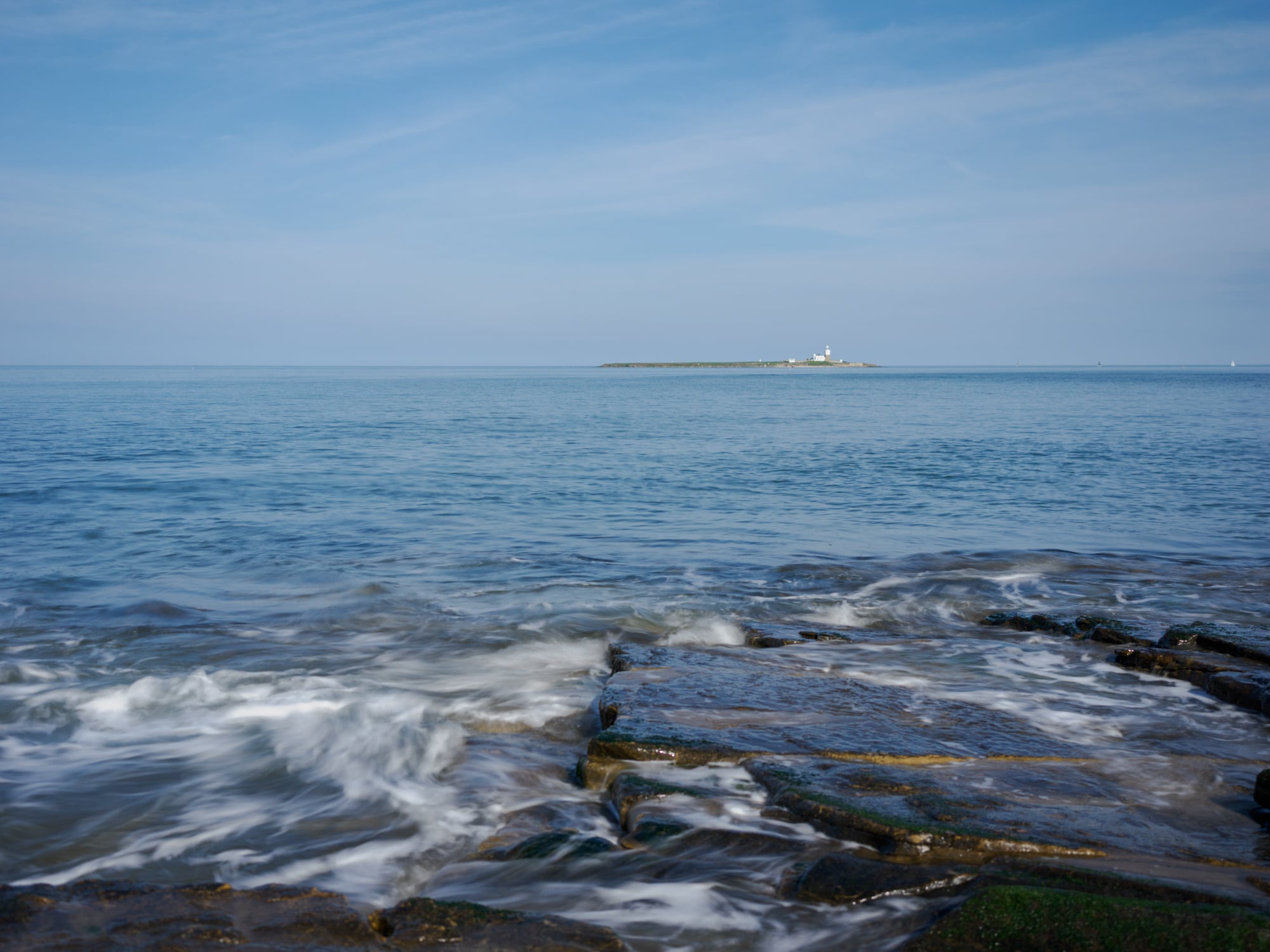
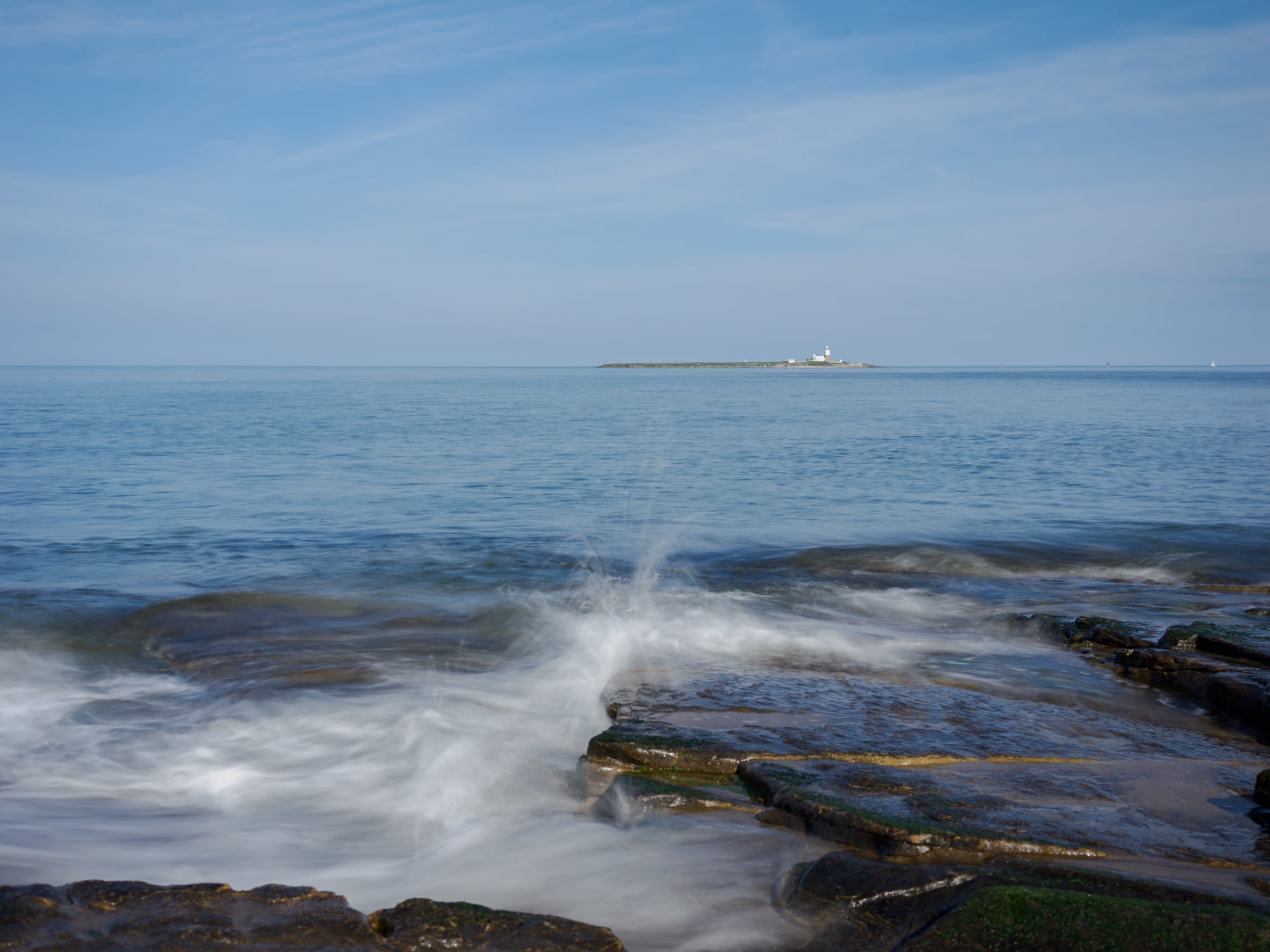
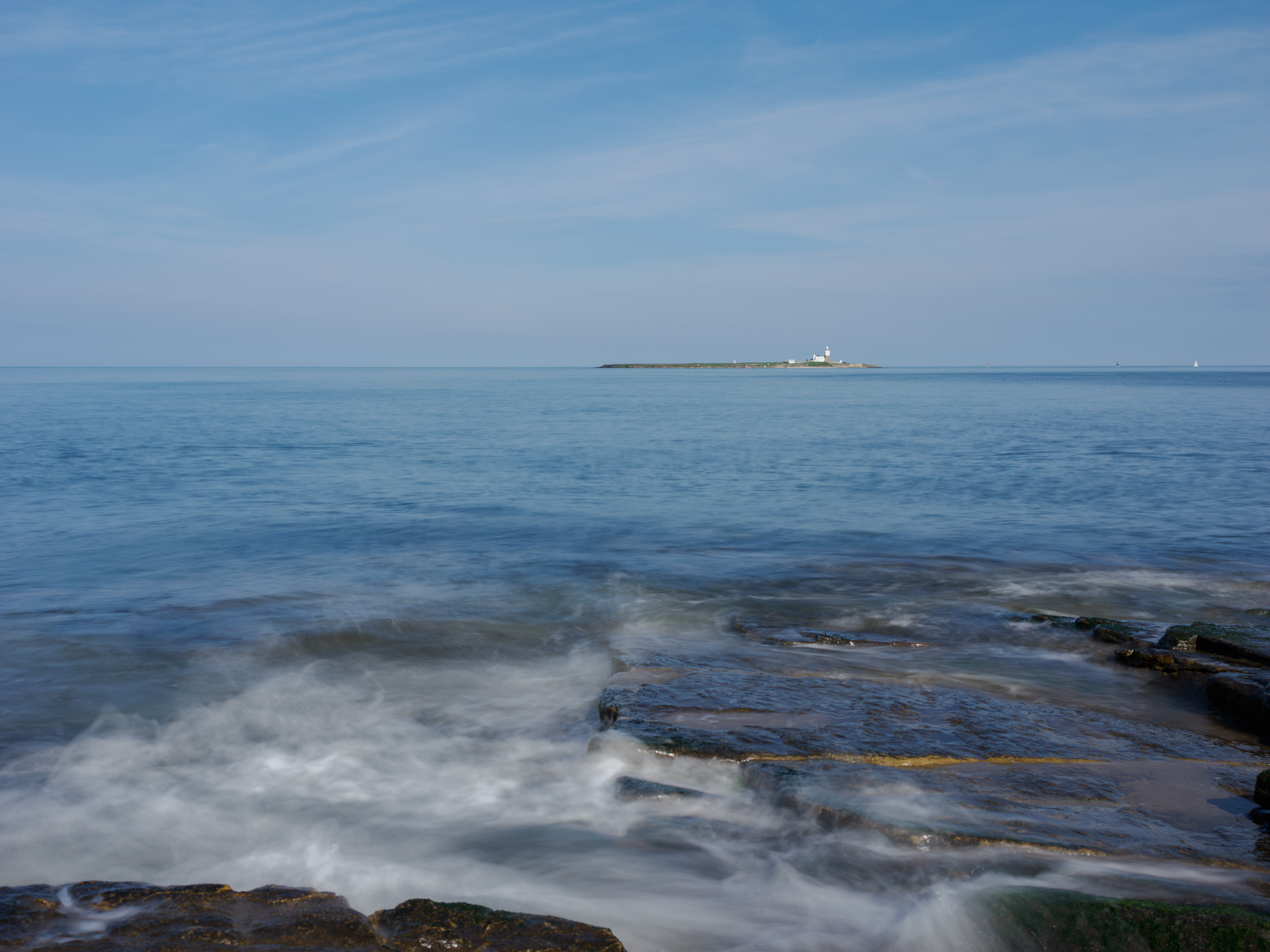
As you can see from the photos throughout this article, I decided to show in a series of shots the difference that changes in shutter speed would make to photographs of the same scene.
Equipment
I am a great believer in only taking the equipment I need with me. Consequently, I rarely carry a camera bag full of gear.
To achieve longer shutter speeds in the bright afternoon light, I needed to combine an ND1000 filter with the camera’s LiveND feature, which digitally adds an additional 7 exposure-value steps of neutral density. Otherwise, the light intensity would limit my longest exposures to about ⅓ second; I wanted to shoot 60-second exposures.
So, for this experiment, I put my Urth ND Plus+ magnetic filters in my pockets. Then I fitted my 12-40mm f/2.8 PRO lens to my OM-1 Mark II and attached it to my Benro Tortoise tripod.
Location
The scene I chose was overlooking the sea towards Coquet Island in the town where I live in Northumberland, North-East England.
I timed it for when the weather was stable, and so the sea state was unlikely to change between shots. The sea was relatively calm because of the offshore breeze. It was as the high tide was turning, so the water’s proximity would not change between shots either.
Waves moved at the same speed. Also, the distant yachts were tacking back and forth on a broad reach, so they moved at a constant rate in the gentle wind, too.
There was one setback. Cumulus clouds drifted overhead, sometimes obscuring the sun. Consequently, whole-stop changes in shutter speed might not correspond to equal changes in aperture, and the light’s color also changes. However, I was not concerned about that. This experiment was solely about the effects of shutter speed.
The Results
As you can see above, in the first few photos, taken from 1/8000 to 1/250 of a second, I could not detect any change. Every shutter speed in that range stopped the motion. However, there was a slight blurring at 1/125 sec. To me, at this speed, the blur looks unintentional and unpleasant. Even doubling the shutter speed by one more stop, to 1/60, and then again to 1/30 sec, the blurring of the splashing water was more pronounced but not enough to be truly effective.
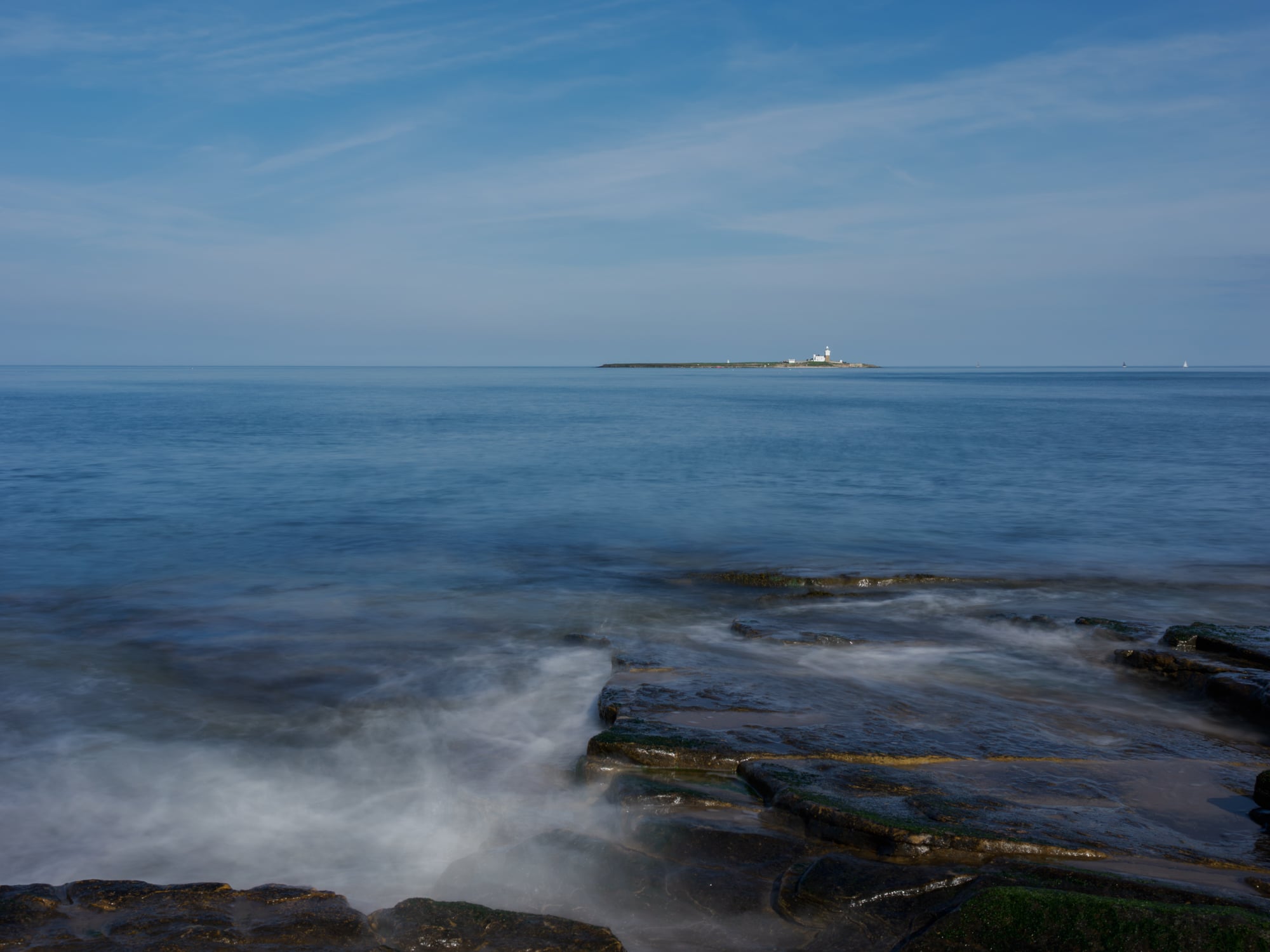
Observe also how the distant speedboat still appears sharp at 1/30s.
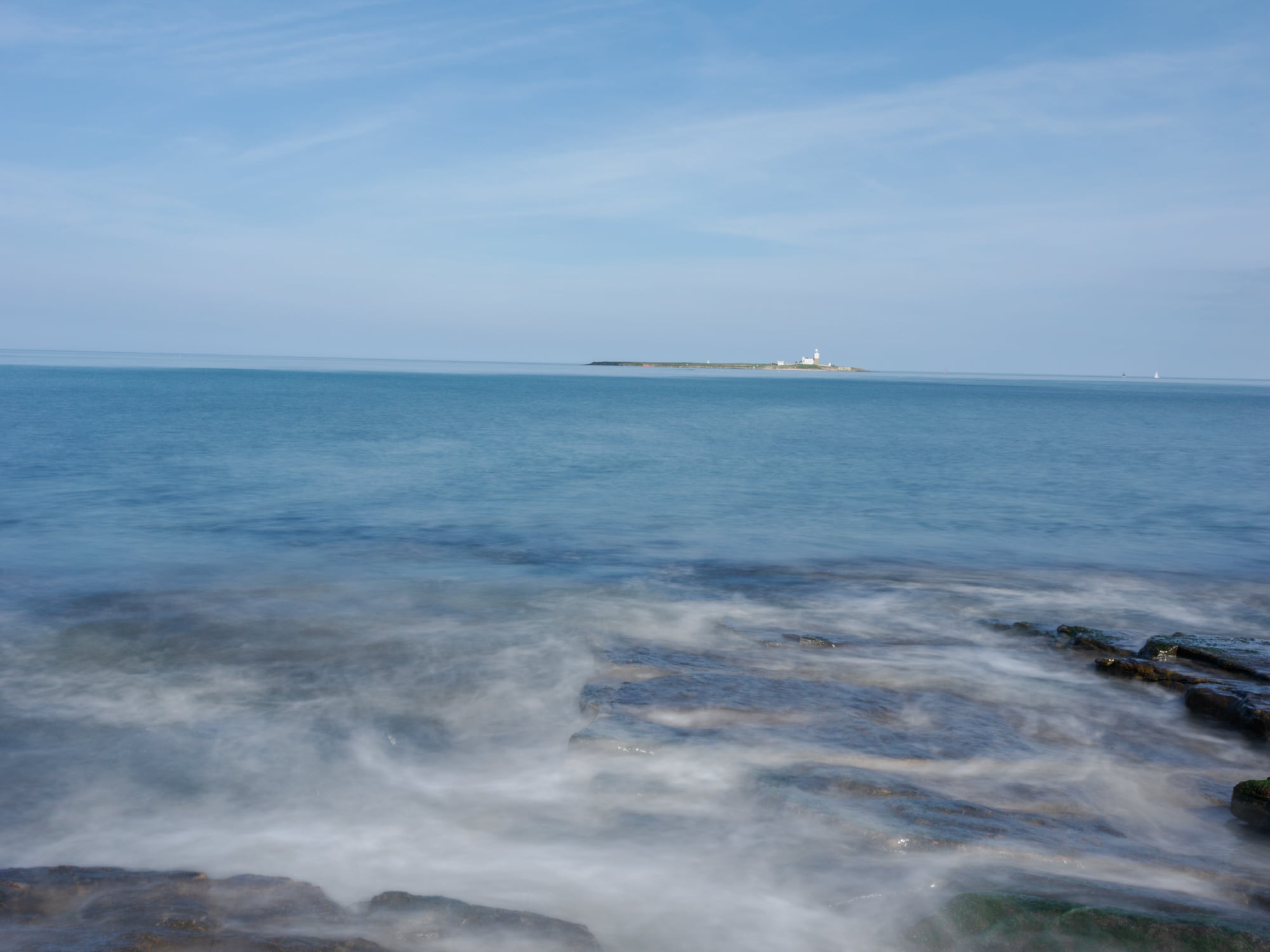
At the four stops between 1/15 and 1/2 second, the pictures are more interesting. The movement blur of the splashes is quite pronounced, reminiscent of exploding fireworks.
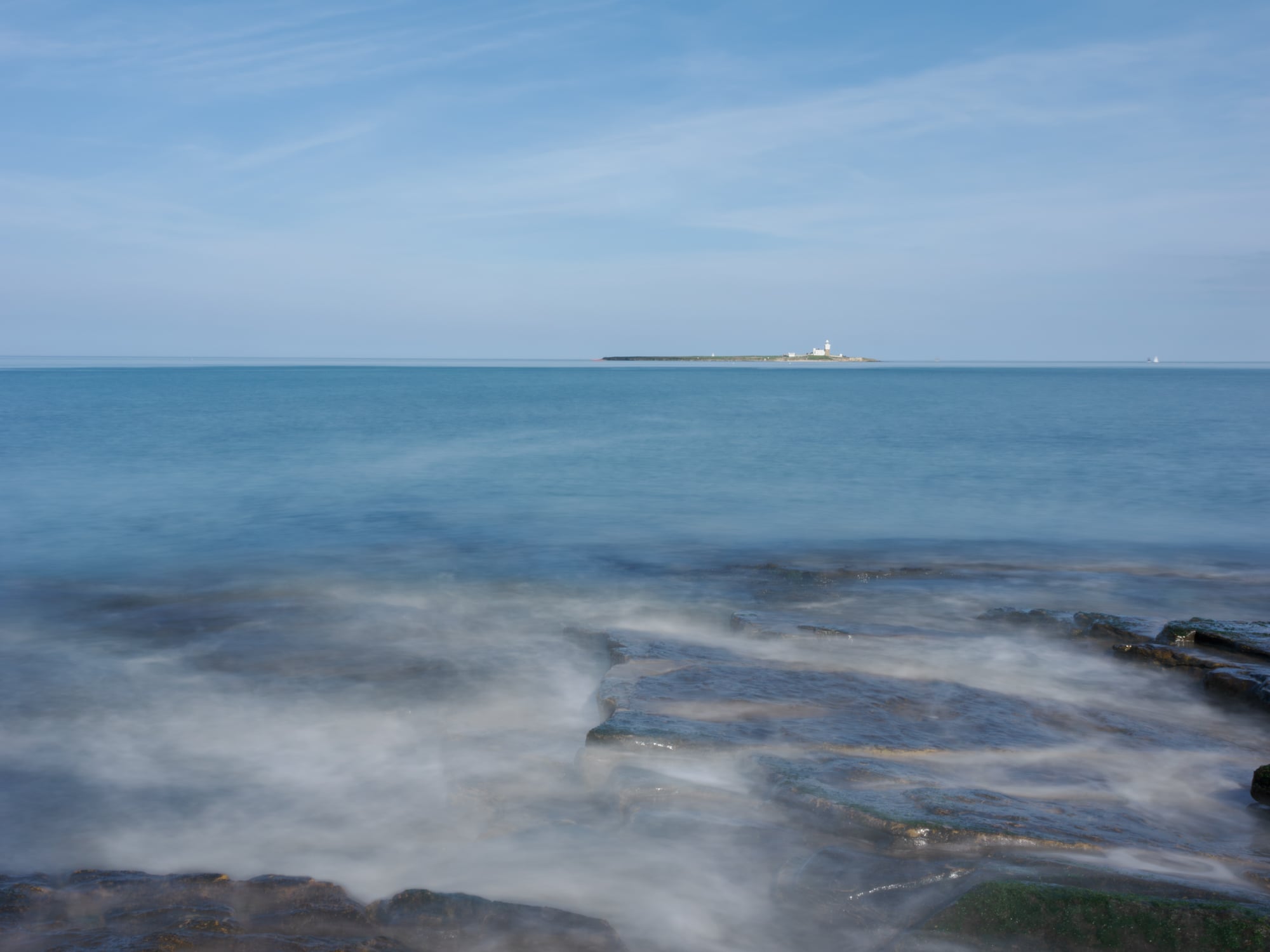
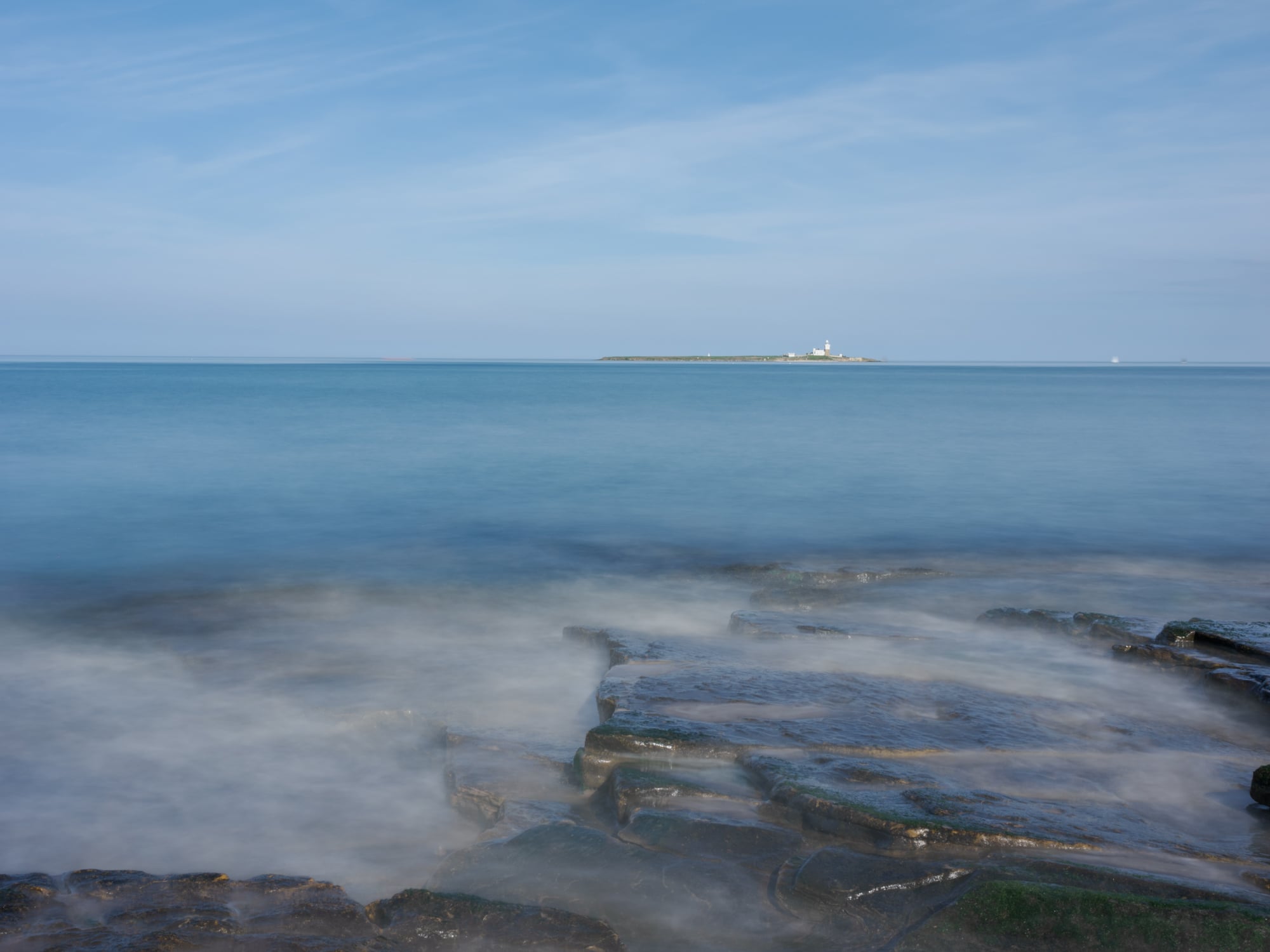
After that, from 1 second onwards, the rapid movement of the splashes became increasingly blurred, until they were invisible, and the swirling water in the foreground became milky. Step by step, the wavelets on the sea lost definition, so by 30- and 60-second exposures the sea appeared smooth, and even the distant yachts showed motion blur.
Conclusion from the Experiment
Clearly, there is no single best shutter speed for every situation. The shutter speed governs the amount of movement blur, but the subject’s speed and proximity to the camera also affect it. It will also vary depending on the lens’s angle of view.
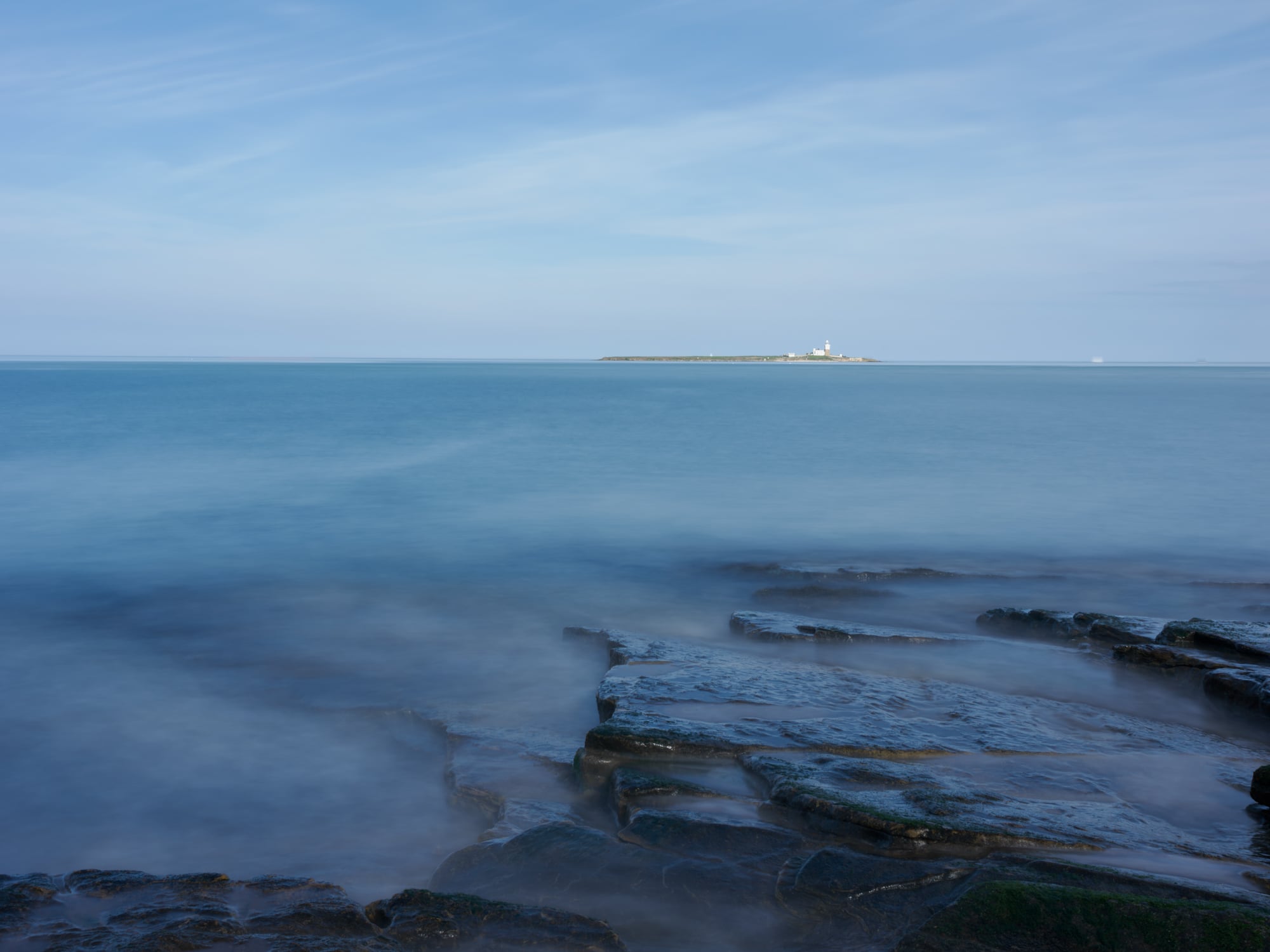
At fast shutters, the dynamic nature of the frames, with their individual splash patterns and wave positions, made each photo unique. The longer the shutter speed, the less variation there was between the frames.
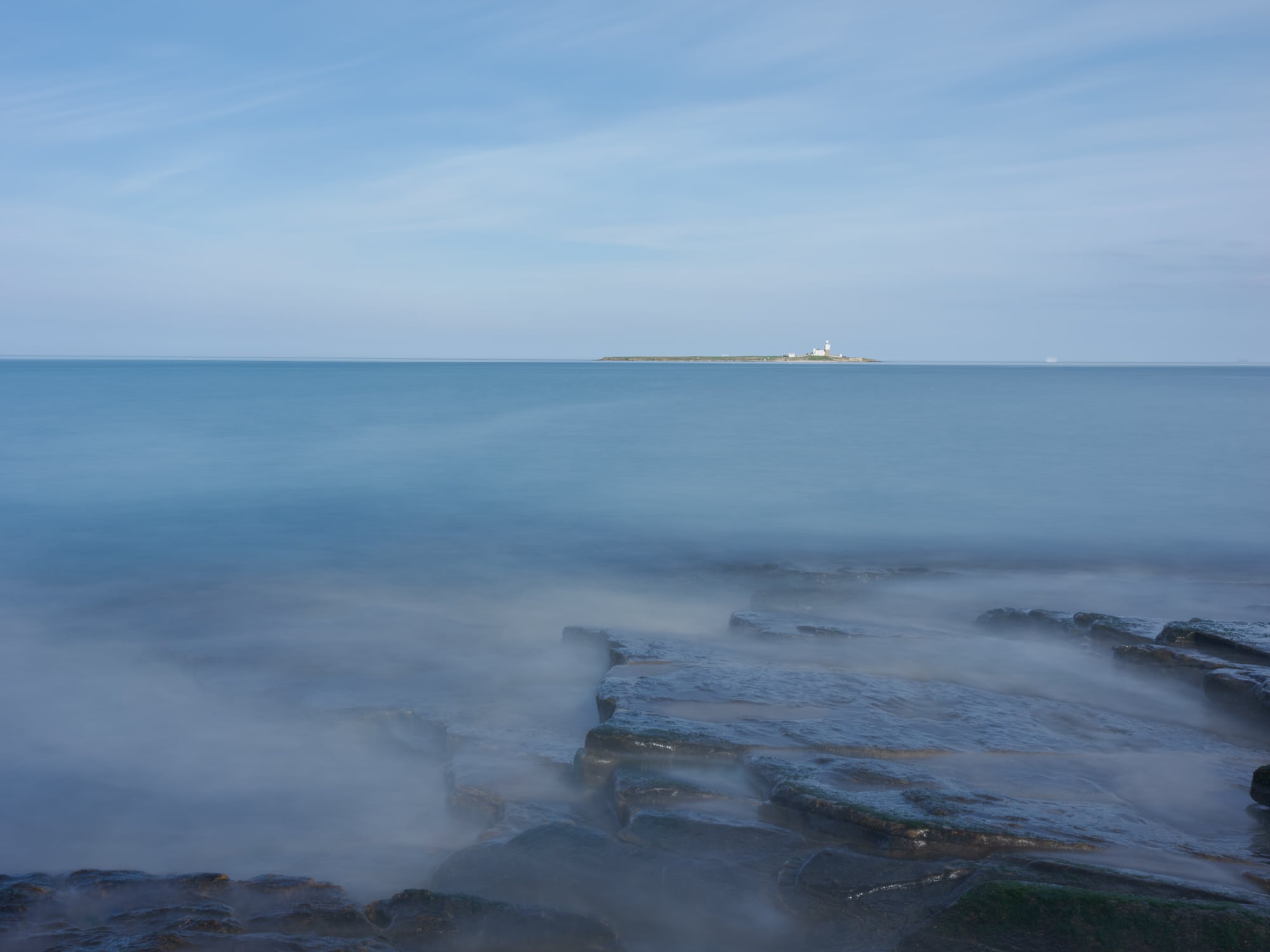
There is no single shutter speed you should use for any given subject. Stopping or showing movement is a subjective choice made by the photographer. Then, it’s your experience that decides the camera’s settings.
Affiliate Disclosure PetaPixel articles may include affiliate links; we may earn a commission if you buy through one.