$399 Dwarf Mini Is ‘the World’s Smallest Smart Telescope’
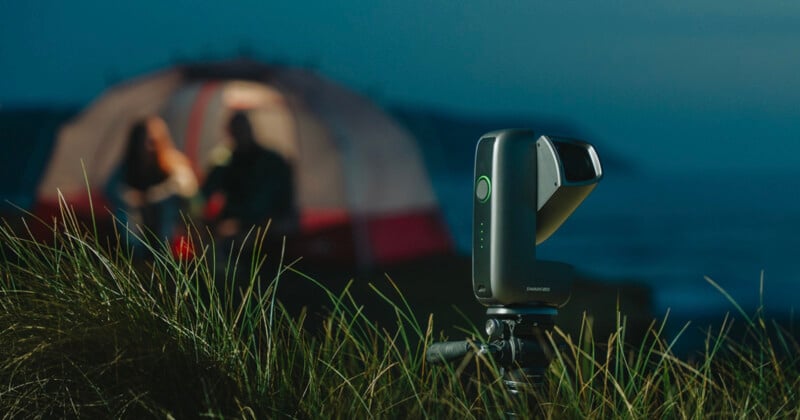
DwarfLab has introduced the Dwarf mini smart telescope, a compact astrophotography device designed to make stargazing and deep-sky imaging more accessible through automation, portability, and app-driven control.
Positioned as a pocket-sized observatory, the Dwarf mini combines dual-lens imaging, automated tracking, and built-in astrophotography processing tools within a compact 1.9 pounds (840 grams) body. Priced at $399, the device sits below the company’s larger Dwarf 3 model and is aimed at users seeking a lightweight entry into smart telescope imaging.
A Portable Smart Telescope for Everyday Stargazing
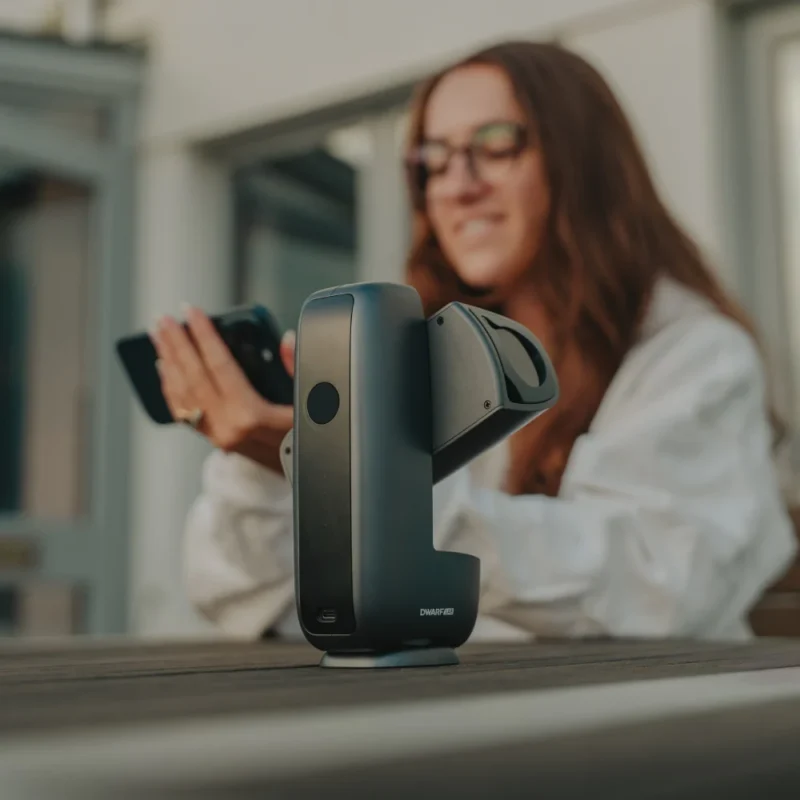
Weighing 1.9 pounds (840 grams), the Dwarf mini is designed for portability, making it suitable for backyard observation, travel, and outdoor use. Despite its compact size, it integrates a dual-lens system with telephoto and wide-angle views, enabling both close-up celestial tracking and broader sky imaging. The telephoto system offers an equivalent focal length of 1,016mm, while the wide-angle lens provides a 45mm equivalent, allowing users to switch between detailed and expansive perspectives of the night sky.
Automated Astronomy and One-Touch Operation
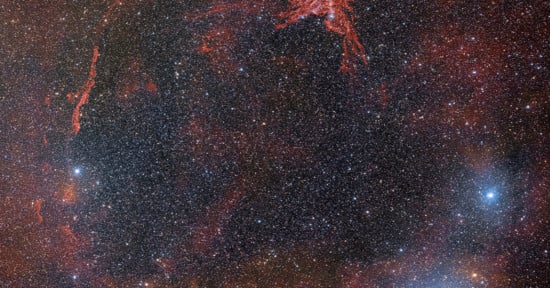
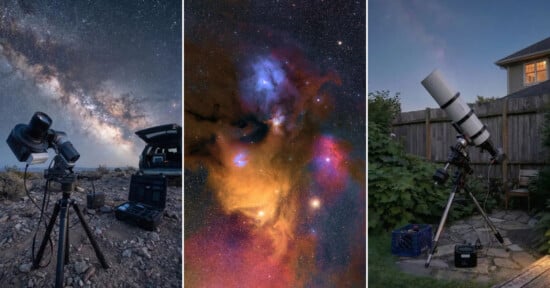
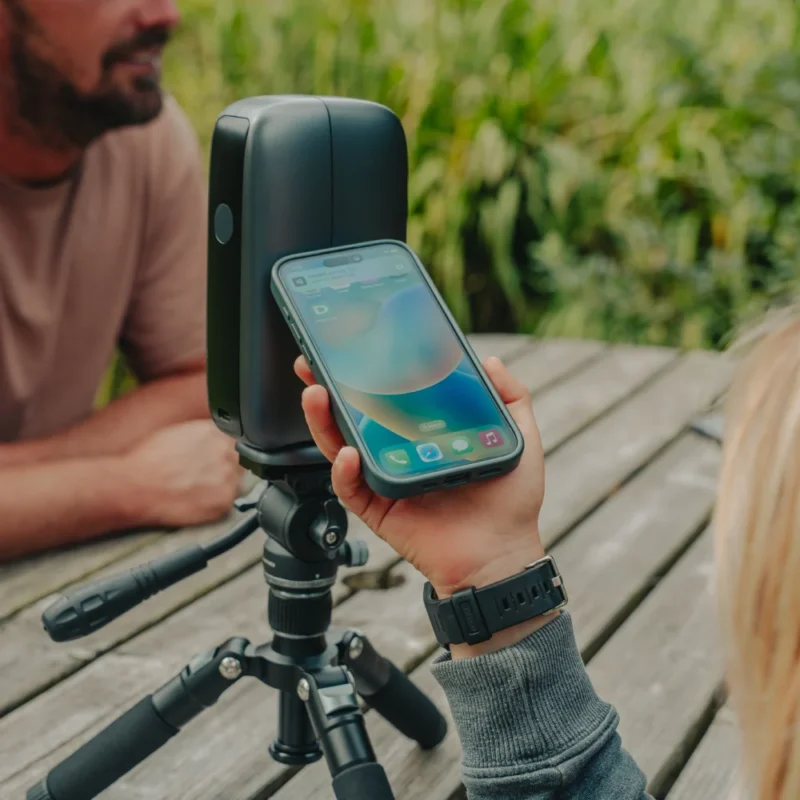
A central feature of the Dwarf mini is its emphasis on automation. Autofocus, calibration, and tracking are handled automatically, reducing the need for manual alignment or telescope setup. Users can select celestial targets, such as the Sun or Moon, via a dedicated Solar System mode, with the device automatically locating and tracking the object. The system also supports Milky Way imaging workflows, including automated stacking and tracking designed to simplify long-exposure astrophotography.
Exposure capabilities range up to 90 seconds in telephoto mode and 30 seconds in wide-angle mode, enabling deeper-sky capture without external equipment.

Astrophotography Tools and Built-In Processing
The Dwarf mini integrates multiple astrophotography tools directly into its ecosystem. Built-in filters such as Astro, Dark, and Duo-Band support different imaging conditions, while features like EQ mode, Astro Mosaic, and Mega Stack expand compositional flexibility.
Post-processing is handled through the companion DwarfLab app, which includes a suite of editing tools under what the company calls “Stellar Studio.” These tools offer star correction, noise reduction, curve adjustments, and watermarking, allowing users to process images without requiring desktop software.
For more advanced workflows, RAW export is supported for external editing in applications such as Photoshop or PixInsight.

AI-Assisted Imaging and Scheduling Features
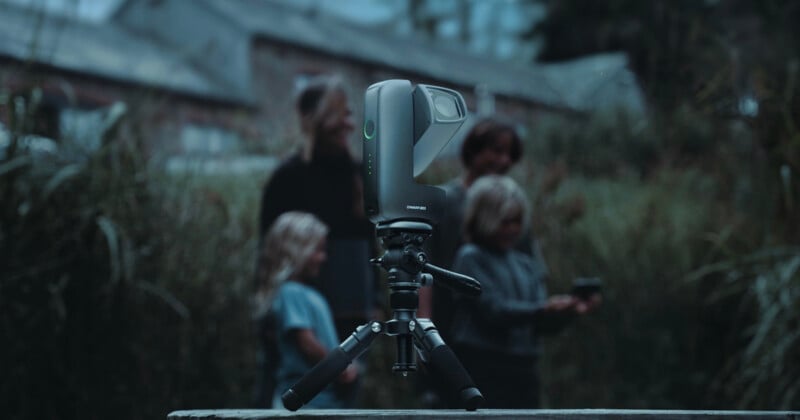
The system also includes automation features designed for extended or unattended capture sessions. Users can schedule shooting sequences, allowing the telescope to operate during optimal conditions without manual intervention.
Additional features include frame selection tools for stacking optimization and multi-night capture support, where exposures from different sessions can be combined into a single final image.
According to DwarfLab, this approach is intended to make deep-sky imaging more accessible, particularly for users without traditional astrophotography setups.
Specs and Comparison: Dwarf mini vs Dwarf 3
While the Dwarf mini is positioned as a lightweight, more accessible entry point into smart telescope imaging, the Dwarf 3 is the higher-end model in DwarfLab’s lineup, offering increased processing power, improved imaging performance, and expanded hardware capacity. While both devices share core smart telescope functionality, the mini is positioned as a more compact and affordable alternative, with reduced weight, storage, and sensor specifications.
The Dwarf mini is priced from $399, while the Dwarf 3 starts at $549. In terms of physical design, the mini is significantly more compact at 1.9 pounds (840 grams), compared to the Dwarf 3’s larger three-pound (1,350-gram) body, making the mini the more portable option for travel and casual use.
Optically, both devices share similar focal length configurations, with 150mm telephoto and 6.7mm wide-angle lenses. However, the Dwarf 3 features a slightly larger 35mm telephoto aperture compared to the 30mm aperture on the mini, which contributes to improved light-gathering capability in more demanding conditions.
Sensor differences are more pronounced. The Dwarf mini uses a Sony IMX662 sensor for the telephoto system and an OmniVision OS02K10 for the wide-angle camera. The Dwarf 3 upgrades this setup with a Sony IMX678 telephoto sensor and a Sony IMX307 wide-angle sensor, enabling higher-resolution capture and improved low-light performance.
In terms of image output, the Dwarf mini is limited to a maximum resolution of 1,920 × 1,080 across both lenses, while the Dwarf 3 supports up to 4K resolution (3,840 × 2,160) on the telephoto system, with Full HD wide-angle output.
The two models also differ in equivalent focal length performance. The Dwarf mini delivers a 1,016mm telephoto equivalent, while the Dwarf 3 offers a shorter 737mm equivalent, alongside a shared 45mm wide-angle equivalent. This gives the mini a slightly tighter reach for distant subjects.
Storage and battery capacity also vary between the two models. The Dwarf mini includes 64GB of internal storage and a 7,000 mAh battery, while the Dwarf 3 doubles storage to 128GB and increases battery capacity to a 10,000 mAh battery for longer sessions.
Processing power is another key distinction. The Dwarf mini operates with a 1 TOPS NPU, while the Dwarf 3 significantly increases computational capability with a 5 TOPS NPU, enabling more advanced onboard processing and AI-assisted imaging tasks.
Exposure performance is broadly similar, with both models supporting long-exposure astrophotography in EQ mode, although the Dwarf mini allows up to 90 seconds across both lenses, while the Dwarf 3 offers 60 seconds on telephoto and 90 seconds on wide-angle. They can both stack multiple exposures, of course.
Despite these differences, both models share core features including automated tracking, NFC one-touch connection, astronomy post-processing tools, scheduled shooting, and Astro Mosaic functionality. The Dwarf 3, however, includes expanded variations of these workflows along with slightly broader mechanical rotation ranges.
Expanding Use Cases in Astrophotography
Beyond basic stargazing, the Dwarf mini supports a range of astrophotography subjects, including lunar and solar eclipses, ISS transits, and wide-field mosaic imaging. DwarfLab also highlights multi-user collaboration features, allowing shared imaging projects and combined deep-sky captures.
Gamified achievement systems, such as “Nebula Hunter” and “Milky Way Catcher,” further extend engagement through milestone-based progression.
Pricing and Availability
Priced at $399, the Dwarf mini joins DwarfLab’s product lineup alongside the higher-end $549 Dwarf 3 model.
Image creditsDwarfLab
Affiliate Disclosure PetaPixel articles may include affiliate links; we may earn a commission if you buy through one.