When Is a 100-Year-Old Lens Better Than Modern Glass?
Photographer, YouTube creator, and enthusiast of weird lenses, Mathieu Stern, adapted a century-old photographic lens for modern digital cinema in his newest video. The experiment pairs vintage glass with the Sony FX3 to test whether early optical designs can produce a more “organic” cinematic aesthetic than modern high-performance lenses.
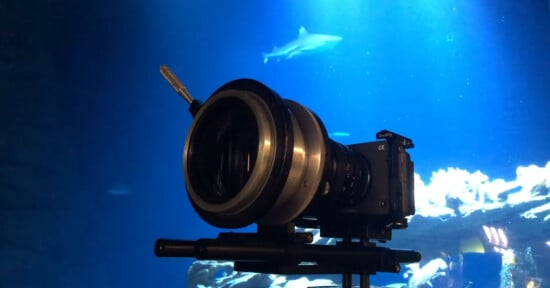
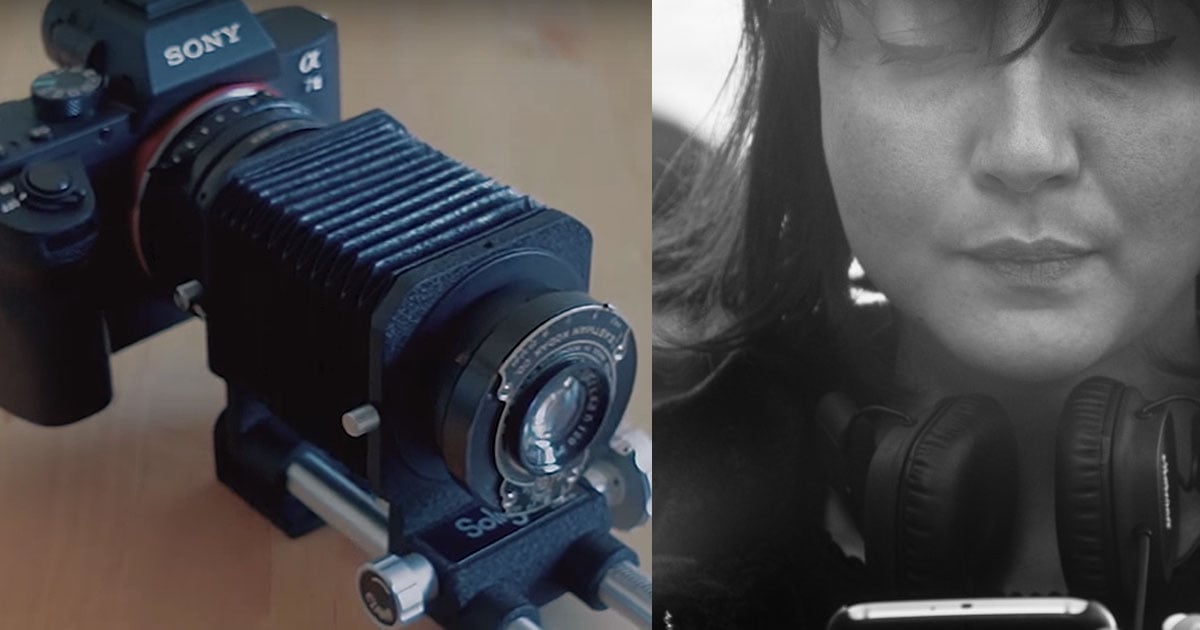
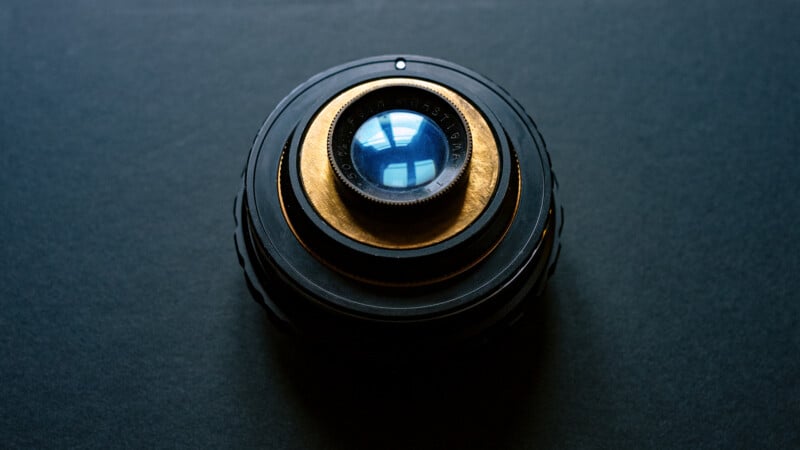
The project centers on a Foth 50mm f/2.5 lens dating back to the late 1920s, originally designed for compact folding cameras. Stern adapted the lens for digital use through a combination of macro adapters and filtration systems, allowing it to function on a modern full-frame sensor. What makes the experiment particularly interesting is not just the age of the optics, but how deliberately minimal the original design was compared to today’s highly corrected cinema lenses. That contrast becomes the foundation of the entire test, as Stern pushes a fragile, early optical system into a demanding 4K workflow.
A Flea Market Discovery With Cinematic Potential
Stern traced the project back to an unexpected discovery at a French flea market, where he came across the vintage optic for just €3, still housed in a small container and separated from its original camera system. Its age and condition immediately raised questions about whether it could still produce usable images.
“I adapted a 100-year-old vintage lens to my Sony FX3 , can it produce a more ‘organic’ cinematic look than modern Canon or Sony G Master lenses?” Stern mused.
Engineering a Functional Imaging System
Unlike modern lenses, the Foth 50mm f/2.5 was never designed to operate independently of a complete camera system. It lacks both a focusing mechanism and an adjustable aperture, requiring Stern to build an external solution before it could be used.
“This lens has no aperture and no focusing mechanism. So I need to find a way to adapt it,” Stern says.
Early attempts involved adding an aperture behind the lens and mounting it to an adapter system. While this allowed focusing, it introduced significant optical issues.
“I tried adding an aperture behind the lens and screwing it onto an elcoid adapter. The focus worked, but the tiny size of the lens combined with the placement of the aperture created massive vignetting.”
The engineering challenge was not simply mechanical compatibility, but maintaining the integrity of the image circle while controlling exposure. Because the lens was never intended to be separated from its original camera body, every modification introduced tradeoffs between usability and image quality. Stern ultimately refined the setup using a macro adapter system with integrated ND filtration, enabling him to control exposure without compromising frame coverage.
Modern Sensor, Vintage Character
Once adapted, the lens was tested on the Sony FX3 to evaluate how a nearly 100-year-old optical design performs under modern 4K capture requirements.
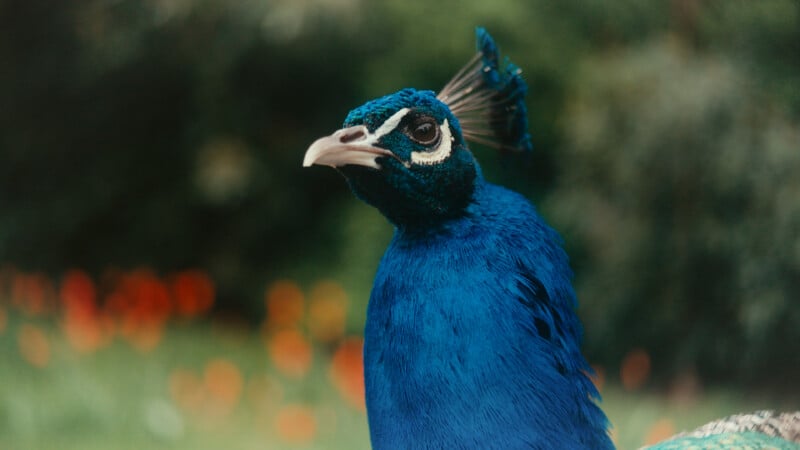
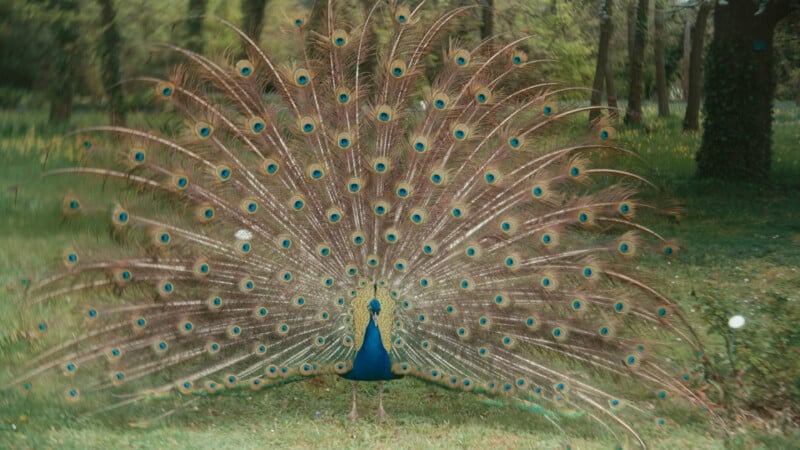
The results revealed a distinctive rendering style that differs significantly from contemporary cinema glass. Stern noted the separation between center and edge performance as one of the lens’s defining traits.
“This is perhaps the most surprising thing about this century old lens. The center of the frame is incredibly sharp, while the edges gently fall into a blur,” Stern says.
Beyond sharpness falloff, the lens also introduces a softer handling of contrast and highlight roll-off, shaped by its uncoated internal elements and early optical construction. Instead of clinical consistency across the frame, the image leans toward unpredictability, with subtle shifts in clarity and glow depending on composition and lighting direction.

Close Focus and Low-Light Behavior
Despite its limitations, the adapted lens proved surprisingly flexible in close-range use, with a minimum focusing distance of roughly 7.9 to 11.8 inches (20 to 30 centimeters) depending on configuration.
That close-focusing capability becomes especially useful for testing the lens’s character at different scales, where texture, skin detail, and foreground separation take on a more exaggerated, almost macro-like quality. It allows the vintage optic to be pushed into creative territory far beyond its original design intentions.
Originally designed as a fast portrait lens for its era, it also retains usable low-light performance when paired with modern digital sensors.
“Since this was a very fast lens in the 1920s, it get great results in low light once the ND filter is removed,” Stern explains.
This combination of historical speed and modern sensor sensitivity creates a hybrid look that blends archival optical behavior with contemporary imaging flexibility.
Why Vintage Optics Still Matter
For Mathieu Stern, the project is less about technical perfection and more about rediscovering the aesthetic qualities of older optical systems.
He describes the overall rendering as distinctly nostalgic, shaped by imperfections that modern lenses are often designed to eliminate.
“This naturally baked-in effect give the lens a deeply nostalgic feel,” Stern says.
Reflecting on the broader experience, he frames the experiment as a form of visual time travel, where historical tools continue to influence modern creative expression. The lens becomes more than a piece of equipment; it acts as a bridge between eras of image-making, where imperfection is not a flaw but part of the visual language itself.
“The world has changed in incredible ways over the last 100 years. Yet so much remains exactly the same.”
Image credits: Mathieu Stern