Photographer’s Cinematic Toy Worlds Bring Plastic to Life
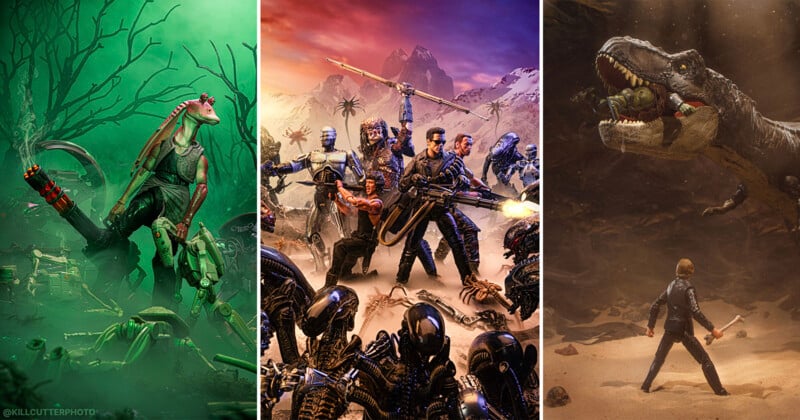
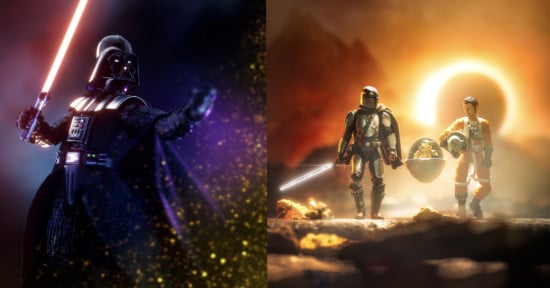
Chicago-based photographer Chuck Eiler transforms action figures into cinematic, story-driven miniature worlds that blur the line between toy photography and film. Through meticulously crafted sets, practical effects, and careful lighting, he creates immersive scenes that bring nostalgia and storytelling to life.
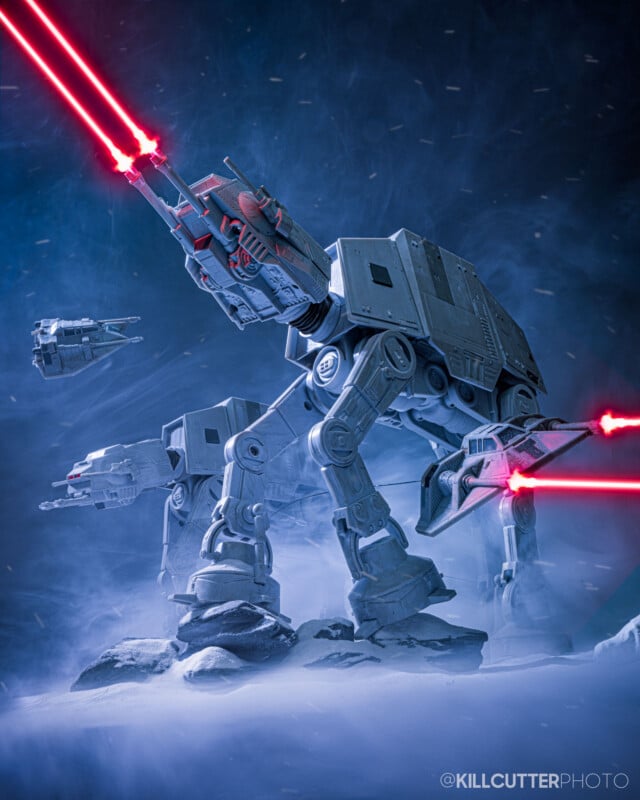

From Casual Hobby to Creative Obsession
For Chuck Eiler, photography was something he loved from an early age, though it began as more of a casual pastime than a professional pursuit. He first explored the medium in high school and college, taking film photography classes and learning the fundamentals the traditional way. After school, photography remained a part of his life, whether wandering around Chicago, capturing architecture and street scenes, or bringing his camera along on trips to photograph landscapes and wildlife. It was always enjoyable, but Eiler says it wasn’t until recently that his work took a new direction.
“I had a creative spark: what if I photographed toys in a cinematic way, to look like realistic characters,” Eiler says.
This idea came while watching his nephew play with his favorite action figure, and it merged several of Eiler’s interests: photography, Photoshop, movies, and pop culture. Initially, he thought it was entirely original, but he soon discovered that toy photography was already a vast, passionate community of artists. Far from discouraging him, this realization deepened his commitment. What started as a weekend experiment evolved into a fully-fledged creative outlet, encompassing storytelling, set-building, prop-making, lighting, and post-production. Today, this work forms the foundation of Killcutter Toy Photography, a brand known for cinematic, story-driven miniature scenes.
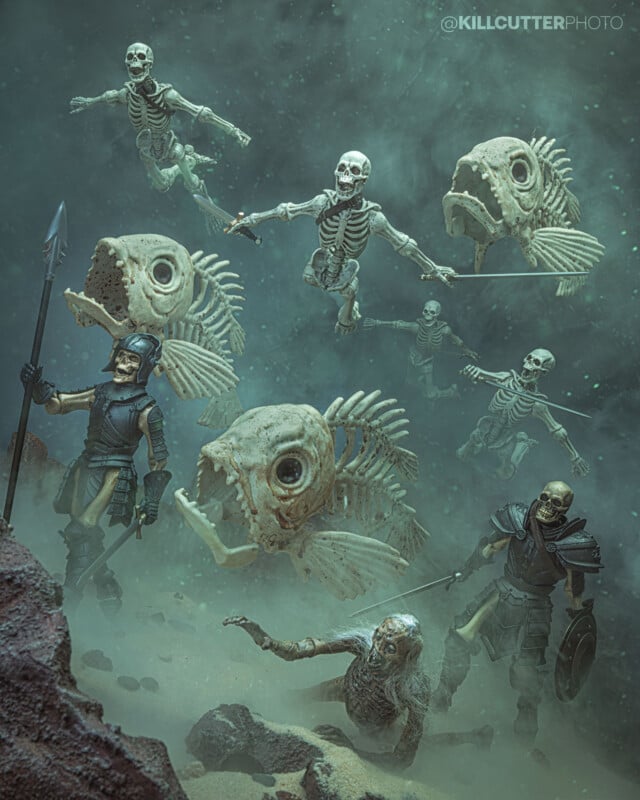
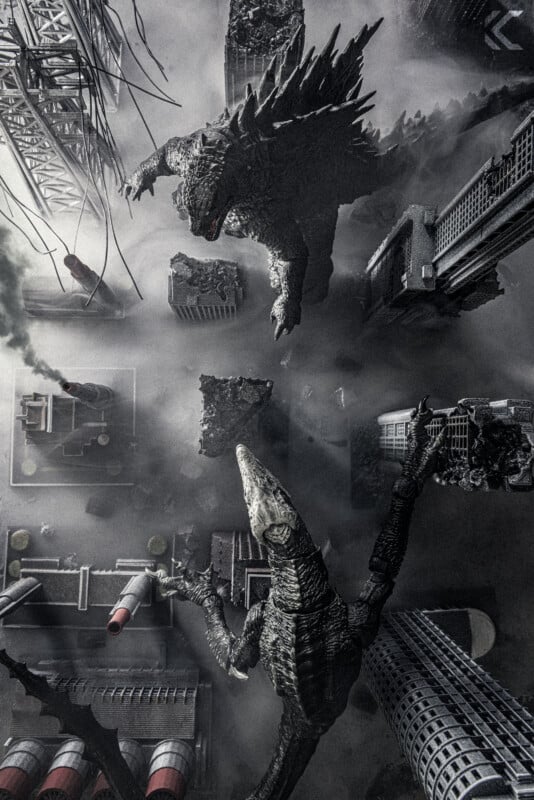
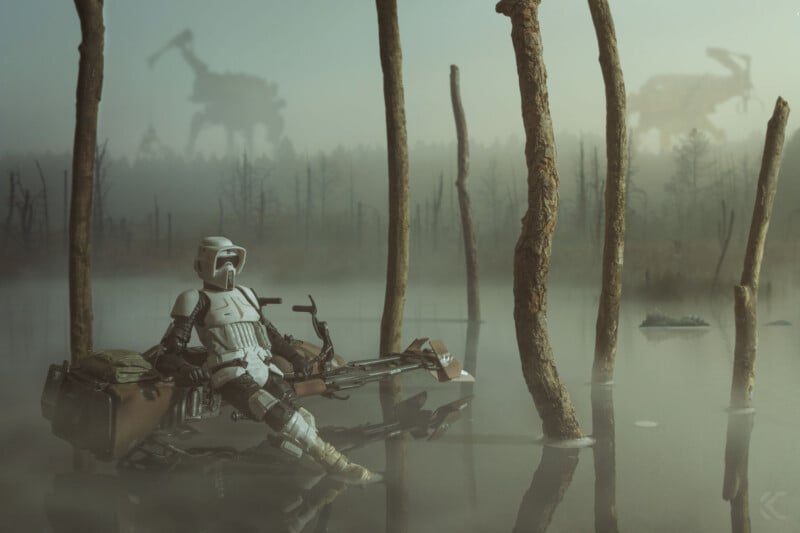
A Cinematic Style Shaped by Childhood
Eiler’s photography is cinematic at its core, drawing inspiration from the films, comics, and toys that shaped his formative years. As a child of the 1980s, he grew up watching Saturday morning cartoons, playing with G.I. Joe, He-Man, and Star Wars action figures, and devouring comic books. As he matured, his influences expanded to include Stephen King novels and, when he could sneak them in, R-rated horror classics like Alien, The Thing, and Predator. These early experiences have profoundly informed his creative vision.
“My style is cinematic, story-driven, and heavily inspired by film and television,” Eiler explains.
He emphasizes that his work is not about replicating the past, but reinterpreting it. His photographs take familiar characters and place them in grounded, dramatic contexts, often through a darker lens. Story, mood, and atmosphere dominate the creative process, and nostalgia becomes a tool for deeper engagement rather than the end goal itself. Eiler draws on inspiration from a wide range of artistic disciplines, including comic book artists, traditional painters, video game and movie concept artists, CGI specialists, and photographers across genres. Each image is the result of blending these influences with his own vision for the story he wants to tell.
Eiler approaches every photograph with storytelling at the forefront. He does not “wing it,” preferring to develop a clear concept before committing to a shoot.
“All of my photographs start with story first. If I haven’t locked down a strong storytelling idea, I don’t even start the process,” Eiler says.
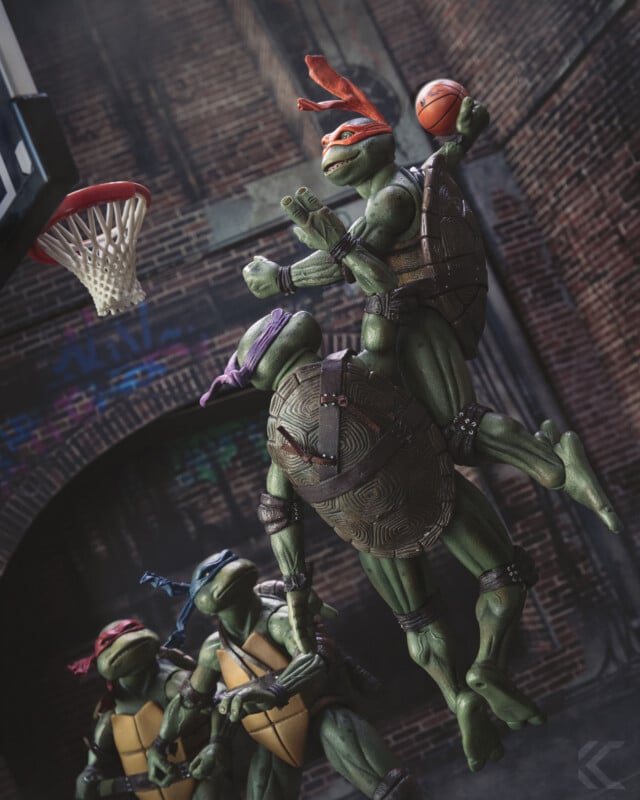
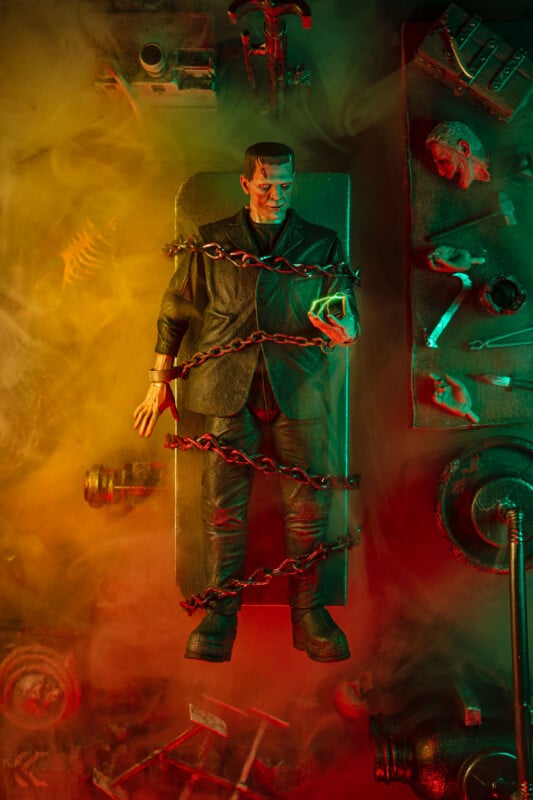
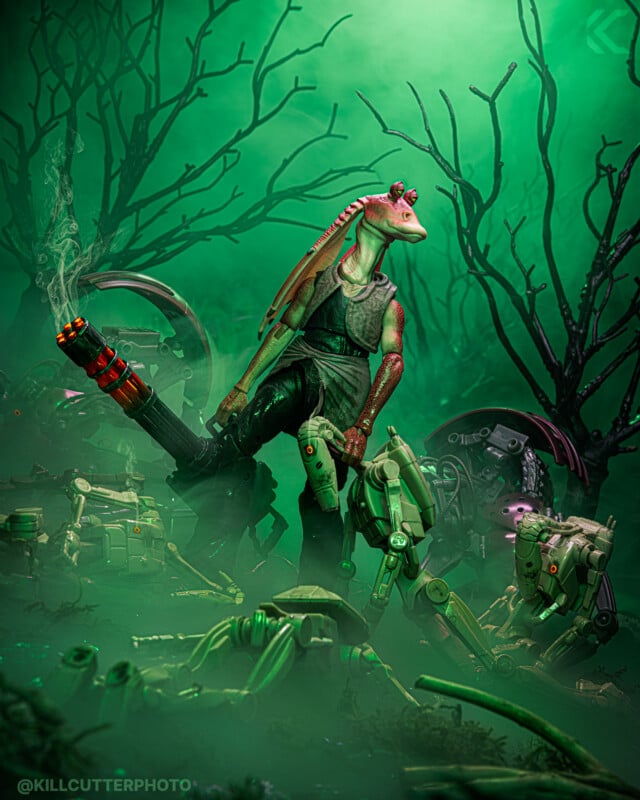
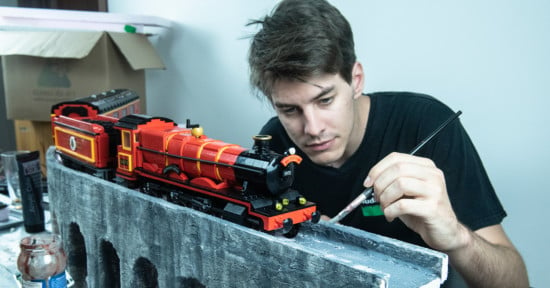
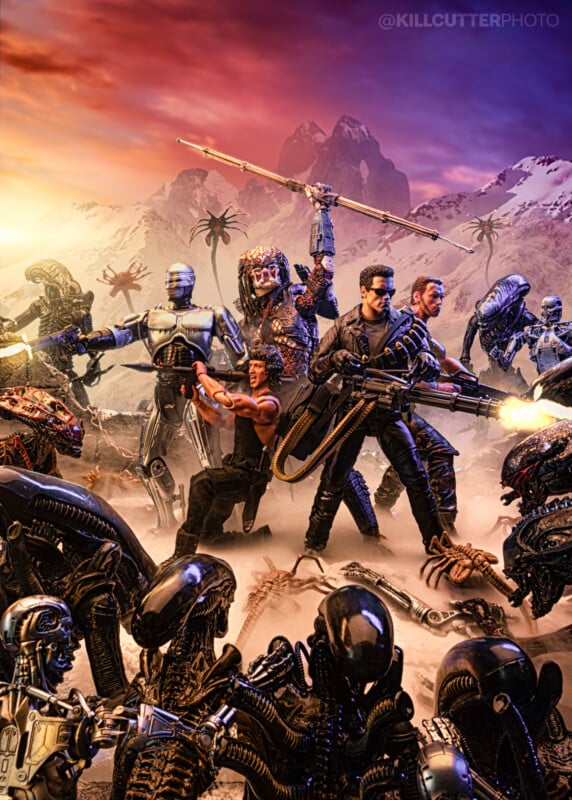
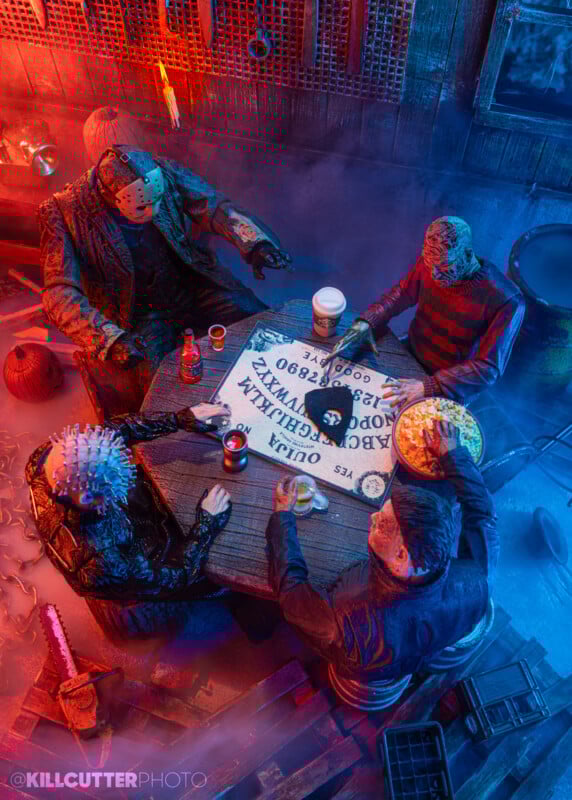
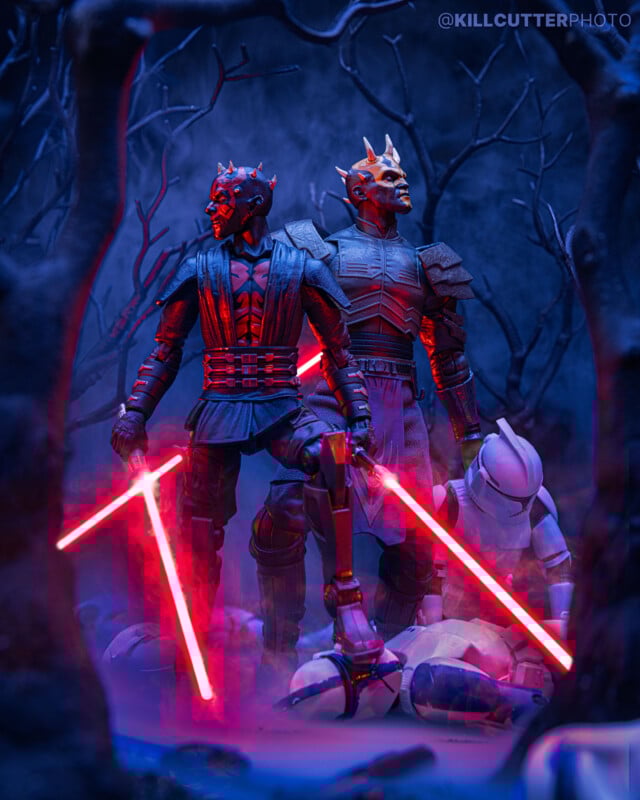
Once a concept is set, he builds miniature environments using foam, paint, and found materials, carefully adding texture and weathering to make them feel lived-in. Props are often scratch-built to fit the scale and narrative, and posing the figures is a meticulous process where even minor adjustments can dramatically affect emotion and mood.
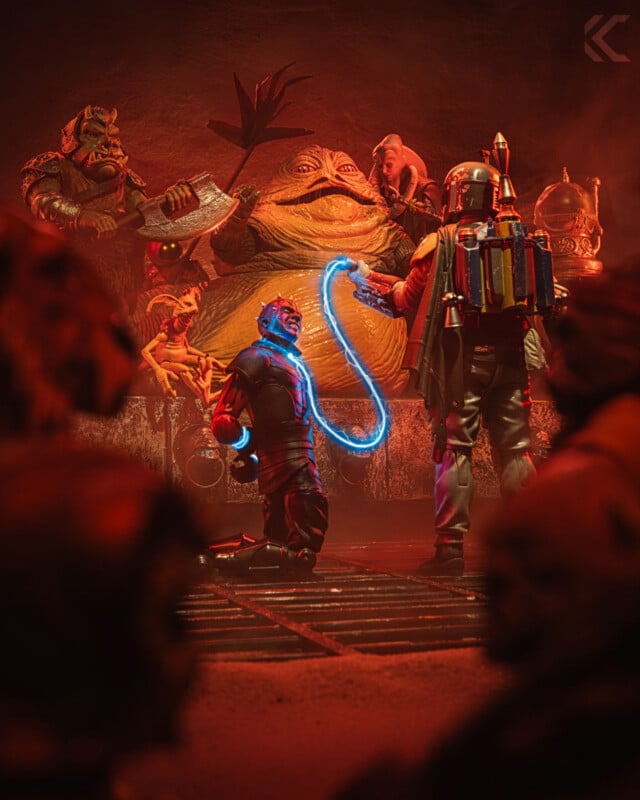
“I approach each setup like a full-scale mini movie scene and lighting is one of, if not the most, important part,” Eiler explains.
Lighting and practical effects play a major role in creating realism and cinematic drama. Smoke, water, snow, and fire are often captured in-camera, enhancing the sense of immersion. At the same time, post-production is used for color correction, refining lighting, and adding effects that cannot be achieved practically, such as lightsabers, blaster shots, or sky replacements. Each element, from figure to backdrop to lighting, is carefully orchestrated to support the story and bring the scene to life.
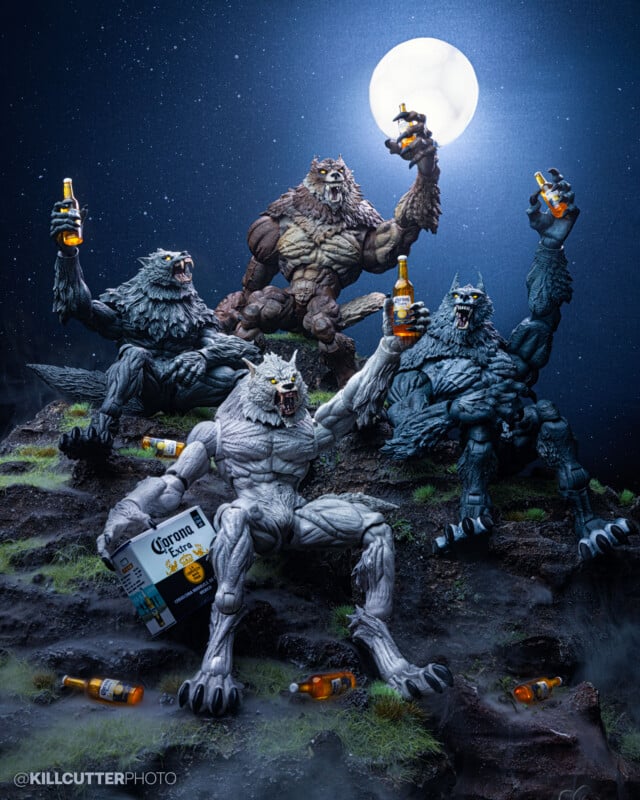
Navigating the Challenges of Miniature Work
Working at a miniature scale comes with unique obstacles. The tiniest details, from millimeters of positioning to stray cat hairs, can break the illusion and distract from the narrative. Eiler emphasizes the need for patience, careful planning, and a willingness to iterate constantly.
“Everything is small, fragile, and ready to topple over with the slightest bump of the table,” Eiler says.
Lighting also presents its own challenges, as shadows and highlights are exaggerated on miniature subjects, and a scene can easily feel overly artificial. Eiler embraces these hurdles as opportunities to refine his skills and approach, using trial and error as a core part of his process.
“I try to embrace trial and error and treat every challenge as part of the creative journey,” Eiler explains.
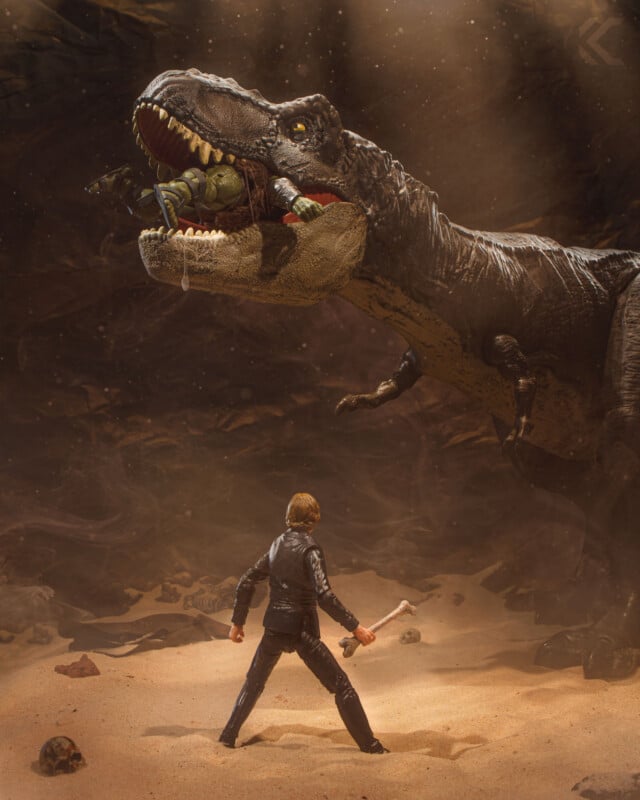
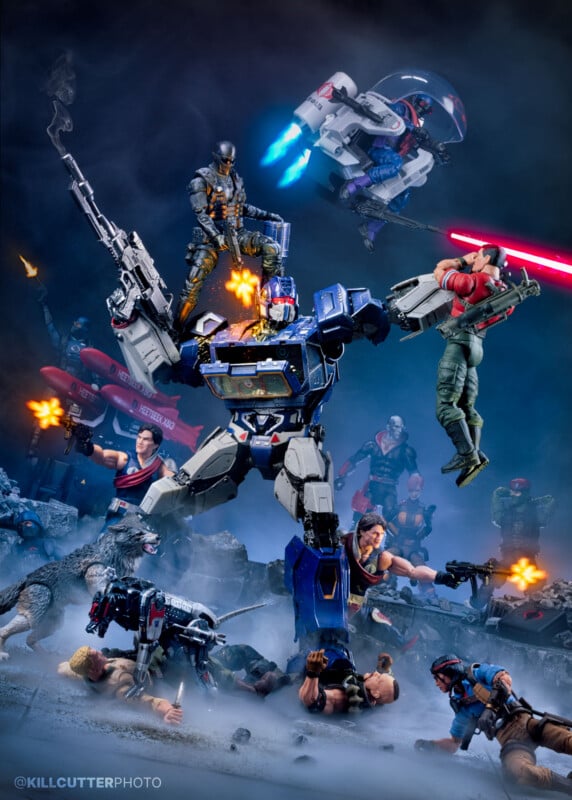
Despite these challenges, the payoff is immense when the illusion holds. Eiler finds particular satisfaction in creating images that evoke genuine emotional engagement and make viewers forget they are looking at toys.
Bringing Ideas to Life
For Eiler, the most rewarding aspect of his work is seeing a concept fully realized, where all the elements of lighting, composition, and atmosphere align to make the scene feel alive.
“The most rewarding part for me is when an image finally feels alive,” Eiler says.
He also values the journey itself, finding fulfillment in building miniature sets, experimenting with practical effects, and refining each shot through post-production. Beyond personal satisfaction, he enjoys sharing his work and seeing others connect with it, whether through technical appreciation, nostalgia, or recognition of the stories his images convey.
“I’m also a big believer in enjoying the journey of creating an image,” Eiler explains.
Looking ahead, Eiler is focused on continuing to push creative boundaries. He is exploring 3D printing, sharpening focus-stacking techniques, and expanding his work in stop-motion animation, all while striving for increasingly ambitious and complex shoots.
“I really just want to keep pushing myself creatively and taking on more ambitious, complex photoshoots,” Eiler says.
What began as a casual hobby has grown into a distinctive visual practice that blends photography, miniature craftsmanship, and storytelling. Eiler continues to expand the boundaries of what toy photography can be, crafting cinematic worlds that resonate far beyond their scale.
Image credits: Chuck Eiler (website, Instagram, YouTube, prints)