The Photographer’s Guide to Capturing Wildflower Superblooms

Once-a-decade superblooms are just starting to turn deserts of the American West into a photographer’s dream. For photographers, the challenge of capturing beautiful wildflower blooms is as thrilling as it is fleeting. Finding the right blooms, capturing their scale and variety, and conveying both their delicate details and the sweeping grandeur of the desert is an exciting opportunity. In this guide, I’ll share my approach to making the most of this extraordinary event, from planning and equipment to timing, composition, and even some scientific insight.
What Is a Superbloom and Why This Year Is Special
If you’re new to desert photography, you might be wondering exactly what a superbloom is. At its core, a superbloom happens when unusually heavy rainfall and the right seasonal conditions trigger a massive, almost surreal flowering across arid landscapes. Normally dry deserts suddenly erupt in vivid colors, with wildflowers of stunning number and variety carpeting valleys, washes, and hillsides. For photographers, it’s a chance to capture both intimate floral details and breathtaking panoramas in a way that only happens once every ten years or so.
This year is particularly remarkable. Many areas in California, Nevada, and Arizona haven’t experienced a superbloom like this since 2016, and in some locations, it’s been even longer. A combination of abundant winter and spring rains, along with ongoing snowmelt feeding lower elevations, has created ideal conditions for flowers to flourish. The result is not just more blooms, but a richer, denser, and longer-lasting display than usual. During previous superbloom years, I’ve personally seen fields of desert gold and lupines stretch farther than I could fit into a single frame, with colors that feel almost unreal. If only photographs could convey the fragrance. It is an amazing spectacle to experience.
For photographers, the superbloom offers an exceedingly rare opportunity to tell a story through images impossible to replicate year to year. It’s a chance to experiment across scales, from sweeping panoramas that capture the enormity of the bloom to macro details that reveal delicate petals, textures, and even the insects that inhabit them. Understanding why the superbloom occurs and why this year is exceptional allows photographers to plan shoots more strategically and anticipate where the most dramatic displays will appear.
Gear Essentials for the Desert
When it comes to lenses, I’ve found that versatility is essential for capturing the full range of the superbloom and ensuring variety in your images. I rely on super wide-angle and wide-angle lenses to capture expansive desert vistas, allowing me to show sweeping fields of flowers alongside sand dunes, canyons, and mountain backdrops. For mid-range shots, I often use a standard lens, which balances subject detail with the surrounding environment, capturing clusters of blooms against natural desert features. My macro lens is invaluable for intimate shots of individual flowers, letting me reveal textures, patterns, and subtle details like dew drops or pollen that might otherwise be missed. Using a combination of these lenses lets me document both the grand scale and delicate intricacies of the desert superbloom.
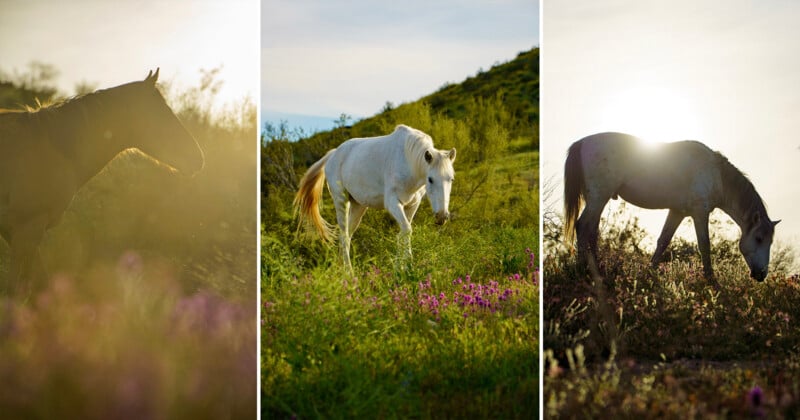
I’ve also learned the value of packing a long lens, even when it’s not the first thing that comes to mind for a superbloom trip. Thankfully, I had mine during previous bloom seasons and have been able to capture hummingbirds, ground squirrels, wild horses, and other wildlife enjoying the flowers, details that added an extra storytelling layer and subject matter to my compositions.
Filters have also become a critical part of my workflow. I rely on a polarizing filter to reduce glare on petals and leaves, intensify colors, and create contrast against the sky, making the flowers pop. Neutral density filters let me experiment with long exposures in bright sunlight, blurring movement in grasses, clouds, or insects. Using the right filters helps me manage the harsh desert light and balance vivid blooms with deep shadows or bright skies, and I often find that a small adjustment can turn a good image into one I’m truly proud of.
Beyond lenses and filters, I make sure to bring a sturdy tripod, an indispensable tool for low-light conditions, long exposures, or HDR shots. I always carry extra batteries and memory cards, because desert conditions and extended shooting sessions can drain resources faster than I anticipate. Lens-cleaning supplies, such as microfiber cloths and air blowers, are another must, keeping sand and dust from compromising image quality. I also pack sun protection, plenty of water, and clothing suited for the desert, because being prepared personally makes it easier to focus on capturing the bloom without distractions.
Where to Go Across the Western Deserts
The superbloom stretches across multiple Western states, creating bursts of color in deserts that are normally muted and barren. In my experience, the most popular and consistently spectacular locations are in California, Nevada, and Arizona. Each state has unique landscapes, floral varieties, and photographic opportunities, and I’ve found that spending time exploring different regions can completely change the kinds of images I bring home. This is the kind of natural phenomenon that is perfect for a big road trip.
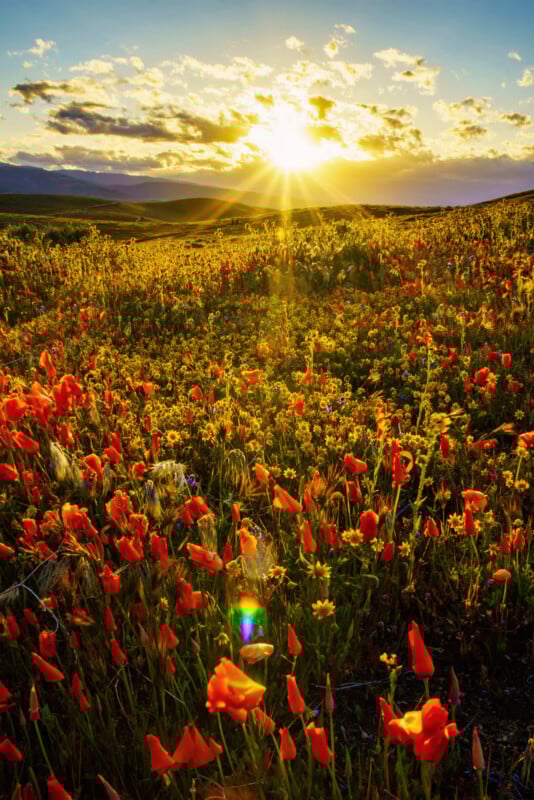
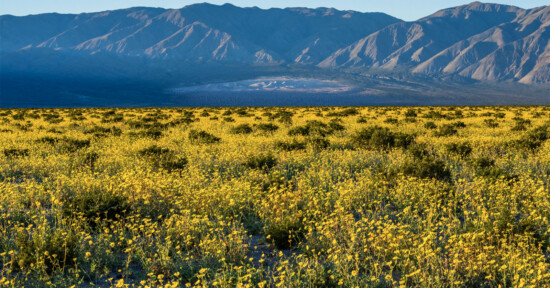
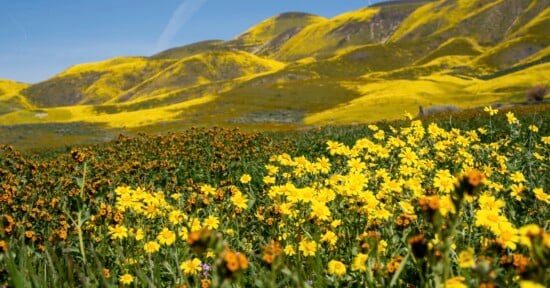
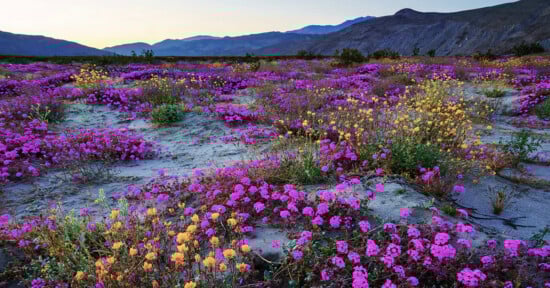
California is the epicenter of the superbloom, and I always make it a priority in my trips. Death Valley National Park, particularly in its southern reaches, offers vibrant blooms at lower elevations, where washes and dunes create natural lines that make composing shots much easier. Anza-Borrego Desert State Park has broad valleys filled with lupines, desert gold, and verbena, forming vivid carpets of color against rugged terrain. I’ve also had success at Carrizo Plain National Monument, where rolling hills and open skies allow for sweeping panoramas that really showcase the scale of the bloom. California’s deserts are so diverse that I can often capture a variety of landscapes in a single day, which keeps my portfolio dynamic.
Nevada has become a favorite for me when I want solitude and more creative angles. While the blooms are generally more localized than in California, I’ve found pockets of color that contrast beautifully with rocky outcrops, washes, and open plains. The state’s more remote areas give me freedom to explore unconventional compositions that might be crowded or impossible in more heavily visited parks. Checking online bloom reports in advance helps me time my visits to catch the most vibrant pockets.
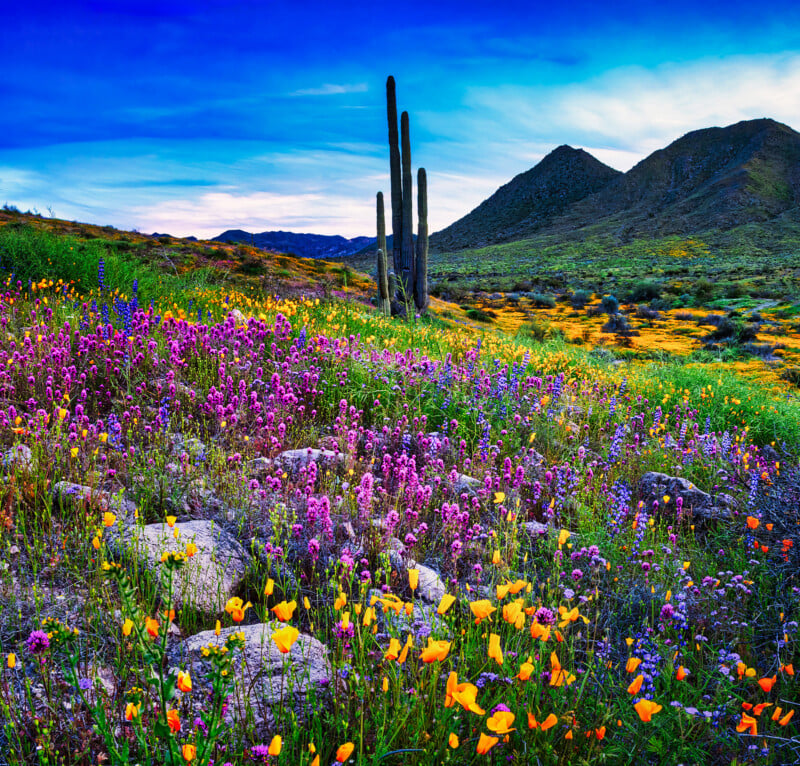
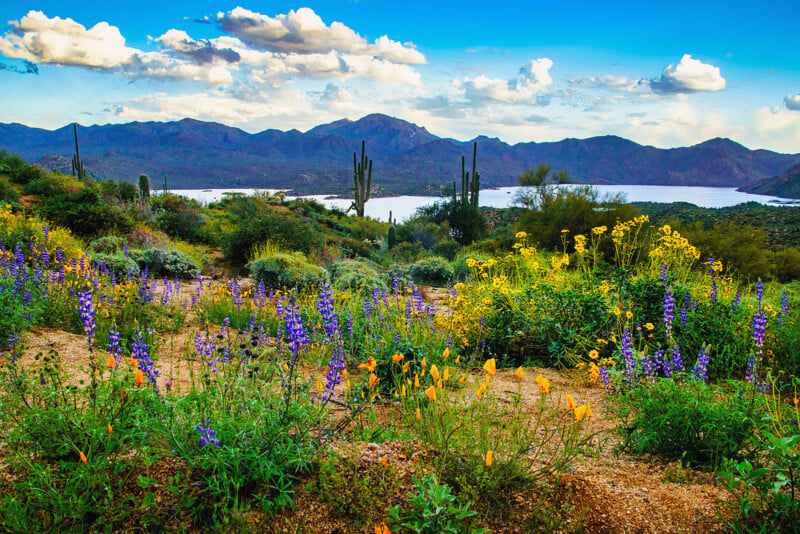
Arizona offers superbloom opportunities in the Sonoran Desert and other lower-elevation regions. Areas like the Tucson Mountains, Picacho Peak State Park, and Organ Pipe Cactus National Monument showcase wildflowers alongside iconic desert plants such as saguaros and palo verde trees, creating combinations that are unique to the region. The interplay between flowers and desert flora produces striking, regionally specific images. I make it a point to scout washes, desert flats, and ephemeral ponds, where concentrated blooms often provide reflections, patterns, and unexpected angles. Arizona is also where, through careful research and time spent in the field, I have been able to photograph wild horses roaming among the wildflowers.
Timing and Light
Timing is one of the most important considerations when photographing a superbloom, and I’ve learned through experience that the window for peak color is very short. Lower-elevation blooms generally peak between late February and March, while higher slopes and mountain washes often don’t hit full color until late March or early April. Tracking the seasonal progression of flowers allows me to plan multiple visits or target specific areas at different bloom stages, from tightly closed buds to fully expansive fields.
I always make it a point to check the state and national park websites for the locations I plan to visit. Many parks maintain dedicated bloom report pages, which are invaluable resources for planning your trip. Following these updates helps me track which areas are peaking, which pockets of blooms are emerging, and even which species are most abundant, information that can make the difference between a good shoot and an extraordinary one.
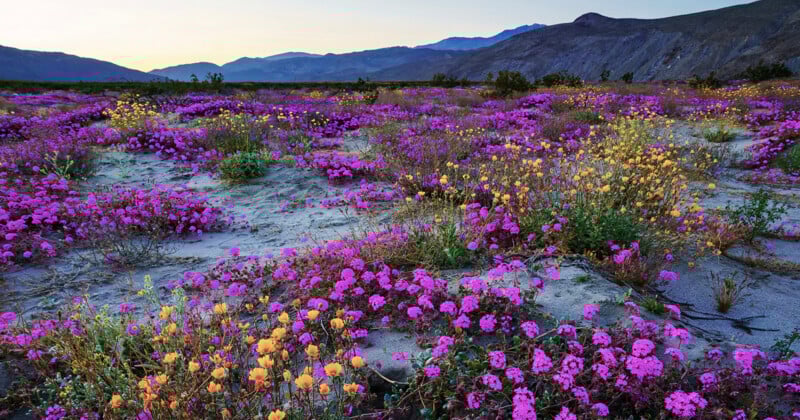
Light is equally critical for capturing the superbloom. I often start during blue hour or early in the morning, continuing through the first couple of hours after sunrise, when the sun casts warm, soft tones that bring out the colors of the flowers and the desert terrain. Golden hours also create long shadows that add texture and depth to my compositions, whether I’m shooting wide landscapes or close-up details. For sunset, I follow a similar routine, arriving late in the afternoon and photographing until an hour after the sun has set to take advantage of the shifting light.
Midday light can be more challenging, but I’ve learned to make it work creatively, particularly for macro compositions where I often use a diffuser panel to soften harsh sunlight. Overcast days provide a different kind of advantage: the clouds diffuse the light, adding mood and depth, and I’ve found these conditions can produce some of my most dramatic and intimate flower shots.

Composition: From Intimate Details to Panoramic Vistas
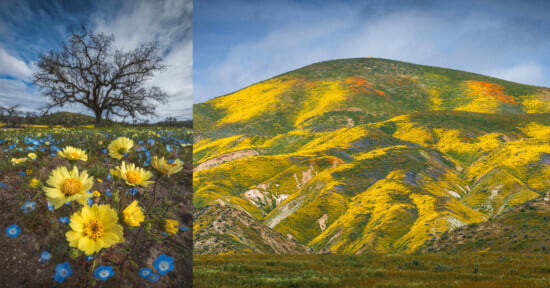
Superblooms offer an extraordinary range of compositional possibilities, and I often find myself switching between scales throughout the day. Macro photography allows me to focus on a single bloom or a small cluster, revealing intricate patterns, textures, and even insect interactions that might otherwise go unnoticed. Mid-range compositions help me show flowers alongside desert features such as washes, dunes, and canyon walls, creating a sense of scale while emphasizing the natural environment.
My favorite is capturing wide-angle or panoramic images, where carpets of flowers stretch across valleys and hillsides. Leading lines, such as ridges or washes, can guide the viewer’s eye into the scene, while natural framing with rocks, arches, or canyon openings adds interest and directs the viewer’s focus to the blooms. I frequently experiment with stitched panoramas, even creating vertical ones, making sure both the bright flowers and darker desert terrain are rendered beautifully. By thinking creatively about perspective, scale, and framing, I try to make each image tell a story of this fleeting, colorful landscape.
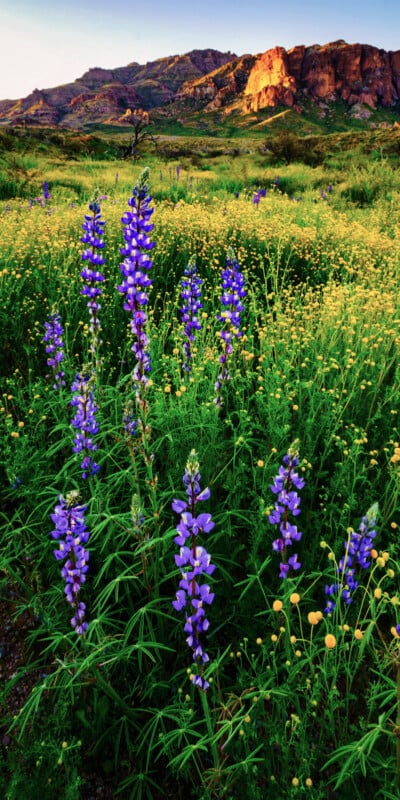
Highlighting Rare Species and Scientific Insights
For me, photographing rare or endemic species adds another layer to the experience. While desert gold, brown-eyed primrose, five-spot, lupines, and verbena dominate many displays, I’ve learned that certain flowers bloom only under very specific conditions. Researching which species are rare or unusual helps me focus my shoots and create images that are both visually striking and ecologically meaningful. Field guides, the park’s bloom reports, and online resources are invaluable for identifying which flowers are currently in bloom, and planning shots around these species adds depth and storytelling potential to my work.
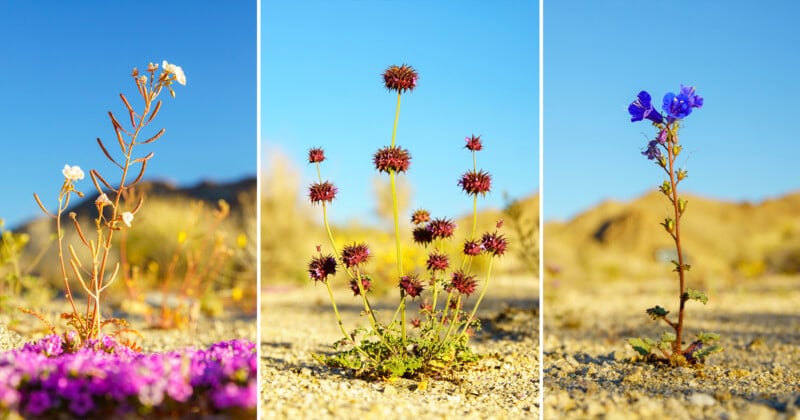
Understanding flowering patterns also helps me anticipate how the bloom will progress. Lower-elevation flowers appear first, followed by higher-altitude species later in the season. By tracking these changes, I can revisit the same locations at different stages and capture a richer narrative in my portfolio.
Desert ecosystems are fragile, so I always follow “leave no trace” principles: I stay on trails whenever possible, avoid trampling flowers, and leave blooms and seeds behind for future seasons.
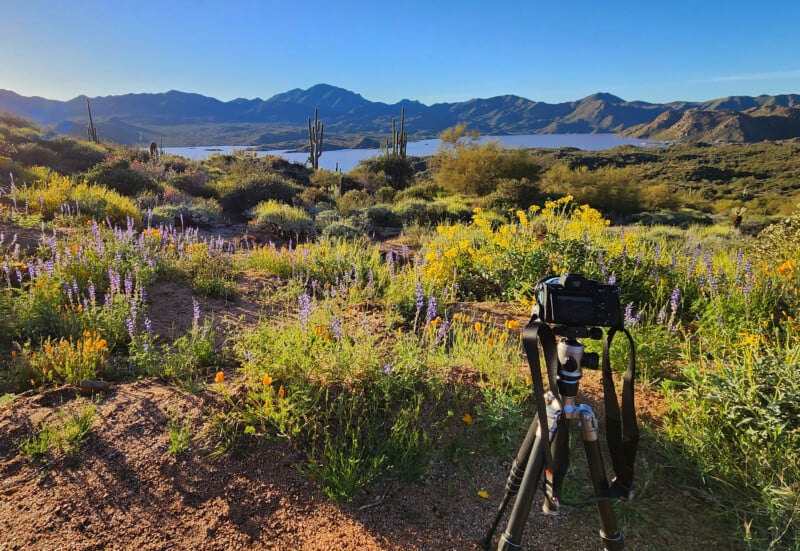
Making the Most of a Fleeting Opportunity
The superbloom is fleeting, and photographing it requires patience, preparation, and careful attention to light, color, and composition. Taking the time to observe the blooms and understand the landscape can reveal both sweeping vistas and delicate details that might otherwise go unnoticed. Each visit provides an opportunity to witness the desert at a moment of extraordinary transformation.
Capturing the superbloom is as much about storytelling as it is about technical skill. Images that convey scale, perspective, and the interplay between flowers and the surrounding terrain help communicate the wonder of this rare event. From intimate macro shots to wide-angle panoramas, thoughtful composition can turn fleeting blooms into lasting photographs that celebrate the beauty and complexity of the desert ecosystem.
This once-a-decade event offers a unique opportunity to experience the American West at its full vibrancy. Proper planning, observation, and respect for the environment allow photographers to make the most of the opportunity and create work that endures long after the blooms have faded. The superbloom is a reminder of nature’s resilience and the power of timing, patience, and careful observation to capture moments that are both visually stunning and meaningful.
Image credits: Kate Garibaldi