Wildflower Superbloom Sweeps Death Valley for First Time in 10 Years
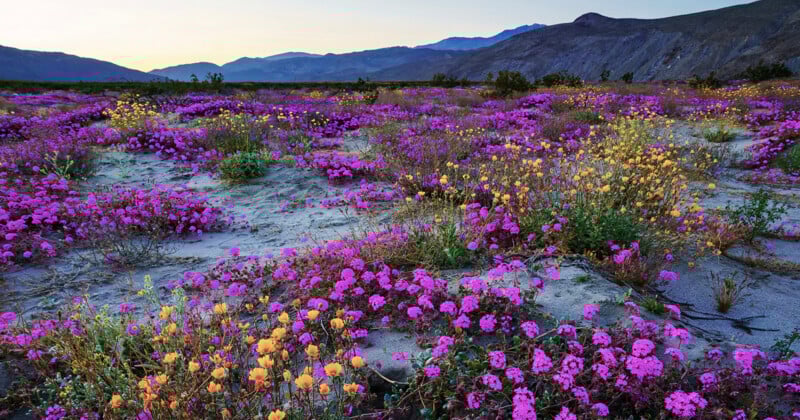
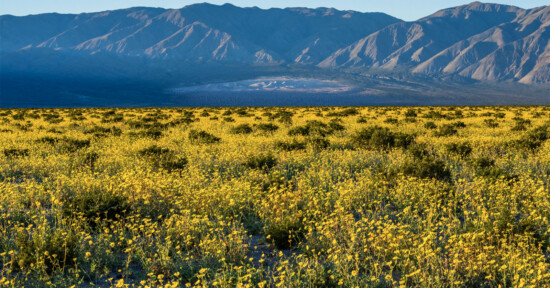
Across the deserts of the American West, a rare and widespread superbloom is taking shape, including in Death Valley National Park where it has already started. Following months of steady storms and snowmelt runoff, landscapes typically defined by sand and sparse vegetation are now covered in acres of vibrant wildflowers.
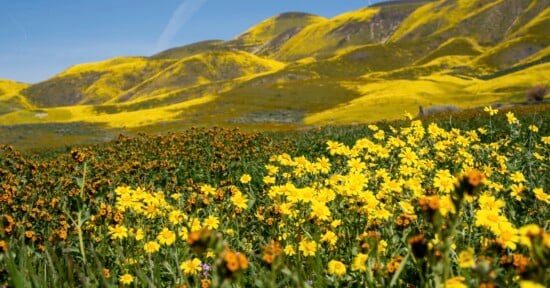
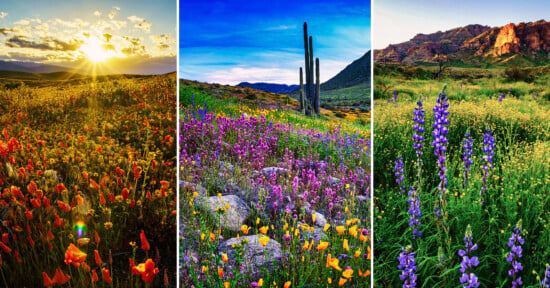
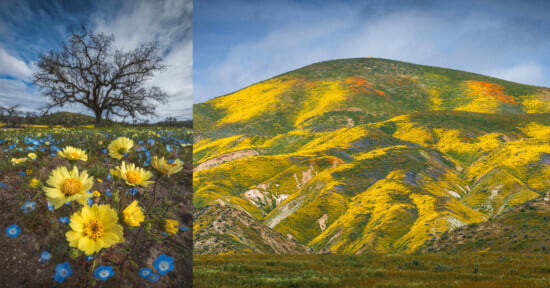
From Southern California to parts of Nevada and Arizona, carpets of these extraordinary flowers are emerging in numbers not seen in years. Hillsides are turning gold and violet. Valleys that appeared dormant just weeks ago are now alive with desert gold, brown-eyed primrose, lupine, and verbena. Regions long defined by drought and dust are experiencing a widespread superbloom, a phenomenon that occurs only when rainfall totals and seasonal timing align almost perfectly.
A Perfect Alignment of Weather
Superblooms are not simply heavy-flowering seasons; they require sustained rainfall that penetrates deep into desert soils, activating seeds that can remain dormant for years or even decades. Moderate temperatures and minimal destructive wind must then follow that moisture. Since last fall, parts of the West have seen unusually wet conditions, with some desert regions receiving what amounts to a year’s worth of rain within just a few months.
In a recent television interview with Fox Weather, Matthew Lamar, a park ranger at Death Valley National Park, described just how unusual this season has been.
“Since October, Death Valley has done the unthinkable. It’s been wet,” Lamar says.
That unusual saturation, paired with gradual warming in late winter, has triggered widespread germination across multiple Western desert ecosystems.
Death Valley: A Signature Spectacle
Among the most dramatic displays is the transformation unfolding in Death Valley, a place better known for record heat than seasonal color. Lamar says the bloom is a direct result of precise timing and rare conditions coming together.
“The reputation of Death Valley is one of extremes. But if we get the right conditions, rains in the fall, winter and spring, the desert can come alive. And that’s what we’re seeing this year,” Lamar says.
The strongest displays are currently concentrated in the southern end of the park, particularly at lower elevations. As temperatures rise, the bloom is expected to shift northward and climb into higher elevations over the coming weeks.
“Above average wildflower blooms like this maybe once every ten years,” Lamar says.
Major blooms in Death Valley historically follow that approximate cycle, with notable events in 2005 and 2016. That rarity adds urgency to the moment for visitors hoping to witness the transformation firsthand.
“So this is a rare experience and it’s a great time to come out to the park and experience Death Valley in a new light,” Lamar says.
Beyond the visual spectacle, Lamar notes that the bloom also challenges long-held perceptions of the park.
“People have this idea that it’s this desolate place. So to come to Death Valley when it is alive, I think is a really special experience,” Lamar says.
Fields of delicate blossoms now stretch toward salt flats, dunes, canyons, and mountain vistas, reframing a landscape more commonly associated with extremes of heat and aridity.
Beyond Death Valley
While Death Valley is commanding attention, it is not alone in this seasonal surge. Anza-Borrego Desert State Park is also reporting significant wildflower activity following heavy winter rains, with broad patches of color emerging across lower desert elevations. Portions of Nevada’s desert basins and western Arizona are experiencing localized bursts as well, particularly in areas where runoff and soil saturation have been strongest.
Timing varies by region and elevation, and bloom intensity can change week to week. Lower elevations typically peak first, followed by higher terrain as spring advances. The progression underscores how sensitive desert ecosystems are to subtle shifts in temperature and moisture.
Desert superblooms represent years of biological patience compressed into a brief spectacle. Seeds that may have waited through multiple dry seasons respond almost instantly to rare moisture, only to fade once heat returns and soils dry out.
This fleeting window of color has photographers chasing light and composition, seeking shots that highlight both the flowers and the dramatic desert backdrops. For those behind the lens, the superbloom is not just a natural spectacle; it is a rare chance to document an environment at its most alive, an event that may not repeat to this magnitude for another decade.
For now, however, the Western desert is offering a rare, once-a-decade, vivid reminder that even the harshest landscapes hold dormant abundance. In a region defined by extremes, this season’s story is not about record heat, but about rain, timing, and a desert unexpectedly coming alive.
Image credits: Cover image by Kate Garibaldi (Colorado Desert of Southern California, 2016), Video embeds via Fox Weather, NPS/Bristlecone Media