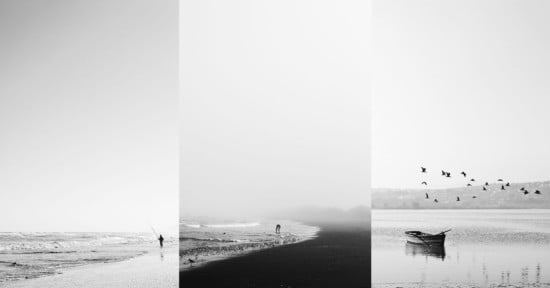
Photography Is the Last Defense for Beauty and the Sublime

Photographers often embrace beauty and the sublime, unlike the current trends in other arts that downgrade their importance. There are good arguments for both rejecting and embracing aesthetics in our images.
What is Beauty and the Sublime
Aesthetics combines beauty and the sublime. But what are they?
Beauty pleases the senses and evokes positive emotions. In the visual arts, including photography, it often relates to harmony, proportion, color, and form. Whereas beauty is approachable, comforting, and delights us, the sublime overwhelms and astonishes. It suggests something beyond human control or comprehension, like the size of a mountain or the force of a stormy sea.

The Rejection of Aesthetics
It is sometimes suggested that we should reject aesthetics in our photography, aligning with current art movements that deem those values unimportant. However, it is also argued that the rejection of aesthetics in art stems from elitism; beautiful and awe-inspiring art may be valid because the majority more widely appreciates it.

The Philosophy of Beauty
Philosophers have long debated whether beauty is objective or subjective. Aristotle and Plato suggested that it is an inherent property of things, linked to symmetry, order, and proportion. Meanwhile, Kant and Hume thought it was subjective. They suggested that beauty is a matter of personal taste and cultural influence and thus “in the eye of the beholder.” Meanwhile, Francis Hutcheson argued in favor of treating beauty as a relational experience rather than a fixed attribute. In other words, it depends on the interaction between the object, the observer, and the context.
Those philosophies may not be absolutes. For example, doesn’t everyone who sees a rose or a golden sunrise know that they have beauty? On the other hand, there are people and things I think of as beautiful that others don’t enjoy. So, it can be both objective and subjective.

Human Beauty in Society
Appreciation of human beauty is influenced by the culture and time in which we live.
Back in 2004, Western fashion photography and portraiture were dominated by waiflike supermodels. Young women with a tall and ultra-slim physique were favoured. They also had delicate facial features with high cheekbones, almond-shaped eyes, and symmetrical proportions. Those lean frames were often criticised for promoting unhealthy standards. Nevertheless, they were also considered beautiful.
That was the year I moved to Africa. The billboards advertising cola and other products featured women with much rounder faces and fuller bodies. Those looks were seen as the epitome of beauty, reflecting the models’ wealth and health.
Clearly, our idea of a beautiful person is subjective.

Ideas of Human Beauty Changing Over Time
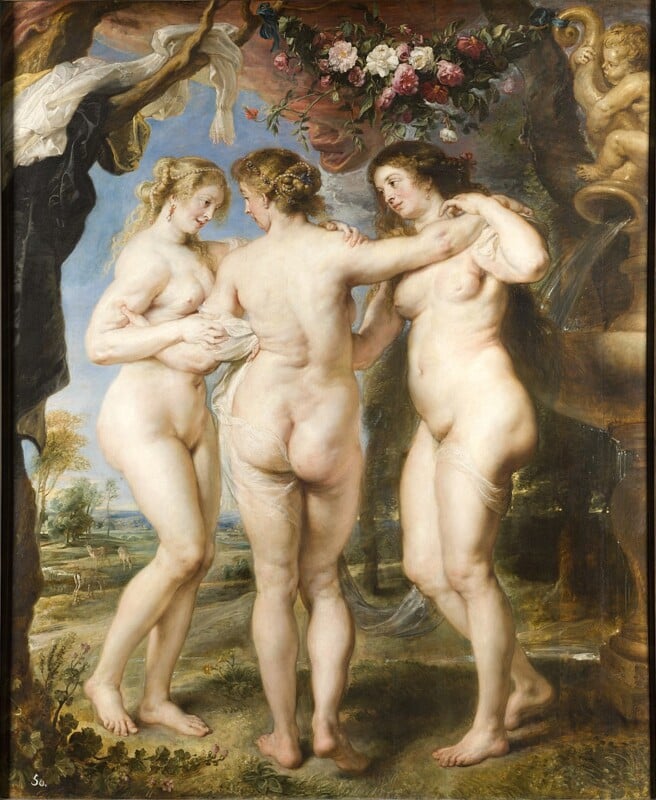
The ideals of human beauty have changed vastly over the centuries. Take, for example, Paul Rubens’ “The Three Graces.” The figures in the painting have rounded bodies and fuller hips, quite different from many of our expectations today.
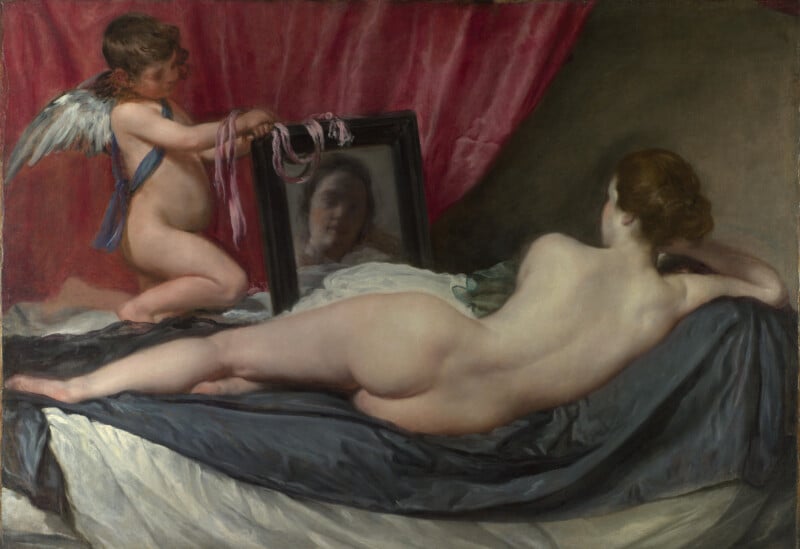
Similarly, Diego Velázquez’s “Venus at Her Mirror” shows Venus with a soft, rounded body and understated facial features. The god of love’s sensuality was expressed through her curves and natural fleshiness.
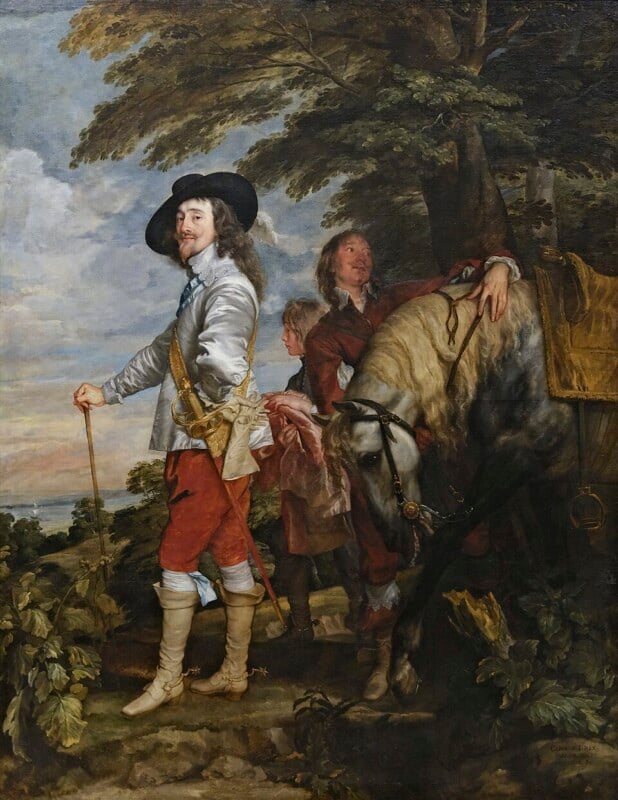
In Anthony van Dyck’s “Charles I at the Hunt,” the king is depicted as being elegant and refined. His long flowing hair, delicate moustache, and slender, almost fragile build suggested his beauty was tied to aristocratic grace and poise. That’s quite different from the muscular and athletic standards that are considered beautiful in a male body today.
Beauty and Desire
We try to separate beauty from sexual desire. Nevertheless, from an evolutionary perspective, we tend to perceive symmetrical faces and healthy physical traits as beautiful. They feature clear, balanced, and familiar patterns and thus signal genetic fitness to mate.
Our idea of beauty involves a deeper physical motivational component aimed at reproduction and pleasure. It triggers sexual desire. Of course, that’s not an absolute. People can feel sexual attraction without perceiving someone as conventionally beautiful, and vice versa. However, sex appeal is widely used in advertising, and adverts invariably feature beautiful people.
I jokingly tell my wife that deteriorating eyesight with age is an evolutionary advantage, as soft focus hides our wrinkles and blemishes, so we still look beautiful to each other.

The Perversity of Perceived Beauty
Our culture is strongly influenced, and even controlled, by big businesses through advertising and promotion. But that brings a moral dilemma. Western standards of beauty are being imposed on the world through its dominant mass media. Other cultures, quite rightly, have different aesthetic ideals. However, it is being changed by Western marketing and social media. This is known as cultural imperialism.
When they marketed the painfully thin, childlike bodies of models as being perfectly beautiful, it was criticized as profiteering by the misogynistic pederasts of the corporate world. The mainly white, middle-aged men in suits were (and maybe still are) seen as enforcing an aesthetic that sexualised young girls. Given the tastes and behaviours of some of those wealthy and powerful men that have come to light recently, the evidence seems to support that criticism.
Thankfully, these days, it is more widely acknowledged that people do not have to conform to one standard of beauty. Nevertheless, even that broader acceptance is still imposed by those who decide what our culture should be.
Beauty’s Feedback Loop
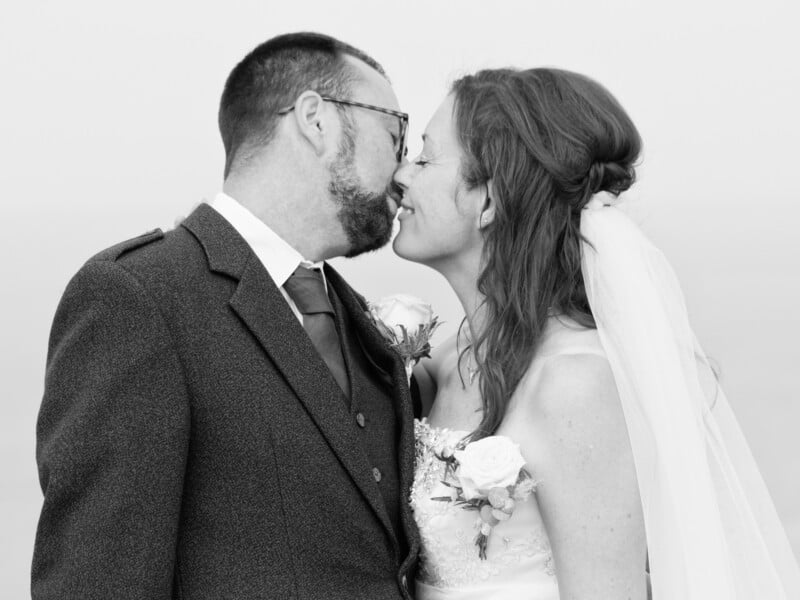
Instagram urges us to produce beautiful images because they are easy to like. If you post a photo there, it will invariably get many more likes and comments if it is beautiful than if it is not. When people like our photos, we get a small shot of addictive endorphins in our brains. Moreover, most people seek greater engagement and therefore try to make their images more beautiful. Beautiful images generate more traffic, which means more revenue for social media companies.
However, that engagement is meaningless, as viewers quickly forget most photos.
Why Aesthetics Became Irrelevant in Art
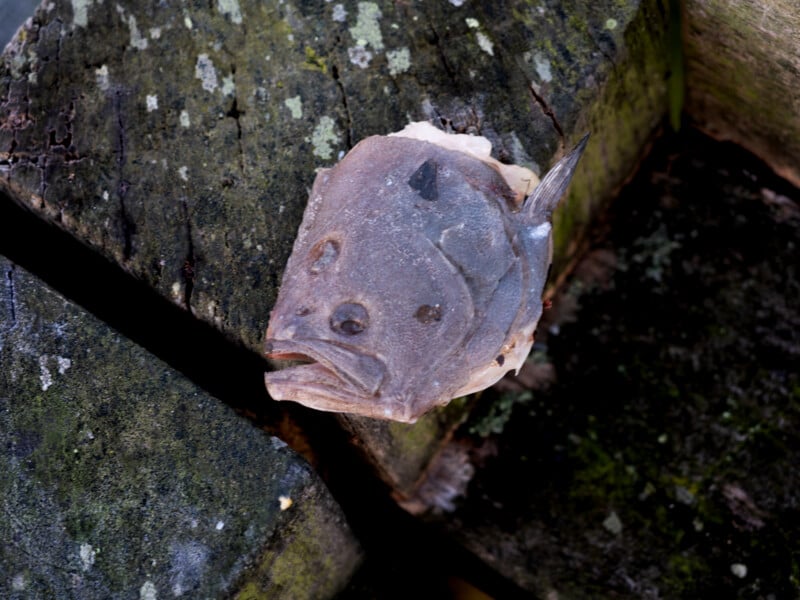
It was modernist movements like Surrealism, Cubism, Dadaism, and Minimalism that shifted the focus from ornamentation to ideas. Thus, they challenged the norms and provoked thought instead of appreciation of beauty and the sublime.
Contemporary art doesn’t completely reject classical beauty. Nevertheless, harmony, proportion, and realism are usually pushed aside in favour of innovation, concept, and context. Beauty is often treated with scepticism or irony by the major art institutions. Tate, for example, says that beauty has been “downgraded” and is rarely a serious criterion for value.
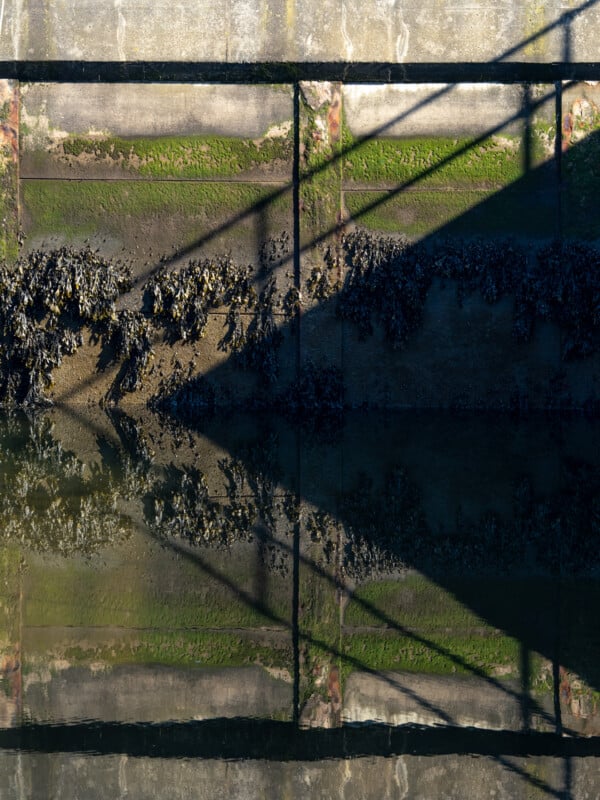
Similarly, the sublime is ignored, too. Artists frequently explore identity, politics, technology, and social commentary, rejecting vastness or overwhelming, awe-inspiring grandeur and power. It’s perverse because beauty and the sublime provoke strong positive emotions that are arguably the most valuable to the human mind.
The Sublime Has Taken a Backseat, too. In this world saturated with easily accessible media and global imagery, the sense of awe is far harder to convey. So, artists often turn to irony, critique, or intimacy instead. However, landscape photographers, especially those inspired by Ansel Adams, buck that trend by striving to capture awe-inspiring scenes in their photos.

Other Areas That Lost Aesthetics
Architecture and music saw similar changes. There are not many modern buildings that compare to the churches and cathedrals built a millennium ago. Nor is there much modern music that is as beautiful as anything written by Beethoven, Bach, or Bruch. As much as I like some of the music produced today, it does not have the same range or emotional impact as it did in the past.
If aesthetic appeal has disappeared from art, what is left? Ugliness?
Beauty and the Sublime in Photography
In its pursuit of aesthetics, some in the art elite view photography as less relevant than, say, painting, architecture, and sculpture.
Up until around the turn of the twentieth century, artworks of all types were primarily beautiful. Even paintings depicting something horrific, such as war, sacrifice, martyrdom, or murder, still contained beauty. So, is that move from the aesthetic just a traditional or transitory trend?

Despite beauty and the sublime being shunned by the art world, they still reign supreme in photography. Besides landscapes and portraiture, other genres have embraced them as well. For example, macro photographers show beauty in the tiny world. At the other extreme, astrophotography depicts the beauty and sublime grandeur of our neighbours in the solar system and of galaxies, dust clouds, and nebulae in deep space. Wedding photographers do everything they can to make the happy couple and the guests as attractive as possible, and they will emphasize the venue’s magnificence.
The Good News for Photographers
Photographers usually show the world as the human eye sees it. It’s literally photorealism. Our world is beautiful and awe-inspiring; therefore, the photos we take of it can be stunning.
Depicting beauty and the sublime in art is a tradition that stretches back thousands of years. So, let us hope that the last century’s art is an anomaly. In the meantime, most people want beautiful things in their homes, and photographers are delivering that. That’s good news if you sell prints.
The rejection of beauty and the sublime is a short-lived thing, considering art’s entire timescale. Although it is good to be challenged by art, it is better to feel positive emotions that beautiful and sublime art can generate.
The most important thing is to be true to yourself and produce the photos you enjoy taking. Nobody becomes as good as they can be by submitting to the pressure of either the art world or social media. If you want to produce beautiful, sublime, or avant-garde photos, there is no stopping you.

An Exercise
Take three photos. One should be beautiful, one sublime, and the other an abstract that is not aesthetically pleasing. At the same time, on the same day over three weeks, post one of the photos to social media. Which photo do you like best, and which is liked the most on social media?