The DJI Neo 2 Adds a Screen, LiDAR, Faster Flight, and a Bigger Battery
While the DJI Neo 2 launched a couple of weeks ago in China, it’s being officially announced today for the rest of the world. Well, most of the rest of the world, as the drone joins a long list of other DJI products that aren’t officially available in the United States.
The Neo remains DJI’s lightest, smallest, and easiest-to-fly drone and the changes to the second generation don’t change that. It is getting slightly heavier — it gains 16 grams and now weighs a total of 151 grams — but is gaining quite a bit for that small increase.
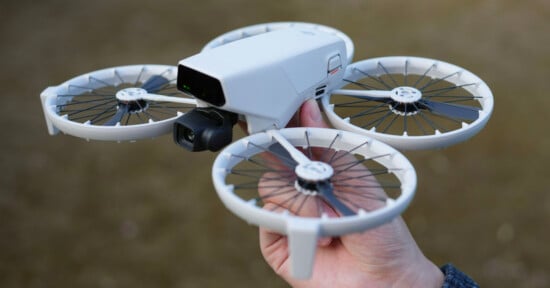
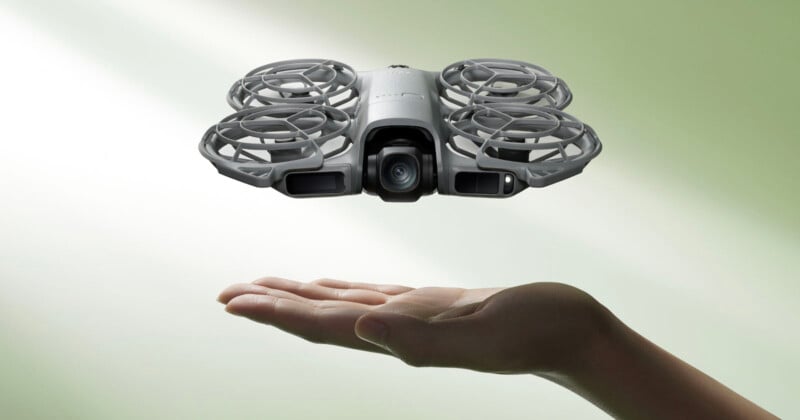
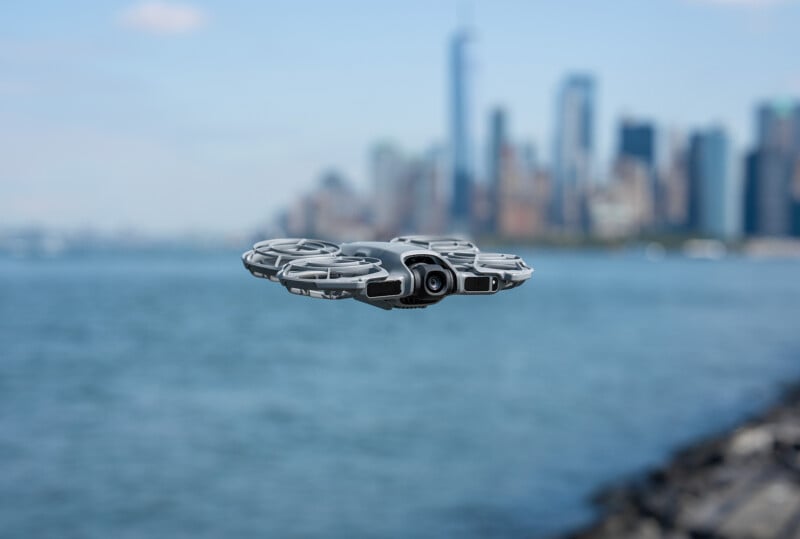
The first new addition is almost immediately visually apparent. To the left and right of the center camera are two new rectangular areas in front of the rotor guards. On the left is a new small onboard display that shows the selected shooting mode. The previous model used flashing LED lights to indicate this, but a screen is a more elegant solution.
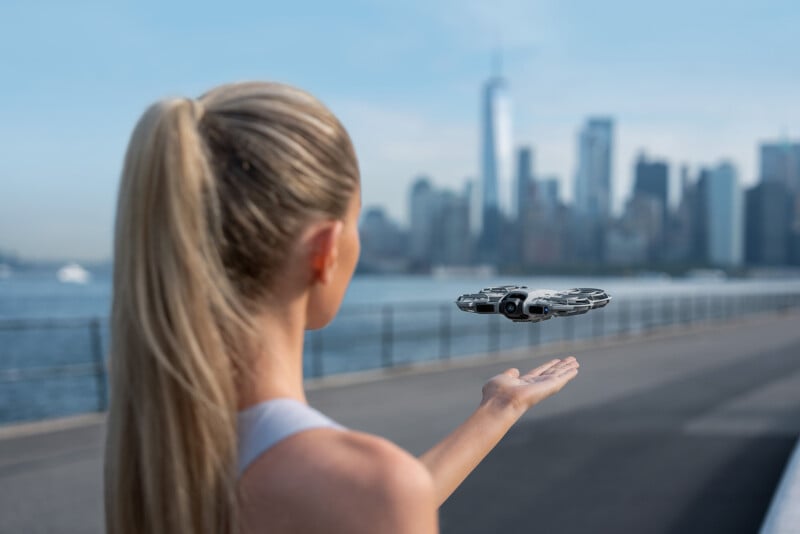
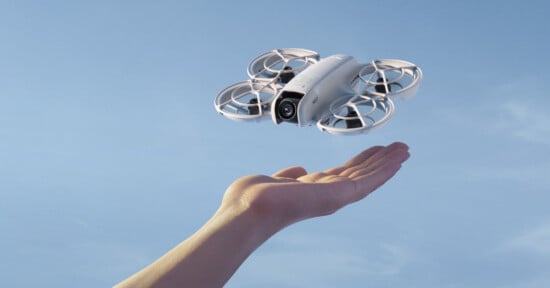
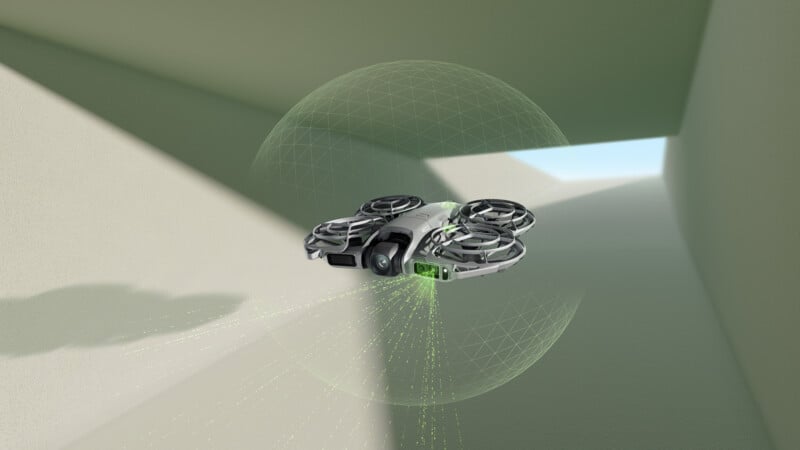
To the right side of the camera is a new LiDAR sensor, which improves the Neo’s ability to navigate its environment. This new forward-facing sensor combines with the monocular vision system and a downward infrared sensing system to detect obstacles quickly and allow it to fly more confidently. The Neo 2 can still be launched from the palm of the hand and return to that palm once it is done with a shot.
The Neo 2 also has enhanced hovering and positioning capabilities over the previous model, allowing it to fly indoors, close to buildings, and over water and snow more effectively.
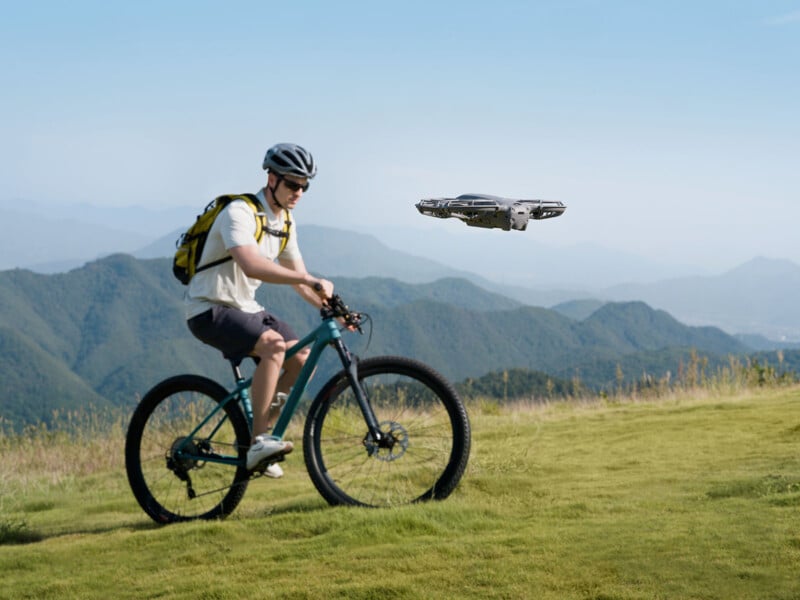
The improved tracking has the added benefit of giving the Neo 2 faster response time and improved stability in flight, which DJI says lets it track faster moving subjects (runners or cyclists) at up to 12 meters per second.
“In complex environments, the drone can switch to rear tracking mode, steadily keeping the subject in focus and providing confident creative freedom,” DJI adds.
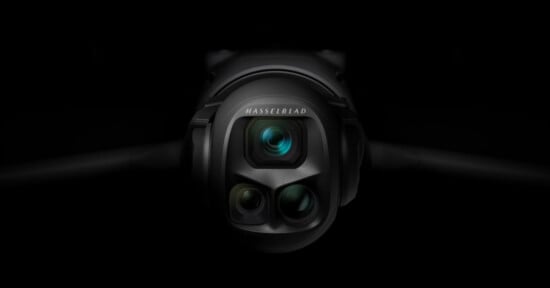
The updated drone uses the same 12 megapixel, Type 1/2 CMOS sensor with an f/2.2 sensor but this is paired with a new 2-axis gimbal. DJI also squeezed a bit more out of the sensor, allowing it to shoot 4K at up to 100 FPS — the original Neo capped at 30p — and 2.7K vertical video.
DJI also improved the Neo’s wind resistance (level 5) and a larger 1,606 mAh battery improves the Neo 2’s flight time to 19 minutes. With its 49GB internal storage, the Neo 2 can capture 105 mintues of 4Kp60 footage, 175 minutes of 4Kp30 footage, and 241 minutes of 1080p60 footage. DJI adds that footage can be offloaded via WiFi using the Fly App at a rate of 80 MB/s, making cables unnecessary.
All of the familiar intelligent flight modes and image options return to a drone that looks like almost entirely upgrades across the board. It is also compatible with both the RC-N3 remote controller as well as DJI’s FPV goggles, but most users will probably leverage the gesture controls. Aside from that slight weight increase, the Neo 2 is a much more compelling drone than the original.
Below are some sample photos captured on the DJI Neo 2 (click any to view in full resolution):





Pricing varies per region, and because it’s not being made available officially in the United States (that is to say, it will not be available officially in the U.S. market through official DJI websites), DJI did not provide pricing in its press materials. But if the past is anything to go by, expect to see a limited number of units available at U.S. retailer like B&H Photo.

That said, DJI is just weeks away from being banned, as the U.S. government has taken no action towards completing a mandated audit of the company. Without completing the audit, DJI’s presence in the U.S. looks dire.
Image credits: DJI