Your Photos May Now Appear on Google’s AI Mode

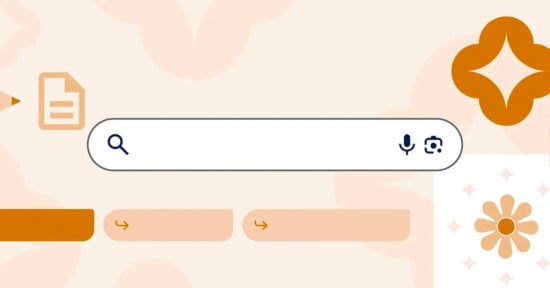
Google is updating its AI-powered search feature, called AI Mode, so that results now include images and photos as well as text.
AI Mode launched in the US in May as a text-only tool that could answer questions in natural language.
In a blog post published on Tuesday, Google announced that the company has added images to its AI search tool. With this update, AI mode users looking for ideas or shopping help will also see visual results, giving them photos or generated images alongside written answers.
For example, if a user searches for “maximalist bedroom design,” AI Mode won’t just give them descriptions. It will now show visuals that match the style. They can then refine what they see by asking for darker tones or bolder prints. According to Google, each image links out to a source. Users can also start a search by uploading or taking a photo instead of just typing text.
This mix of text and images is meant to make AI searches more useful. Users can upload a picture, combine it with a written prompt, and get results that are closer to what they have in mind.
“Sometimes what you’re looking for really just can’t be articulated with text,” Robby Stein, vice president of product management at Google Search, tells CNBC. “If you ask about shopping for shoes, it’ll describe shoes when really people want visual inspiration, they want the ability to see what the model might be seeing.”
Google says the new visual results use several of its tools together: Gemini 2.5, Search, Lens, and Image Search. This lets AI Mode analyze not only the main subject of an image but also small details, then run multiple background searches to match what the user is asking. On a smartphone, an AI mode user can even tap into a single image and ask follow-up questions about what they see in the photo.
“This is really, we think, a breakthrough in what’s possible,” Stein adds.
The new visual results in AI Mode start rolling out this week in English for US users, and should appear for everyone in the coming days, according to Google.
Image credits: Header photo via Google.