PetaPixel

Canadian Photogs Now Officially Own the Copyright to All of Their Photos
Canadian Photogs Now Officially Own the Copyright to All of Their Photos canadian1

A big win for photographers in Canada: as of today, you now officially own the copyright to all your photographs regardless of whether they were commissioned. The development comes as a result of Canada major copyright reform bill (Bill C-11) taking effect this morning. One of the stated goals of the new copyright law is to, “give photographers the same rights as other creators.”

In an email just sent out to member photographers, Canadian Association of Professional Image Creators (CAPIC) copyright head André Cornellier writes,

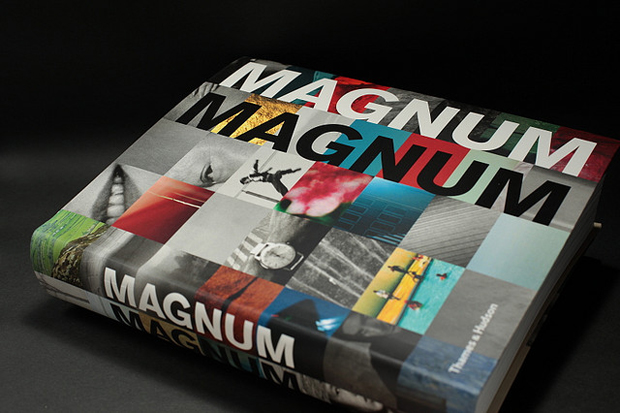
The principle of protecting photographers’ ownership rights started 65 years ago by Henri Cartier-Bresson, who founded Magnum with Robert Capa and David Seymour. Magnum assured that a photographer’s image belonged to the photographer and not to the commissioner of the work.

In Canada, all other artists have already owned the copyrights to their work and thanks to this new law, Canadian photographers, albeit the last in the industrialized world, now have all legal rights to their images.

Previously, photographers were not automatically the first owners of their photographs when shooting commissioned work, but instead it was the individuals or businesses that commissioned the images who owned the copyrights. Section 13(2) of the Canadian Copyright Act specifically singled out photography as being different than other creative works.

Photographers who wanted to own the full copyrights of their work were required to have the transfer explicitly agreed upon in a written and signed contract.
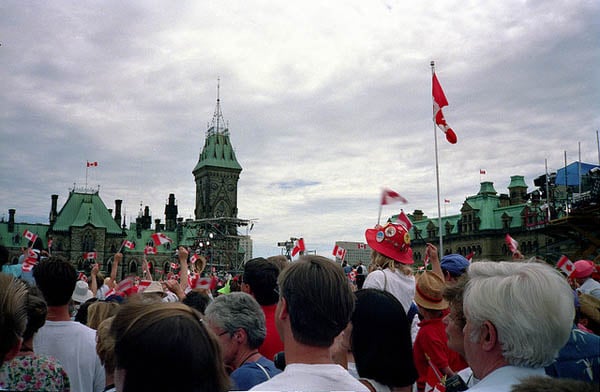
Canadian Photogs Now Officially Own the Copyright to All of Their Photos canada

That once-murky environment is no more. Starting today, photographers will automatically become the first owners of photos created for someone else.

Cornellier notes that his organization and a number of others have been working to see this law passed for more than 20 years, and that many photographers have contributed countless donations and volunteer hours toward the lobbying process.


Thanks for sending in the tip, Ben!


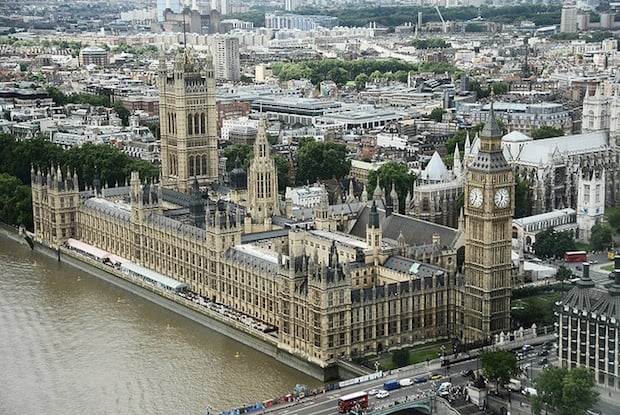
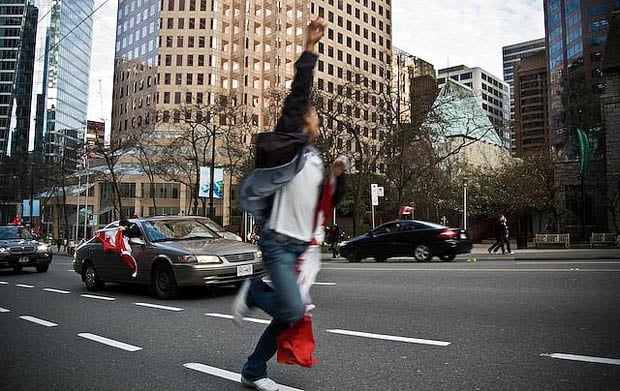
Image credits: Canada wins Hockey Gold by Chris Bizzy, Canada 125 (Ottawa) 06 by zemistor



  • http://www.facebook.com/bojan.landekic Bojan Landekic

    You’re lying to prove your stupid point.

    If we’re talking about digital photos, they require loads of electricity, user-know how, experience, man hours, and equipment (which is made of parts and labour). If we’re talking about printed photos, they require similar effort to produce.

    Photos are very scarce. You cannot reproduce wedding photos easily once they are lost. Nor can you reproduce childhood photos if something were to happen to your digital backups. Like say you live in an apartment building and the floor above you leaks with water and all your hard drives get flooded! Most people lack off-site backups of all their digital archives, especially dead tree versions.

    Photos are scarce, just like anything else that captures our precious moments. They are property in every sense of the word. And should be legally ours to do with as we please.

  • http://www.agentnoir.ca/ Summer Coley-Ward

    Many photographers will work with a contract that transfers photo ownership from them to you, but sometimes, the creator will expect to keep “rights of authorship” basically stating that another creator cannot attempt to take credit for the original creator’s work. The contract you make when commissioning any kind of work for commercial use (design, content, photography) should clearly outline who has rights to what, and how the final work can be used. Most professionals will be very reasonable to work with, but laws like this one just serve to protect photographers from having their work claimed by other artists. It’s not much different than an artist or architect requiring that another artist or architect not take credit for their work simply because the other artist or architect added a blue dot or an extra window to the original work. I hope this helps : D

  • http://www.agentnoir.ca/ Summer Coley-Ward

    More likely to apply to the compilation – the final product, not split second frames. I suggest you create and use contracts with your clients if you wish to reserve rights to your work. Everyone who “creates” for commercial use should use contracts.

  • http://www.agentnoir.ca/ Summer Coley-Ward

    That’s like saying that everyone can cook like Gordon Ramsey so long as they can crack an egg in a pan. Absurd!

  • http://www.agentnoir.ca/ Summer Coley-Ward

    Use a contract that states your terms and rights of authorship to your published work.

  • http://www.agentnoir.ca/ Summer Coley-Ward

    Once a prof-makeup artist myself, I can tell you that it is your/our sole responsibility to protect our own contributions to works with contracts that state our terms. We cannot (nor could we ever) rely on others to watch out for our best interests. Besides seasoned skill, contracts are what separates the hobbiest from the professional. Your contract should read clearly and be fair, and you can request terms such as: “the Makeup Artist shall be credited (by featuring full name) whenever imagery created under this Agreement is used for commercial purposes, contests or in publications. This does not include 3rd party usage of imagery, whereby the imagery’s other contributors, including the photographer, are not mentioned (such is the case when imagery is used in ads and billboards etc).

    Inquire with other artists and hair stylists whose work is often featured in catalogues etc. Good luck!

  • http://www.agentnoir.ca/ Summer Coley-Ward

    Depends upon your contract with the publisher. Contracts, contracts, contracts!

  • Lucid Times

    Wrong on two out of three counts. I most definitely show contempt for an industry that almost always places revenue above all else, often at the expense of all else. I was laying out images for the printing press long before the digital workflow arrived and offered unbelievable flexibility and attention to detail. But 37 professional years later, after working with or for, three provincial newspapers, and countless magazines, I’ve seen a steady increase in irreverence for the image and a quick decline in the quality of it’s application, whether that be press or digital publication.
    You simply cannot argue that as a culture, we have lost our way in regards to the ‘art’ of photography and all that should command. Much of that is about massive image saturation at every level. Where’s there was once one absolutely gorgeous sunset picture there are now 4,239,623 of them you can steal with a Google screenshot and post on your Facebook page!
    In regards to newspapers specifically, ads rule, editorial is fodder between the ads and images you squeeze in the cracks if there’s room. Oh, wait, toss that image, Bob in sales just sold another ad! I’m not saying I like it that way. I truly don’t but it is what it is despite your personal ideals. There are exceptions of course and I’m proud to say that may own four-year football publication lived and breathed on interesting editorial and large, plentiful, dramatic images. Since I shot many, sometimes all of them, and laid out the pages in Quark Xpress, I had full control. I also had only 25% advertising content which is a luxury almost no newspaper on Earth can claim. Most fringe around the legal limits of about 70% ad space and simply cannot offer the images the attention they deserve.

    Now if you really want to see how far newspapers have decayed, go find yourself a copy of the original Illustrated London Times. I have two copies, one from 1897 and the other 1925 (Jubillee year) and oh my God, these were the days! Absolutely incredible specially commissioned images on a massive scale. One hundred plus years later there is nothing anywhere that can rival the glory of, and the reverence for the image in this one publication.

  • sbfphotography

    contract contract contract… I am a pro. photographer and I would never think of selling photos of someones wedding. That is just terrible business practice!!!

  • Dana S.

    The C-11 bill has a ridiculous clause that makes usual fair use activities, such as backing up data, illegal if the media you are trying to back up has Digital Rights Management locks on it. It was more for big media companies than it was for us photographers, unfortunately.

    I’d need to re-read the bill, but last I heard it made it very difficult to alter media to add closed captioning and other accessibility features. That’s pretty terrible for people with hearing disabilities.

  • Kim

    Even though the photographer owns copyright to the photo, they can’t profit off of your likeness without a signed model release.

  • Happy guy

    I believe that this a plus for those who do the work and those who take the credit. It the photgraphers eye that makes the company look good. Customers believe that the company is responsible for those amazing images.

  • EricLefebvre

    True … anyone can take a photo. Not everyone can take a GOOD photo. It’s like saying “anyone can cook a meal” sure … but not everyone is good enough to be a chef in a 5 star french restaurant.

  • EricLefebvre

    I shoot weddings … you hand me a contract like that my rate just tripled or I tell you to go **** yourself.

    And we aren’t free to sell the pictures … unless you signed a sweeping model release as part of the contract, I can;t use these images commercially … I can sell prints as art, I can use them for editorial work, I can enter them in to contests, I can use them for self promotion … but I can’t sell them (at least, not the images with identifiable people in them) to a florist shop to be used in their advertising for example.