Photographer Spends 20 Years Capturing the Wildlife of Yosemite

A fluffy owlet, a black bear walking on a rocky path, and a small pika nibbling on a green leaf, each animal shown in its natural habitat.
Robb Hirsch

A photographer who has spent over 20 years documenting California’s Yosemite Park has pulled together an incredible collection of wildlife photos for a new book.

PetaPixel spoke to photographer Robb Hirsch who worked with author Beth Pratt for the book titled Yosemite Wildlife: The Wonder of Animal Life in California’s Sierra Nevada
.

“Everybody knows and recognizes Yosemite for its landscape of iconic, towering granite faces and impressive waterfalls, but the wildlife is often overlooked,” Hirsch says over email.

“Nonetheless, Yosemite boasts an incredible diversity of birds, mammals, reptiles, amphibians, and insects due in part to the huge elevation range (2,000 ft to 13,000 ft) and numerous habitats available.

“They may not always be as noticeable and charismatic as the megafauna in the northern national parks (wolves, grizzlies, elk, moose), but with a little patience and observation, an abundance of fascinating wildlife reveals its presence in Yosemite.”

A river otter stands in shallow water, holding a large fish with its front paws. The water reflects shades of blue and yellow, and tree branches are visible in the background.
A river otter makes a meal of a Sacramento sucker in Yosemite.
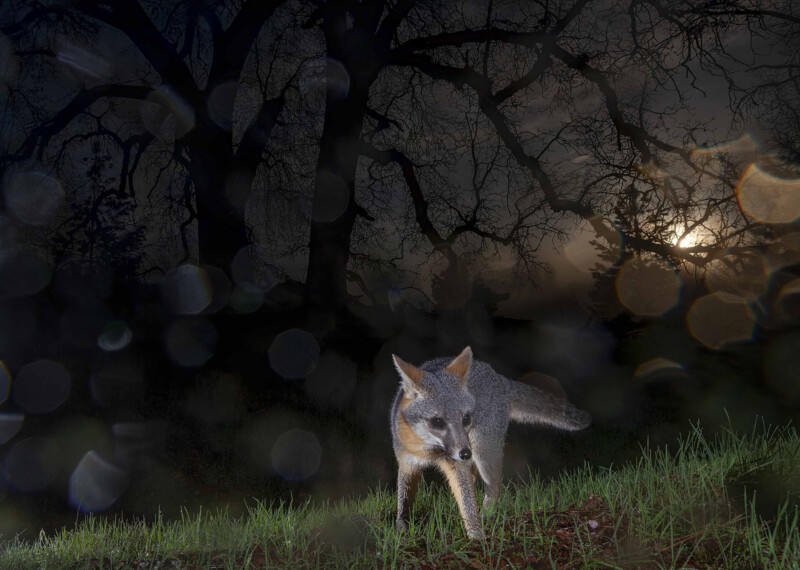
A gray fox stands alert on grass at night, with a large tree’s dark branches silhouetted against the night sky and a glowing full moon in the background. Dew drops or lens flares are visible in the image.
A gray fox captured by a camera trap on a rainy night with the Moon rising.
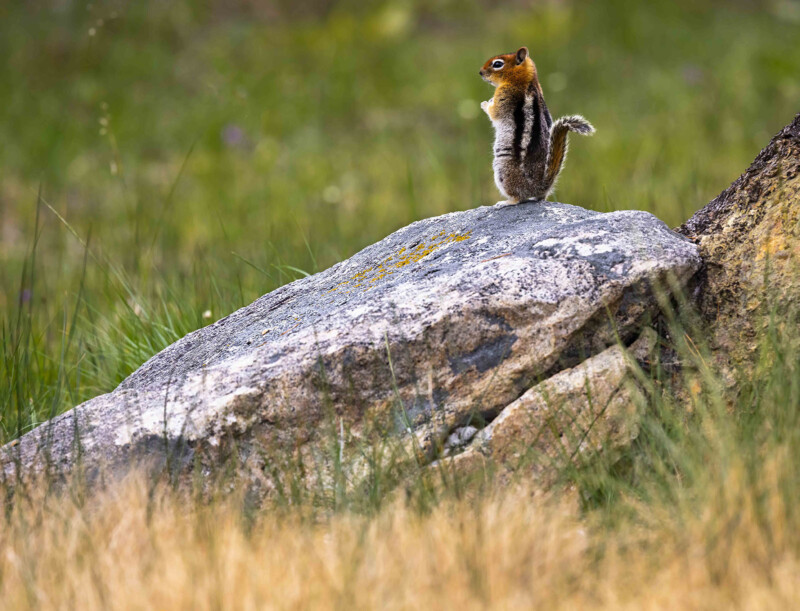
A small chipmunk with brown and white stripes stands upright on a large gray rock surrounded by grass and blurred greenery in the background.
A chipmunk.
A black-and-white bird, likely a killdeer, sits on rocky ground with a fluffy chick nestled under its wing. The scene is sunlit and there is sparse vegetation around them.
Killdeer and chick.
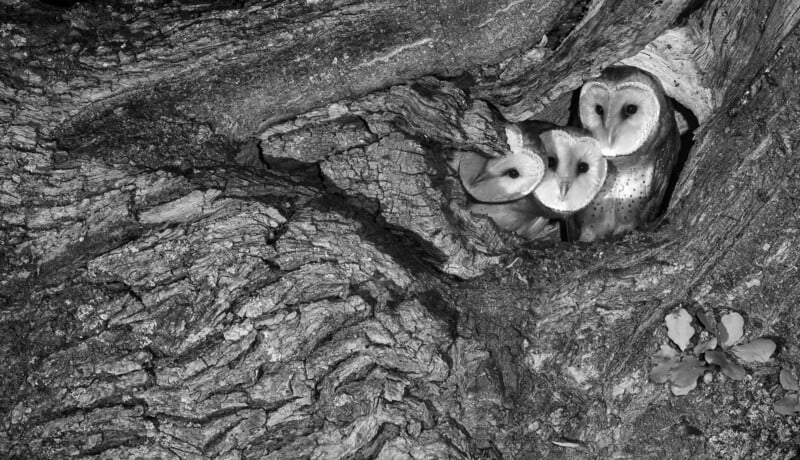
Three barn owls huddle together in a tree hollow, blending in with the rough bark. The image is black and white, emphasizing the texture of the wood and the owls’ pale, heart-shaped faces.
Three barn owls huddle.

Hirsch says he has captured 197 species in Yosemite, but for the book, only 129 animals made it in.

“Although not very glamorous, one of the most remarkable wildlife experiences and resulting images were of the rare, federally listed, hugely threatened, Yosemite toad,” Hirsch says.

“They breed in shallow pools only a few inches deep, created from spring snow runoff, in the Yosemite high country. Males compete in these pools for access to females by wrestling and trying to push the other toad’s head under the water.

“One of my favorite images in the book is of a toad on another’s back holding it in a full headlock. Observing and photographing this behavior from only a few feet away was the ultimate wild kingdom encounter on a small scale.”

Two brown, spotted toads are partially submerged in shallow water, with one toad on top of the other. Green grass blades are visible on the right side of the image.
Federally threatened male Yosemite Toads wrestling during breeding season, Yosemite National Park, California.
Two marmots sit upright on a rock, side by side, with their paws held in front of them. They have brown and gray fur and are looking attentively ahead. The background is blurred green foliage.
Baby yellow-bellied Marmots.
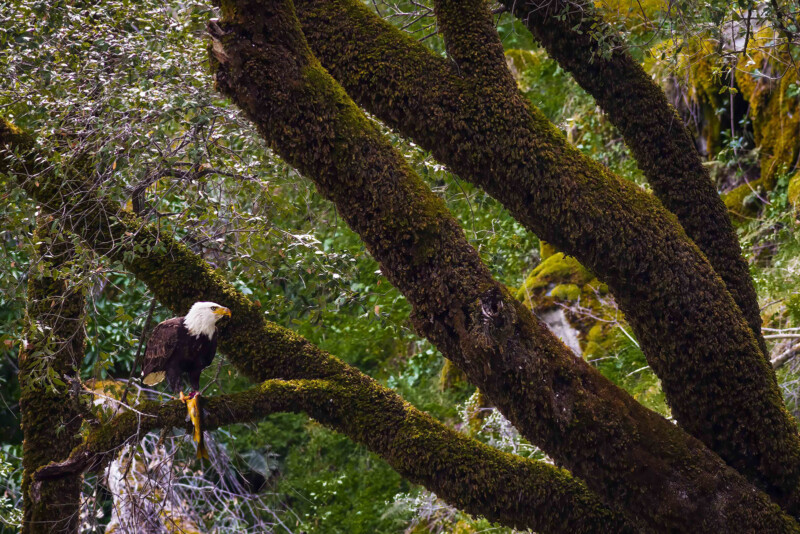
A bald eagle perches on a moss-covered tree branch in a lush, green forest, blending with the dense foliage and twisted, textured branches.
Bald Eagle with captured trout on the Merced River.
A small brown and white bird is camouflaged against the rough, textured bark of a tree, peeking out from a vertical crevice in the trunk.
Camouflaged bird.

Another image that Hirsch had to work hard to get was a rare and elusive fisher, a member of the weasel family, which is rarely spotted in the wild.

“To capture images for the book, I worked closely with National Park Service biologists to set up remote camera traps in areas of fisher activity,” Hirsch explains.

“It took several months of checking, moving, and resetting the traps before we were finally successful. For the nighttime images, an infrared camera and IR flashes were used to avoid disturbing them. We were thrilled to capture quality images of these rarely seen, amazing animals.”

A small pika with gray-brown fur is holding and nibbling on green leaves while perched on a rock, with blurred stones in the background.
Pika collects vegetation to cache for winter.
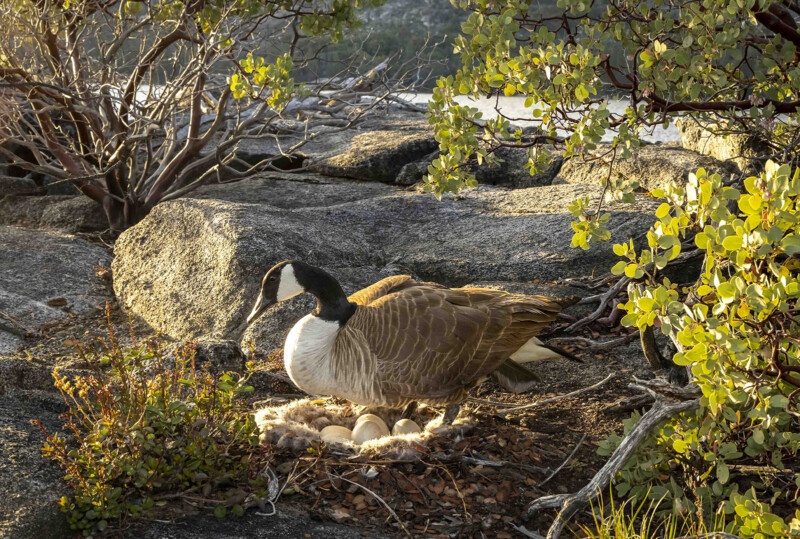
A Canada goose sits on a nest with several eggs, surrounded by rocks, bushes, and sunlight filtering through leaves in a natural outdoor setting.
A Canada goose is captured with a remote camera while nesting on a small island in the Yosemite backcountry.
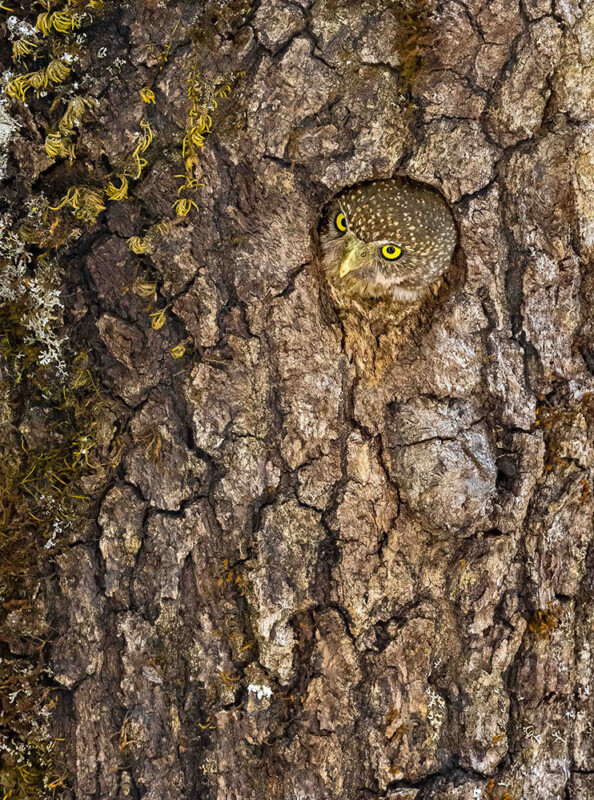
A small owl with bright yellow eyes peeks out from a hole in rough, brown tree bark, blending in well with its surroundings. Yellow-green moss is visible on the left side of the tree trunk.
A northern pygmy owl pokes its head out from its nesting cavity.
A fluffy young owl with soft, downy feathers sits on a mossy branch. Its large, dark eyes look forward, and the background is a softly blurred mix of green and brown tones.
Spotted owl chicks are extremely vulnerable to predators after leaving their nest.

Hirsch officially signed on to do the book in December 2021. “From that date, my sole photographic focus was wildlife images for the book.”

But he adds, “I have been photographing wildlife (and landscapes) in Yosemite for over 20 years with books as one of the goals, and about half of the images in Yosemite Wildlife are from that older period. So, it’s fair to say I’ve been working on this project for 20+ years.”
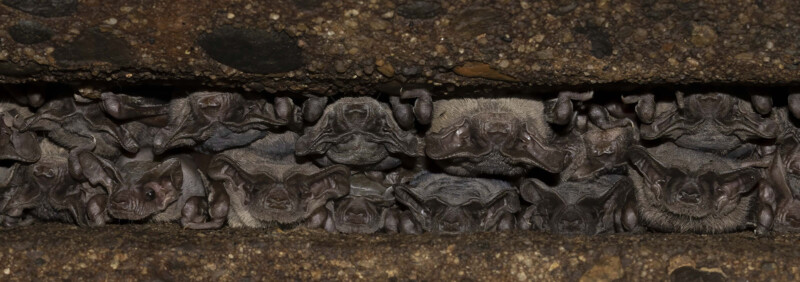
A group of bats tightly packed together, hanging upside down from the ceiling of a rocky cave or crevice, with their faces closely pressed side by side.
Mexican freetail bats are packed tight in their day roost.
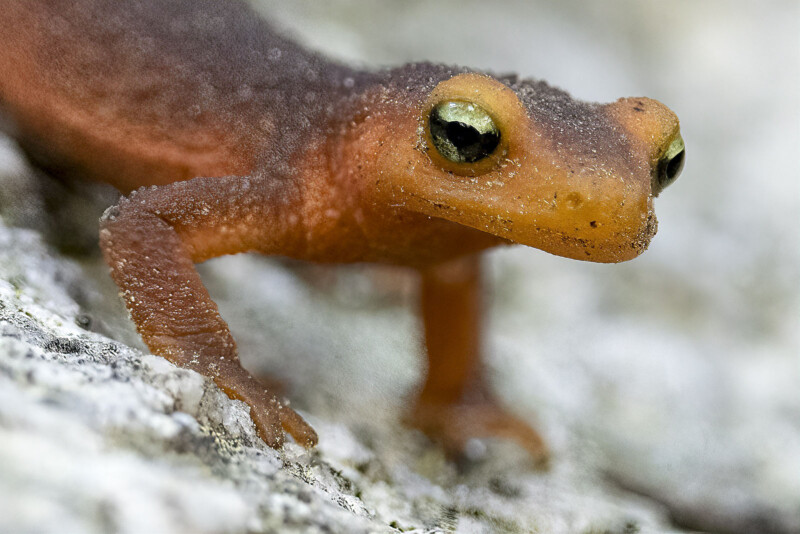
Close-up of a small orange newt with bumpy skin and large, round eyes, standing on a light-colored, textured surface. The focus is on its face, showing details of its skin and eyes.
A bright orange, and highly toxic, California newt traverses a granite outcrop.
A gray owl with mottled feathers perches on a branch in front of a tree trunk, surrounded by branches with yellow and green autumn leaves.
The largest owl in North America, the great gray owl hunts primarily by sound as their facial discs help funnel noises to their ears.
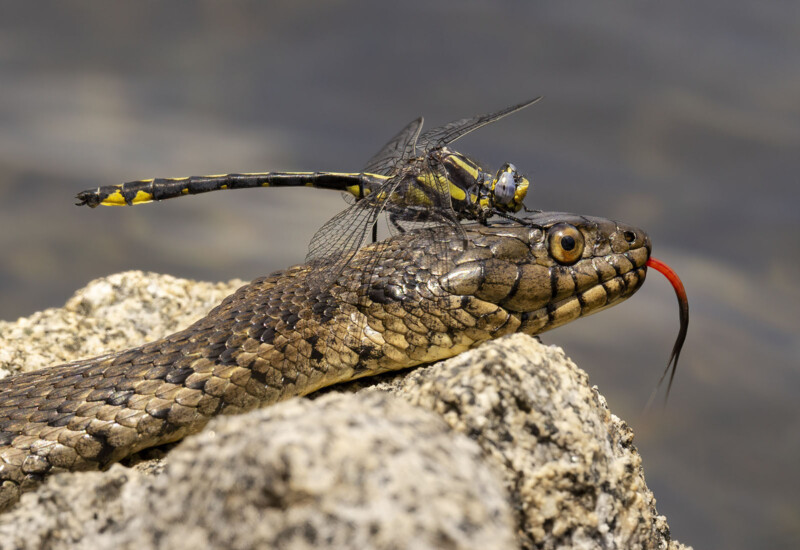
A dragonfly with a yellow and black body rests on the head of a brown snake, which is perched on a rock with its red, forked tongue sticking out.
A dragonfly chooses a most remarkable spot to perch on the head of a Sierra garter snake.

Yosemite is far bigger than people realize; it is almost 1,200 square miles, about the size of Rhode Island. Visitors tend to stick to Yosemite Valley for the waterfalls and granite cliffs. But Hirsch says that is just a tiny fraction of the park’s area and that 95 percent of Yosemite is designated wilderness.

“It is both incredibly enjoyable and rewarding to explore this vast backcountry of canyons, rivers, lakes, and meadows, photographing the landscapes and wildlife to bring awareness, appreciation, and importance of these natural places.”
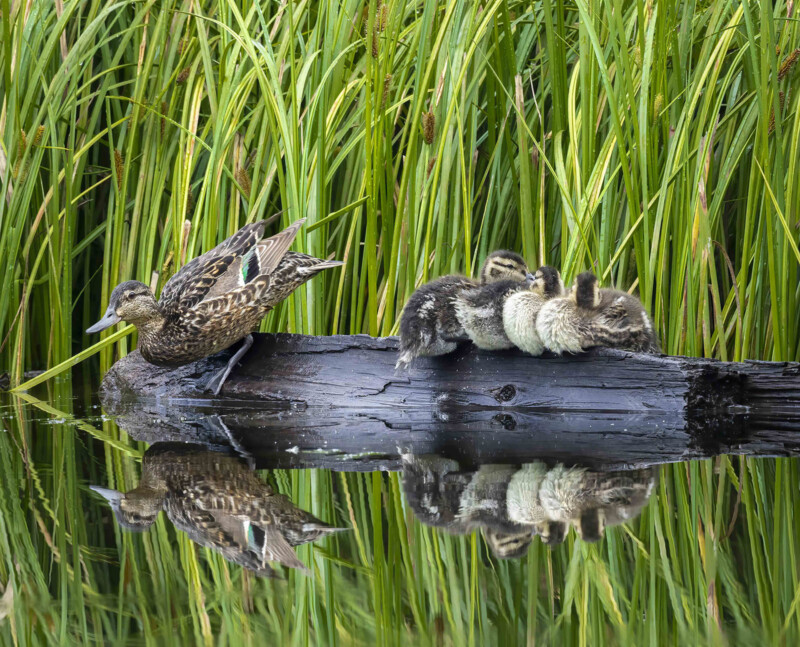
A brown adult duck sits on a log in a pond next to four fluffy ducklings huddled together, surrounded by tall green grass reflected in the water.
Ducks on a pond.
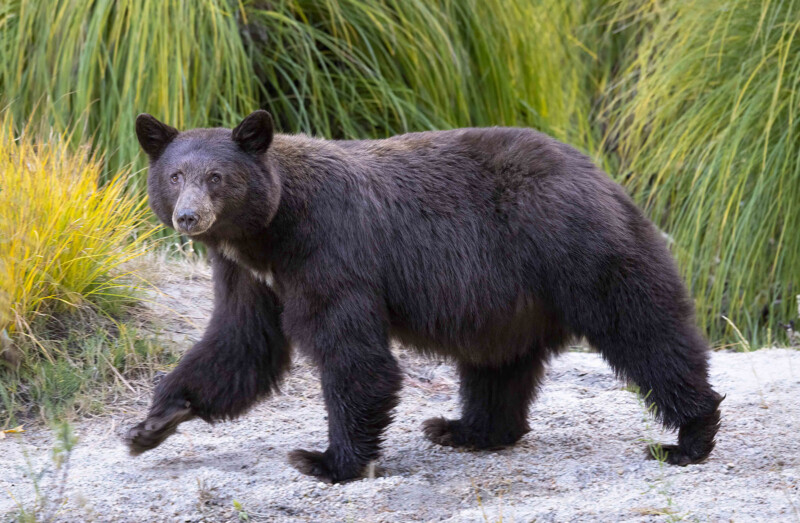
A black bear walks on a gravel path, looking toward the camera, with tall green grass in the background.
Black bear.
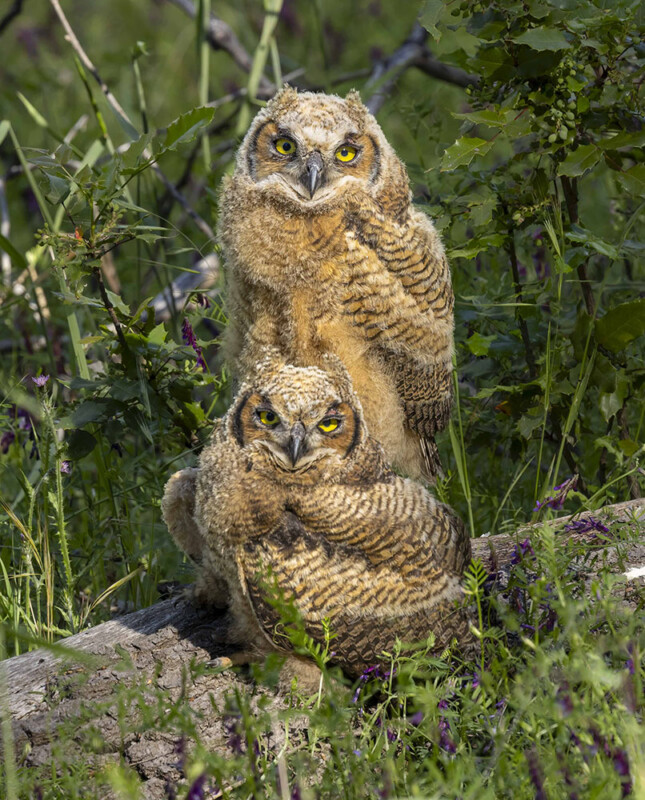
Two fuzzy juvenile owls with yellow eyes sit close together on a fallen log surrounded by green grass and foliage, looking intently toward the camera.
These juvenile great horned owls had left their nest just days prior.

“I’m extremely proud of Yosemite Wildlife, and I’m also very happy the project is completed,” Hirsch says.

“For the past couple of years, whenever I would see a bird fly by or a lizard perched on a rock, my first reaction was always ‘is this a species I need an image of for the book?, then take appropriate action.

“I enjoyed that challenge and quest, but I’m also happy now not to have that pressure and to pursue whatever subjects attract my attention at the time.”

Hirsch’s photos in Yosemite Wildlife: The Wonder of Animal Life in California’s Sierra Nevada is accompanied by extensive writing from wildlife advocate and conservation leader Beth Pratt. It comes out October 28 and is available on Amazon.

Discussion