Posts Tagged ‘night’

How to Photograph the Night Sky

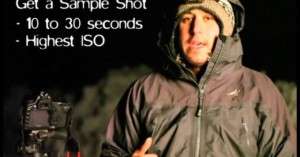
Photographer Ben Canales created this great video tutorial teaching the basics of shooting the night sky. He goes over how to shoot quick test shots to set up your composition before discussing more in-depth tips and tricks for capturing the final shot, including the “Rule of 600″:

[...] the quickest way to determine the longest exposure that is possible for any given focal length lens, without the stars streaking, is to divide that focal length into 600. (This is the formula for 35mm. Larger formats are laxer, smaller formats more unforgiving). [#]

For example, with a 50mm lens on a full frame camera, you can only expose for 12 seconds (600/50=12) before the stars turn into star trails. It’s a good rule of thumb to keep in mind!

(via Fstoppers)

Long Exposure Night Photos of Airplanes Taking Off and Landing

Long Exposure Night Photos of Airplanes Taking Off and Landing airport0

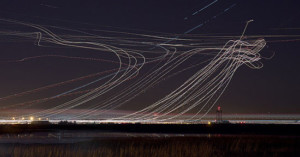
Sit around long enough near an airport and you can shoot photos like these — stacked long-exposure images that make airplanes look like fireflies streaking around the night sky. Flickr user Terence Chang visits various locations around the Bay Area to capture these photographs of San Francisco International Airport.
Read more…

Gorgeous Time-lapse of North American Cities at Night

Between late 2010 and early 2011, photographer Dominic Boudreault visited Montreal, Quebec City, Toronto, Manhattan, and Chicago, shooting gorgeous images of the cityscapes at night using a Canon 5D Mark II. The images were then combined into this beautiful time-lapse video showing the hustle and bustle of highways, sidewalks, streets, and rivers.

(via Fstoppers)

Tomorrow Night May Be the Best Time to Shoot the Moon in 18 Years

Tomorrow Night May Be the Best Time to Shoot the Moon in 18 Years 446068306 1c6a37771d

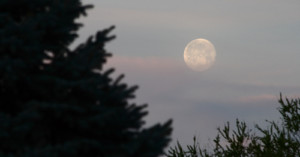
If you’ve been thinking of trying your hand at lunar photography, tomorrow night might present the perfect opportunity to do so. It’s when the Moon will be the closest it has been to the Earth in 18 years, making it 14% larger and 30% brighter than when the full Moon is furthest away. Miss this opportunity, and you won’t see a Moon like this until about 2029 — who knows what we’ll be shooting with by then!

Super Full Moon (via Harry Lim Photography’s Blog)


Image credit: Moon and trees by jpstanley

Oil Paintings That Mimic Long-Exposure Night Photos

Oil Paintings That Mimic Long Exposure Night Photos longex1

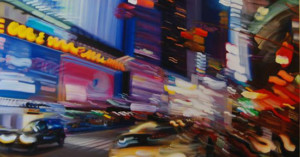
Alexandra Pacula paints beautiful oil paintings of cities at night that look like blurry, long-exposure photographs.
Read more…

Time Lapse and Star Trails Shot with a Canon 20D

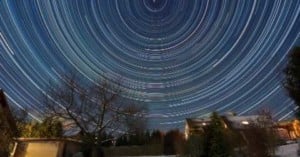
You don’t need fancy camera gear to capture beautiful images and video of the night sky. The above video shows a timelapse created using 1262 photos captured with a Canon 20D at 30 second exposures and ISO 800. At the end there’s a star trails photo created by combining all the stills into a single image. It’s a great 1.25 minute dose of relaxation and inspiration.

Perseid Meteor Shower Fail, Breathtaking Time-Lapse Win

Vimeo user ph dee went out to Anza-Borrego Desert State Park last night after hearing that it’s a great place to watch meteor showers. After spending four hours shooting frames for a Perseid meteor shower timelapse video, he discovered that the heavy air traffic in the area dominated the scene.

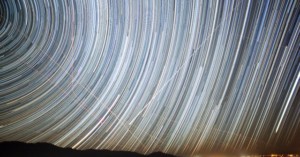
Luckily for us, he still went ahead and created the video, publishing it to his Vimeo stream with the title “Perseid Meteor Shower Failure“. Even though you don’t get to see much of the Perseid meteor shower, the video offers a breathtaking view of the Earth rotating and airplanes shooting across the sky. Meteor shower fail. Timelapse win.

The first part of the video was captured with a Canon 20D and intervalometer, while the second part was shot with a Canon 5D Mark 2 and Sigma 20mm f/1.8 at f/2 and 30 second exposures on continuous shooting mode with the shutter depressed.

A Long Exposure Desk Portrait

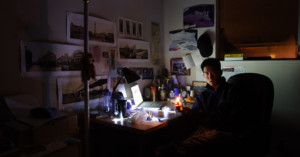
On the same day I was experimenting with the light painting I described in a post yesterday, I also fiddled around with long exposure portraiture. I had my buddy Aaron pose for me at his desk in near darkness. The only sources of light in the room were his laptop screen, a few LED flashlights that I placed on his desk in various directions, and a lighter that Aaron held in his hand.

Here’s the original, unedited photograph that resulted:

A Long Exposure Desk Portrait aaron2

It was taken with a 10 second exposure at ISO 100. It was probably a mistake to use such a low ISO, since I could have gotten the same exposure with less time if I had used a higher number. Every time the ISO number doubles, the shutter speed is cut in half for the same exposure (assuming aperture is kept constant). This is pretty intuitive, since if you double the sensitivity of your film, you’ll only need half as much time to expose it with the same amount of light.

Keeping the aperture at a constant f/8, here’s what the difference would have been.

ISO 100 – 10 second exposure
ISO 200 – 5 second exposure
ISO 400 – 2.5 second exposure
ISO 800 – ~1.25 second exposure
ISO 1600 – ~.75 second exposure

Luckily, Aaron was able to hold still enough to not appear too blurry in the photograph, making it acceptable when viewed at a normal web resolution. If it were to be blown up or printed, the faster shutter speed would have helped a lot.

Here’s a crop showing the different small sources of light that I used to illuminate the scene:

A Long Exposure Desk Portrait aaron3

What I found interesting about lighting up the scene this way was that each of the sources of light were a slightly different color temperature, giving the scene an interesting look in terms of colors and lighting.

During post processing, I increased exposure a little, did a little recovery, added a splash of fill light, and pushed contrast up a little. Here’s the final image (hover over it to compare it to the original):

A Long Exposure Desk Portrait aaron1

If you’re looking for something new to learn and photograph, try your hand at taking longer exposure portraits with unconventional sources of light. Just find a friend that can hold still!