Could Rows of Cheap Cameras Change Live Sports Broadcasting and Replace Cameramen?

A new camera system used at major sports events is wowing audiences with its silky-smooth shots, with some viewers even praising the cameraman. The catch? There isn’t one.
Norwegian startup Muybridge, named after Eadweard Muybridge who pioneered motion pictures, uses a long line of relatively small cameras and relies on software to seamlessly capture motion.
It was used during the Madrid Open, and the overall effect is like a video game thanks to its ultra-smooth nature. But while one YouTube commenter thought it was a dexterous camera operator, the floaty aesthetic is achieved by smoothly stitching many different shots together, without any delay or blur.
“400 years of camera history is ending here,” Muybridge co-founder Håkon Espeland boldly tells Fast Company. “I see a lot of resemblance to what he [Muybridge] did with sequenced triggers to actually create motion.”
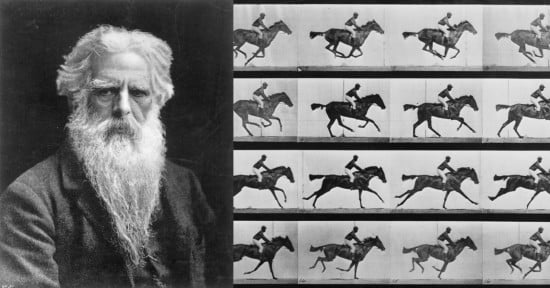
Eadweard Muybridge was an English photographer and is known as the “Father of the Motion Picture” after he developed the zoopraxiscope, an early device for projecting moving pictures. He was asked to prove that all four legs of a horse are off the ground while it runs. At the time, camera exposures were seconds, if not minutes, meaning freezing a horse was impossible. So Muybridge set up 24 cameras with special shutters he had developed and used a new, more sensitive photographic process that drastically reduced exposure time. He took successive photos of a horse in motion and mounted the images on a rotating disk and projected the images via a “magic lantern” onto a screen, giving birth to the motion picture in 1878.
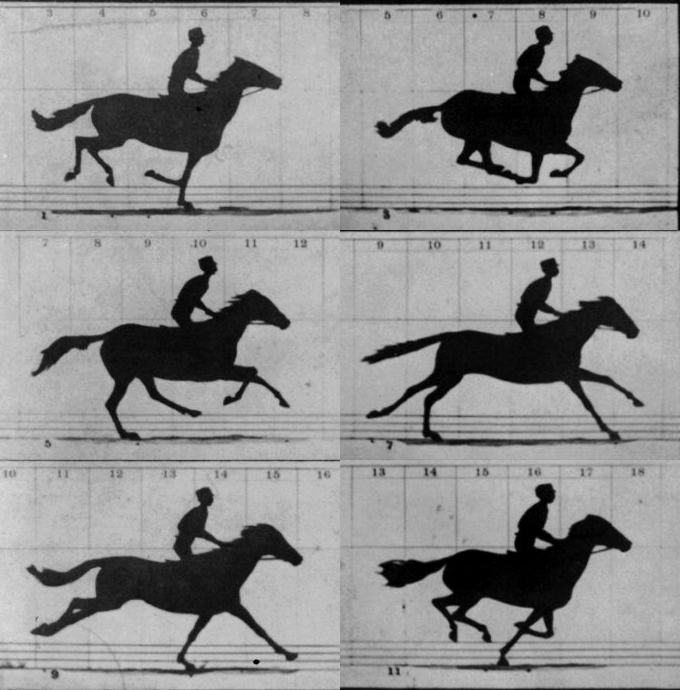
Espeland says that he is approaching capturing movement in a similar way to Muybridge. “How can you distribute sensors and use that data in a smart way?” he ponders.
The Muybridge system resembles extended speaker bars lined with smartphone-style camera lenses. Each unit spans about two meters (6.5 feet), and multiple units can be linked to create what functions as a single continuous camera of almost any length. “We’re going to build future digital stadiums full-360,” Espeland tells Fast Company.
Unlike conventional broadcast equipment that can block sightlines, these arrays attach discreetly to walls or existing structures, recording activity on the court, field, or rink without drawing attention.
Because the system relies on widely available electronic components, the sensors are relatively affordable.
“We are lucky that the consumer [electronics] and mobile industry consume so [many] cameras,” says Espeland. “They’ve taken the costs down. There’s a reason why there are three cameras on an iPhone now.”
Espeland is piggybacking on the mobile industry via computational photography, too. Software enhancements are delivering better image quality even as the underlying sensors have changed little.
The company is now talking to Formula 1, soccer leagues, and the NHL in search of more clients after already deploying the tech during major tennis tournaments.
One uncomfortable question remains: if this takes off, what will happen to the human camera operators who have honed their skills on the sidelines for years?