This One-of-a-Kind Lens Was Disney’s Biggest Gamble
Photographer and YouTube creator Mathieu Stern saw an incredible piece of cinematic and optical history show up on an auction site. While it was outside his price range, it was not beyond the reach of Atlas Lens Co., known for its Orion and Mercury series cinema lenses. The lens in question was a Bausch + Lomb CinemaScope anamorphic lens attachment, which could turn a traditional cinema lens into a then-groundbreaking anamorphic optic.
“I sent [Dan] the link, and he immediately bought it,” Stern says of emailing Dan Kanes at Atlas Lens Co. the link to the cinema lens. Kanes, a fan of Stern’s work, thought it was only fair that the photographer got to try the lens before it went into Atlas Lens Co.’s museum.
“A few days later, a plain box showed up at my door. Inside was a battered carrying case, the kind of relic you expect to see in an Indiana Jones movie. And when I saw this detail, my jaw dropped,” Stern says. The detail was a sticker on the case that reads, “20th Century Fox Camera Dept, 80 – 5, 6468.”
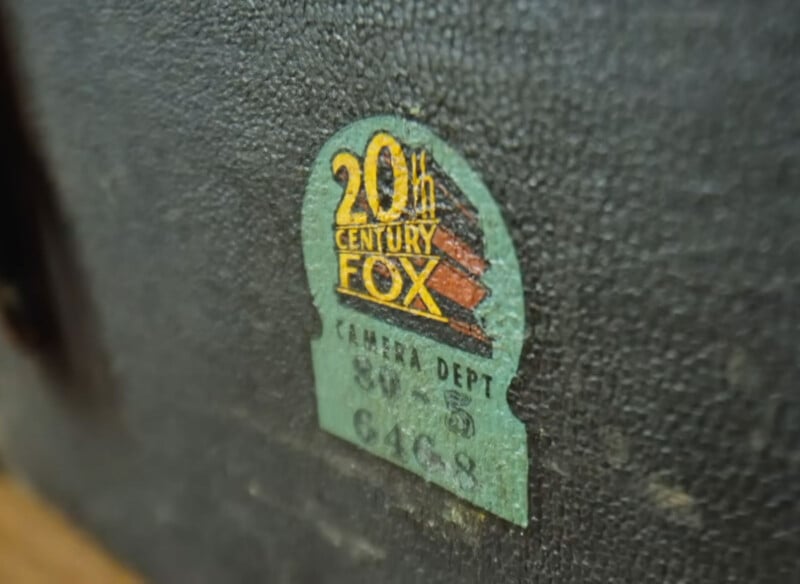
As for why this sticker matters so much, Stern invites viewers to join him on a trip back in time to the early 1950s, when Walt Disney was “under enormous pressure.”
Walt Disney, who had been celebrated for decades by now for pioneering work in animation, was struggling to earn respect as a live-action filmmaker.
“Then came the project that could change everything,” Stern says. “An adaption of Jules Verne’s novel, 20,000 Leagues Under the Sea. Walt Disney loved it so much that he poured nearly all of his money into the production. It became the most ambitious and the most expensive film in Hollywood history at the time.”
The stakes were “higher than ever,” as Stern puts it. “If the film failed, it wouldn’t just be a box office disappointment, it could have broken down the entire Disney empire.”
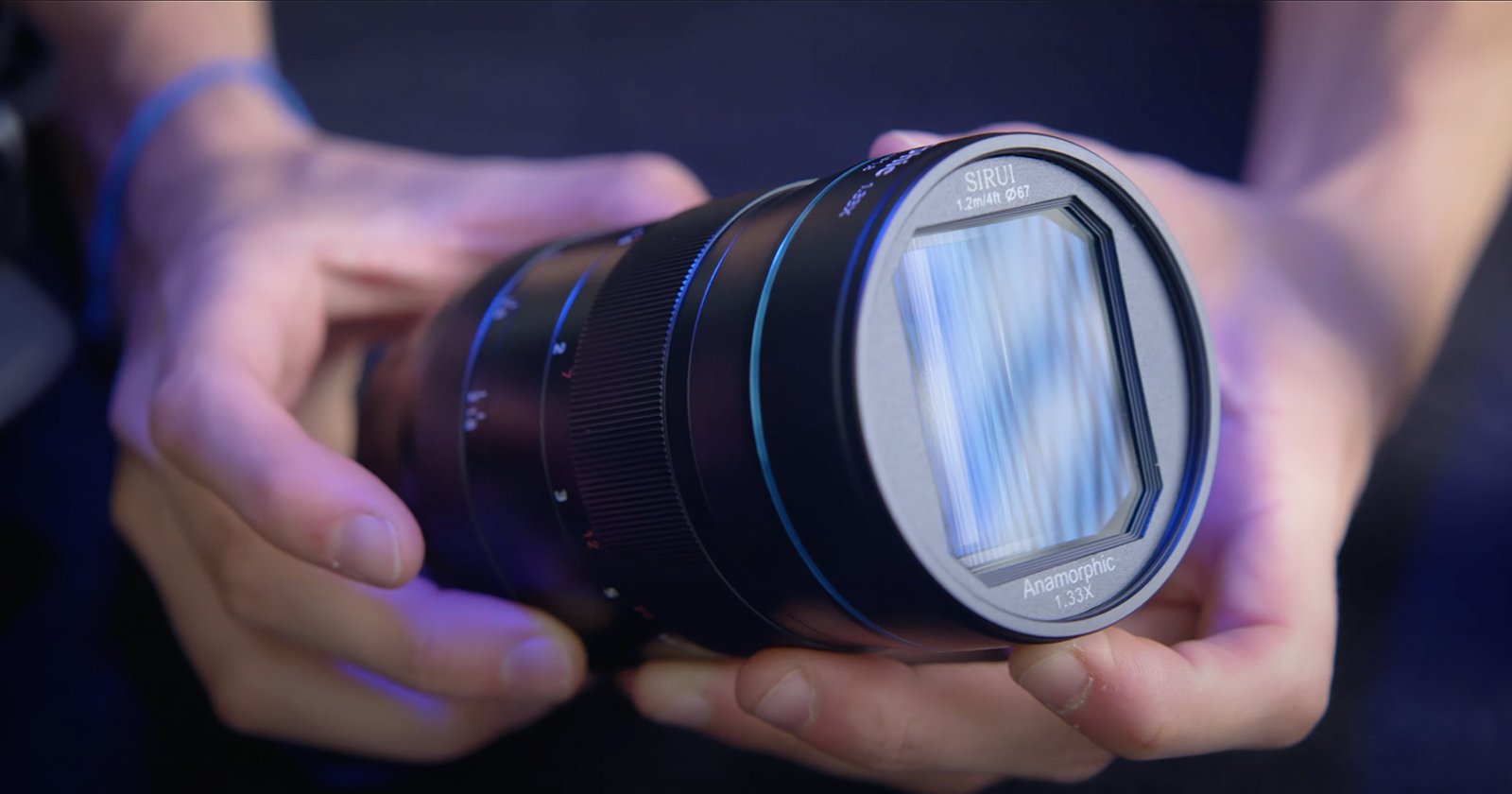
In pursuit of making the movie as visually spectacular as possible, Disney turned its sights toward a burgeoning cinema technology: CinemaScope. This technology, derived in the 1950s by 20th Century Fox from the Anamorphoscope filming process developed by French inventor Henri Chrétien in the 1920s, brought the anamorphic format to contemporary filmmaking with the introduction of CinemaScope. Like filmmakers still do today, CinemaScope enabled artists to use anamorphic lenses to squeeze wider movies out of 35mm film. While a 2.39:1 or 2.55:1 movie is commonplace today, in 1953, it delivered filmgoers an experience they had never had before.

Despite Disney’s record-setting budget and general influence, it could secure only a single CinemaScope anamorphic adapter and lens for filming 20,000 Leagues Under the Sea, which, of course, had to be outfitted in a highly specialized, difficult-to-use underwater camera rig.
The film’s director, the late Oscar-winning Richard Fleischer, noted in an interview that 20,000 Leagues Under the Sea was only the second film shot in CinemaScope, so the team had little history to draw on. They also had to focus everything twice, once on the anamorphic adapter and again on the actual lens. Worse yet, the two focused in opposite directions. Given that the team had only one of each optic, they had to be extremely careful throughout production.
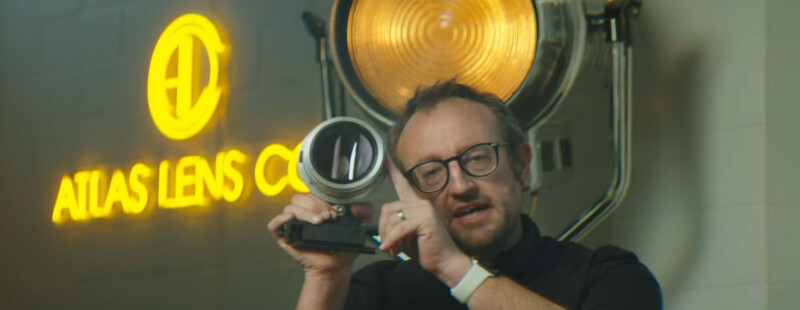
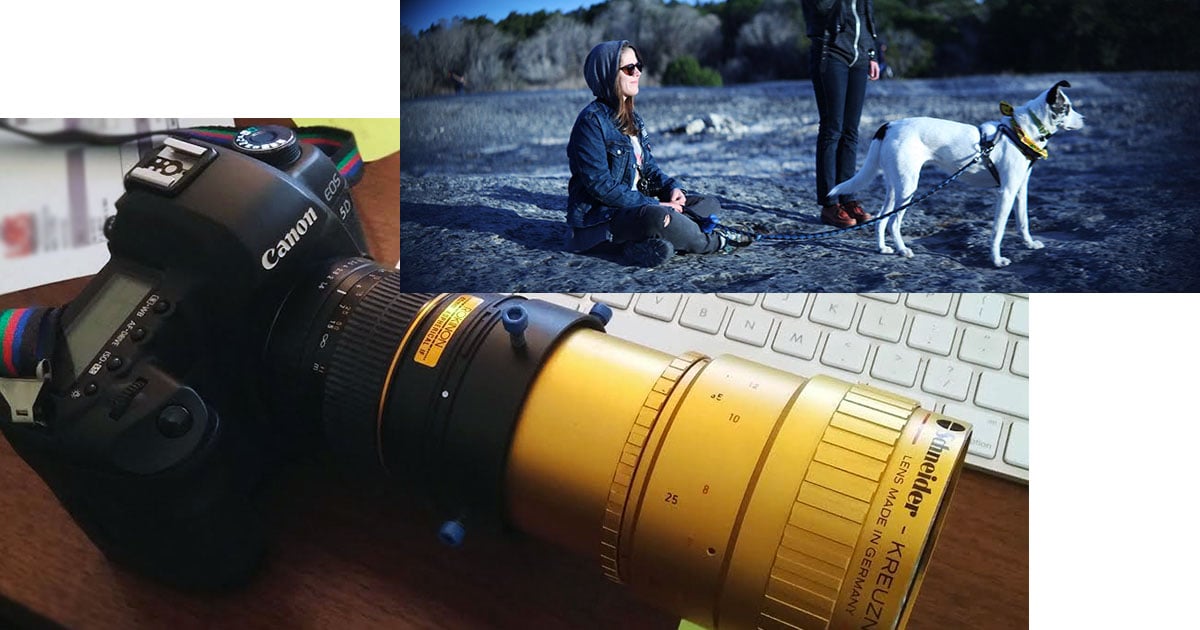
It is this Bausch + Lomb anamorphic adapter that Stern got his hands on in Paris in 2025, determined to adapt this piece of cinematic history to his modern Sony mirrorless camera. For anyone who has seen Stern’s work before, it is of little surprise that he found a way to do it.

“For the first time in decades, this piece of glass could sit in front of a taking lens again,” Stern says. In this case, the primary capture lens is his trust Konica Hexagon 57mm f/1.2 prime. To prevent light leaks, he sealed the connection with a series of custom tubes and was ready to go.

The same incredible flare and rendering that was featured in 20,000 Leagues Under the Sea is still available today, albeit on Stern’s vastly different setup. He even uses close-up adapters to enable close-focusing and shallower depth-of-field that the original filmmaking setup prevented, and the bokeh is genuinely incredible.


Wanting to give the legendary Bausch + Lomb anamorphic adapter one more chance under the sea, Stern got permission to take his large camera rig to the Aquarium de Paris and film various underwater creatures. After more than 70 years, the lens that joined Captain Nemo on his aquatic adventures was “able to go under the sea once more.”
“I still can’t believe I had the chance to hold and actually shoot with this incredible piece of cinema history. A lens that was once at the heart of Walt Disney’s boldest gamble, and then forgotten for decades, only to resurface in the most unexpected way,” Stern concludes.
Image credits: Mathieu Stern. As a note, after testing weird and wonderful vintage projector lenses for a decade, Stern has released a new book that captures his experiences, ‘The Projector Lens Handbook.’ It is available now and promises to take everything Stern knows about adapting, using, and shooting with projector lenses into an easy-to-follow guide for fellow photographers.