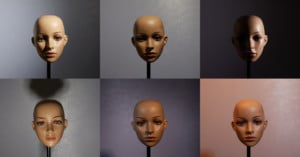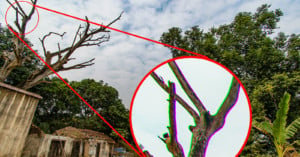
It’s fairly well known that not all lenses are created equal. Put that in combination with manufacturing variables and lenses don’t always perfectly align with the camera mount. Generally the differences are minor and for the most part negligible, but I buy old Minolta lenses from eBay and I want to get the best bang for buck out of them.
I started making micro adjustments to my lens/camera combinations when I first got Sony’s a77, and have now micro adjusted all my lenses for the a99 and D3. After reading what the Internet had to offer regarding “micro adjustment” or the “fine tune” functions higher level DSLRs offer, I quickly printed off some charts similar to rulers and taped them to my wall to start making adjustments. Read more…
If you’ve been looking for a basic photography course online, here’s something to hold you over until you find the right one for you. This “Photography (Basic)” course was put together by the U.S. Navy in 1993. And thanks to Reddit user clutch70706, you now have access to the full thing in PDF format. Read more…
Here’s a thrifty DIY idea courtesy of Netherlands-based photo enthusiast Rob Gipman. After getting rain on his lens a while ago, Gipman decided to take an unwanted piece of water-resistant fleece and make a do-it-yourself covering for his Canon 100-400mm lens. Read more…
David Hobby over at Strobist shares a fantastic idea for photographers who would like to always have some gaffers tape handy at all times:
So we are gonna make a gaffer’s tape keychain fob [...] That right there is 40″ of gaff, effortlessly carried by default, at all times [...]
No, no, no. While duct tape may in fact be more manly, gaff is what duct tape wishes it could be. And it is what photographers use because of its holding power and ease of clean removal. Don’t ever mistake the two.
All you’ll need is a paperclip, a wooden pencil, and a larger roll of gaffer’s tape. Head on over to Strobist to read Hobby’s step-by-step tutorial.

Here’s an interesting fusion of analog camera technologies: Kevin over at the Hong Kong-based photo site FilMe figured out how to make his Rolleiflex twin-lens reflex camera shoot Fujifilm Instax instant photos. Read more…
Remember that slow-motion wildlife footage that consisted entirely of still photos animated with parallax? French photographer Sebastien Laban does the same thing, except with his wedding photographs.
In the video above, all the apparently 3D scenes you see are actually the result of using some After Effects magic on ordinary 2D photographs. Read more…
Photographs printed onto wood are hangable, durable, and sustainable. The technique I use at Wood Craft Photos involves printing the image onto a special film, preparing a wood panel with custom gel medium, and then combining, leaving the wood grain in the light colored areas of the image showing through.
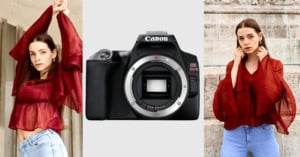

Here’s a step-by-step tutorial on how you can use this process yourself for beautiful wood prints. Read more…
Here’s a video that may be very interesting to you if you’ve never tried your hand at creating a tintype with wet plate collodion photography. Oklahoma City-based photographer Mark Zimmerman recently strapped a GoPro Hero 3 to his head and went through the entire process of creating a wet-plate photo on aluminum, from flowing the collodion in the beginning, through exposing it using his large format camera, and ending with a finished tintype photo of a camera. Read more…
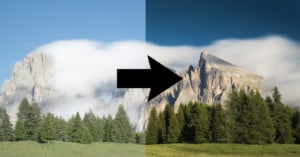
Shooting a seasonal time-lapse poses several challenges. You have to figure out how to power the camera for a very long time, how to protect it from the elements, how to make sure nobody messes with it, and how to run your set-up for months without needing to check on it very often.
Fortunately, if you’re interested in making your own long-term time-lapse, the people of Kontent Films have put together a step-by-step tutorial on Instructables that covers all the bases — from building the enclosure to shooting the (many thousand) exposures. Read more…
For beginners in the world of photography, getting a good grasp on the types of lenses available and when you might want to use them is an important step. So, given that there’s a lot of glass out there, we thought we’d share this basic lens intro from Pentax. Read more…