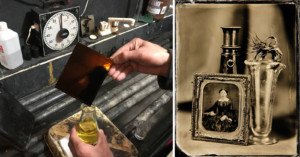
Making Collodion From Scratch
A few days ago, for the first time ever in my experience with wet plate photography, I mixed up collodion from scratch. I thought I'd share about the experience.
A few days ago, for the first time ever in my experience with wet plate photography, I mixed up collodion from scratch. I thought I'd share about the experience.
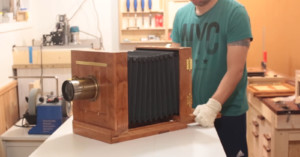
Photographer Dieter Schneider started building cameras about five years ago, and last year he fashioned a 4x5 camera using a CNC Machine. This year he took things to yet another level, creating an 8x10 large format camera entirely by hand without using computer-aided machinery. You can watch the entire build process in the 35-minute video above.
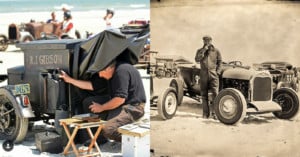
Rob Gibson is a tintype photographer who works in what he calls "the world's fastest darkroom." After photographing vintage motorcycle and car events, he develops his tintypes in a 1938 Harley-Davidson sidecar that he zooms around with.
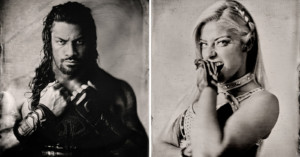
New York-based photographer James Weber recently shot a series of portraits of WWE wrestling superstars using the 1800s wet plate collodion process.
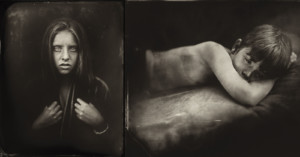
For her project titled "Nebula," Spanish photographer Jacqueline Roberts shot portraits of youth in the limbo period between childhood and adolescence using the wet plate collodion process from the mid- to late-1800s. The resulting photos are haunting in their appearance.
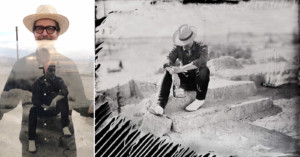
Capturing beautiful stories. That's what wet plate photographer Ian Ruhter set out to do for his 3-year project at Slab City. But some of the most meaningful moments actually transpired within 48 hours, when English actor Gary Oldman paid Ruhter and his crew a surprise visit.
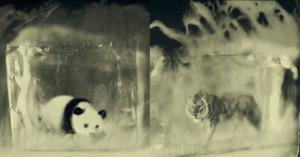
When photographer Erik Hijweege realized that there were over 22,000 species on the IUCN Red List of Threatened Species, he was shocked... and inspired. Inspired to create a hauntingly beautiful series of glass ambrotypes depicting some of these endangered species encased in ice.
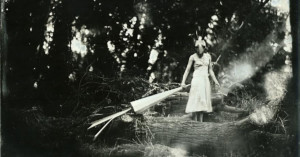
French photographer Nède has been working on a project called Altered Reality in which he explores the line between mundane reality and madness. One of the images, shown above, is titled "The Unsuspecting Victim."
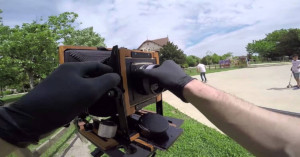
During a photo shoot last summer under the hot sun in the South of France, photographer …
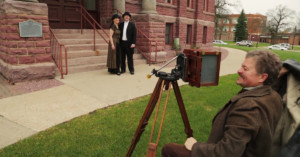
Minnesota’s Pioneer Public Television made this 12-minute mini-documentary about wet plate photography and photographer David Rambow. Rambow discusses the …
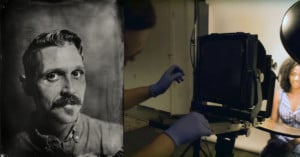
Photographer Patrick Demmons shoots tintype portraits for about $60 a pop through his Revival Tintype studio in Oakland, California. In the 2.5-minute profile above by WIRED, Demmons offers a short and sweet look at what tintype photography is and how it's done.
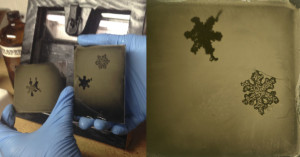
Want a crazy photography challenge? Try photographing a snowflake. Want to make it even more challenging? Try doing it with the wet plate collodion process.
That's what a couple of photography professors over at the Rochester Institute of Technology recently attempted and pulled off.
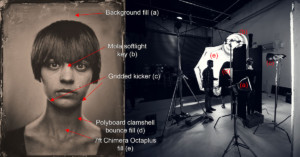
This is a story about a collaboration to overcome 19th century technology problems using 21st century technology to produce well lit portraits.
Luke White and I, Paul Alsop, are two English photographers living in New Zealand who came together in 2014 to make wet plate collodion portraits.
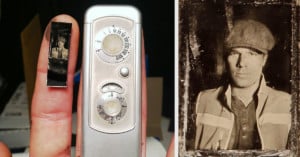
How small can you go when it comes to wet plate collodion photography? Photographer Anton Orlov of The Photo Palace recently experimented with this question by shooting thumbnail-sized 8x11mm tintypes using an old Minox subminiature camera -- a model A III from the 1950s.
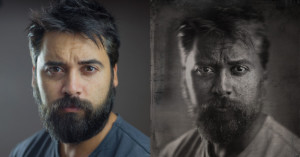
Love the look of wet plate collodion photographs? Did you know you can give any digital photo that same look using Photoshop? It's a technique that can be learned in about 10 minutes.
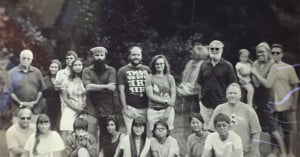
Last week, RIT photography professor Willie Osterman held the 2015 RIT Photo MFA picnic in the front yard of his home in Bristol, New York. To commemorate the gathering, he pulled out a giant camera to shoot a wet plate collodion ambrotype portrait of the group.
On the other side of the camera, in the group, was fellow photo professor Frank Cost with a DJI Inspire camera drone. Cost used the drone to capture the wet plate shooting process from a subject's point of view before lifting off into the sky for a bird's-eye view. The drone was also captured in the resulting wet plate from the last portrait attempt.

Want to see how wet-plate collodion photography is done but have the attention span of a goldfish? Our buddy Sam Cornwell over at Phogotraphy has created an unusual step-by-step wet plate walkthrough -- everything is crammed into a 6-second Vine video.
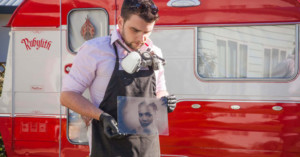
Having failed woodworking at school, probably the worst thing I could have done is venture into the world of wet plate photography.
Back in 2012, I learned the dark art of the silver stuff, just around the time the wave of interest was starting to build worldwide. However, as I live in New Zealand, an island nation, it has taken a while (and is still taking a while) to reach us. As a result, getting anything wet plate-related is quite a task. One does not simply walk into a store and buy a 'wet plate kit'.
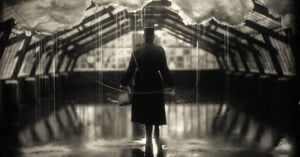
During past few weeks I have been working on a new picture I had in mind. This time I already knew the title: "The Rain Maker." It's a picture made with the collodion photographic process that was invented back in 1851.

I get a call on Saturday, February 28th, 2015, telling me “The Champ can give you an hour if you can pick him up at the hotel in 10 minutes”. “I'll be there in 8," I say to the person on the phone.
This "Champ" they are referring to is none other than Evander Holyfield, 4-time heavyweight champion of the world, and I am being offered an opportunity of a lifetime.
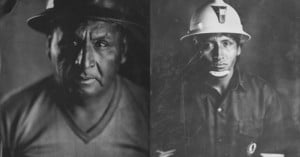
Here's a creative (and super meta) idea for a photo project: photographer Sean Hawkey traveled to a silver mine in Peru and shot tintype portraits of the miners there using the silver they mined as his emulsion.
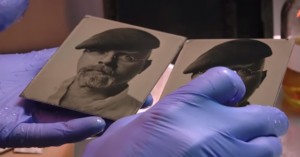
We never get sick of watching talented wet plate photographers at work. This process, made to look so simple by those who have been honing their craft for years, is actually incredibly complex and finicky. And so when the Tested crew decided to get MythBusters' star and fellow host Jamie Hyneman's picture taken, they went to Michael Shindler, one of the absolute best.

Photographer Justin Borucki has spent the better part of a year and a …
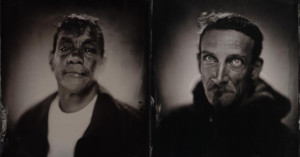
Dylan Burr is a full-time artist from Denver, Colorado, but despite his busy schedule and full-time job, Burr recently embarked on a personal photography project on the side. The project, however, wasn't for him. His goal was to use the raw power of wet plate collodion portraiture to give a name and story to the Denver Area homeless.
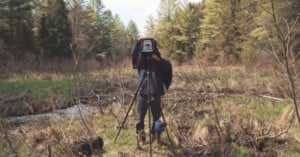
Skateboard company Element recently put together a wonderful little mini-documentary titled The Road to Wolfboro. In it, a dedicated film crew follows photographer Brian Gaberman around as he shares his fascination of wet plate photography and captures some of the most beautiful scenes across the east cost.
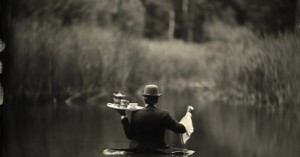
From portraits to surreal scenes that feel as if they were pulled out of some long-lost storybook, the wet plate collodion photography of Alex Timmermans is unlike any we've seen or featured before.
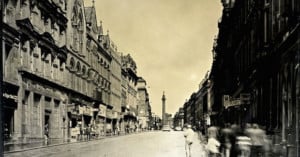
What's a photographer to do when they're in possession of a 130-year-old wooden camera and a 100-year-old lens, capable of capturing images using the wet plate collodion process?
Well, if you’re Jonathan Keys, you set out on a mission to document the modern world around you using tools that are all but ancient in the world of photography... and you get spectacular results for your effort.
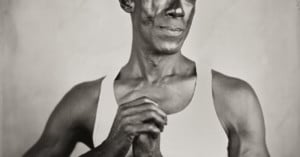
Keliy Anderson-Staley is an assistant professor of photography at the University of Houston. Her work has been exhibited at the National Portrait Gallery of the Smithsonian, the California Museum of Photography and the Portland Museum of Art, and is currently on view at the Houston Center for Photography.
Her book of portraits, On a Wet Bough, is forthcoming from Waltz Books. She is represented by Catherine Edelman Gallery.
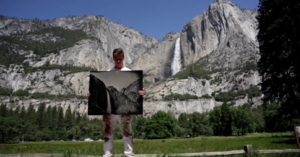
Two years after photographer Ian Ruhter tried to capture photographs of the Yosemite Valley using the world’s largest wet plate collodion camera and suffered a "devastating failure," he decided to chase this seemingly impossible dream again.
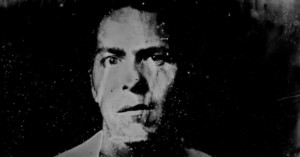
If you don't really think about it, it's easy to take video for granted. After all, you can pull out your cell phone and be recording video in a few seconds flat (even fewer if you have Pressy). But what if you were limited to older photographic techniques? No, we don't mean film, we mean wet plate photography.
Capturing even a 12fps animation for only a few seconds would seem an enormous task, and yet, that's exactly what director Kellam Clark and his 40-person crew -- altogether The Living Tin -- are doing. They're shooting video made entirely of collodion tintypes.
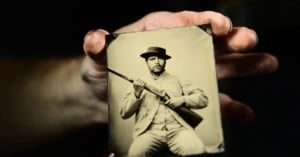
Wet plate photographer Rob Gibson believes that there are those among us who are "flame-keepers of the past," and if such people exist, he is certainly one of them. Like the others out there who continue to practice age-old photographic techniques such as the daguerreotype or wet collodion process, his passion harkens back to a simpler time -- a time he does his best to recreate with 100% accuracy through his lens.
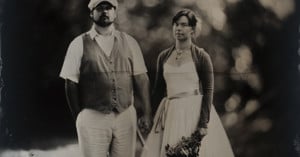
When my wife Sara and I finally decided to start planning our wedding (after a crazy Muppet Proposal proposal that seemed to tickle quite a few people's fancy) one thing that became very important to us was what to do with our wedding portraits/photography.
We are both photographers. Sara and I have experience in handmade processes (Sara is heavily into large format pinhole photography and albumen printing), and after the proposal thing went viral we had all kinds of photographers contacting us pushing their services in our face.
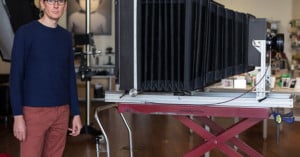
Gigapixel photography is all the rage these days, as photographers all over the world compete to hold the record for "world's largest photo," but one photographer in San Francisco is participating in a very different way.
Michael Shindler, a photographer at the tintype studio Photobooth, has built a custom giant tintype camera that shoots portraits that are the analog equivalent of a gigapixel photo.

Using discarded tin cans found on the hot Arizona desert ground, David Emitt Adams has created timeless pieces he calls Conversations with History. The cans are branded with tintype pictures, reflecting ties to the very locations the cans -- some of which have been sitting out in the sun for over forty years -- were found.
In the words of Adams, "The deserts of the West also have special significance in the history of photography. I have explored this landscape with an awareness of the photographers who have come before me, and this awareness has led me to pay close attention to the traces left behind by others."
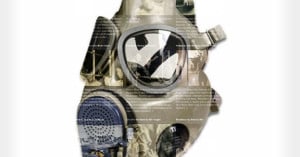
The Mask Series is a collaboration between wet plate photographers around the world who are trying to raise public awareness of the historical photographic process that they're so passionate about. The whole thing is centered around a specific prop: a vintage Czech M10 gas mask. Basically, every photograph contributed to the project must somehow incorporate one of these gas masks in one way or another.
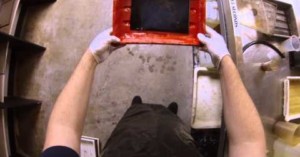
Here's a video that may be very interesting to you if you've never tried your hand at creating a tintype with wet plate collodion photography. Oklahoma City-based photographer Mark Zimmerman recently strapped a GoPro Hero 3 to his head and went through the entire process of creating a wet-plate photo on aluminum, from flowing the collodion in the beginning, through exposing it using his large format camera, and ending with a finished tintype photo of a camera.

Photographer Ian Ruhter has released the latest video in his beautiful Silver & Light series, which follows along as he creates portraits around the United States using a giant wet plate camera van. The video above is titled, "Death Do Us Part," and is about the idea of letting go of fears.
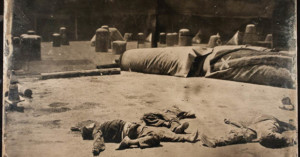
Photographer and photography student Eric Omori has an interesting project that combines the modern with the historical. He has been capturing paintball wars using wet plate photography. The project is titled Weekend Warriors.

Faking the look of old films is becoming ubiquitous in the world of mobile photo sharing apps, but so far the popular apps have stuck with various films and not older photographic processes. If you want to create a photograph that mimics the look of a wet plate, it's actually pretty easy to do in Photoshop.
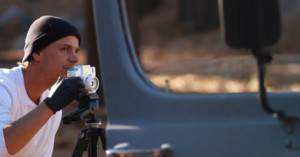
Wet plate photographer Ian Ruhter has received a good deal of attention over the past year for using a custom camera van to create giant collodion process metal photos. When he's not turning large sheets of metal into photographs, he's sometimes working on the opposite side of the spectrum.
One of his recent interests has been shooting pint-sized photos using a Holga toy camera that he converted into a wet plate camera.