
Australian Photo Industry Website Inside Imaging is Shutting Down
After 15 years of publishing photography industry news, the Australian website Inside Imaging has announced that it is shutting down.
After 15 years of publishing photography industry news, the Australian website Inside Imaging has announced that it is shutting down.

Amazon has released a new beta feature that uses artificial intelligence (AI) to generate virtual backgrounds for product advertisements, putting virtual backgrounds behind real items.

Photography website ePHOTOzine has been purchased by Giggster, an online studio space rental company.

Photography-on-the-Net, one of the original digital photography forums and perhaps one of the most prominent of the time, is shutting down at the end of 2023.
Nearly three months after DPReview announced its imminent shutdown, and more than two months after DPReview was initially slated to shut down and go offline, the beloved publication has found a new lease on life.

"AI or Not" is a free web-based app that claims to be able to identify images generated by artificial intelligence (AI) simply by uploading them or providing a URL.

Wedio is a Europe-based platform that lets photographers and filmmakers rent equipment from other creators, effectively creating the "Airbnb of photo equipment."
How I feel about losing DPReview is difficult to put to words. The brand has been a mainstay since I took up a camera and the space that they leave now is one that I don't think will ever be properly filled again.
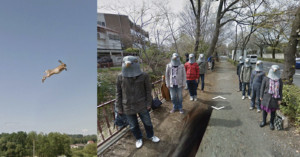
A coder has created a new website that explores the quirks and curiosities that Google Street View has to offer.
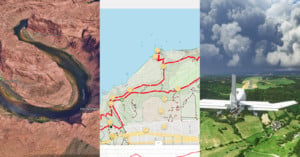
Being an accomplished photographer means developing a range of complementary skills all of which combine in an agreeable process that, hopefully, results in good photographs.
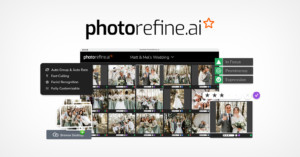
Zenfolio has announced PhotoRefine.ai, a new application that employs artificial intelligence (AI) to reduce the amount of time photographers spend grouping, rating, and culling images after a photo session.
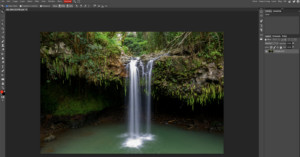
Photopea has launched version 5.2 that adds support for color profiles, a CMYK mode, a new noise reduction filter, the ability to add text and strokes, and more.
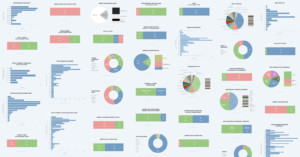
What are famous photographers doing right on their websites? Or better yet, what are they doing awfully wrong despite being successful? In this detailed research report, I thoroughly reviewed over 100 individual websites (from the most well-known photographers out there) to try to uncover all of that.

Recently I've been thinking a lot about how to keep my self-hosted photography website alive after I’m gone (no, I’m not dying anytime soon, though -- hopefully). My website is where all my passions are combined into one (travel, photography, web design and development), and I treasure it like my child. I really want it to last beyond my time on this planet, but the problem is how.

My name is Albert Dros, and I am a professional landscape photographer from the Netherlands. People often tell me that I am "in the right place at the right time." But I obviously don’t post "failed" shoots. And not only that, I also spend a great deal of time planning my shots in order to make my chances of success as high as possible.

Last week we reported that CVS's photo printing website had been taken offline in response to a possible breach of credit card data at its third party vendor. It turns out that same vendor powers many other huge photo printing service sites out there, and those sites are now down as well.
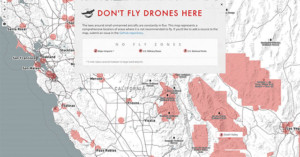
Just got your hands on a drone and can't wait to use it to shoot aerial photographs? First, make sure you only use it where it can legally fly. If you're not sure where to look for this info, there's a new website designed just for you.
It's called Don't Fly Drones Here (DFDH), and is an interactive map that shows off limit areas of the US by shading them in with red.
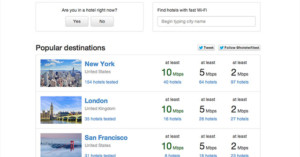
Want to make sure you can upload your travel photos quickly from your hotel room? Hotel WiFi Speed Test is a service that can help you plan ahead when you're roaming the world with your camera.
As was inevitable, the more common and generic top level domains (e.g. .com, .net, and even .co) are becoming scarce as more and more domains are registered each day.
Knowing this moment in time would come, ICANN, the authority in charge of managing domain names, has been putting out more and more top level domains in hopes of opening up more options for those looking to grab their own piece of the web -- and photographers are benefiting more directly than most.

Yesterday we shared some news coming out of photographer Vincent LaForet's camp that the website service liveBooks -- which is used by many photographers -- was quite possibly on its way out. This after a month of silence and "knowledgeable sources" indicating that the US branch of the business was all but shut down.
A few hours after that news broke, however, we found out what was really happening: liveBooks has been acquired by the online event marketplace WeddingWire.
The modern web was made for photographers; it's such a visual medium where beautiful images have an incredible impact. Text, or copy, is still important for SEO considerations and for those visitors that want to spend more time on your content. Video is fantastic, and many photographers have the capability to produce great videos with their current equipment.
But unlike still images, by its nature video demands time -- you need 30 seconds to watch a 30 second video versus a quick glance at a photo that usually communicates the entire message.
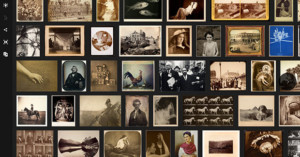
Opened in 1949, the George Eastman House in Rochester, New York is the world's oldest museum dedicated to photography. It's world renowned for its collection of more than 400,000 photos and negatives dating back to when the medium was first invented.
If you would like to check out some of the museum's photos but can't make the trip out to Rochester, there's now a sleek new way for you to browse the imagery. The museum announced this week that it has become the first photo museum to join the Google Art Project.
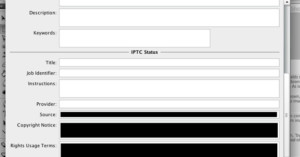
How well does your favorite photo hosting and/or sharing service handle the copyright information and EXIF data of your photographs? How do the popular services stack up against one another in this regard?
Metadata handling isn't often discussed when photo sites are compared, but that's what the International Press Telecommunications Council (IPTC) has been devoting an entire study to. The organization has published its findings regarding which companies play nicely with your metadata, and which pretend it's not there.

Obvious Corp, the company that spawned Twitter, has unveiled a new project called Medium. It's a site that attempts to revolutionize how online publishing is done.
Instead of content being centralized around individual people, it features photographs and text grouped into themed collections. Content within collections can be sorted by how "interesting" viewers rated it to be.
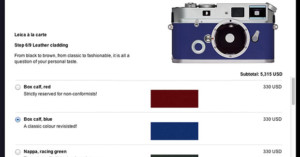
When shopping for a new computer, online shops often allow you to customize the computer and choose the individual components that go into it. If the computing world can offer that, why not the photography world?
Turns out you can with Leica cameras. The company has a website called "Leica à la carte", through which you can configure a film Leica rangefinder to suit your tastes and needs.
There are currently 22 "generic" top level domains (e.g. .COM, .NET, .ORG), but that's about to change. ICANN, the authority behind the Internet's domain name system, began accepting applications for new gTLDs, meaning we may soon see web addresses that end in things like .PARIS, .FERRARI, and .KIDS. Yesterday was "reveal day" -- the day on which the full list of domain proposals and applicants was published. The reveals some pretty interesting clues on some photo-related domains that might soon hit the web.
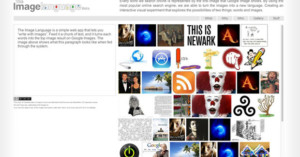
The Image Language is a simple web app that lets you “write with images”. Feed it a chunk of …
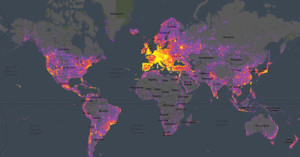
Curious about where people like to take pictures in your part of the world? …
In August 2005, a UK student named Alex Tew launched a creative project called …
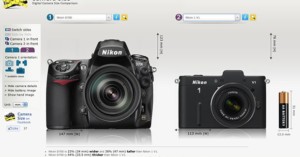
Mirrorless cameras are designed to be compact, but how big are they compared to DSLRs? How big are popular DSLRs compared to one another? Camera Size is a website that helps answer these types of questions. It's a simple web app that shows you exactly how big digital cameras are compared to one another and compared to reference objects (e.g. a battery).
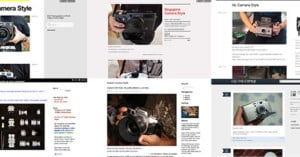
tokyo camera style by John Sypal (see our interview with him) is a popular website documenting the analog camera culture in Tokyo, Japan by sharing photographs of cameras being used on the streets -- it's like The Sartorialist except for cameras instead of fashion. If you're a fan of the site and love browsing photos of old school cameras people use, you'll be happy to know that there's a number of similar websites for other cities and places around the world.

Google Street View is neat in that it allows you to step into …
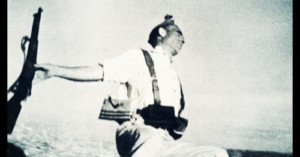
What would famous photographs look like if the photographers who created them had been using Instagram? That's a question that's answered by Mastergram, a site that takes the work of renowned photographers and passes them through Instagram filters.
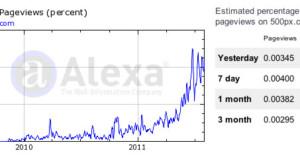
Alexa's traffic reports seem to show that photo sharing service 500px is growing like a weed. The site has received quite a bit of coverage as of late.
Mashable is reporting that Google will be rebranding …
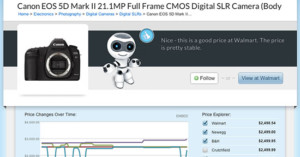
Shopobot is a new shopping tool that helps buyers determine the best price …

Bad news for TinEye but good news for photographers: Google is adding …
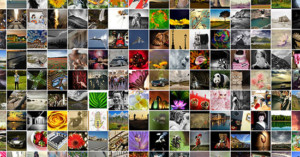
Need some inspiration? The “Endless Interestingness” page by designers Mark Barcinski and Adrien …
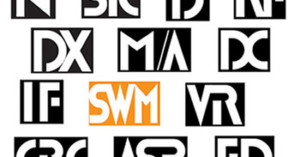
Confused about what a certain acronym means when it comes to Nikon’s line of Nikkor lenses? There’s a helpful …
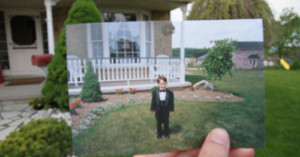
DEAR PHOTOGRAPH is a neat photo project by Taylor Jones that collects pictures of pictures from the past in the present. These are images that show old photos held up and aligned to the present day location, offering a glimpse into what once was.