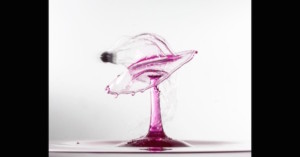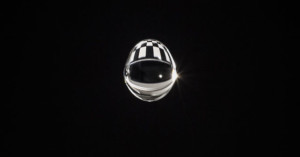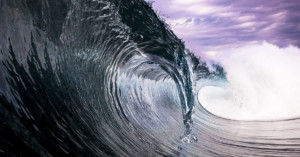
Water drop photographer Corrie White creates pretty neat “time-lapse” videos of water drops falling and making splashes. The images aren’t from the same splash: White shoots one photo of 350-400 individual drop attempts, with each photo delayed just a fraction of a second longer than the previous one. Combining the resulting images into a time-lapse (or stop-motion) video creates the result seen here. Read more…
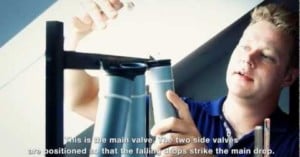
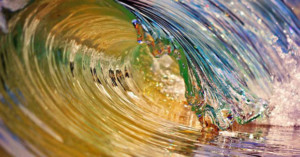
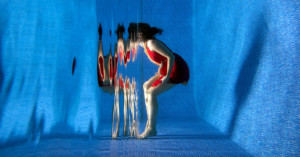
Here’s a gorgeous series of underwater portraits shot by photographer Jacob Sutton, the same guy who did the LED snowboarding shoot that we featured a while back. It’s titled “Underwater Girl”. Read more…

A couple weeks ago we shared an interesting video in which a speaker and Canon 5D Mark II’s frame rate were used to make water appear to be frozen in mid-air. This new video by YouTube user Brusspup takes the idea to the next level by making the water appear to travel upwards. He explains:
Fill a bucket full of water and place it about 5 feet off the ground. Place a subwoofer about 1 foot lower than the bucket. Run a plastic tube from the top bucket down in front of the subwoofer. Tape the tube to the front of the speaker. Then aim the end of the tube to an empty bucket on the floor. Get the water flowing from the top bucket. Now just generate a 24 hz sine wave and set your camera to 24 fps and watch the magic happen. Basically your cameras frame rate is synced up with the rate of the vibrations of the water so it appears to be frozen or still. Now if you play a 23 hz sine wave your frame rate will be off just a little compared to the sine wave causing the water to “move backward” or so as it appears. You can play a 25 hz sine wave and cause the water to move slowly forward.
This experiment has become quite a trend as of late — this particular video has been viewed over a million times in less than a week.
When recording video, a camera’s frame rate can produce some pretty strange effects. If matched up with a helicopter’s blades, a helicopter looks like it’s hovering in midair with motionless blades. YouTube user mrbibio found that the same thing can be done with falling water. His technique is brilliant: by pressing a water tube against a speaker, mrbibio was able to control the vibration frequency of the water flowing through the tube. He then adjusted the pulses of the water to match up with the frame rate of his Canon 5D Mark II. The result is a video of the water looking as though it’s frozen in time.
Photographer Clemens Wirth wanted to dive into microscopy, so he attached his Canon 5D Mark II to a monocular microscope using an adapter and pointed it at one small drop of water. He was amazed to find out how much activity goes on inside ordinary water, and how detailed that tiny world is. This short film, titled “Micro Empire”, is a beautiful combination of Wirth’s footage and audio by Radium Audio.
Here’s a super cool trick: instead of buying a special macro lens for your smart phone, simply use a drop of water! Carefully place a drop of water over your lens, carefully invert the phone, and voila — instant macro shots with the cheapest lens you’ll ever own. Alex Wild over at Scientific American has more details on the technique and some great sample shots taken with it.
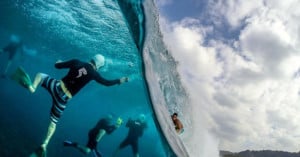
You’ve likely seen plenty of images of giant waves from above the surface of the water, but have you ever seen what it’s like to pass under a wave? Photographer Mark Tipple has an amazing project called “The Underwater Project” in which he captures epic photographs of swimmers diving deep in order to survive passing waves, which look like ominous storm clouds rolling overhead. In the interview and behind-the-scenes video above, Tipple shares how he was inspired by a powerful photo by Brian Bielmann, and how he goes about shooting his images.
Reflections is a series of photographs by New York-based fine art photographer Ira Fox. Shot through the reflections seen in puddles on their ground, they show shadows of passers-by as they cross paths with Fox on a rainy day. Read more…