Posts Tagged ‘war’

War Photographers Share about Shots that Almost Got Them Killed

War Photographers Share about Shots that Almost Got Them Killed stories

The Guardian compiled a powerful collection of vignettes by war photographers recounting times when their work almost got them killed.

Anyone who says they aren’t frightened during war is either lying or a fool. It’s about finding a way of dealing with the fear – you have to be very calm. You’re not there to get your rocks off; you’re there because you feel your pictures can make a difference.

– Tom Stoddart

It’s amazing the kinds of dangerous situations photographers place themselves into to serve as the world’s eyes during wars and conflicts.

The shot that nearly killed me (via dvafoto)

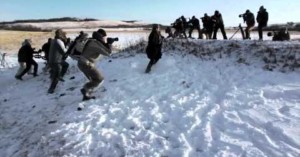
The Legendary Battle At F-Stop Ridge

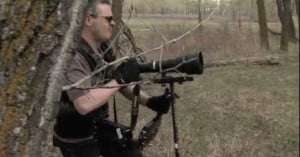
This epic advertisement for The Camera Store imagines what would be like if wars were fought with cameras instead of guns. In this alternate reality, massive telephoto lenses and flash(bang)s sure come in handy!

The Battle at F-Stop Ridge (via Reddit)

Three and a Half Rolls of Melted History

Three and a Half Rolls of Melted History capadday

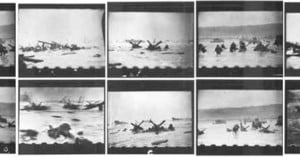
On June 6, 1944 — also known as D-Day — war photographer Robert Capa braved the defenses of the heavily fortified Omaha beach, swimming ashore with the second wave of soldiers. Using two Contax II cameras, a 50mm lens, and several rolls of film, he managed to capture 106 photographs documenting the first couple hours of the now-famous invasion (Omaha beach is the one seen in the opening scenes of Saving Private Ryan). After he raced back to London to have the film processed, a Life magazine darkroom technician make a tragic mistake: the dryer was set too high and the emulsion on three and a half of the rolls melted, completely erasing 95 of the 106 photos. The 11 remaining images were all published and became Capa’s most famous work.

If you ever accidentally nuke some photos, whether film or digital, just remember Capa’s three and a half rolls of melted history and you might not feel so bad about your lost images.

The Magnificent Eleven: The D-Day Photographs of Robert Capa [Skylighters]

Powerful Short Film Captures the Toll of Wartime Photojournalism

There’s a photography joke that goes, “If you saw a man drowning and you could either save him or photograph the event… what kind of film would you use?”. While this might be a lighthearted jab at photo-lovers, it also reminds us of a very real dilemma photojournalists are often confronted with — the struggle between doing their job by documenting reality and getting involved in the reality they need to document. The short film above, titled “Moment of Truth – Photographer”, provides a powerful glimpse into the mental and emotional toll wartime photojournalists undoubtedly pay quite often.

(via Photoxels)

Hipstamatic War Photography on the Front Page of the New York Times

Hipstamatic War Photography on the Front Page of the New York Times nythipsta

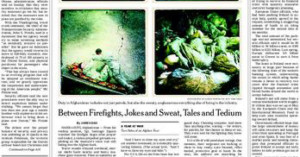
If you’re subscribed to the New York Times, you might have noticed some unique-looking war photographs featured as the top story when opening up the paper yesterday. The four photographs were actually iPhone photos taken by NYT photographer Damon Winter in Afghanistan, and processed with the popular app Hipstamatic. Earlier this year AP photographer David Guttenfelder did the same thing in Afghanistan with an iPhone and a Polaroid filter app.

You can view a gallery of Winter’s Hipstamatic war photos over on the NYT Lens blog.

(via Gizmodo)

James Nachtwey on the Importance of Photography in War

James Nachtwey on the Importance of Photography in War warphotographer

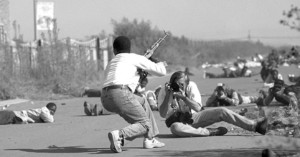
If James Nachtwey were a street photographer, he wouldn’t be the type to stand on the opposite sidewalk and stealthily capture unsuspecting strangers using a telephoto lens. As you can see from the photograph above, Nachtwey has a fearless attitude when shooting in dangerous situations, getting up close and personal with the subjects.

The photo is from a documentary titled “War Photographer” by Christian Fei, which was nominated for an Academy Award (Best Documentary Film) in 2002. The film follows Nachtwey for two years as he documents conflicts in Kosovo, Rawanda, Indonesia, and the West Bank.
Read more…

Apple Responds to Adobe Advertisement

Apple Responds to Adobe Advertisement appleresponds

We reported yesterday that Adobe had launched a “Freedom of Choice” ad campaign against Apple, the latest shot in their ongoing battle over Flash. The above nerd joke is supposed to show what it might look like if Apple responded to Adobe with their own advertisement.

(via Laughing Squid)


Image credit: Graphic by @issaco

Photo Pulitzer Prize Winners: Mary Chind and Craig F. Walker

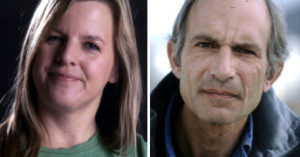
Photo Pulitzer Prize Winners: Mary Chind and Craig F. Walker mugsPhotojournalists Mary Chind of The Des Moines Register and Craig F. Walker of The Denver Post won Pulitzer Prizes this year in photography.

Chind’s photo of a harrowing water rescue photo won as the Best Breaking News Photograph. The photo, published July 1, 2009, shows a construction worker dangling above the rapids of a dam, in an attempt to reach a victim in the water. The Pulitzer board say the photo captured “a heart-stopping moment.”

The victim and her husband had gone over the edge of the dam on a boat. Rescuers could not reach the pair with a crane. According to the National Press Photographer Association, Chind took the photo from a nearby bank crowded with rescue workers and firefighters. A worker in a makeshift rig was lowered down towards the water and managed to save the woman after several attempts.

Photo Pulitzer Prize Winners: Mary Chind and Craig F. Walker rescue

Walker won the Best Feature Photography for his intimate photo essay of a teenager, Ian Fisher, as he entered the Army. Walker documented the young man for 27 months, following him as he recruited, trained, was deployed to Iraq, and finally returned.

The Pulitzer board described Walker’s work as “an intimate portrait of a teenager who joins the Army at the height of insurgent violence in Iraq, poignantly searching for meaning and manhood.” Color versions of Walker’s essay can be seen on the Pulitzer website and the multimedia package can be seen on the Post’s website.

Photo Pulitzer Prize Winners: Mary Chind and Craig F. Walker walker


Image Credits: River Rescue in Downtown Des Moines by Mary Chind and American Soldier by Craig F. Walker

Grim Military Footage Reveals Death of Two Reuters Employees

Grim Military Footage Reveals Death of Two Reuters Employees screencap

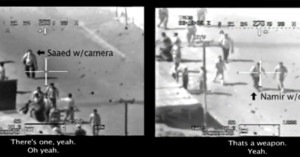
A video released on WikiLeaks.org shows disturbing footage taken in 2007 from an American apache helicopter as they circle and fire upon a group of people they identify as armed hostiles in the street.

As it turns out, the two men who appear to be armed are actually working Reuters employees: photographer, 22-year-old Namir Noor-Eldeen, and his driver, Saeed Chmagh, who was 40. The two men were walking in the street with camera straps hanging from their shoulders. One of the men has a long lens, misidentified as an RPG.

According to a New York Times article published yesterday, Reuters had heard of a military raid in the area — the same raid that the military was attending to, and the two men went to investigate. Their mere proximity to the raid proved to be fatal.

The military fired upon the men and other individuals, who were later confirmed to be civilians, among them two children and the two Reuters employees. The attack killed 12, including Noor-Eldeen and Chmagh.

In a United States Central Command report:

β€œ[The men] made no effort to visibly display their status as press or media representatives and their familiar behavior with, and close proximity to, the armed insurgents and their furtive attempts to photograph the coalition ground forces made them appear as hostile combatants to the Apaches that engaged them.”

Reuters news editor in chief David Schlesinger said in a statement:

β€œThe deaths of Namir Noor-Eldeen and Saeed Chmagh three years ago were tragic and emblematic of the extreme dangers that exist in covering war zones. We continue to work for journalist safety and call on all involved parties to recognize the important work that journalists do and the extreme danger that photographers and video journalists face in particular.”

(via New York Times)